ZeroWater vs Brita: What Each Pitcher Removes, and What It Costs per Gallon
Published October 29, 2026
As an Amazon Associate we earn from qualifying purchases. This never changes which products we recommend.
Choose ZeroWater if you want to strip dissolved solids and are willing to pay more per gallon and replace cartridges more often on hard or high-TDS water; choose Brita if chlorine taste and odor are the main complaint and you want a low-cost, low-maintenance pitcher with a predictable 40-gallon filter life.
The deciding tradeoff is filtration depth versus running cost: ZeroWater's five-stage ion exchange and carbon design goes after total dissolved solids, while the Brita Metro's activated carbon cartridge is built around taste and a short list of metals.
Both pitchers are countertop, no-install options that suit renters and small kitchens. Neither is a whole-house or under-sink system, and neither is the right tool for bacteria in a private well or for a household that needs verified fluoride reduction. The comparison below uses the published specifications for the ZeroWater five-stage pitcher and the Brita Metro 6-cup pitcher, and it separates total dissolved solids (a taste and mineral indicator) from certified contaminant reduction claims.
Quick verdict
ZeroWater is the deeper-filtering, higher-maintenance side; Brita is the simpler, cheaper-to-run side. ZeroWater's five-stage cartridge and included TDS meter appeal to readers chasing demineralized water, while Brita Metro's 40-gallon activated carbon filter and 6-cup body fit readers who mainly want better-tasting city water.
ZeroWater
Deep filter, meter, pricier
Choose ZeroWater if your main goal is reducing total dissolved solids and you accept faster cartridge use on high-TDS supplies.

Brita
Simple carbon, 40 gallons
Choose Brita if chlorine taste and odor are the problem and you want a 40-gallon filter life in a small, low-cost pitcher.
Key takeaways
- ZeroWater's five-stage ion exchange and carbon filter targets total dissolved solids, while Brita Metro's activated carbon filter is listed for chlorine taste and odor plus mercury, copper, zinc and cadmium.
- Brita Metro carries a 40-gallon filter life and a 6-cup capacity, so it needs fewer changes per year than a ZeroWater cartridge on the same high-TDS supply.
- ZeroWater includes a TDS meter that shows dissolved-solids readings, an accessory Brita Metro does not list; the meter measures TDS, not contaminant safety.
- Neither pitcher is the right answer for bacteria in a private well or for a household that needs verified fluoride reduction; those cases call for testing and a different filter type.
Table of contents9 sections · tap to expand
What is ZeroWater?
ZeroWater is a countertop pitcher that runs water through a five-stage ion exchange and activated carbon filter and includes a TDS meter to show the dissolved-solids reading before and after.
What is Brita?
Brita is a countertop pitcher brand whose Metro model uses an activated carbon filter rated for 40 gallons and listed to reduce chlorine taste and odor, mercury, copper, zinc and cadmium.
At a glance
ZeroWater vs Brita at a glance
| Criterion | ZeroWater | Brita |
|---|---|---|
| Contaminants reduced (as listed) | Total dissolved solids targeted by five-stage ion exchange and carbon; specific reduction claims depend on the | Chlorine taste and odor, mercury, copper, zinc and cadmium named in the listing |
| Certification stated | Check the specific model's performance data sheet for NSF/ANSI 42, 53, 401 and 372 listings | Listing names chlorine, mercury, copper, zinc and cadmium; confirm the NSF/ANSI standard on the performance data sheet |
| Filter life | Varies with TDS; cartridges exhaust faster as dissolved solids rise | 40 gallons |
| Cartridge replacement frequency | More frequent on hard or high-TDS water | About every two months at 40 gallons |
| Cost per gallon | Higher per gallon because of shorter cartridge life on high-TDS supplies | Lower per gallon at a 40-gallon filter life |
| Taste and mineral content | Demineralized water with a flatter mouthfeel | Carbon-filtered water that keeps minerals and more body |
| Capacity | Pitcher and dispenser sizes vary by model | 6 cups |
| Footprint and fridge fit | Depends on the model; dispensers take more shelf space | 9.8 in high, 4.45 in wide, 9.37 in deep; 1.39 pounds |
| Installation and renter friendliness | Countertop, no plumbing, no permanent change | Countertop, no plumbing, no permanent change |
| Well water and high-TDS suitability | Targets TDS but cartridges exhaust faster; not for bacteria | Improves taste but does not target TDS; not for bacteria |
Key differences
7 key differences between ZeroWater and Brita
1. What each pitcher reduces and how it is certified
The practical difference is scope: ZeroWater goes after dissolved solids broadly, and Brita goes after taste and a named short list of metals.
Certification wording matters. The Brita Metro listing names the contaminants it reduces, but the standard behind each claim should be confirmed on the manufacturer performance data sheet, where NSF/ANSI 42 covers aesthetic effects such as chlorine taste and odor and NSF/ANSI 53 covers health effects such as lead. For ZeroWater, the same rule applies: check the specific model's data sheet for NSF/ANSI 42, 53, 401 and 372 listings rather than assuming them from the brand name.
2. Filter life and cartridge replacement frequency
Brita Metro states a 40-gallon filter life, which works out to roughly two months of typical use, while ZeroWater's cartridge life depends on the dissolved-solids load in the incoming water. On soft, low-TDS city water a ZeroWater cartridge lasts longer; on hard or high-TDS well water it exhausts faster, so the same pitcher can behave very differently in two homes.
That difference changes the buying decision for a small household. Brita's fixed 40-gallon rating makes yearly cartridge planning predictable, while ZeroWater requires watching the TDS meter and replacing the cartridge when the reading stops dropping. Neither pitcher signals exhaustion the same way: Brita Metro uses an electronic change indicator, and ZeroWater relies on the meter reading.
3. Cost per gallon and the TDS meter accessory
Cost per gallon favors Brita Metro because its 40-gallon filter life spreads each cartridge over more water, while ZeroWater's five-stage cartridge is replaced more often as TDS rises. The ZeroWater pitcher includes a TDS meter, an accessory Brita Metro does not list, and that meter adds upfront value but not filtration capacity.
The meter is best understood as a maintenance tool, not a safety device. It shows dissolved-solids readings before and after filtration so you know when the cartridge is spent, but a low TDS reading does not prove the water is free of lead, PFAS or bacteria. Readers comparing yearly spend should price cartridges for their own TDS level, because the same ZeroWater cartridge that lasts months on soft water may last weeks on hard water.
4. Taste and mineral content of the finished water
ZeroWater produces demineralized water with a flatter mouthfeel because its ion exchange stage targets dissolved solids, while Brita Metro's activated carbon leaves minerals in place and mainly improves chlorine taste and odor. Someone who dislikes flat water will usually prefer the Brita result; someone chasing a near-zero TDS reading will prefer ZeroWater.
Taste is not a safety measure in either direction. Minerals contribute mouthfeel, and dissolved solids contribute body, but neither tells you whether lead, PFAS or fluoride are present. For those contaminants, check the manufacturer performance data sheet and your local water quality report, and for a private well, order a certified lab test.
5. Capacity, pour speed and fridge fit
Brita Metro holds 6 cups in a body measuring 9.8 inches high, 4.45 inches wide and 9.37 inches deep at 1.39 pounds, a slim shape built for refrigerator shelves. ZeroWater's capacity and footprint depend on the model, and its dispensers take noticeably more counter or shelf space than a 6-cup pitcher.
Pour speed follows filter design. A five-stage ion exchange cartridge is a slower path for water than a single activated carbon bed, so ZeroWater pitchers generally refill more slowly, while Brita Metro's smaller capacity means more frequent refills in a busy kitchen. A one- or two-person household can live with either; a family filling bottles every morning should weigh capacity against refill speed.
6. Installation and renter friendliness
Both pitchers are countertop units that need no plumbing and no permanent change, which makes them equally renter-friendly. Neither requires a cold water line, a drill hole or a plumber, and both can move with you when you leave.
The renter decision therefore comes down to running cost and filtration goal, not installation. A renter with chlorine taste in city water gets the simplest result from Brita Metro's 40-gallon carbon filter, while a renter who wants to track dissolved solids gets more information from ZeroWater's five-stage cartridge and meter. Neither replaces an under-sink or reverse osmosis system if the water report shows a contaminant the pitcher is not listed to reduce.
7. Well water, hard water and high-TDS supplies
ZeroWater is the more relevant pitcher for high-TDS water because its ion exchange stage targets dissolved solids, but its cartridges exhaust faster as TDS climbs, so a family on very hard well water may spend more on cartridges than expected. Brita Metro improves chlorine taste and reduces the metals named in its listing, but it does not target total dissolved solids and is not a hardness solution.
Neither pitcher is the right tool for private well water that has not been tested. The EPA and CDC recommend testing private wells for bacteria, nitrates, iron, hardness and pH, and a pitcher cannot disinfect water or address every well problem. If a lab test shows bacteria, a boil-water notice is in effect, or the water report lists a contaminant neither pitcher is certified for, follow local authority guidance and consider a different filter type.
ZeroWater: strengths and limitations
ZeroWater is the deeper-filtering side, using a five-stage ion exchange and activated carbon cartridge to target total dissolved solids and including a TDS meter to track the reading. It suits readers who want demineralized water and are prepared for cartridge life that shortens as TDS rises.
Strengths
- Five-stage ion exchange and carbon design targets total dissolved solids, not just chlorine taste.
- Included TDS meter shows dissolved-solids readings so cartridge changes are based on a measurement.
- Countertop design needs no plumbing and no permanent change, so it works for renters.
- Pitcher and dispenser sizes give a choice of capacity for different kitchens.
Limitations
- Cartridges exhaust faster on hard or high-TDS water, raising cost per gallon.
- Demineralized water has a flatter taste that some drinkers dislike.
- Specific contaminant reduction claims depend on the model's performance data sheet, which readers must check.
ZeroWater Five-Stage Pitcher
This ZeroWater pitcher pairs a five-stage ion exchange and carbon cartridge with an included TDS meter, which is the feature that separates it from Brita in this comparison. Its cartridge life depends on the dissolved-solids load, so it rewards readers who will track the meter and replace the filter when the reading stops dropping.
Brita: strengths and limitations
Brita Metro is the simpler, lower-cost side, with a 6-cup body and an activated carbon filter rated for 40 gallons and listed for chlorine taste and odor, mercury, copper, zinc and cadmium. It suits readers who mainly want better-tasting city water and predictable cartridge changes.
Strengths
- 40-gallon filter life makes cartridge replacement predictable and lowers cost per gallon.
- 6-cup slim body fits refrigerator shelves at 9.8 inches high and 1.39 pounds.
- Activated carbon leaves minerals in place, so the water keeps more mouthfeel.
- Electronic change indicator takes the guesswork out of cartridge timing.
Limitations
- Does not target total dissolved solids, so it is not a high-TDS solution.
- No TDS meter is listed, so dissolved-solids tracking is not part of the package.
- Small 6-cup capacity means frequent refills for larger households.
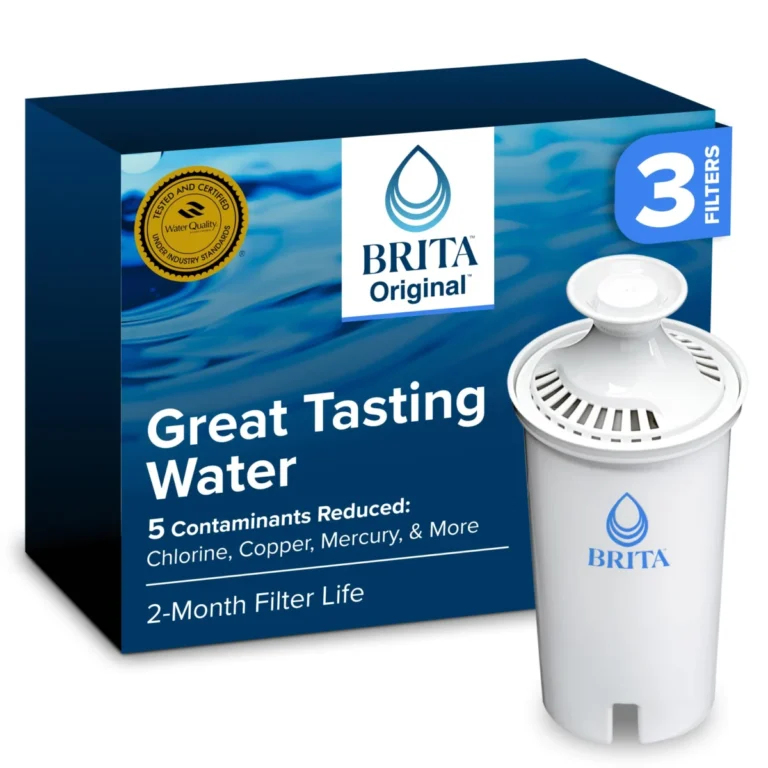
Brita Metro 6-Cup Pitcher
The Brita Metro is a 6-cup countertop pitcher with a 40-gallon activated carbon filter listed for chlorine taste and odor, mercury, copper, zinc and cadmium. Its slim 9.8-inch body and electronic change indicator make it the simpler, lower-maintenance side of this matchup.
Decision guide
Which should you choose?
| If you… | Choose | Why |
|---|---|---|
| Renter with city water and a chlorine taste who cannot touch the plumbing | Brita | Brita Metro is a no-install 6-cup pitcher with a 40-gallon carbon filter aimed at chlorine taste and odor. |
| Household in an older building worried about lead from pipes | Either | Neither listing states NSF/ANSI 53 lead reduction, so check the manufacturer performance data sheet for each before relying on either pitcher for lead. |
| Family on high-TDS or very hard well water deciding whether a pitcher can help | ZeroWater | ZeroWater's five-stage ion exchange design targets dissolved solids and its meter lets you track the reading, but cartridge life shortens as TDS rises. |
| Drinker who dislikes the flat taste of demineralized water | Brita | Brita's activated carbon leaves minerals in place, so the water keeps more mouthfeel than a demineralized pitcher. |
| Small household comparing yearly cartridge spend before buying | Brita | Brita Metro's 40-gallon filter life means fewer cartridge changes per year than a five-stage cartridge on the same high-TDS water. |
| Buyer who saw a high TDS reading and wonders whether the water is unsafe | Either | TDS is a taste and mineral indicator, not a safety test; use the local water report and a certified lab test for private wells. |
Choose ZeroWater if
- You want to reduce total dissolved solids and are willing to replace cartridges more often on hard or high-TDS water.
- You want a TDS meter to track when the cartridge is spent rather than relying on a calendar.
- You dislike the mineral taste of your tap water and prefer a demineralized result.
- You rent and want a countertop filter with no plumbing, and you accept a higher cost per gallon.
Choose Brita if
- Chlorine taste and odor are your main complaint and you want a 40-gallon carbon filter.
- You want predictable cartridge changes and a lower cost per gallon for a small household.
- You need a slim 6-cup pitcher that fits a refrigerator shelf.
- You prefer water that keeps its minerals and mouthfeel rather than a demineralized result.
See also: Lifestraw vs Brita: One Filters Untrusted Water, the Other Fixes Tap Taste; Waterdrop vs ZeroWater: Matching the Right System to Your Water.
Common questions
Frequently asked questions
Is ZeroWater better than Brita?
Neither is better in every case: ZeroWater targets total dissolved solids with a five-stage cartridge and meter, while Brita Metro targets chlorine taste and odor plus named metals with a 40-gallon filter. Choose ZeroWater for dissolved-solids reduction and Brita for lower cost per gallon and simpler maintenance.
Does Brita remove lead from water?
The Brita Metro listing names chlorine, mercury, copper, zinc and cadmium, not lead. Lead reduction requires an NSF/ANSI 53 claim on the specific model's performance data sheet, so check that document and your local water report before relying on any pitcher for lead.
Does ZeroWater remove fluoride?
Fluoride is a dissolved solid, and ZeroWater's ion exchange stage targets dissolved solids, but the reduction claim must come from the specific model's performance data sheet. Check that document for a fluoride claim before relying on the pitcher for fluoride, and confirm with your local water report.
Why does my ZeroWater filter need changing so often?
ZeroWater cartridge life shortens as total dissolved solids rise, so hard or high-TDS water exhausts the five-stage cartridge faster than soft water does. The included TDS meter shows when the reading stops dropping, which is the signal to replace the cartridge.
Is water with zero TDS safe to drink?
A zero TDS reading means dissolved solids were not detected; it does not prove the water is free of lead, PFAS or bacteria. TDS is a taste and mineral indicator, so use the manufacturer performance data sheet, your local water quality report and, for private wells, a certified lab test.
Which pitcher suits well water or hard water?
ZeroWater is the more relevant pitcher for high-TDS water because it targets dissolved solids, but its cartridges exhaust faster as TDS rises. Neither pitcher disinfects well water or softens hard water, so test a private well first and consider a softener or a different filter type for hardness.
Bottom line
The verdict
The choice between ZeroWater and Brita follows the water, not the brand. If your complaint is chlorine taste in city water and you want a 40-gallon filter with predictable changes and a lower cost per gallon, Brita Metro fits; if you want to strip dissolved solids and track the reading with a meter, ZeroWater fits, provided you accept faster cartridge use on hard or high-TDS supplies.
Neither pitcher is the right tool for bacteria in a private well, for verified fluoride reduction, or for a water report that lists a contaminant neither listing covers. In those cases, test the water, check the performance data sheets, and move to an under-sink or reverse osmosis system rather than asking a pitcher to do a job it was not built for.