Best Brita Filter Review: Who It Suits and Who Should Skip It
Published October 29, 2026
As an Amazon Associate we earn from qualifying purchases. This never changes which products we recommend.
Verdict
Worth considering
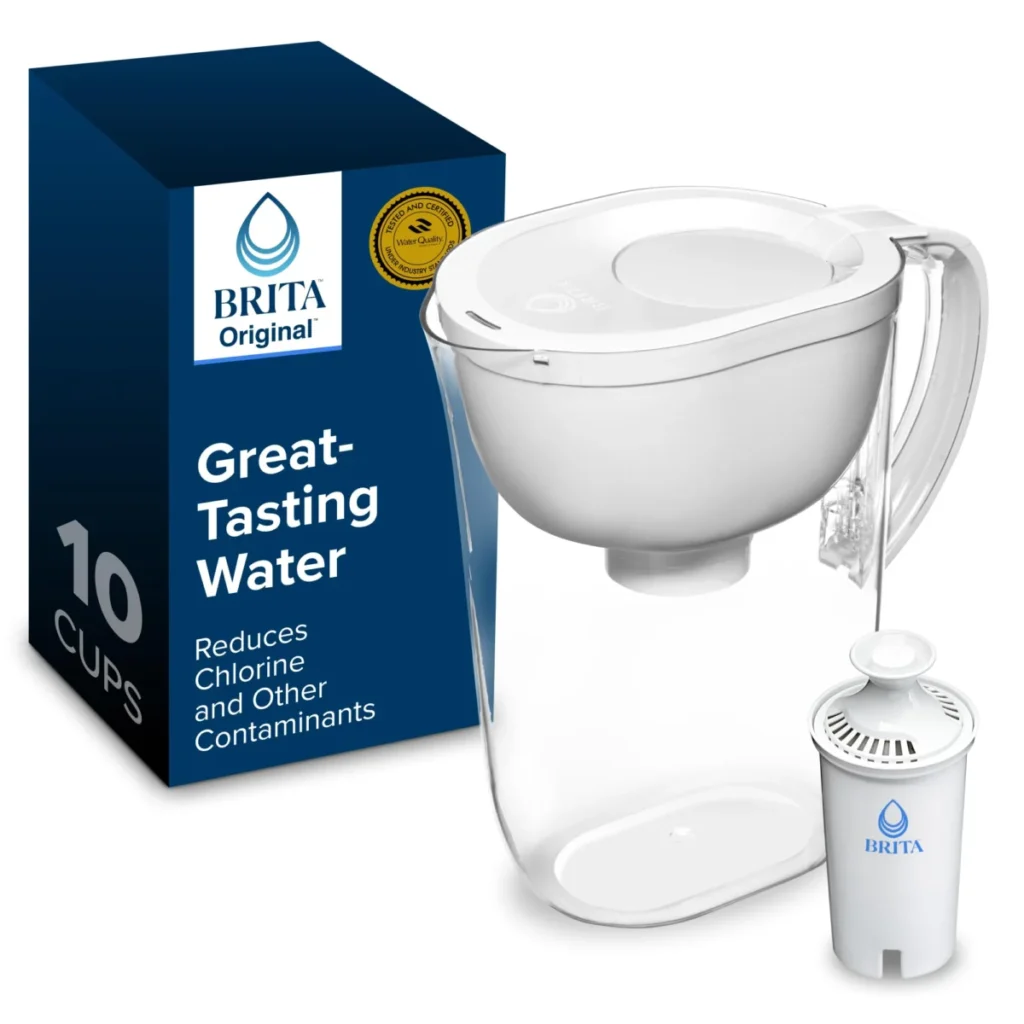
The Brita Large 10 Cup pitcher is a sensible buy for renters and small households on chlorinated city water who want better-tasting water without plumbing. It reduces chlorine taste and odor and is listed as reducing mercury and copper, but it does not address fluoride, PFAS or dissolved solids, so anyone with a lead or PFAS concern should look at a certified under sink or reverse osmosis system instead.
- Best for: Renters with chlorinated city water who cannot or will not install an under sink filter, Small households or single people who want a modest 10 cup reservoir in the fridge, Anyone replacing a Brita pitcher who needs to confirm whether it takes a Standard or Longlast cartridge
- Not for: Households with a known lead, PFAS or fluoride concern that needs a certified reduction claim, Families that want unlimited filtered water at the tap without refilling a reservoir
Key takeaways
- The Brita Large 10 Cup holds 10 cups and fits standard refrigerator shelves at about 10.5 inches tall, so it suits a household that wants cold filtered water on hand.
- It is compatible with both Brita Standard and Brita Longlast cartridges, which differ sharply in rated life: Standard is rated for 40 gallons (about 2 months) and Longlast for 120 gallons (about 6 months).
- The pitcher reduces chlorine taste and odor and is listed as reducing mercury and copper, but it is not a solution for fluoride, PFAS, nitrate or dissolved solids.
- The main drawback is that a pitcher is slow and batch-based: you filter what you pour, and you need to refill and wait rather than draw filtered water on demand.
Table of contents11 sections · tap to expand
The Brita Large 10 Cup Water Filter Pitcher is a freestanding plastic pitcher that uses granular activated carbon to improve the taste of tap water. It holds 10 cups, stands about 10.5 inches tall and is designed to sit on a refrigerator shelf. It is the kind of product most people mean when they search for the best Brita filter: a simple, no-plumbing way to get chlorine-reduced water.
Is it worth it? For a renter or small household on city water where chlorine taste is the main complaint, yes. The pitcher is inexpensive to start, needs no tools and takes two cartridge options with very different replacement intervals. It is not worth it if your water report flags lead, PFAS or fluoride as the problem, because a carbon pitcher is not built to remove those.
Specifications
Key specifications
| Specification | Detail | Why it matters |
|---|---|---|
| Type | Pitcher | A pitcher sits on the counter or in the fridge and needs no plumbing, which makes it the easiest option for renters. |
| Capacity | 10 cups | Ten cups is enough for a few glasses or a small pot of coffee before a refill, but larger households will refill often. |
| Filter life | 120 gallons | The 120 gallon figure applies to the Longlast cartridge; the Standard cartridge is rated for 40 gallons, so cartridge choice changes how often you buy. |
| Reduces | Chlorine, Mercury, Copper (named in listing) | These are the reductions named for this pitcher; it does not claim fluoride, PFAS or dissolved solids reduction. |
| Product Dimensions | 10.7"L x 5.4"W x 10.1"H | At about 10 inches tall and 5.4 inches wide, it should fit most refrigerator shelves without taking over the space. |
| Purification Method | Granular Activated Carbon | Granular activated carbon adsorbs chlorine and some taste and odor compounds; it is not a reverse osmosis membrane and does not remove dissolved minerals or fluoride. |
| Installation Type | Freestanding | No faucet adapter or cold line is needed, so it can move with you when you move. |
What do Brita filters reduce and what do they leave behind?
The Brita Large 10 Cup pitcher is listed as reducing chlorine taste and odor, mercury and copper. That is the core of what a carbon pitcher does: activated carbon adsorbs chlorine and many taste and odor compounds, which is why the water tastes fresher. The listing also names mercury and copper, which are metals a carbon filter can capture to some degree, but the listing does not state a reduction percentage or name the standard behind it.
What the pitcher does not do matters just as much. It is not listed as reducing fluoride, PFAS such as PFOA and PFOS, nitrate or dissolved solids, and a granular activated carbon pitcher is not designed to.
If your local water report or a lab test flags those, a pitcher is the wrong tool and you should look at a reverse osmosis system or a filter carrying a named certification for the specific contaminant.
Which Brita cartridge fits the Large 10 Cup pitcher?
The Brita Large 10 Cup is compatible with both Brita Longlast and Brita Standard water filters. That compatibility is the single most useful fact for a buyer, because the two cartridges have very different rated lives.
The Longlast filter is rated for 120 gallons, or about every 6 months, while the Standard filter is rated for 40 gallons, or about every 2 months. The pitcher ships with one filter, and the listing does not specify which one, so check the box or the cartridge label before you buy replacements.
The practical consequence is running cost. A Longlast cartridge lasts roughly three times as long as a Standard cartridge, so it usually means fewer changes per year and less chance of forgetting. A Standard cartridge costs less per unit but needs replacing more often. Neither cartridge turns the pitcher into a lead or PFAS filter; the difference is life and convenience, not contaminant coverage. If you are replacing a cartridge, match the model name on the old cartridge rather than guessing.
How convenient is the pitcher day to day?
The 10 cup reservoir is a middle size: enough for a couple of glasses and a small pot of coffee, but a family of four will refill it more than once a day. The pitcher is freestanding and designed for refrigerator shelves, with an easy-fill locking lid and a footprint of about 10.7 by 5.4 inches. That makes it a good fit for a renter who wants cold filtered water without a plumbed dispenser.
The tradeoff is speed and batch size. A pitcher filters as water passes through the cartridge, so you fill the reservoir and wait rather than drawing filtered water on demand. Compared with an under sink filter, a pitcher is slower and limited to what it holds. Compared with a faucet mount filter, it does not clutter the tap but does take up fridge or counter space. For one or two people, that is a fair trade; for a busy kitchen, it can become a chore.
Is the Brita Large 10 Cup enough, or do you need under sink or reverse
A Brita pitcher is enough when the goal is better-tasting water from a chlorinated municipal supply and the water report does not flag a health contaminant. It is not enough when the concern is lead, PFAS, fluoride or nitrate, because the pitcher is not listed as reducing those.
The other reason to step up is volume. A pitcher holds 10 cups and needs refilling; an under sink filter delivers filtered water at the tap for as long as you run it. The pitcher wins on installation and renters' rights, since it needs no plumbing and moves with you. If you own your home and want filtered water for cooking and drinking at the sink, the under sink route is more convenient even though it costs more up front.
How does the Brita Large 10 Cup compare with other pitcher options?
The closest comparison in this article is the Waterdrop PT-04C, a 10 cup pitcher with NSF/ANSI 42 and NSF/ANSI 372 certifications and a listed reduction of chlorine, PFAS and iron. On paper, the Waterdrop carries named certifications and a PFAS claim that the Brita listing does not, and its filter life is rated at 200 gallons. That makes the Waterdrop worth a look if PFAS is your concern, provided you confirm the certification details on its performance data sheet.
The Brita's advantage is the cartridge ecosystem: it takes both Standard and Longlast filters, which are widely sold, and the pitcher is a familiar design with a locking lid and fridge-friendly dimensions. The EHM alkaline pitcher in this article is a different proposition, listed as reducing sediment and aimed at alkaline water rather than chlorine reduction, so it is not a like-for-like swap. For a straightforward chlorine-taste fix, the Brita remains the simpler choice; for a named PFAS claim, compare carefully.
Strengths and weaknesses
Pros and cons
Pros
- No installation: freestanding design works for renters and needs no faucet adapter or cold line
- Fits standard fridge shelves at about 10.5 inches tall and 5.4 inches wide
- Takes both Brita Standard and Brita Longlast cartridges, so you can choose between a 40 gallon and a 120 gallon replacement interval
- Reduces chlorine taste and odor, the main reason most people buy a pitcher
- Listed as reducing mercury and copper as well as chlorine
- Locking lid and easy-pour design make daily use straightforward
Cons
- Not listed as reducing fluoride, PFAS, nitrate or dissolved solids, so it is not a solution for those contaminants
- Batch-based: you must refill the 10 cup reservoir and wait for water to filter
- The listing does not specify which cartridge is included, so you need to check before buying replacements
- Certification is a WQA listing without a named NSF/ANSI standard in the listing, so verify the specific claim on the performance data sheet
Other options
Alternatives to consider
Waterdrop PT-04C

Choose the Waterdrop PT-04C if you want a 10 cup pitcher with named NSF/ANSI 42 and 372 certifications and a listed PFAS reduction claim, and you are willing to verify the details on its data sheet.
EHM Alkaline Pitcher
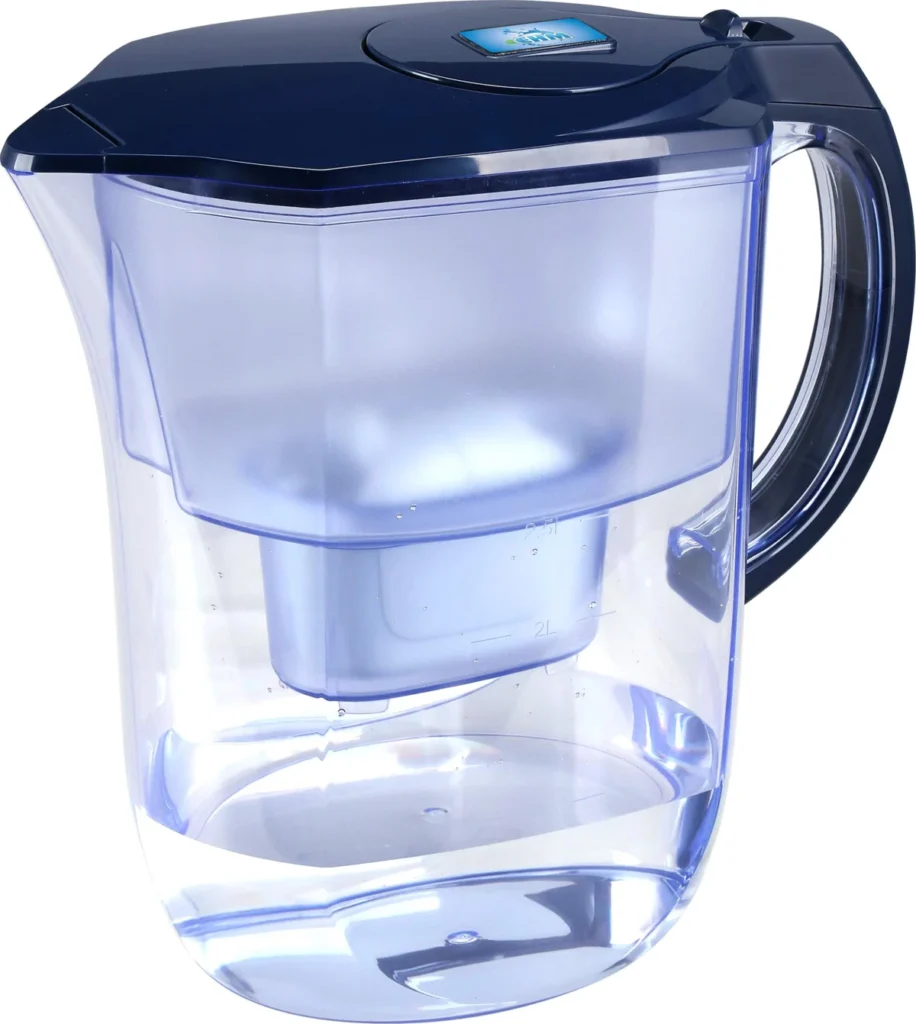
Choose the EHM alkaline pitcher only if your goal is alkaline water and sediment reduction rather than chlorine taste and odor, since it is listed for sediment and not for chlorine.
The Brita Large 10 Cup also appears in
See also: Waterdrop vs Brita: Pitcher Convenience or Plumbed Filtration?.
Common questions
Frequently asked questions
How often should I change my Brita filter?
Change a Brita Longlast filter after 120 gallons or about every 6 months, and a Brita Standard filter after 40 gallons or about every 2 months. The right interval depends on which cartridge is in the pitcher, so check the cartridge name before you buy a replacement.
Do Brita filters remove lead?
The Brita Large 10 Cup listing does not name lead as a reduced contaminant, so do not rely on it for lead. If lead is a concern, look for a filter with a specific lead reduction claim and check your local water report.
Do Brita filters remove PFAS or fluoride?
This Brita pitcher is not listed as reducing PFAS or fluoride. Carbon pitchers are not designed to remove fluoride or dissolved PFAS, so if those are flagged in your water report, a reverse osmosis system or a filter certified for the specific contaminant is the better route.
Which Brita filter fits my pitcher?
The Brita Large 10 Cup is compatible with both Brita Standard and Brita Longlast cartridges. Match the cartridge name on your current filter or the pitcher's packaging; the two are not the same size or rated life, so do not assume one fits every Brita pitcher.
Does a Brita pitcher need to be refrigerated?
No, the pitcher does not require refrigeration, but its dimensions are designed to fit refrigerator shelves if you prefer cold water. Keeping it in the fridge slows bacterial growth in the reservoir, and the locking lid helps prevent spills.
Is a Brita filter worth it compared with an under sink filter?
A Brita pitcher is worth it if you rent, want no plumbing and mainly want chlorine-reduced water. An under sink filter costs more and needs installation but delivers filtered water on demand and can carry specific certifications for lead or PFAS that this pitcher does not.
Bottom line
Should you buy the Brita Large 10 Cup?
Buy the Brita Large 10 Cup if you are on chlorinated city water, want better-tasting water without plumbing, and are comfortable refilling a 10 cup reservoir. It is a good fit for renters and small households, and the choice between Standard and Longlast cartridges lets you trade upfront cost against how often you replace the filter.
Skip it if your water report or a lab test flags lead, PFAS, fluoride or nitrate, because this pitcher is not listed as reducing those and you would be paying for a taste fix that does not address the health concern. In that case, look at an under sink or reverse osmosis system certified for the specific contaminant, and confirm the certification on the performance data sheet before you buy.