Clearly Filtered Clean Water Pitcher Review: What the Premium Buys
Published October 29, 2026
As an Amazon Associate we earn from qualifying purchases. This never changes which products we recommend.
Verdict

Worth considering
The Clearly Filtered Clean Water Pitcher suits renters and small households on city water who want a no-install pitcher with a longer filter life than many basic models and cannot plumb in an under sink system. Its decisive limitation is the pitcher format itself: slow gravity flow, limited capacity and a premium cartridge you replace on a schedule.
- Best for: Renters who cannot install an under sink filter and want a no-plumbing pitcher with a longer rated filter life, Households on city water who will check the manufacturer data sheet against the contaminants listed in their consumer confidence report, Small apartments or fridge users who need a compact, storable pitcher
- Not for: Households that can plumb in an under sink or reverse osmosis system and want faster flow, Private well owners with bacteria, hardness or iron problems that a pitcher cannot address
Key takeaways
- The pitcher needs no plumbing and fits on a counter or fridge shelf, which makes it the practical option for renters.
- The published listing names NSF/ANSI 42 and chlorine reduction; broader contaminant claims need the manufacturer performance data sheet before you rely on them.
- Filter life is rated at 150 gallons, so yearly cost depends on how much water you drink; heavy households replace cartridges more often.
- The main drawback is pitcher performance: slow filtration, limited capacity and frequent refills compared with a faucet-mounted or under sink filter.
Table of contents12 sections · tap to expand
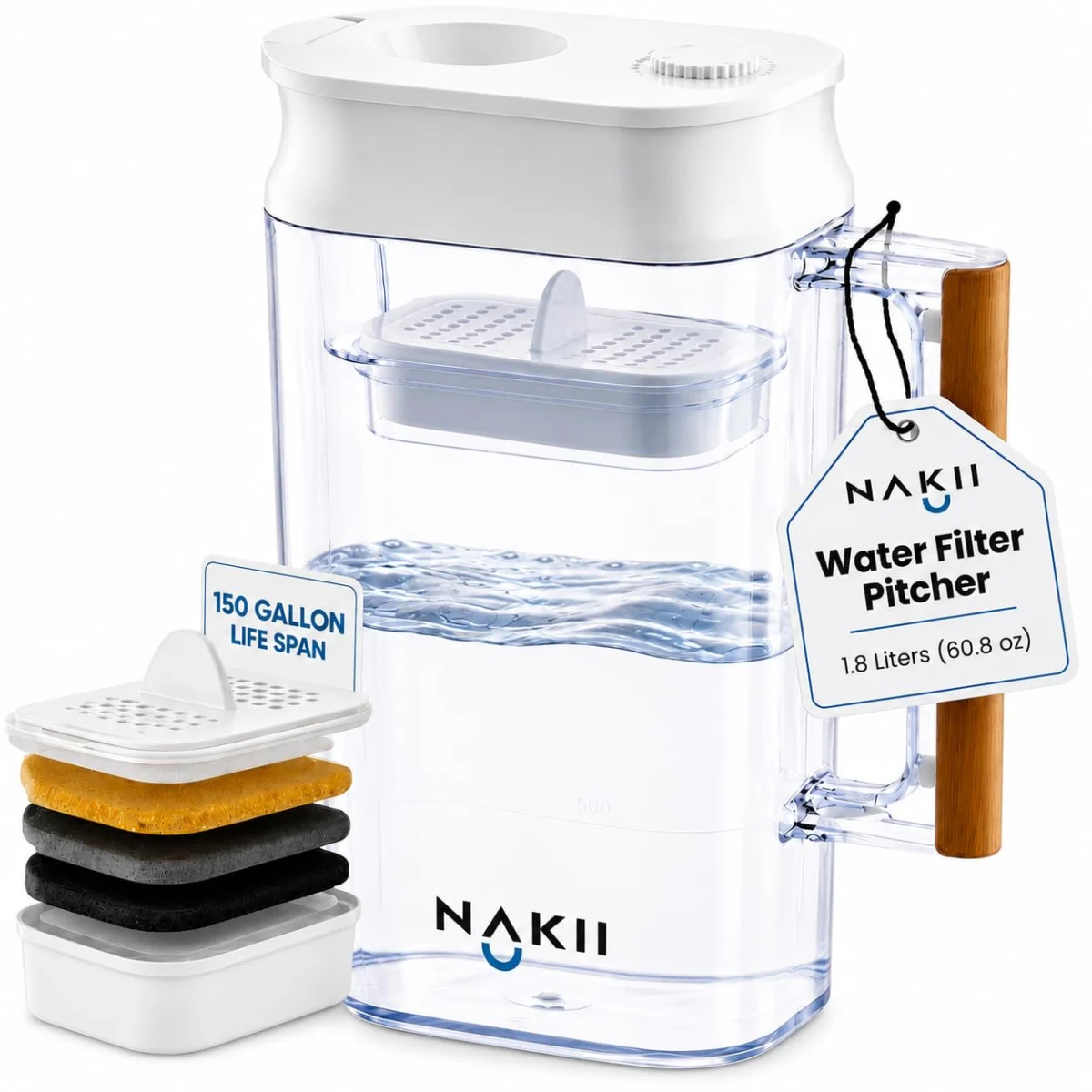
The Clearly Filtered Clean Water Pitcher is a no-install water filter pitcher built around a carbon block and ion exchange cartridge, with a 150-gallon filter life and NSF/ANSI 42 certification for chlorine taste and odor. It sits on a counter or fridge shelf and needs no plumbing, which is why it appeals to renters and small households.
This Clearly Filtered Clean Water Pitcher review answers the question buyers actually ask: is the premium worth it? The answer depends less on the marketing list than on your water source, your daily volume and whether you can install a countertop or under sink filter instead. For city water, a small household and no installation option, it is a reasonable choice; for high-volume households or well water, it is usually the wrong tool.
Specifications
Key specifications
| Specification | Detail | Why it matters |
|---|---|---|
| Type | Pitcher | A pitcher needs no plumbing but filters slowly and holds limited water, so it suits small households and renters rather than high-volume kitchens. |
| Certifications | NSF/ANSI 42 | |
| Filter life | 150 gallons | A 150-gallon rating sets the replacement schedule; a household drinking a gallon a day changes the cartridge roughly every five months. |
| Product Dimensions | 11.42 x 8.5 x 4.29 in | The footprint fits a counter or fridge shelf, but check your fridge shelf height before buying. |
| Item Weight | 1.79 pounds | At under two pounds empty, the pitcher is easy to lift and store, though it becomes heavier when full. |
Which contaminants does the Clearly Filtered pitcher reduce, and which
The Clearly Filtered pitcher is listed with NSF/ANSI 42 certification and names chlorine reduction, which covers taste and odor. A pitcher of this type generally cannot address hardness, bacteria or dissolved gases.
For city water, compare the pitcher's documented reductions with your local consumer confidence report. If lead or PFAS appears there, ask the manufacturer for the specific certification behind any health-effect claim before relying on the pitcher. For private well water, a pitcher is not a treatment system: test for bacteria, nitrates, iron and hardness first, because a carbon block and ion exchange cartridge will not make well water safe.
What does the Clearly Filtered pitcher cost to run for a year?
Filter life is rated at 150 gallons, so yearly cost depends on consumption. A household drinking one gallon a day replaces the cartridge about every five months, or roughly two to three cartridges a year; a heavier household replaces more often. The cartridge price is not published here, but the premium positioning means it costs more per gallon than a basic carbon pitcher.
Compare that with a basic carbon pitcher, which typically costs less upfront and per cartridge but mainly reduces chlorine taste and odor. A countertop or under sink filter costs more upfront but often has a lower cost per gallon and much faster flow. The pitcher's value is convenience and no installation, not the lowest running cost.
How fast does the Clearly Filtered pitcher filter water, and how much
Pitchers filter by gravity, so flow is slow compared with a faucet or under sink filter. The Clearly Filtered pitcher holds a limited volume and requires refilling during meals or when filling bottles, which is the main everyday tradeoff. The 150-gallon filter life means the cartridge lasts longer than many basic pitchers, partly offsetting the slow refills.
If you need fast, unlimited water for cooking or a large family, a countertop or under sink filter is the better fit. The pitcher suits one or two people who fill a bottle or glass at a time and can wait a few minutes for a refill.
Does the Clearly Filtered pitcher need installation or plumbing?
No installation is required: the pitcher sits on a counter or fridge shelf and needs only a tap to fill it. At 11.42 x 8.5 x 4.29 inches and 1.79 pounds, it fits small kitchens and apartments, though check fridge shelf clearance if you plan to store it cold. There is no permanent change to your plumbing, which makes it renter-friendly.
The tradeoff is capacity and refill frequency. An under sink filter hides below the counter and delivers water on demand, but needs a cold line and cabinet space. The pitcher's no-install design is its main advantage for renters and small spaces.
How does the Clearly Filtered pitcher compare with basic carbon pitchers?
Against a basic carbon pitcher, the Clearly Filtered model offers a more complex cartridge and a longer 150-gallon filter life, but at a higher upfront and per-cartridge cost. Basic pitchers mainly reduce chlorine taste and odor; the Clearly Filtered pitcher is marketed for broader coverage, so verify the specific certifications before paying the premium.
Against countertop and under sink filters, the pitcher is slower and holds less water, but it needs no plumbing and costs less upfront. An under sink filter typically delivers faster flow and a lower cost per gallon over time, but requires installation and cabinet space. Choose the pitcher if you rent or cannot install; choose an under sink or countertop system if you want volume and speed.
Who should buy the Clearly Filtered pitcher, and who should choose
Buy it if you rent, live in a small apartment, or want a storable pitcher and your city water report lists contaminants that the manufacturer's data sheet confirms the cartridge reduces. It also suits a fridge user who wants cold filtered water without plumbing. Skip it if you have a large household, need fast flow for cooking, or own a private well with bacteria or hardness problems.
If you can install one, an under sink or countertop filter is the better long-term spend for high-volume households. If your main concern is chlorine taste on a budget, a basic carbon pitcher costs less. The Clearly Filtered pitcher is a middle path: more cartridge complexity and longer filter life than a basic pitcher, less performance than a plumbed system.
Strengths and weaknesses
Pros and cons
Pros
- No plumbing or installation, so it works for renters and small apartments
- Longer 150-gallon filter life than many basic pitchers
- Compact footprint at 11.42 x 8.5 x 4.29 inches and 1.79 pounds
- Carbon block and ion exchange cartridge design goes beyond a chlorine-only carbon element, subject to certification checks
Cons
- Slow gravity filtration and limited capacity mean frequent refills
- Premium cartridge cost raises the yearly running cost above basic pitchers
- Not suitable for well water with bacteria, hardness or iron problems
Other options
Alternatives to consider
Aquagear Water Filter Pitcher
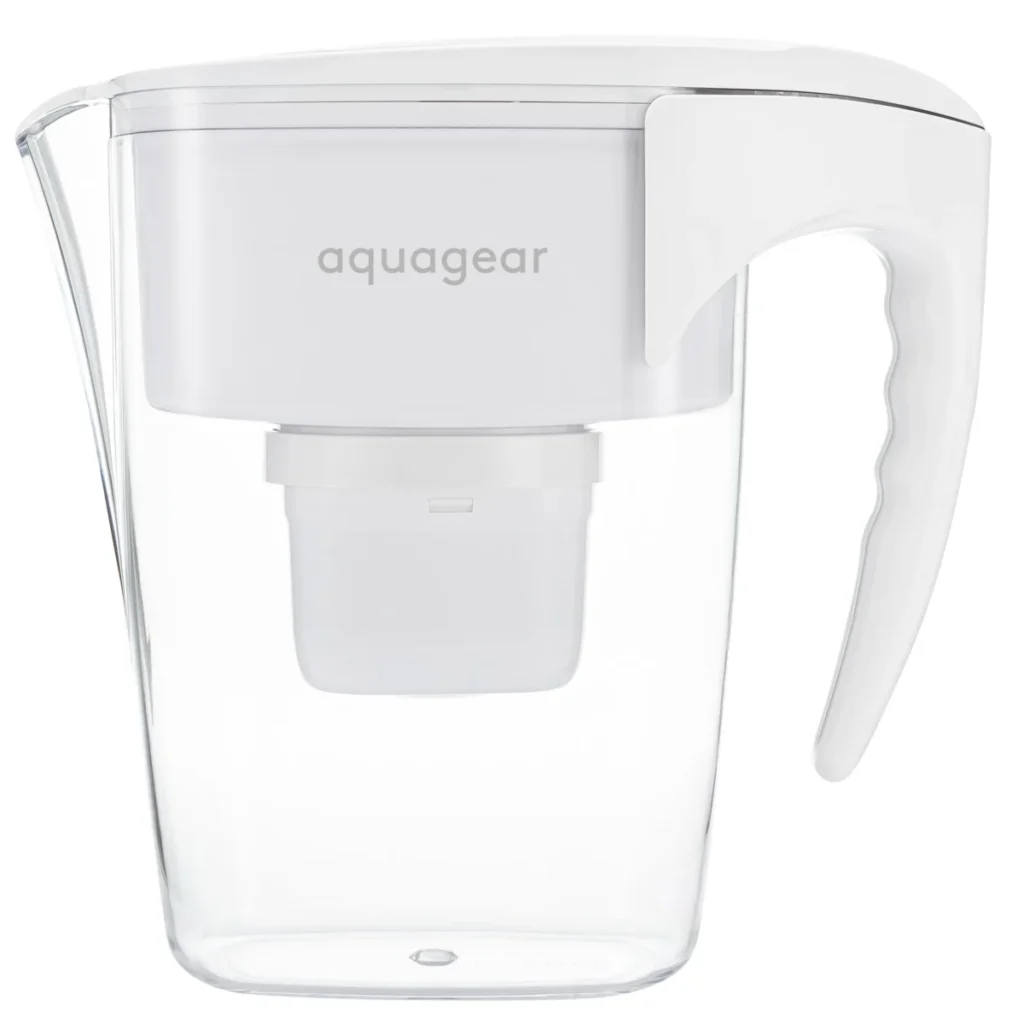
Choose the Aquagear if you want a pitcher with a stated 120-gallon filter life and listing-named reductions for lead, PFAS and microplastics, and you prefer a 10-cup capacity.
ZeroWater 12-Cup Pitcher

Choose the ZeroWater if you want a 12-cup pitcher with a TDS meter and a five-stage ion exchange filter that targets dissolved solids, lead and PFAS.
Common questions
Frequently asked questions
Does the Clearly Filtered pitcher remove fluoride?
The published listing does not name fluoride reduction, so do not assume it does. Ask the manufacturer for the performance data sheet showing fluoride reduction and the standard it was tested under before relying on the pitcher for fluoride.
Does the Clearly Filtered pitcher remove PFAS?
PFAS reduction is not listed in the published certification details, which name NSF/ANSI 42 and chlorine. Check the manufacturer data sheet for PFOA and PFOS reduction and the standard it was tested under before buying for a PFAS concern.
How often do you change the Clearly Filtered pitcher filter?
The filter is rated for 150 gallons. A household drinking about a gallon a day changes it roughly every five months, or two to three times a year; heavier use shortens that interval.
Is the Clearly Filtered pitcher NSF certified?
The listing states NSF/ANSI 42 certification, which covers aesthetic effects such as chlorine taste and odor.
How much does it cost per year to run the Clearly Filtered pitcher?
Yearly cost equals the number of cartridges you use times the cartridge price. At 150 gallons per cartridge, a one-gallon-a-day household uses two to three cartridges a year; the premium cartridge price makes it costlier per gallon than a basic pitcher.
Does the Clearly Filtered pitcher work on well water?
A pitcher is not a well water treatment system. Private well water is unregulated, so test for bacteria, nitrates, iron and hardness with a certified lab and choose treatment based on the results rather than on a countertop pitcher.
Bottom line
Should you buy the Clearly Filtered Clean Water Pitcher?
The Clearly Filtered Clean Water Pitcher is a consider, not an automatic buy. It is a sensible choice for renters and small households on city water who want more than chlorine reduction and cannot install an under sink filter, provided the manufacturer's data sheet confirms the specific contaminants you care about.
If you can plumb in a countertop or under sink filter, or you have a large household or a private well, spend your money there instead. If you want a pitcher with listing-named lead and PFAS reductions, compare the Aquagear and ZeroWater options before deciding.