LifeStraw Water Filter Review: Travel Straw vs Home Pitcher
Published October 29, 2026
As an Amazon Associate we earn from qualifying purchases. This never changes which products we recommend.
Verdict
Recommended
The LifeStraw Personal Water Filter is worth buying if you need a lightweight, no-power backup for hiking, travel or emergency kits, because it removes bacteria and protozoa without chemicals or batteries. It is not a substitute for a home water filter: it does not reduce fluoride, lead, PFAS or dissolved salts, and it will not make tap water taste better.
- Best for: Hikers, campers and backpackers who need to drink from streams, lakes or questionable taps, Travelers visiting areas where treated water is not guaranteed, Emergency-preparedness kits for boil-water notices or outages
- Not for: Households wanting better-tasting tap water or reduction of chlorine, lead or PFAS, Renters or homeowners seeking a countertop or under-sink filter for daily kitchen use, Anyone needing to remove viruses or dissolved salts from water
Key takeaways
- The LifeStraw Personal Water Filter is a portable straw filter rated for 1,000 liters and removes bacteria, parasites and microplastics down to 1 micron.
- It does not remove fluoride, lead, PFAS, chlorine or dissolved salts, so it is not a replacement for a carbon pitcher, under-sink filter or reverse osmosis system.
- Drinking through the straw requires suction; it is slower and more effortful than a gravity pitcher or faucet filter.
- The main drawback is that it offers no improvement to taste or chemical contamination, so it suits wilderness and emergency use rather than everyday kitchen water.
Table of contents11 sections · tap to expand
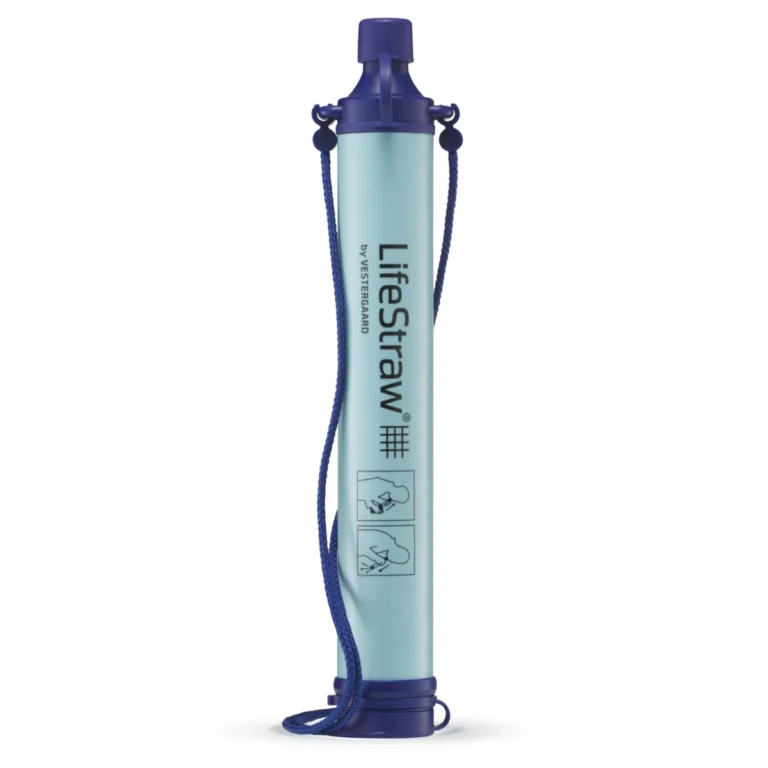
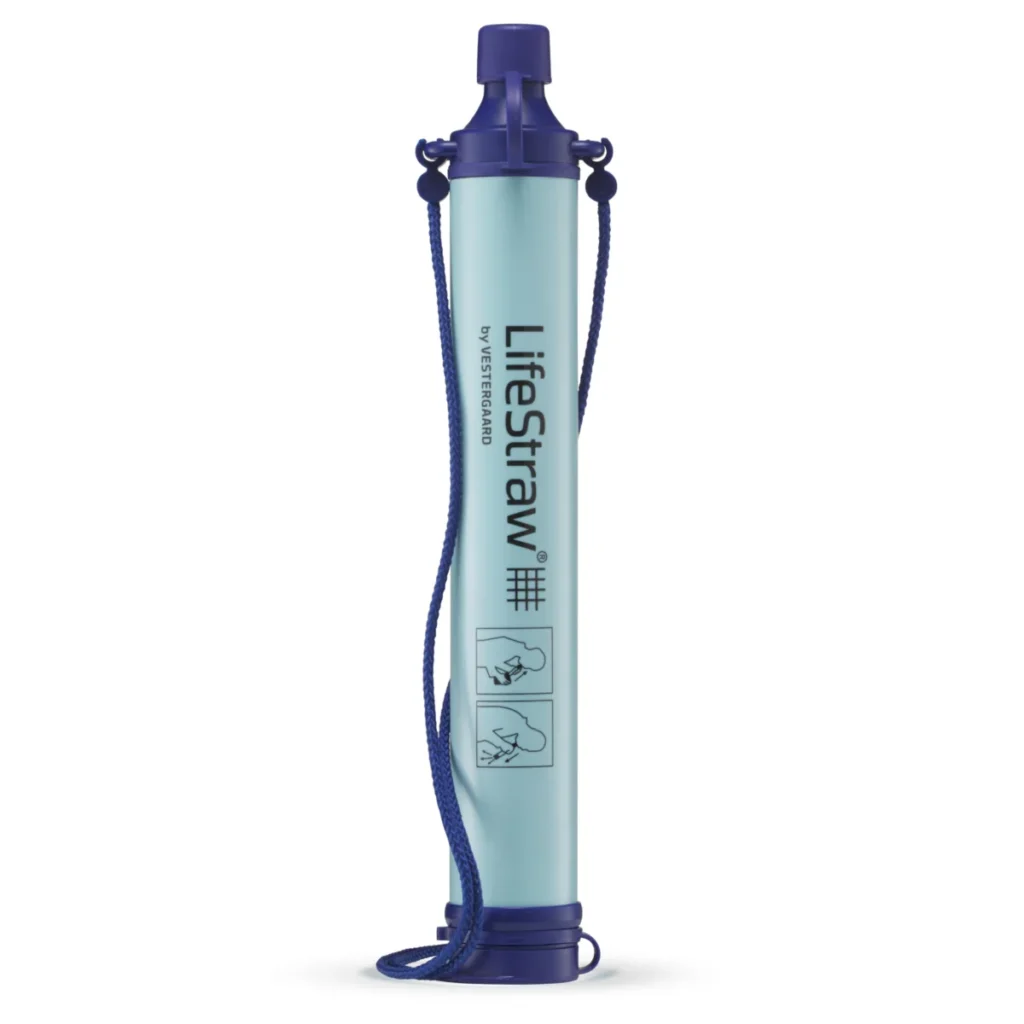
The LifeStraw Personal Water Filter is a compact, battery-free water filter shaped like a straw. You drink directly through it, and its hollow fiber membrane filters out bacteria, parasites and microplastics as you pull water up. It is a portable tool for hiking, travel and emergencies, not a plumbed or countertop appliance.
Is it worth it? For backcountry or emergency use, yes: it is light, needs no power and is rated for 1,000 liters. For everyday tap water at home, no: it does not improve taste or remove chemicals like chlorine, lead or PFAS, and a carbon pitcher or under-sink filter is the better fit.
Specifications
Key specifications
| Specification | Detail | Why it matters |
|---|---|---|
| Micron rating | 1 micron | A 1 micron rating is fine enough to block many bacteria and protozoan cysts but not viruses or dissolved substances. |
| Capacity | 1000 liters | The filter lasts for 1,000 liters before replacement, which is long for a personal filter. |
| Purification Method | Hollow Fiber Membrane | Hollow fiber membranes physically strain out particles and microorganisms without chemicals or power. |
| Power Source | No Electricity Or Battery Power Required | It works anywhere, which matters for emergencies and remote travel. |
| Product Dimensions | 3.75"L x 12"W x 1.39"H | The listed dimensions describe the whole unit, so check them if you plan to pack it in a small pocket or pouch. |
| Material | Plastic | Plastic construction keeps it light, but it is not designed for hot water or long-term storage of treated water. |
What the LifeStraw Personal Water Filter removes and what it does not
The LifeStraw Personal Water Filter removes bacteria, protozoan cysts and microplastics down to 1 micron, according to the manufacturer. Its hollow fiber membrane physically strains out contaminants as you draw water through the straw. The listing states it removes 99.999999% of waterborne bacteria and 99.999% of waterborne parasites, and that these claims are verified by laboratories using US EPA, NSF and ASTM protocols. That is a testing claim rather than a certification, but it indicates third-party verification.
It does not remove dissolved chemicals or metals: no chlorine, lead, PFAS, fluoride or dissolved salts. It also does not remove viruses, which are smaller than the 1 micron pore size. The LifeStraw is a microbiological filter, not a general water purifier.
Filter life and replacement cost over a year
The LifeStraw Personal Water Filter is rated for 1,000 liters of water before replacement. That is a long life for a personal filter: a hiker drinking 2 liters a day would take over a year to exhaust it. The manufacturer does not state a time-based replacement interval, so the liter rating is the guide.
Replacement cost is low relative to the volume treated, but the filter is not designed to be cleaned and reused indefinitely. When flow slows noticeably or the rated volume is reached, replace the unit. For everyday household use, the cost per gallon of a pitcher or under-sink filter is usually lower because those systems use replaceable cartridges rather than a whole-unit replacement.
Flow rate and effort: how fast can you drink?
Drinking through the LifeStraw requires suction, so it is slower than pouring from a pitcher or opening a faucet. You pull water up through the straw with your mouth, which takes some effort, especially if the filter is cold or partially clogged. The flow rate is not published, but it is designed for sipping, not filling a bottle quickly.
For a thirsty hiker or a child, the effort can be a drawback. A gravity-fed pitcher or dispenser lets water flow by weight, and a faucet filter runs on line pressure. The LifeStraw's advantage is that it needs no setup, no clean container and no power, which matters when you are drinking directly from a stream.
Portability versus countertop footprint
The LifeStraw Personal Water Filter is small and light enough to carry in a pocket or pack, and it takes up no counter space. That makes it a true portable filter, unlike a pitcher or dispenser that stays in the kitchen. It is also ready to use without assembly, priming or electricity.
The tradeoff is capacity: it treats water one sip at a time, so it is impractical for filling a family water bottle or a cooking pot. A countertop gravity pitcher or dispenser holds several cups and serves multiple people, but it cannot go in a backpack. The two products solve different problems: the straw is for personal use away from home, the pitcher is for household use at home.
Water source suitability: tap, surface water, well water and emergencies
The LifeStraw Personal Water Filter is designed for untreated water from lakes, rivers, streams and taps of unknown quality. It is a good fit for hiking, camping, international travel and emergency kits. For municipal tap water that is already treated, it offers no benefit over a carbon pitcher because it does not improve taste or remove chlorine.
For private well water, a lab test is the right first step: the LifeStraw addresses bacteria and protozoa but not nitrates, arsenic, hardness or other well-water problems. In a boil-water notice, it can provide microbiologically safer water, but follow local authority guidance first. It is not a desalination device and cannot make seawater or water with high dissolved solids drinkable.
Does the LifeStraw straw work the same as the LifeStraw Home pitcher?
No. The LifeStraw Personal Water Filter is a portable straw for drinking directly from a water source, while the LifeStraw Home line (pitchers and dispensers) is designed for household tap water and uses different filtration media. The Home pitcher and dispenser typically combine a hollow fiber membrane with activated carbon and ion exchange resin to reduce chlorine, taste and odor, and some models are certified to NSF/ANSI 42, 53, 401 and 372. Those certifications and contaminant reductions do not apply to the personal straw.
If your goal is better-tasting tap water at home, a LifeStraw Home pitcher or dispenser is the relevant product, not the personal straw. If your goal is drinking from a stream or during a boil-water notice, the personal straw is the right tool. The two should not be judged by the same criteria.
Strengths and weaknesses
Pros and cons
Pros
- Removes bacteria, protozoan cysts and microplastics down to 1 micron without chemicals, power or batteries
- Rated for 1,000 liters, which is a long life for a personal filter
- Compact and lightweight, so it fits in a pocket, pack or emergency kit
- No installation, priming or maintenance required; ready to use out of the package
Cons
- Does not remove fluoride, lead, PFAS, chlorine or dissolved salts, so it cannot improve tap water taste or make it suitable for all contaminants
- Requires suction to drink, which is slower and more effortful than a gravity pitcher or faucet filter
- Not designed for sharing or filling large containers; treats water one sip at a time
Common questions
Frequently asked questions
Is the LifeStraw Personal Water Filter good for everyday tap water?
No. It is a microbiological filter for untreated water and does not reduce chlorine, lead, PFAS or improve taste.
Does LifeStraw remove fluoride?
The LifeStraw Personal Water Filter does not remove fluoride. Fluoride is a dissolved ion that requires reverse osmosis or a specialized fluoride-reduction filter. Check the manufacturer performance data sheet for any LifeStraw model you consider.
Does LifeStraw remove lead and PFAS?
The LifeStraw Personal Water Filter is not rated to remove lead or PFAS. The LifeStraw Home pitcher line may have different certifications, so verify the specific model.
How often do you replace a LifeStraw filter?
Replace the LifeStraw Personal Water Filter after 1,000 liters of use, or sooner if flow slows noticeably. There is no time-based schedule; the volume treated is the guide.
Can the LifeStraw filter be used for well water?
It can reduce bacteria and protozoa from well water, but it does not address nitrates, arsenic, hardness or other dissolved contaminants. Test your well water with a certified lab first to know what treatment you need.
Bottom line
Should you buy the LifeStraw Personal Water Filter?
Buy the LifeStraw Personal Water Filter if you need a lightweight, reliable backup for hiking, travel or emergencies, because it removes bacteria and protozoa without power or chemicals and lasts for 1,000 liters.
For household drinking water, look to the LifeStraw Home pitcher or dispenser line or a certified carbon filter instead. The personal straw and the Home pitcher are different products for different needs, and choosing the right one depends on whether you are drinking away from home or at your kitchen counter.