Zero Water vs Reverse Osmosis: 6 Differences That Decide It
Published October 29, 2026
As an Amazon Associate we earn from qualifying purchases. This never changes which products we recommend.
Zero Water suits renters and small households who want better-tasting water without plumbing, because the 23-cup ZeroWater dispenser sits on the counter and needs no cold line. Reverse Osmosis suits households that can give up under-sink cabinet space and a drain connection, because the iSpring RCC7-BN is a 5-stage, 75 GPD system certified to NSF/ANSI 58. The single deciding tradeoff is no-install convenience against a plumbed system that removes a broader set of dissolved contaminants and produces wastewater.
The two are different technologies, not two versions of the same filter. ZeroWater runs water through a five-stage ion exchange filter by gravity; Reverse Osmosis pushes water through a membrane under pressure and stores it in a tank. That difference drives everything else: installation, flow, filter life, wastewater and what each is certified to reduce.
Quick verdict
Zero Water is a countertop gravity dispenser with a TDS meter and no plumbing; Reverse Osmosis is an under-sink 5-stage system with a membrane, tank and faucet.
no install, countertop, cartridge-dependent
Choose Zero Water if you rent, cannot touch the plumbing, and want a pitcher or dispenser that fits on the counter.
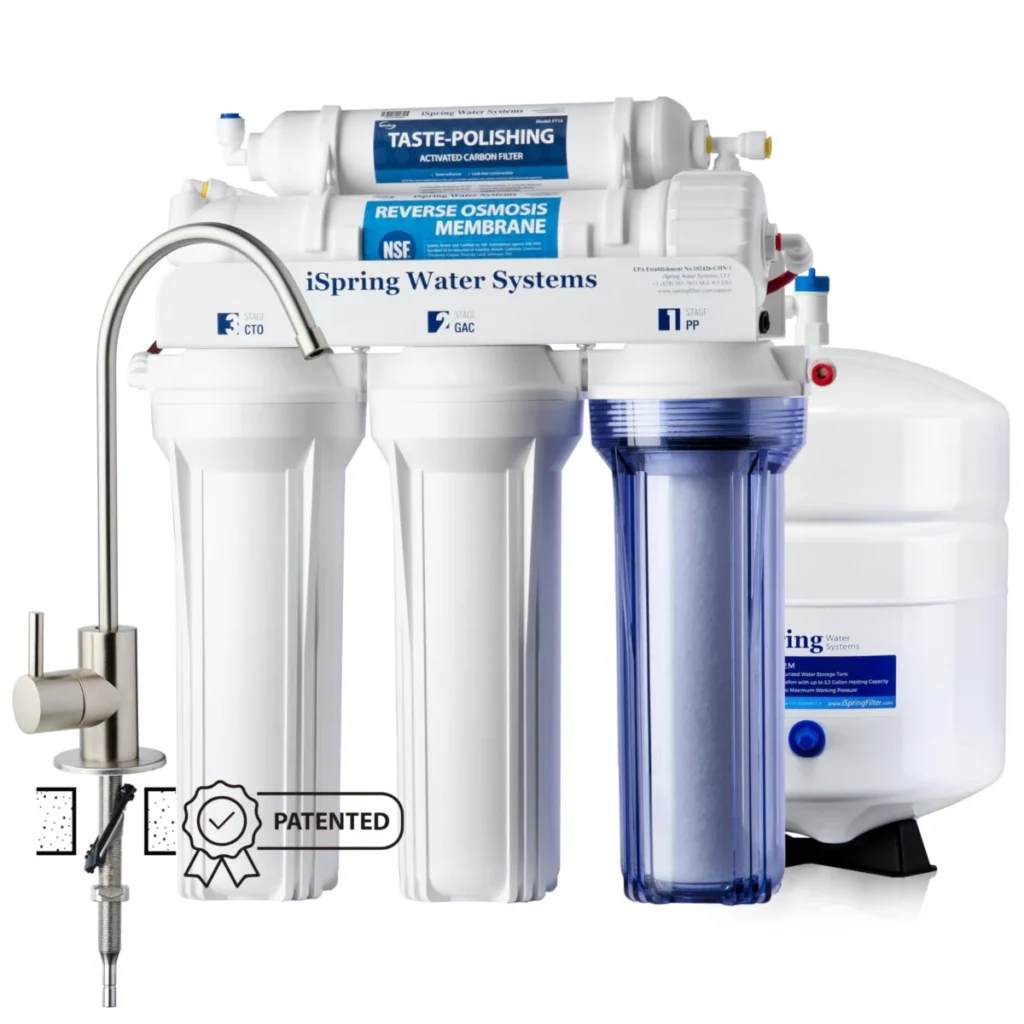
Reverse Osmosis
plumbed in, tank-stored, wastewater
Choose Reverse Osmosis if you can spare cabinet space and a drain connection and want a plumbed system certified to NSF/ANSI 58.
Key takeaways
- ZeroWater is a gravity ion exchange filter, not a Reverse Osmosis system, so it cannot be described as RO.
- The iSpring RCC7-BN is NSF/ANSI 58 certified and rated at 75 GPD, while ZeroWater's listing states IAPMO certification for PFOA/PFOS, lead, chromium and mercury without naming a standard.
- ZeroWater needs no installation but depends on frequent cartridge changes; RO needs a cold line, drain and cabinet space and adds membrane replacement and wastewater.
- A low TDS reading from the ZeroWater meter measures conductivity, not certified removal of every contaminant, so compare certifications rather than the number alone.
Table of contents9 sections · tap to expand
What is Zero Water?
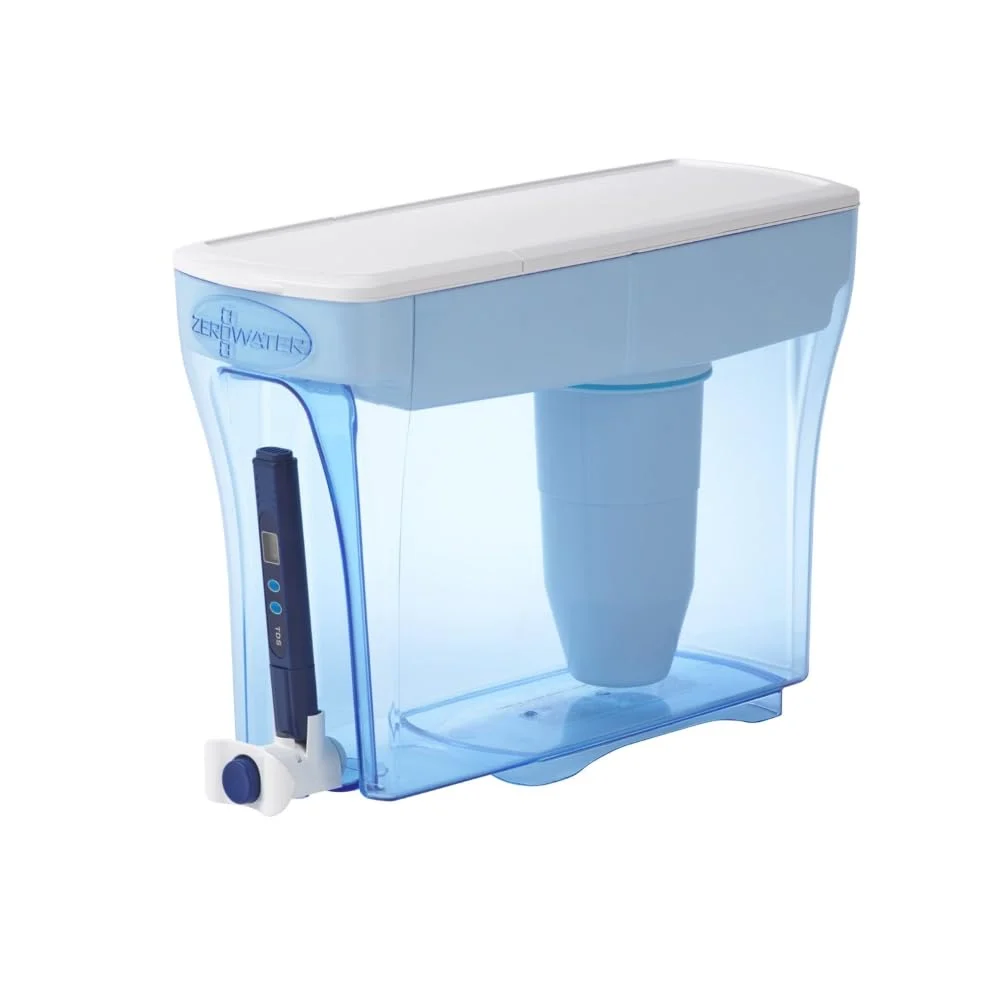
Zero Water is a gravity-fed countertop filter, here the 23-cup ZeroWater dispenser, that pushes water through a five-stage ion exchange filter and includes a TDS meter to check dissolved solids.
What is Reverse Osmosis?
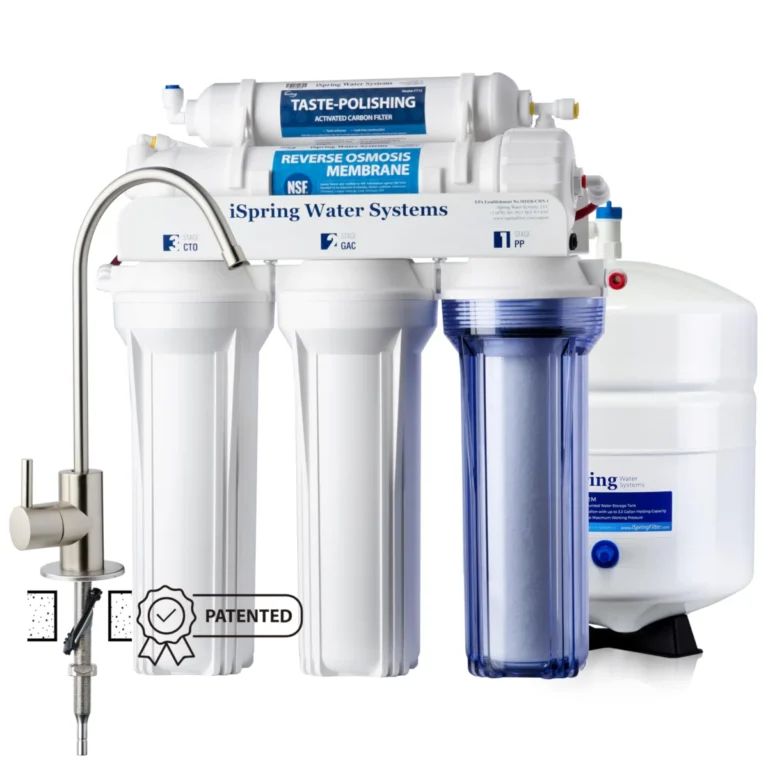
Reverse Osmosis is a plumbed under-sink process, here the iSpring RCC7-BN, that forces water through a membrane and carbon stages, stores treated water in a tank and dispenses it through a dedicated faucet.
At a glance
Zero Water vs Reverse Osmosis at a glance
| Criterion | Zero Water | Reverse Osmosis |
|---|---|---|
| Filter type | Gravity countertop dispenser, 5-stage ion exchange | Under-sink Reverse Osmosis, 5 stages with membrane |
| Installation | None; sits on the counter | DIY under-sink plumbing, faucet hole and drain |
| Certifications listed | IAPMO certified for PFOA/PFOS, lead, chromium, mercury (standard not stated); NSF certified per listing | NSF/ANSI 58 |
| Contaminants named | Lead, PFAS, mercury, chromium; removes virtually all TDS | Chlorine, lead, PFAS, fluoride; up to 99% of over 1,000 contaminants per listing |
| Capacity / filter life | 23 cups (5.4 liters) reservoir; cartridge life not stated | 75 gallons per day; filter life stated as 75 gallons |
| Flow and storage | Pour-through by gravity; no storage tank | 75 GPD production into a storage tank; faucet dispense |
| Wastewater | None | Produces wastewater; ratio not stated |
| Remineralization | Not applicable | Not included; taste may be flat after near-total removal |
| Space needed | Countertop footprint 15"L x 5.5"W x 10.6"H | Under-sink cabinet space; unit 23.62"L x 15.75"W x 11.81"H |
| Renter suitability | High; no permanent change | Low; needs plumbing and faucet hole |
Key differences
6 key differences between Zero Water and Reverse Osmosis
1. What each one filters and how it is certified
ZeroWater's five-stage ion exchange filter is listed as IAPMO certified to reduce PFOA/PFOS, lead, chromium and mercury, and the listing also says NSF certified without naming the standard. The iSpring RCC7-BN is certified to NSF/ANSI 58, the standard for Reverse Osmosis systems, and its listing names chlorine, lead, PFAS and fluoride among the contaminants it reduces.
The practical difference is that RO carries a system-level certification for the whole process, while ZeroWater's claims are attached to the filter and its certification wording should be checked on the performance data sheet.
Neither listing should be read as removing everything. ZeroWater's own description says it removes virtually all dissolved solids, which is a TDS claim, not a guarantee for every contaminant. The iSpring listing gives a broad contaminant count but still points to its own data for specifics. For lead, PFAS or fluoride, read the manufacturer performance data sheet and your local water report before deciding.
2. Installation: countertop gravity versus under-sink plumbing
ZeroWater requires no installation at all: the 23-cup dispenser is filled from the tap and pours through a spigot, so a renter can use it without touching the plumbing. The iSpring RCC7-BN is an under-sink system that needs a cold water line, a faucet hole for its dedicated brushed nickel faucet and a drain connection, and its listing describes DIY installation. That makes ZeroWater the lower-effort option and RO the higher-effort one.
The consequence is who can use each. A renter or anyone in a temporary home can set up ZeroWater in minutes and take it along when moving. The iSpring needs cabinet space and a permanent change, so it suits owners or long-term occupants who can plan the install and leave it in place.
3. Filter life, cartridges and the RO membrane
ZeroWater's cartridge life is not stated in the listing, so the replacement interval depends on your water's dissolved solids and the TDS meter reading; the dispenser includes a TDS meter to tell you when to change the filter. The iSpring RCC7-BN lists a filter life of 75 gallons, which is unusually short for an RO system and should be checked against the manufacturer's schedule, since RO systems typically also need a membrane change every two to three years.
Neither listing gives a cartridge price, so yearly cost cannot be calculated from the published specifications alone.
The cost structure differs in kind. ZeroWater concentrates cost in frequent replacement cartridges and no plumbing. RO spreads cost across pre-filters, a membrane and wastewater, plus the initial install. A buyer comparing several years should price the cartridges for both and add the membrane and water waste for RO.
4. Flow, storage and daily convenience
ZeroWater pours by gravity, so flow is limited by how fast water passes through the five stages and by how much you filled the 23-cup reservoir. The iSpring RCC7-BN is rated at 75 GPD and stores treated water in a tank, so you draw from the tank through a faucet rather than waiting for a pour-through. The tradeoff is that RO gives faster dispensing from storage but needs the tank to refill, while ZeroWater gives immediate but slower pour-through.
For a small household, the 23-cup ZeroWater reservoir may be enough for a day's drinking water, and refilling is manual. The iSpring's 75 GPD rating is a production rate, not a tank size, and the listing does not state the tank capacity, so the number of glasses available between draws depends on the tank and recovery.
5. Wastewater and the taste question
Reverse osmosis produces wastewater as part of the process, and the iSpring listing does not state a ratio, so the exact volume should be confirmed with the manufacturer. ZeroWater produces no wastewater because it is a gravity filter. That makes ZeroWater the simpler choice where water waste matters, and RO the one that carries an ongoing water cost alongside its cartridges.
RO also removes dissolved minerals along with contaminants, which is why some people find RO water flat; the iSpring listing does not include a remineralization stage. ZeroWater also removes virtually all dissolved solids per its listing, so it is not a remedy for flat taste in the way a mineral-adding filter would be. If taste is the main concern, compare both against your own water and consider whether either needs a remineralization step.
6. Space, renters and well water versus city water
ZeroWater takes countertop space, with a footprint of 15 inches long, 5.5 inches wide and 10.6 inches high, and no cabinet space. The iSpring RCC7-BN takes under-sink cabinet space, with unit dimensions of 23.62 inches long, 15.75 inches wide and 11.81 inches high, plus a faucet hole. In a small kitchen, that difference often decides the choice before water quality does.
For city water, start with the consumer confidence report and match the filter to the contaminants listed. For a private well, the EPA and CDC recommend a lab test before choosing any system, because hardness, iron, bacteria and dissolved solids each call for different treatment. ZeroWater's TDS meter is a conductivity check, not a lab test, and RO is not a disinfectant, so neither replaces a well test.
Zero Water: strengths and limitations
ZeroWater is a 23-cup gravity dispenser with a five-stage ion exchange filter, a TDS meter and no installation. It suits renters and small households who want countertop convenience and no plumbing.
Strengths
- No installation and no permanent change, so it works in a rental.
- No wastewater and no drain connection.
- Includes a TDS meter to check dissolved solids before pouring.
- IAPMO certified for PFOA/PFOS, lead, chromium and mercury per the listing.
Limitations
- Cartridge life is not stated, so replacement frequency depends on your water.
- Gravity pour-through is slower than a faucet draw.
- TDS removal is not the same as certified reduction of every contaminant.
ZeroWater 23-Cup Dispenser
This listing offers a 23-cup gravity dispenser with a five-stage ion exchange filter and a TDS meter, and it needs no plumbing. Its IAPMO certification for PFOA/PFOS, lead, chromium and mercury supports the contaminant claims.
Reverse Osmosis: strengths and limitations
Reverse Osmosis, here the iSpring RCC7-BN, is a 5-stage under-sink system rated at 75 GPD and certified to NSF/ANSI 58. It removes a broad set of dissolved contaminants but needs plumbing, cabinet space and a drain.
Strengths
- NSF/ANSI 58 certification covers the Reverse Osmosis system as a whole.
- Listing names chlorine, lead, PFAS and fluoride reduction.
- 75 GPD production with stored water for faucet dispensing.
- DIY installation per the listing, with a dedicated faucet included.
Limitations
- Needs a cold line, faucet hole, drain and under-sink cabinet space.
- Produces wastewater; ratio not stated.
- No remineralization stage, so taste may be flat.
iSpring RCC7-BN
This listing offers a 5-stage under-sink Reverse Osmosis system rated at 75 GPD with a brushed nickel faucet and NSF/ANSI 58 certification. It names chlorine, lead, PFAS and fluoride among the contaminants it reduces.
Decision guide
Which should you choose?
| If you… | Choose | Why |
|---|---|---|
| Renter with city water and no under-sink space | Zero Water | The ZeroWater dispenser needs no plumbing and no permanent change. |
| Household in an older building worried about lead from pipes | Either | Both listings name lead reduction, but check the performance data sheet and your local water report. |
| Small kitchen comparing a countertop pitcher against an under-sink system | Zero Water | ZeroWater uses counter space only; the iSpring needs cabinet space and a faucet hole. |
| Well owner whose lab test shows high dissolved solids or hardness | Reverse Osmosis | A Reverse Osmosis system is built for dissolved solids, but test first and confirm the system suits your water. |
| Someone who dislikes the flat taste of RO water | Zero Water | ZeroWater is a gravity filter, not RO, so it does not produce the same near-total demineralization profile. |
| Buyer comparing several years of running cost | Either | ZeroWater costs depend on cartridge life; RO costs include cartridges, membrane and wastewater. |
Choose Zero Water if
- You rent and cannot install under the sink or drill a faucet hole.
- You want no wastewater and no drain connection.
- You have a small kitchen and only counter space to spare.
- You want a TDS meter built into the dispenser to track cartridge changes.
- You prefer a gravity pour-through over a plumbed faucet.
Choose Reverse Osmosis if
- You own your home and can give up under-sink cabinet space.
- You want a system certified to NSF/ANSI 58 for Reverse Osmosis.
- You want stored water dispensed from a faucet rather than poured.
- Your water report or lab test points to dissolved contaminants that RO is built to reduce.
- You can accept wastewater and a membrane replacement schedule.
Common questions
Frequently asked questions
Is ZeroWater Reverse Osmosis?
No. ZeroWater is a gravity filter that uses a five-stage ion exchange filter, while Reverse Osmosis forces water through a membrane under pressure. The two use different processes and carry different certifications.
Is ZeroWater as good as Reverse Osmosis?
It depends on the contaminant and the certification you need. ZeroWater's listing states IAPMO certification for PFOA/PFOS, lead, chromium and mercury, while the iSpring RCC7-BN is NSF/ANSI 58 certified and names chlorine, lead, PFAS and fluoride. Compare the performance data sheets for your specific concern.
Does ZeroWater remove fluoride and lead?
The ZeroWater listing names lead, PFAS, chromium and mercury as reductions but does not name fluoride. The iSpring RCC7-BN listing names fluoride and lead. Check each manufacturer's performance data sheet before relying on either for fluoride.
Does Reverse Osmosis remove more than a ZeroWater pitcher?
The iSpring listing claims up to 99% removal of over 1,000 contaminants including fluoride, while ZeroWater claims removal of virtually all dissolved solids and names specific contaminants. The breadth of the claim differs, so match it to the contaminants in your water report.
How often do ZeroWater filters need changing compared with an RO membrane?
ZeroWater does not state a cartridge life, so the TDS meter is the guide to when to change it. The iSpring RCC7-BN lists a filter life of 75 gallons, and RO membranes typically need replacement every two to three years; confirm the schedule with the manufacturer.
Do I need a plumber for either option?
ZeroWater needs no plumber because it sits on the counter. The iSpring RCC7-BN is described as DIY install, but it requires a cold water line, a faucet hole and a drain, so a plumber may be needed if those are not already in place.
Bottom line
The verdict
Choose Zero Water when the priority is no-install convenience, no wastewater and countertop use, especially for renters or small kitchens. Choose Reverse Osmosis when you can plumb in an under-sink system and want NSF/ANSI 58 certification with stored, faucet-dispensed water. Neither is universally better; the decision turns on installation, space and which contaminants your water report or lab test actually shows.