Best Reverse Osmosis Systems: 7 Picks Ranked by Waste Ratio, Filter Life and Cabinet Fit
Published October 29, 2026
As an Amazon Associate we earn from qualifying purchases. This never changes which products we recommend.
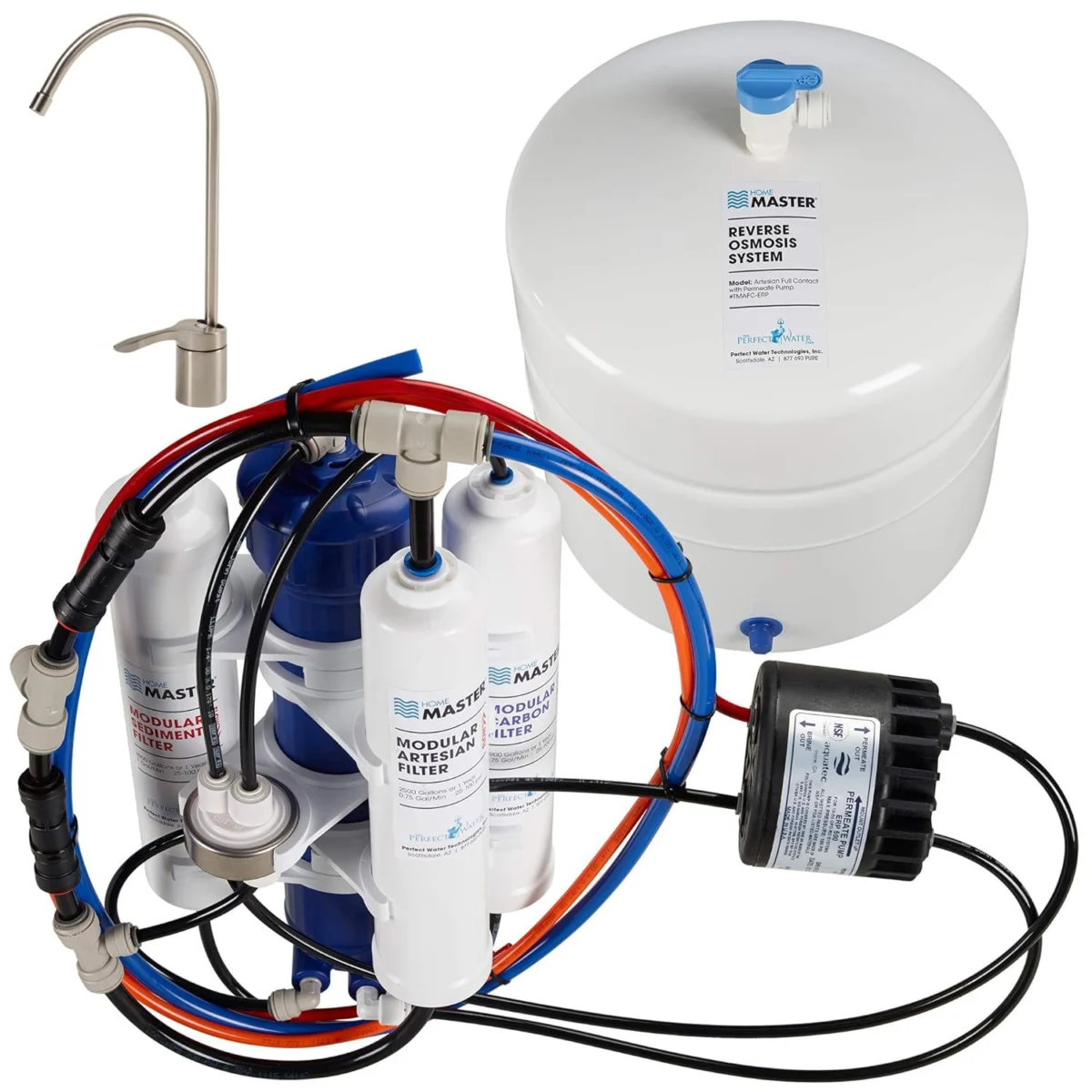
The best reverse osmosis system for most homes here is the Home Master TMAFC-ERP Artesian Full Contact, which pairs a 1:1 wastewater ratio and a 2,000 gallon filter life with a patented two-pass remineralization stage that addresses the flat taste RO water is known for. It is the pick for a household that wants one system under the sink and does not want to think about it again for a year.
The real dividing line is not brand but format. Tank-based systems such as the iSpring RCC7 line deliver steady flow from stored water and cost less up front, while tankless units such as the Frizzlife PD600-TAM3 and PD800-TAM4 free up cabinet space and produce water on demand. Certification depth, filter life and drain requirements decide the rest.
 Best OverallHome Master TMAFC-ERP ArtesianHouseholds wanting long filter life and better taste9.0/10
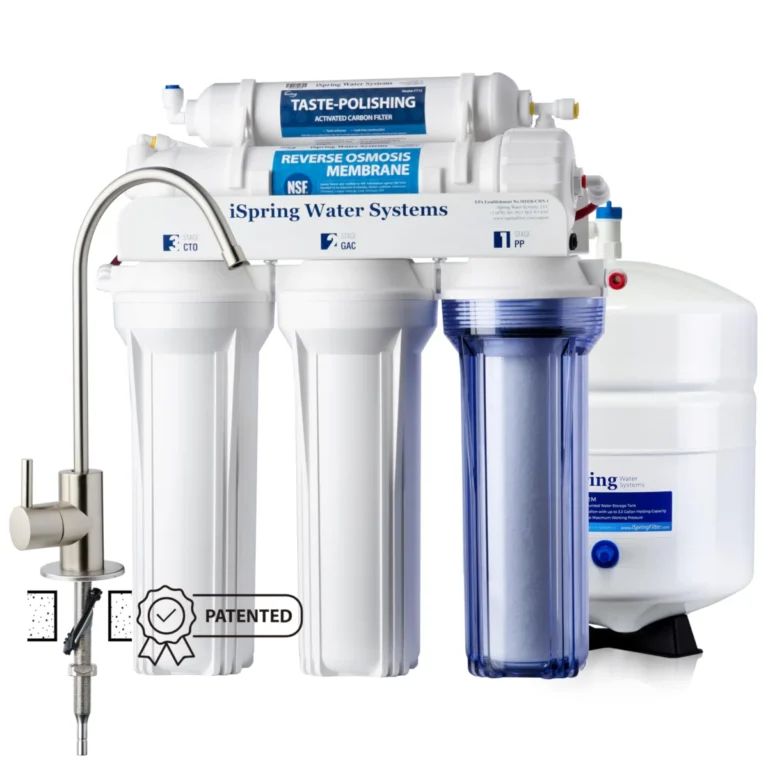
 Best Certified ValueiSpring RCC7-BNBudget buyers who want NSF/ANSI 58 on the whole system8.9/10
 Best with RemineralizationiSpring RCC7AK-BNBuyers who find plain RO water flat8.9/10
 Best with UV StageiSpring RCC7AK-UVWell water users adding a disinfection stage8.8/10
Table of contents9 sections · tap to expand
At a glance
Our top picks compared
| Product | Best for | Type and size | Key features | Where to buy |
|---|---|---|---|---|
| 1. Home Master TMAFC-ERP Artesian Best Overall 9.0/10 | Households wanting long filter life and better taste | Reverse osmosis system, 2,000 gallons | NSF certifiedRemineralizingFilter life listed | Premium Check price |
| 2. iSpring RCC7-BN Best Certified Value 8.9/10 | Budget buyers who want NSF/ANSI 58 on the whole system | Reverse osmosis system, 75 gallons, 75 GPD | NSF certifiedLead reductionPFAS reductionFluoride | Budget Check price |
| 3. iSpring RCC7AK-BN Best with Remineralization 8.9/10 | Buyers who find plain RO water flat | Reverse osmosis system, 75 gallons, 75 GPD | NSF certifiedLead reductionPFAS reductionFluoride | Budget Check price |
| 4. iSpring RCC7AK-UV Best with UV Stage 8.8/10 | Well water users adding a disinfection stage | Reverse osmosis system, 75 gallons | NSF certifiedLead reductionFluorideInstallation | Mid-range Check price |
 5. Express Water RO5DX Best Budget Starter Kit 8.7/10 | First-time RO buyers on a tight budget | Reverse osmosis system, 50 GPD | NSF certifiedLead reductionPFAS reductionFluoride | Budget Check price |
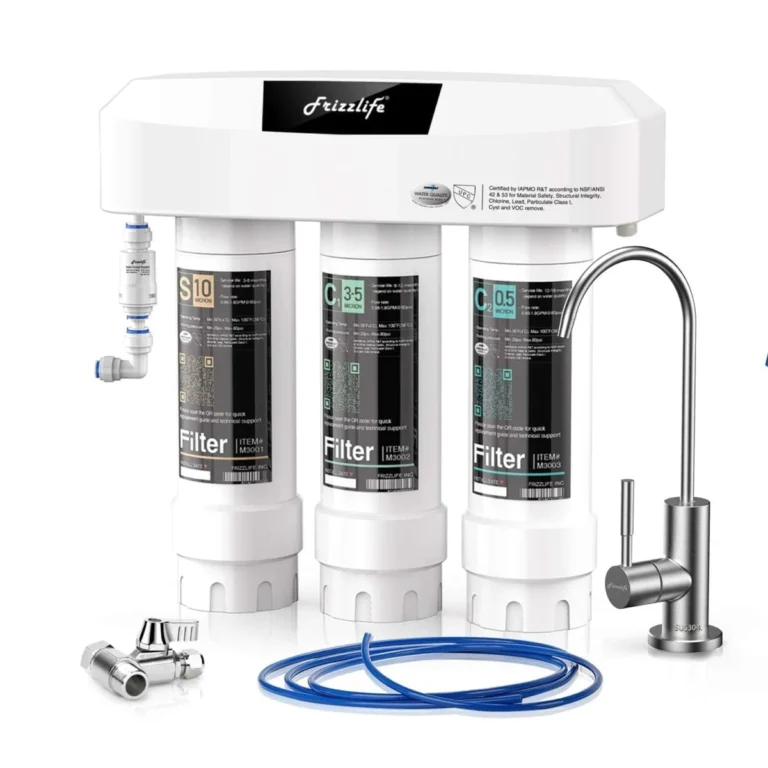
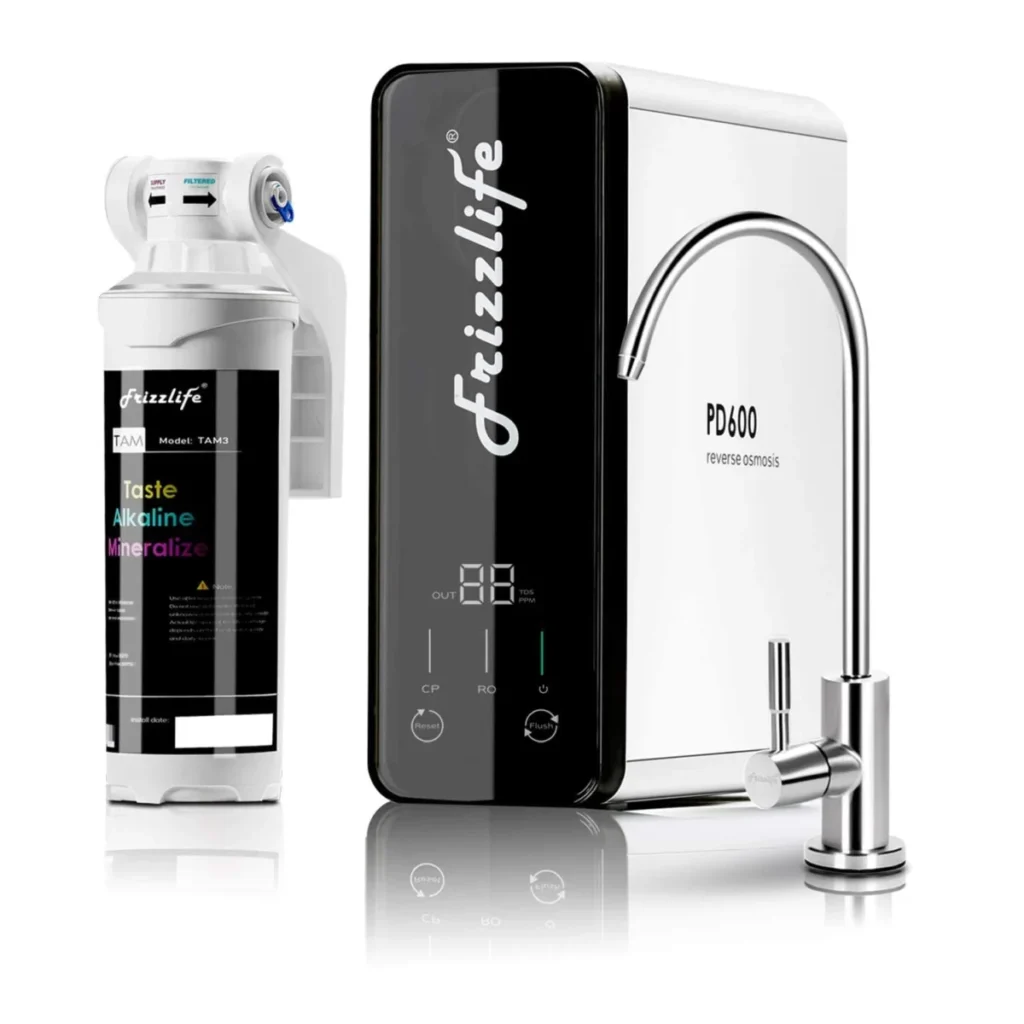
 6. Frizzlife PD600-TAM3 Best Tankless for Small Cabinets 8.6/10 | Renters and small kitchens without tank space | Reverse osmosis system, 600 gallons, 600 GPD | NSF certifiedPFAS reductionRemineralizingFilter life listed | Mid-range Check price |
 7. Frizzlife PD800-TAM4 Best for High Demand 8.5/10 | Large families filling pitchers and fridge lines | Reverse osmosis system, 800 gallons, 0.56 GPM | NSF certifiedLead reductionFluorideRemineralizing | Premium Check price |
Score: our 0-10 rating from fit for this use, buyer ratings, review volume, completeness of the product details and availability. It is not a lab test.
Buying advice
How to choose a Reverse Osmosis System for your home
Match the format to your cabinet and your lease
A tank-based under sink system stores treated water in a pressure tank, which gives steady flow at the faucet but claims a chunk of cabinet floor space; the Express Water RO5DX lists a 4 gallon capacity tank. A tankless unit such as the Frizzlife PD600-TAM3 or PD800-TAM4 uses a booster pump and no tank, so it fits a narrow cabinet and produces water on demand, at the cost of needing an electrical outlet.
Renters who cannot drill a faucet hole or tap the cold line should look at countertop reverse osmosis instead, which needs no plumbing but produces water far more slowly.
Check which NSF/ANSI standards the whole system holds
The certification that matters most for an RO system is NSF/ANSI 58, because it covers the complete system rather than a single component. The Frizzlife PD600-TAM3 lists 42, 53, 58 and 372 together, which is the broadest set here. A listing that names only 372 is a materials claim, so confirm the contaminant you care about on the performance data sheet.
Weigh filter life and stage count against running cost
Filter life decides how often you buy cartridges, and stage count tells you what those cartridges do. The Home Master TMAFC-ERP lists a 2,000 gallon filter life, far longer than the 75 gallon figure listed for the iSpring RCC7 models and the 600 or 800 gallons listed for the Frizzlife units, so fewer changes per year.
More stages are not automatically better: a 5-stage system with a carbon block pre-filter, the RO membrane and a post-carbon filter covers the essentials, and alkaline or UV stages are additions you pay for at each change.
Decide whether your water needs pre-treatment first
Reverse osmosis is a fine-particle process, so sediment, iron and hardness scale can foul the membrane before it does its job. On a private well, test first for bacteria, nitrates, iron, hardness and pH, then add sediment and iron pre-treatment ahead of the RO system if the results call for it. On city water, read the consumer confidence report: if the only issue is chlorine taste, a carbon pitcher or under sink carbon filter costs less and wastes no water.
Our picks
The Best Reverse Osmosis Systems for Home Use, Ranked
Best Overall
Home Master TMAFC-ERP Artesian
- Reverse osmosis system
- NSF certified
- 2,000 gallons

Best for: Households wanting long filter life and better taste
Skip if: You have a shallow cabinet or want a tankless unit with a certification that names the standard it meets.
Price range: Premium
Check price on AmazonPaid link. We may earn a commission.
It earns Best Overall because a 2,000 gallon filter life, a 1:1 waste ratio and two-pass remineralization are a combination no other pick here matches.
What matters in daily use
The 2,000 gallon filter life is the number that changes ownership most. Most reverse osmosis systems in this guide are rated around 75 gallons, so the Home Master TMAFC-ERP Artesian stretches cartridge changes across a far longer interval and cuts the yearly cartridge count. The 1:1 waste ratio also means one gallon of wastewater per gallon of treated water, against the 2:1 pure-to-drain figures on the Frizzlife PD600-TAM3 and PD800-TAM4.
Remineralization happens twice, so the water picks up calcium and magnesium after the membrane has stripped them out. That addresses the flat taste many people notice with plain reverse osmosis, the same problem the iSpring RCC7AK-BN solves with a single alkaline stage.
The tradeoff is a larger footprint: the unit measures 20 by 16 by 12 inches and includes a storage tank, so measure the cabinet before committing. The listing states NSF certification without naming the standard, so confirm which contaminants are covered on the performance data sheet.
Specifications
| Type | Reverse osmosis system |
|---|---|
| Certifications | NSF certified (per listing; standard not stated) |
| Filter life | 2,000 gallons |
| Tank | Tankless |
| Wastewater ratio | 1:1 waste |
| Remineralization | Yes |
Pros
- 2,000 gallon filter life means far fewer cartridge changes
- 1:1 waste ratio sends less water down the drain
- Two-pass remineralization targets flat-tasting RO water
- Permeate pump needs no electricity
Cons
- NSF standard is not named in the listing
- Larger footprint plus a storage tank needs cabinet space
Best Certified Value
iSpring RCC7-BN
- Reverse osmosis system
- NSF/ANSI 58
- 75 gallons
- 75 GPD
- Chlorine, Lead, PFAS
- DIY install
Best for: Budget buyers who want NSF/ANSI 58 on the whole system
Skip if: You want remineralized water or a tankless design with higher daily output.
Price range: Budget
Check price on AmazonPaid link. We may earn a commission.
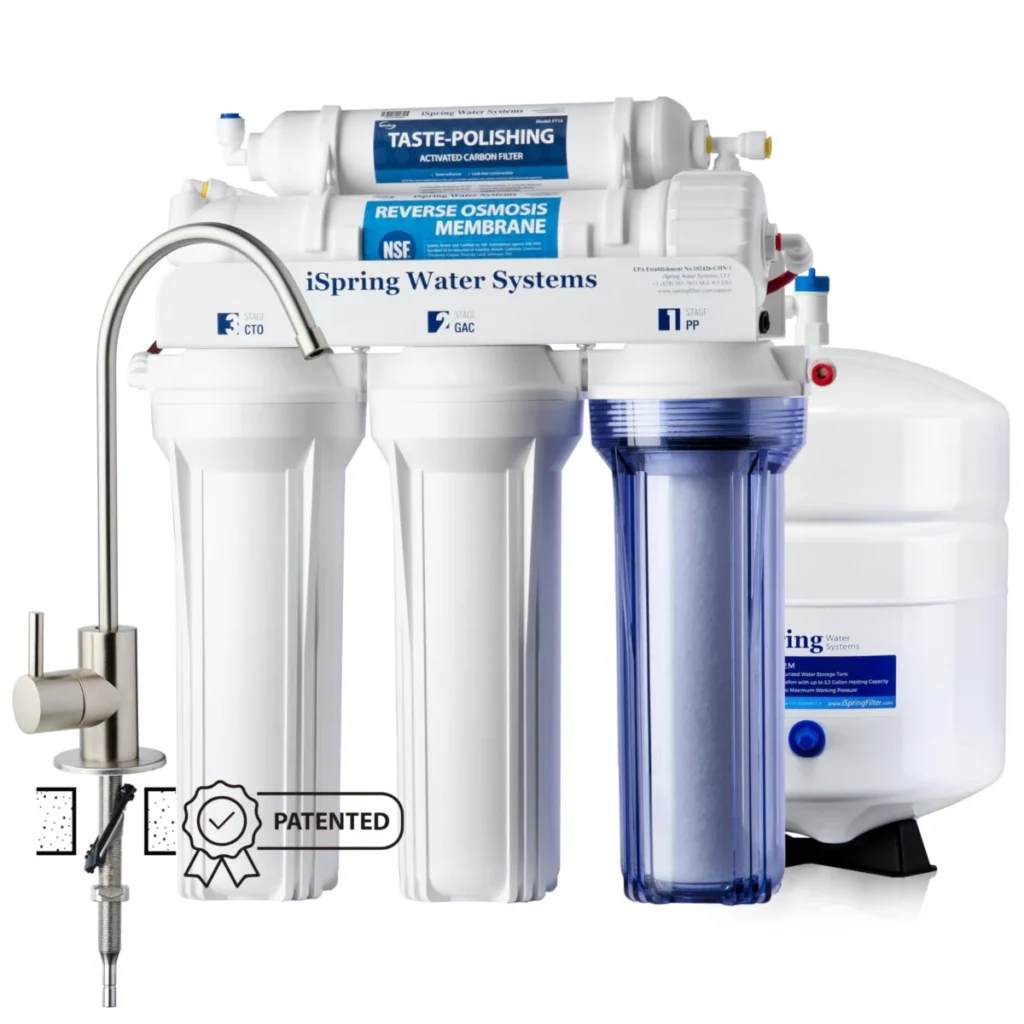
Best Certified Value goes to the iSpring RCC7-BN because the whole system carries NSF/ANSI 58 certification at the entry end of this lineup.
What matters in daily use
NSF/ANSI 58 is the standard written specifically for reverse osmosis systems, and this iSpring holds it for the full system rather than for one component. The listing also names chlorine, lead, PFAS and fluoride among the contaminants it reduces. For a buyer whose main worry is lead in an older building's pipes, that named coverage plus the certification is the reason to pick this over the Express Water RO5DX, whose listing states NSF certification without naming the standard.
What you get instead is a straightforward under sink layout with a transparent first-stage housing for checking sediment buildup, a lead-free faucet and DIY installation. The 75 gallon filter life rating means more frequent cartridge changes than the Home Master TMAFC-ERP Artesian, so budget for replacements.
Specifications
| Type | Reverse osmosis system |
|---|---|
| Certifications | NSF/ANSI 58 |
| Reduces | Chlorine, Lead, PFAS, Fluoride (named in listing) |
| Filter life | 75 gallons |
| Flow rate | 75 GPD |
| Stages | 5 stages |
| Installation | DIY install |
Pros
- Whole-system NSF/ANSI 58 certification
- Listing names lead, PFAS and fluoride reduction
- Clear first-stage housing shows when to change filters
- DIY install with no power needed
Cons
- No remineralization stage, so taste stays flat
- 75 gallon filter life means frequent cartridge changes
Best with Remineralization
iSpring RCC7AK-BN
- Reverse osmosis system
- NSF/ANSI 58
- 75 gallons
- 75 GPD
- Chlorine, Lead, PFAS
- DIY install
Best for: Buyers who find plain RO water flat
Skip if: You want the longest interval between cartridge changes or a tankless unit.
Price range: Budget
Check price on AmazonPaid link. We may earn a commission.
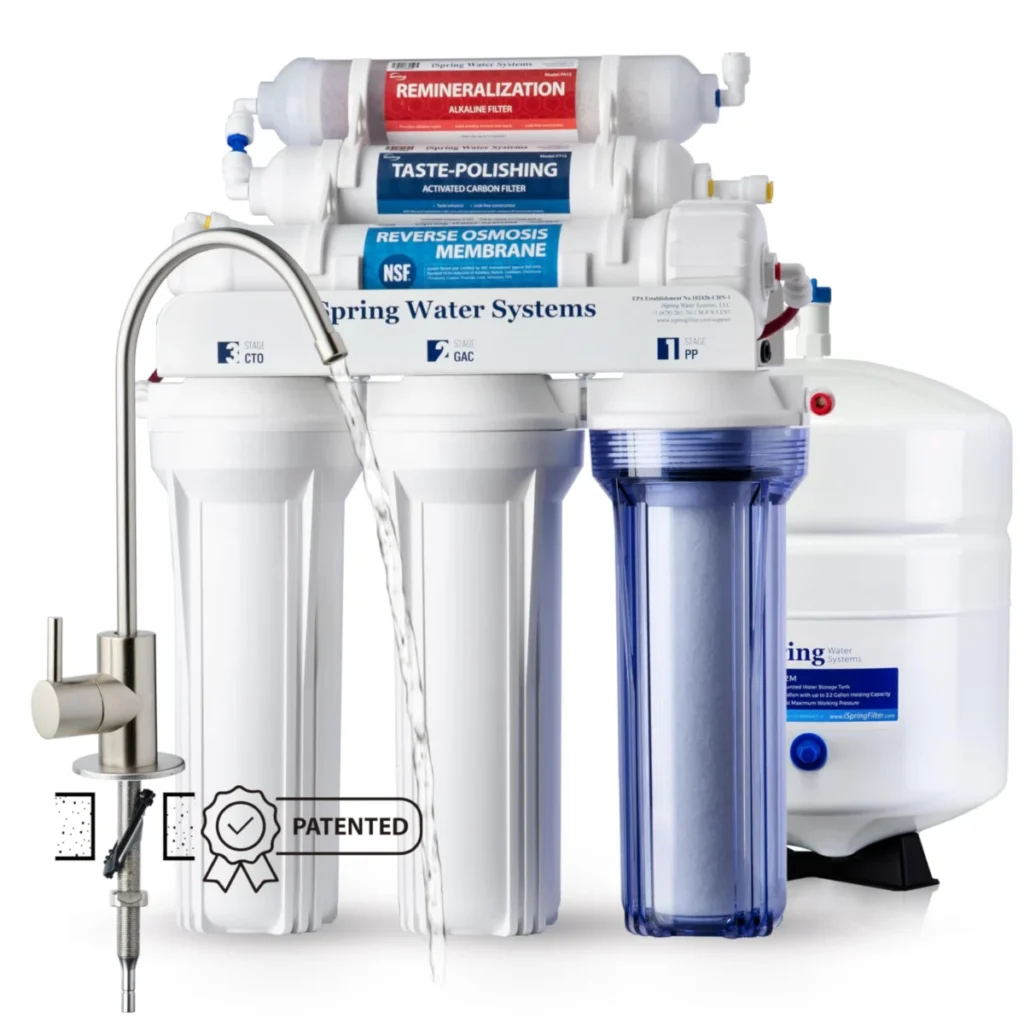
The iSpring RCC7AK-BN takes Best with Remineralization because its alkaline sixth stage restores minerals and pH that the membrane strips out.
What matters in daily use
Plain reverse osmosis water is slightly acidic and low in minerals, which is why some households find it dull. The RCC7AK-BN adds a mineral stage after the membrane to balance pH and put calcium and other minerals back. It keeps the same 75 GPD flow rate and 5-stage base as the iSpring RCC7-BN, so the difference between the two is essentially that sixth stage rather than performance.
Certification is the same NSF/ANSI 58 for the whole system, and the listing names chlorine, lead, PFAS, fluoride and copper among the reductions. Installation is DIY, helped by a top-mounted faucet fastener that tightens from above the counter instead of under the sink.
The 75 gallon filter life rating is the main running-cost limit, and the added mineral cartridge is one more element in the replacement rotation than the RCC7-BN carries. Households that want the mineral taste without the extra cartridge work should weigh the RCC7-BN instead, while anyone chasing the longest service interval should look at a tankless design.
Specifications
| Type | Reverse osmosis system |
|---|---|
| Certifications | NSF/ANSI 58 |
| Reduces | Chlorine, Lead, PFAS, Fluoride, Copper (named in listing) |
| Filter life | 75 gallons |
| Flow rate | 75 GPD |
| Stages | 6 stages |
| Installation | DIY install |
| Remineralization | Yes |
Pros
- Alkaline stage improves pH and mineral content
- Whole-system NSF/ANSI 58 certification
- Faucet installs from above the countertop
- Listing names lead, PFAS and fluoride reduction
Cons
- Short rated filter life relative to the RCC7-BN's replacement schedule
- Extra mineral cartridge adds to the replacement rotation
Best with UV Stage
iSpring RCC7AK-UV
- Reverse osmosis system
- NSF/ANSI 58, NSF/ANSI
- 75 gallons
- Lead, Fluoride, Mercury
- DIY install
Best for: Well water users adding a disinfection stage
Skip if: you have no power outlet under the sink or want long filter intervals.
Price range: Mid-range
Check price on AmazonPaid link. We may earn a commission.
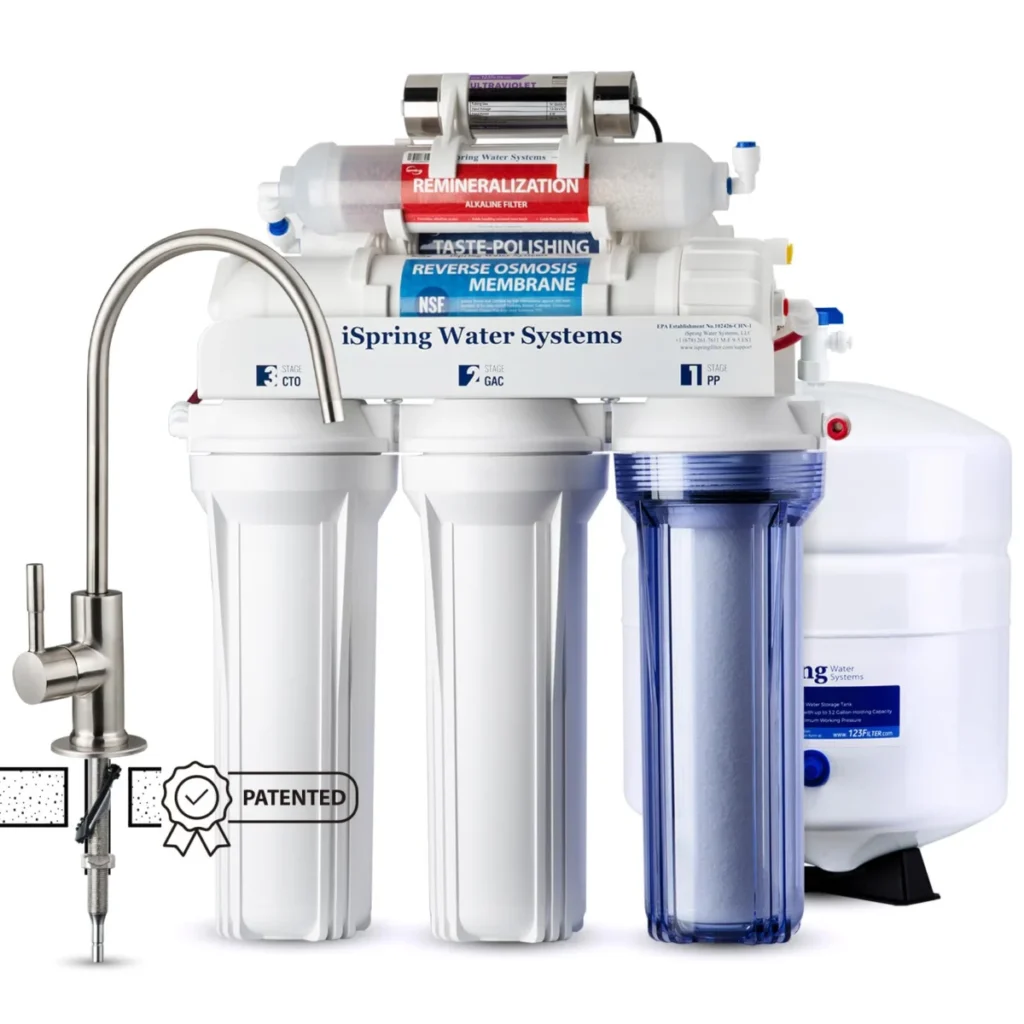
Earns Best with UV Stage because it pairs NSF/ANSI 58 and 372 certification with a 7-stage chain that adds alkaline remineralization and an LED UV stage for well water households.
What matters in daily use
The RCC7AK-UV layers seven stages: sediment and carbon ahead of the RO membrane, then alkaline remineralization and an 11W LED UV stage that activates only when water flows. NSF/ANSI 58 covers the RO system and NSF/ANSI 372 covers lead-free materials, so the certification applies to the whole unit rather than one cartridge. For a household on a private well, that UV stage adds a disinfection step the iSpring RCC7AK-BN does not have.
The tradeoff is power: this is the only iSpring here with a corded electric connection, where the RCC7AK-BN needs no power. The 75 GPD rating and 75 gallon filter life are modest next to the Home Master TMAFC-ERP Artesian at 2,000 gallons, so a busy kitchen will reach the change interval sooner and should budget for cartridges more often. The alkaline stage addresses the flat taste plain RO water can have, and the top-mounted faucet design keeps installation a DIY job.
Specifications
| Type | Reverse osmosis system |
|---|---|
| Certifications | NSF/ANSI 58, NSF/ANSI 372 |
| Reduces | Lead, Fluoride, Mercury, Copper (named in listing) |
| Filter life | 75 gallons |
| Stages | 7 stages |
| Installation | DIY install |
Pros
- UV stage adds disinfection for well water
- Whole-system NSF/ANSI 58 and 372 certification
- Alkaline stage restores minerals and pH
- Top-mounted faucet installs from above the counter
Cons
- Needs a power outlet under the sink
- Shorter 75 gallon filter life than the 2,000 gallon Home Master TMAFC-ERP Artesian
- 75 GPD is low for large households
Best Budget Starter Kit
Express Water RO5DX
- Reverse osmosis system
- NSF certified
- 50 GPD
- Chlorine, Lead, PFAS
- Plumber recommended
Best for: First-time RO buyers on a tight budget
Skip if: Choose the iSpring RCC7-BN instead if you want a documented NSF/ANSI 58 certification and DIY install.
Price range: Budget
Check price on AmazonPaid link. We may earn a commission.
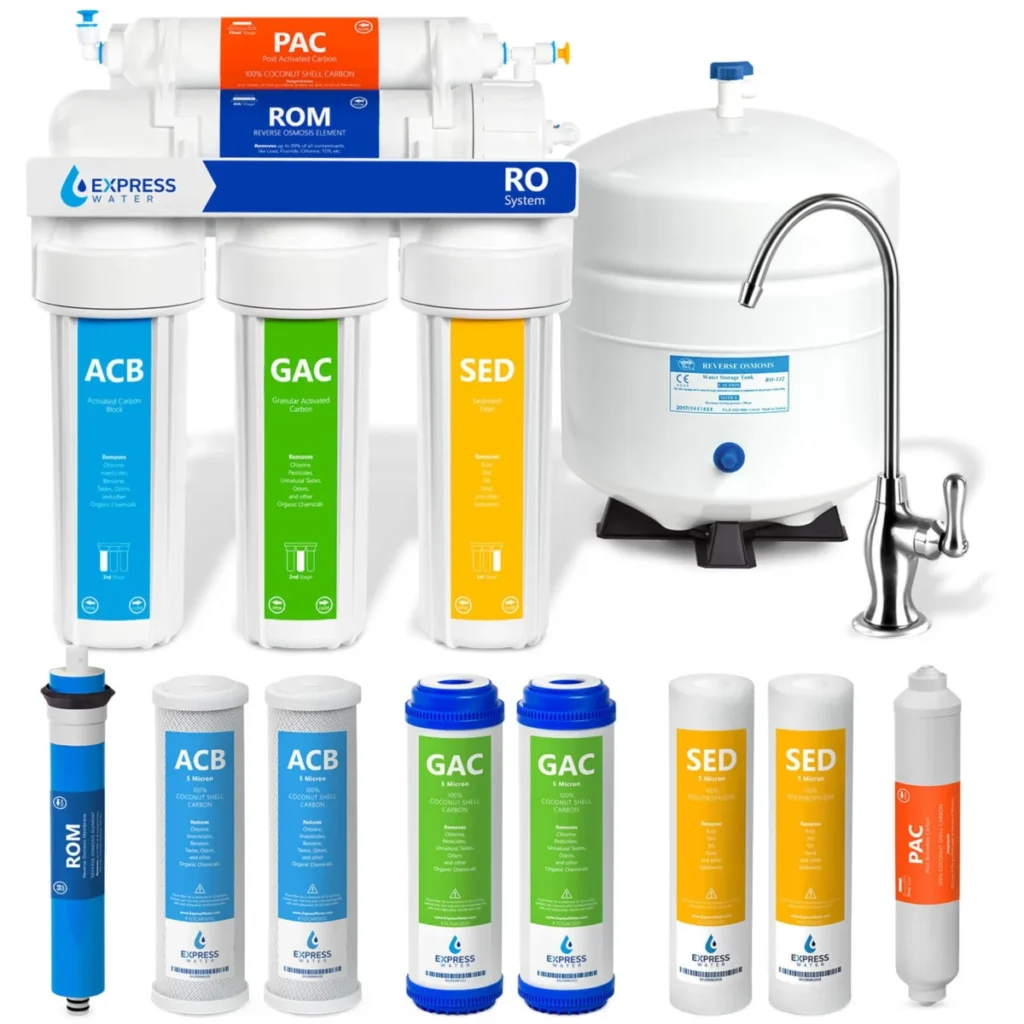
Takes Best Budget Starter Kit because it bundles an extra filter set and a leak detector with a 5-stage, 50 GPD system, giving first-time RO buyers spare cartridges from day one.
What matters in daily use
The RO5DX is a 5-stage under sink system rated at 50 GPD, the lowest flow in this group, so it suits a household drawing drinking water a few times a day rather than filling pitchers constantly. The listing names chlorine, lead, PFAS, fluoride, microplastics, arsenic and mercury among the contaminants it targets, and the package includes a second filter set plus a leak detector, which lowers the cost of the first year of ownership.
Two details matter before buying. The listing describes the unit as tankless while the specifications also list a 4 gallon capacity and a steel tank, so confirm the configuration with the seller. Installation is listed as plumber recommended, unlike the DIY iSpring systems, which adds a labor cost that narrows the budget advantage. The Frizzlife PD600-TAM3 costs more but delivers 600 GPD and a 2:1 pure to drain ratio.
Specifications
| Type | Reverse osmosis system |
|---|---|
| Certifications | NSF certified (per listing; standard not stated) |
| Reduces | Chlorine, Lead, PFAS, Fluoride, Microplastics, Arsenic |
| Flow rate | 50 GPD |
| Stages | 5 stages |
| Tank | Tankless |
| Installation | Plumber recommended |
Pros
- Spare filter set included from the start
- Leak detector bundled with the system
- Broad contaminant list for the price
- Compact footprint for tight cabinets
Cons
- 50 GPD is the slowest flow in this group
- Plumber recommended installation adds cost
- Tankless and tank descriptions conflict in the listing
Best Tankless for Small Cabinets
Frizzlife PD600-TAM3
- Reverse osmosis system
- NSF/ANSI 42, NSF/ANSI
- 600 gallons
- 600 GPD
- PFAS
Best for: Renters and small kitchens without tank space
Skip if: Pick the Frizzlife PD800-TAM4 if your household needs 800 GPD and longer filter intervals.
Price range: Mid-range
Check price on AmazonPaid link. We may earn a commission.
Wins Best Tankless for Small Cabinets because the 600 GPD tankless design frees under-sink floor space, carries NSF/ANSI 42, 53, 58 and 372, and adds alkaline remineralization.
What matters in daily use
The PD600-TAM3 produces 600 GPD from a tankless body measuring 14.7 by 5.3 by 15.5 inches, so it fits where a pressure tank would not and serves a family that fills glasses and pitchers back to back. Four certifications cover the system: NSF/ANSI 42 for taste and odor, 53 for health effects, 58 for reverse osmosis and 372 for lead-free materials. The 2:1 pure to drain ratio sends one cup to the drain for every two of drinking water, well ahead of older RO designs.
The tankless build needs a corded electric connection, and the internal pump is a part that can fail where a tank system has none. The 600 gallon filter life is shorter than the 800 gallons of the Frizzlife PD800-TAM4, so a heavy household should weigh the higher-capacity model. The third-stage alkaline filter counters the flat taste RO water often has, and the smart display reports real-time TDS and remaining filter life.
Specifications
| Type | Reverse osmosis system |
|---|---|
| Certifications | NSF/ANSI 42, NSF/ANSI 53, NSF/ANSI 58, NSF/ANSI 372 |
| Reduces | PFAS (named in listing) |
| Filter life | 600 gallons |
| Flow rate | 600 GPD |
| Tank | Tankless |
| Wastewater ratio | 2:1 pure |
| Remineralization | Yes |
Pros
- Tankless body saves under-sink floor space
- Four NSF/ANSI certifications cover the system
- 2:1 pure to drain ratio cuts wastewater
- Real-time TDS readout tracks water quality
Cons
- Requires a power outlet for the internal pump
- 600 gallon filter life is shorter than the PD800-TAM4
- Tankless pump is an added part that can fail
Best for High Demand
Frizzlife PD800-TAM4
- Reverse osmosis system
- NSF/ANSI 372
- 800 gallons
- 0.56 GPM
- Chlorine, Lead, Fluoride

Best for: Large families filling pitchers and fridge lines
Skip if: Your household uses only a few gallons a day and a 75 GPD tank system like the iSpring RCC7-BN would do.
Price range: Premium
Check price on AmazonPaid link. We may earn a commission.
The Frizzlife PD800-TAM4 earns Best for High Demand because its 800 GPD output and 2:1 pure-to-drain ratio suit big households that fill pitchers and fridge lines all day.
What matters in daily use
At 800 gallons per day, the PD800-TAM4 produces more water than any other pick here, and the tested flow of 0.56 GPM means a glass fills in seconds rather than the slow trickle of a 75 GPD tank system. The 2:1 pure-to-drain ratio sends one cup to the drain for every two of drinking water, which matters for a family drawing several gallons daily.
The tankless body measures 14.5 by 5.3 by 15.5 inches, so it frees the cabinet floor space a storage tank occupies, and the alkaline TAM4 stage adds minerals back after the membrane. The tradeoff is certification scope: the listing names NSF/ANSI 372 for lead-free materials only, narrower than the four standards the Frizzlife PD600-TAM3 lists, so check the performance data sheet for the contaminants you care about.
Specifications
| Type | Reverse osmosis system |
|---|---|
| Certifications | NSF/ANSI 372 |
| Reduces | Chlorine, Lead, Fluoride (named in listing) |
| Filter life | 800 gallons |
| Flow rate | 0.56 GPM |
| Stages | 9 stages |
| Tank | Tankless |
| Wastewater ratio | 2:1 pure |
| Remineralization | Yes |
Pros
- 800 GPD output serves large families and fridge lines
- 2:1 pure-to-drain ratio wastes less than conventional RO
- Tankless body frees cabinet floor space
- Panel readout lets you track filter life without pulling the cartridges
Cons
- Listing names only NSF/ANSI 372, not 53 or 58
- Needs an electrical outlet under the sink
- Higher capacity than small households need
Which certifications should a Reverse Osmosis System have?
NSF/ANSI 58 is the standard that covers a Reverse Osmosis System as a whole, including the membrane's ability to reduce dissolved solids and the claims tied to it. NSF/ANSI 42 covers chlorine taste and odor, NSF/ANSI 53 covers health-effect claims such as lead and cysts, NSF/ANSI 372 confirms lead-free wetted materials, and NSF/ANSI 401 covers selected emerging contaminants. A listing that names only 372 is a materials claim, not a performance claim.
Read the wording carefully. "Certified to NSF/ANSI 58" means an independent body verified the system; "tested to" or "meets NSF standards" is a manufacturer statement and carries less weight. Before buying, open the performance data sheet and confirm the specific contaminant you care about, such as fluoride, lead or PFAS, appears with a certified reduction claim. Your local water quality report, or a lab test for a private well, tells you which of those claims actually matter at your tap.
How much water does a Reverse Osmosis System waste?
A wastewater ratio states how much water goes to the drain for each unit of treated water. A 1:1 ratio sends one gallon to the drain per gallon produced, a 2:1 ratio sends one per two, and older conventional systems often ran closer to 3:1 or 4:1. The Home Master TMAFC-ERP lists 1:1, and both Frizzlife units list 2:1 pure to drain, so the Frizzlife models send less water down the drain per gallon made.
The drain line matters as much as the number. Every under sink system needs a drain connection, usually through an air gap or a saddle on the sink drain pipe, and a septic system absorbs that extra volume along with everything else the household sends it. Renters who cannot tap the drain should look at countertop reverse osmosis instead, which needs no plumbing at all.
Decision guide
Tank or Tankless, iSpring or Frizzlife: Which RO System Fits Your Sink?
The iSpring RCC7-BN and the Frizzlife PD600-TAM3 sit at opposite ends of the same decision. The iSpring uses a storage tank and a 75 GPD rating, needs no power and lists NSF/ANSI 58, which suits a household that wants a low-cost, low-maintenance system and has cabinet room to spare. The Frizzlife produces 600 GPD on demand, holds no tank and lists four standards, but it needs an outlet and costs more.
The Home Master TMAFC-ERP goes further on both fronts, with two-pass remineralization and a 2,000 gallon filter life, and its 1:1 waste ratio beats the conventional drain rates typical of tank-based designs.
Our process
How we chose our Reverse Osmosis System picks
Systems were shortlisted from currently sold under sink and tankless reverse osmosis units, then ranked on published specifications: which NSF/ANSI standards the system lists, flow rate in GPD, wastewater ratio, filter life in gallons, stage count, remineralization, footprint and installation requirements. Buyer ratings were weighed as a signal of reliability, and value was judged on filter life and cartridge count rather than sticker price alone. No unit was tested or installed for this guide.
Common questions
Frequently asked questions
Does reverse osmosis remove fluoride and lead?
Yes, an RO membrane reduces fluoride and lead when the system is certified for them. The iSpring RCC7AK-BN and RCC7AK-UV name both, and the Frizzlife PD800-TAM4 names fluoride and lead. Confirm the claim on the manufacturer performance data sheet and check your local water report for the levels at your tap.
Do I need a plumber to install an under sink RO system?
Usually not. The iSpring and Frizzlife units are designed for DIY installation with quick-connect fittings, and the iSpring models use a top-mounted faucet fastener so you tighten it from above the counter. You will still need a faucet hole, a cold water line connection and a drain saddle, so a plumber helps if your sink lacks those.
How much water does a Reverse Osmosis System waste?
It depends on the ratio. A 1:1 system such as the Home Master TMAFC-ERP sends one gallon to the drain per gallon produced, while the Frizzlife PD600-TAM3 and PD800-TAM4 list 2:1, meaning one gallon wasted per two produced. Older conventional designs waste considerably more, so the ratio is worth checking.
Is reverse osmosis the right choice if my water only tastes of chlorine?
Probably not. Chlorine taste and odor are handled by activated carbon, so a pitcher or under sink carbon filter costs less, wastes no water and needs no drain connection. Choose RO when your water report or a lab test shows fluoride, arsenic, lead or high dissolved solids that carbon alone will not reduce.
Can a Reverse Osmosis System run to my refrigerator line?
Yes, if the system has a tee and enough pressure to push water to the fridge. Tank-based units such as the iSpring RCC7-BN store water under pressure, and tankless units such as the Frizzlife PD800-TAM4 use a booster pump, so both can feed a refrigerator line. Route the tubing before installation and check the fridge's inlet fitting.
Bottom line
Final verdict
- Most homeowners: Home Master TMAFC-ERP Artesian. The 2,000 gallon filter life, 1:1 waste ratio and two-pass remineralization make it the least fussy long-term choice, provided you have cabinet room for the tank.
- Small kitchens and renters with an outlet: Frizzlife PD600-TAM3. The tankless PD600-TAM3 frees the cabinet floor and lists NSF/ANSI 42, 53, 58 and 372, though it needs power and produces more wastewater per gallon than the Home Master.
- Budget buyers who want whole-system certification: iSpring RCC7-BN. The RCC7-BN lists NSF/ANSI 58 on the complete system at the lowest outlay here, but its 75 gallon filter life means more frequent cartridge changes.
- Well water households: iSpring RCC7AK-UV. The RCC7AK-UV adds a UV stage and NSF/ANSI 372 to the iSpring platform, but test the well first and add sediment or iron pre-treatment so the membrane is not fouled.
Final decision
Compare two finalists
Choose the two picks you narrowed down to see who each one suits and the main reason to skip it.
Keep reading
Which APEC Reverse Osmosis System Fits Your Water? A Model-by-Model Look
See what an APEC reverse osmosis system reduces, how much under sink room the tank needs, and which households should choose a…

ISpring Water System Review: Who It Suits and Who Should Skip It
ISpring water system reviews explained: what the WGB32B's three stages reduce, its 15 GPM flow and 100,000-gallon filter life, and why it…
Home Master Reverse Osmosis Review: Stages, Remineralization and Fit
Is the Home Master Reverse Osmosis worth it? Our review weighs contaminant reduction, stages and tank, its pros and cons, and who…