Best Water Filter System for Home: Under Sink, Whole House or No Install
Published October 29, 2026
As an Amazon Associate we earn from qualifying purchases. This never changes which products we recommend.
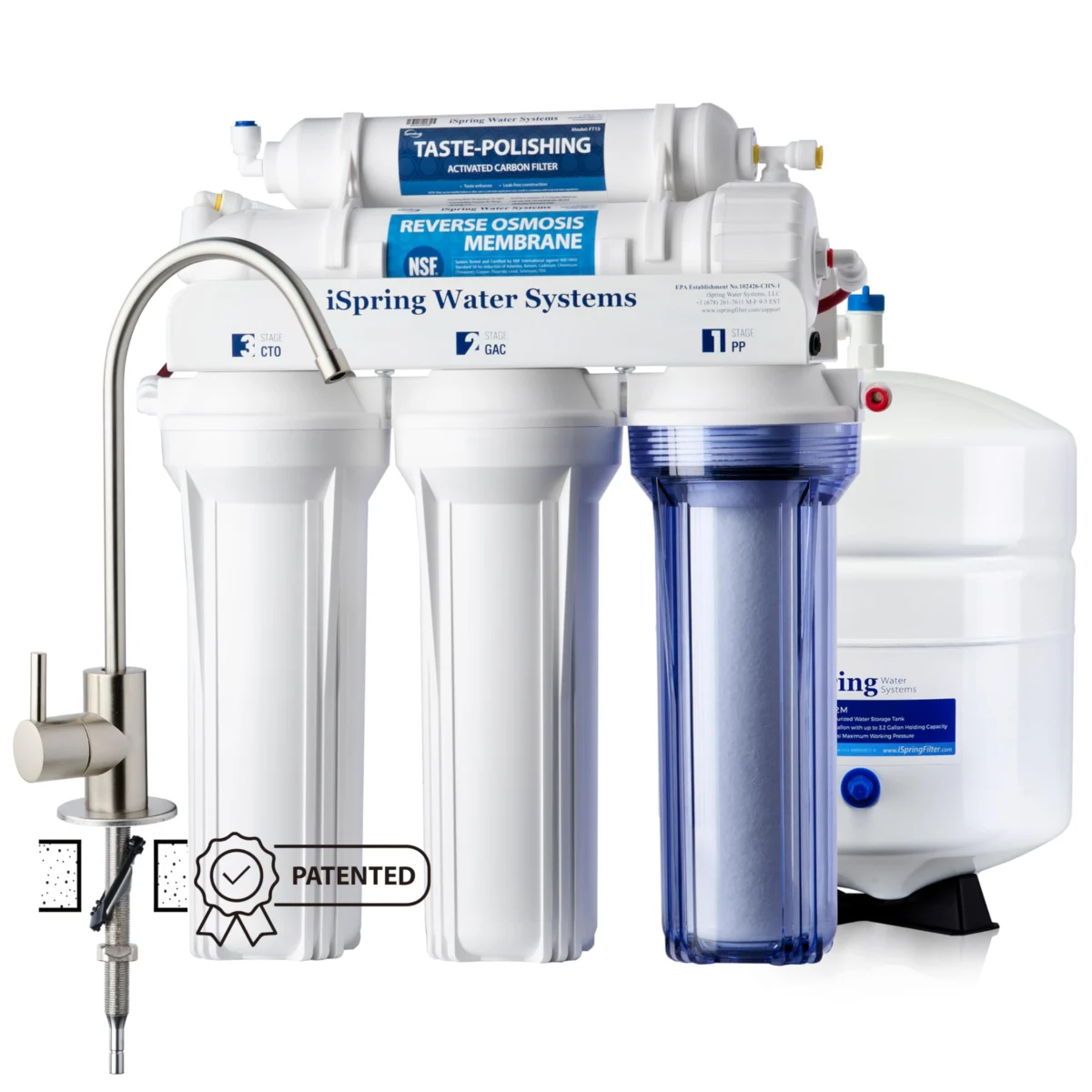
The closest match to a single system for most homes is the iSpring RCC7-BN, a 5-stage under sink reverse osmosis unit certified to NSF/ANSI 58 that names chlorine, lead, PFAS and fluoride among its reductions and runs at 75 GPD. It fits under a kitchen cabinet, needs no power, and serves drinking water at one tap.
The real decision is not which filter is best in the abstract but which one solves your water. A whole house carbon system protects every tap and appliance but leaves dissolved fluoride and lead alone; a gravity or countertop unit needs no plumbing but filters slowly. Cartridge cost, wastewater and installation limits separate the picks more than the purchase price does.
 Best OveralliSpring RCC7-BNHouseholds that want certified drinking water at one tap8.4/10
 Best for TasteiSpring RCC7AK-BNBuyers who dislike flat-tasting RO water8.4/10
 Most StagesiSpring RCC7AK-UVHomes wanting an added UV stage and lead-free certification8.4/10
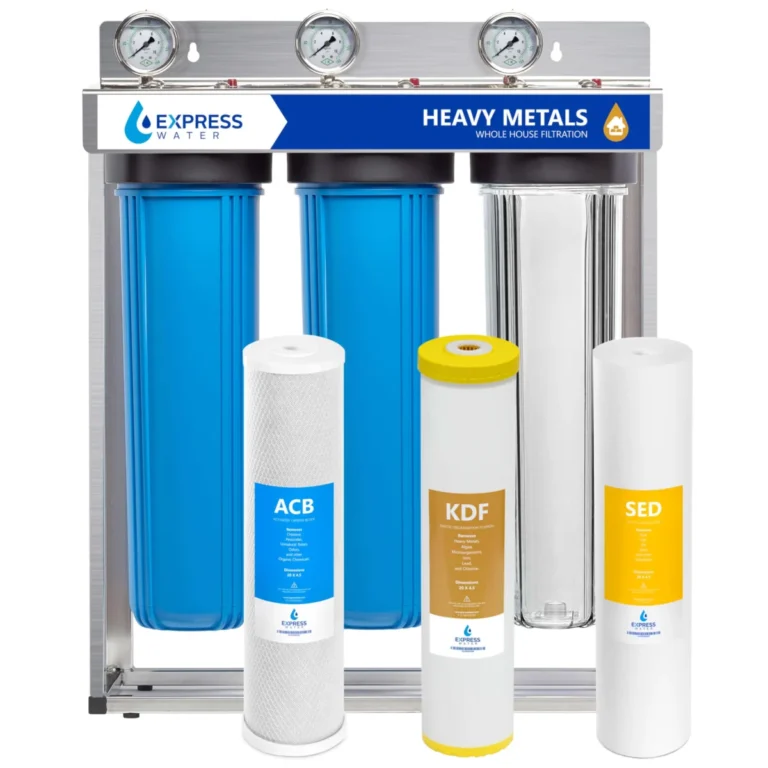
 Best Whole HouseiSpring WGB32BHouses treating chlorine and sediment at the point of entry8.4/10
Table of contents9 sections · tap to expand
At a glance
Our top picks compared
| Product | Best for | Type and size | Key features | Where to buy |
|---|---|---|---|---|
| 1. iSpring RCC7-BN Best Overall 8.4/10 | Households that want certified drinking water at one tap | Reverse osmosis system, 75 gallons, 75 GPD | NSF certifiedLead reductionPFAS reductionFluoride | Budget Check price |
| 2. iSpring RCC7AK-BN Best for Taste 8.4/10 | Buyers who dislike flat-tasting RO water | Reverse osmosis system, 75 gallons, 75 GPD | NSF certifiedLead reductionPFAS reductionFluoride | Budget Check price |
| 3. iSpring RCC7AK-UV Most Stages 8.4/10 | Homes wanting an added UV stage and lead-free certification | Reverse osmosis system, 75 gallons | NSF certifiedLead reductionFluorideInstallation | Mid-range Check price |
| 4. iSpring WGB32B Best Whole House 8.4/10 | Houses treating chlorine and sediment at the point of entry | Whole house filter, 100,000 gallons, 15 GPM | InstallationFilter life listed | Premium Check price |
 5. iSpring HB28B Best Value Housing 8.3/10 | DIY owners building a sediment stage on a budget | Whole house filter, 20 gallons | Filter life listed | Budget Check price |
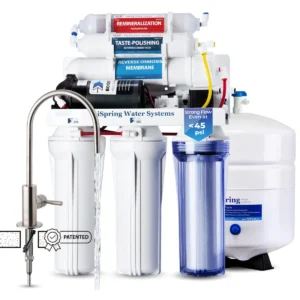 6. iSpring RCC7P-AK Best for Low Pressure 8.3/10 | Homes with weak water pressure feeding an RO unit | Reverse osmosis system, 75 gallons | Lead reductionPFAS reductionFluorideInstallation | Mid-range Check price |
 7. Royal Berkey Best No-Install Option 8.1/10 | Renters and off-grid homes with no plumbing access | Gravity filter, 6,000 gallons | Filter life listed | Premium Check price |
Score: our 0-10 rating from fit for this use, buyer ratings, review volume, completeness of the product details and availability. It is not a lab test.
Buying advice
How to choose a home water filter system
Start with the contaminant, not the product
The contaminant you need to reduce decides the filter type before any model comparison. Carbon pitchers and carbon block cartridges address chlorine taste and odor; a reverse osmosis membrane is what rejects dissolved fluoride, lead and PFAS; a sediment cartridge only stops rust and grit. Read your consumer confidence report or, on a private well, a certified lab test, then look for a system whose certification names that contaminant.
Check whether the certification covers the whole system
A certification to NSF/ANSI 58 applies to the complete reverse osmosis system, while a claim that a carbon block was tested to meet NSF/ANSI standards describes one component. That difference changes how much weight the reduction figures deserve. Ask which standard, which contaminants and whether the certificate names the system or the cartridge, because a whole unit listing is stronger evidence than a material claim.
Add up filter life and cartridge cost, not just the price
A cheaper system with short-lived proprietary cartridges can cost more over five years than a pricier unit with widely available replacements. Compare rated filter life in gallons or months, how many cartridges a year the schedule implies, and whether the brand sells compatible cartridges. Reverse osmosis adds a membrane replacement every few years, and whole house systems with 20 inch cartridges change the math again.
Match flow rate and installation to your plumbing
Whole house systems are rated in GPM and must not starve showers, while reverse osmosis is rated in GPD and fills a storage tank slowly. Under sink units need a cold water line and cabinet space; whole house units need a 1 inch connection and a plumber or confident DIY work. Renters should stay with countertop or gravity options that leave the plumbing untouched.
Our picks
The best home water filter systems, ranked by what they actually reduce
Best Overall
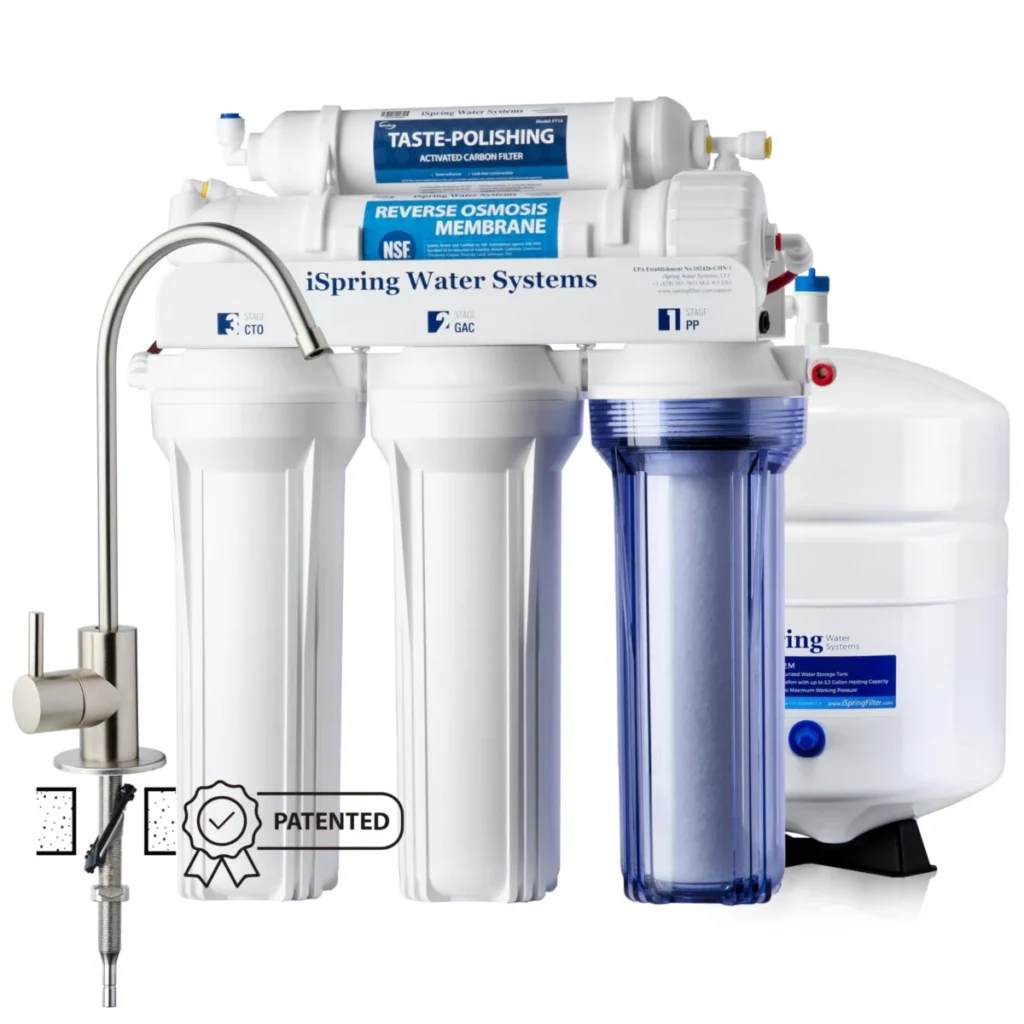
iSpring RCC7-BN
- Reverse osmosis system
- NSF/ANSI 58
- 75 gallons
- 75 GPD
- Chlorine, Lead, PFAS
- DIY install
Best for: Households that want certified drinking water at one tap
Skip if: You want remineralized taste or cannot install plumbing under the sink.
Price range: Budget
Check price on AmazonPaid link. We may earn a commission.
Earns Best Overall because NSF/ANSI 58 certification covers the whole reverse osmosis system, and the 5 stages reduce lead, PFAS and fluoride at one under sink tap.
What matters in daily use
The RCC7-BN is a 5-stage reverse osmosis system rated at 75 GPD, so it fills a storage tank slowly through the day rather than delivering a fast pour. That is normal for tank-based RO and fine for drinking and cooking water. NSF/ANSI 58 certification applies to the system, and the listing names chlorine, lead, PFAS and fluoride among the contaminants it reduces.
Installation is DIY, needs a cold water line and under sink space, and the 75 gallon filter life figure is the rated capacity stated for the system. Renters who cannot plumb in should look at the Royal Berkey instead.
Specifications
| Type | Reverse osmosis system |
|---|---|
| Certifications | NSF/ANSI 58 |
| Reduces | Chlorine, Lead, PFAS, Fluoride (named in listing) |
| Filter life | 75 gallons |
| Flow rate | 75 GPD |
| Stages | 5 stages |
| Installation | DIY install |
Pros
- Whole-system NSF/ANSI 58 certification
- Reduces lead, PFAS and fluoride at one tap
- No electricity required to operate
- Transparent first-stage housing shows sediment buildup
Cons
- RO wastes water and strips minerals
- Tank-based 75 GPD output is slow to refill
- Needs a cold line and cabinet space
Best for Taste
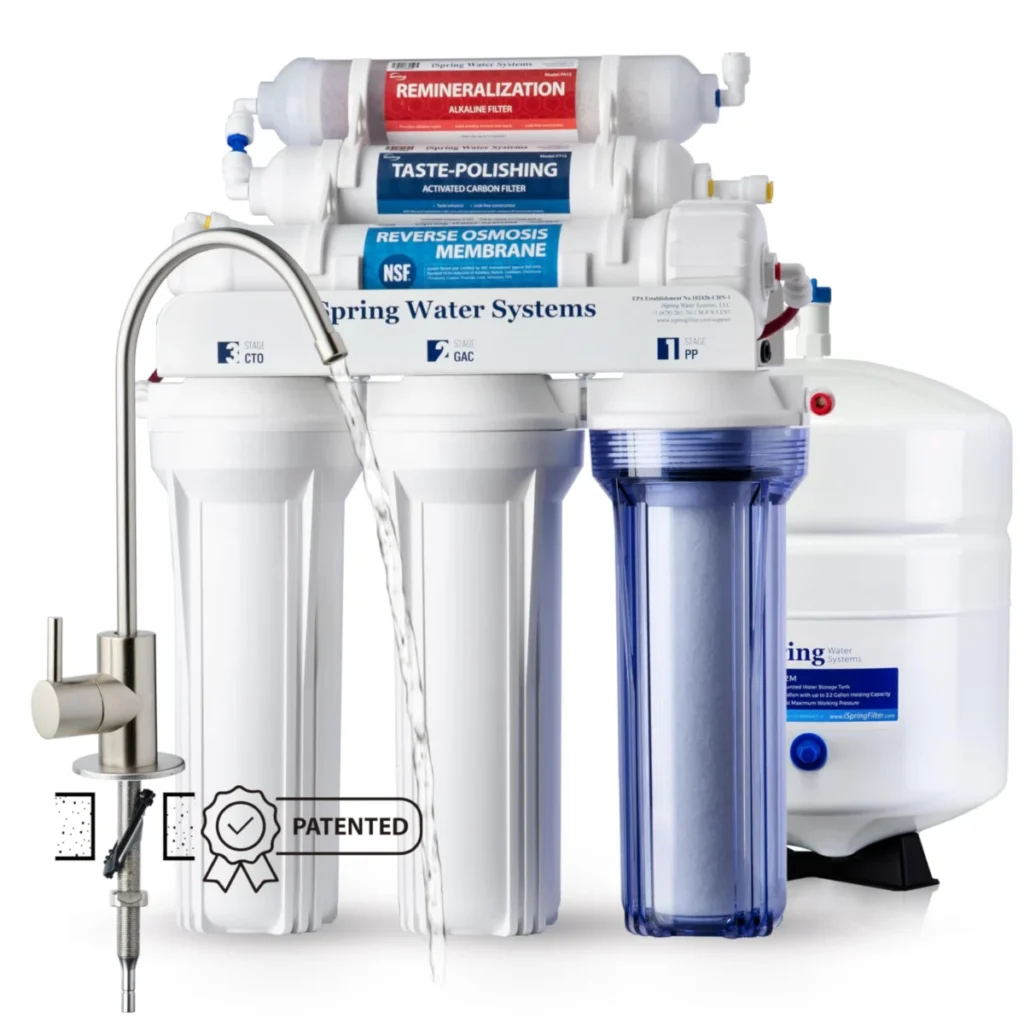
iSpring RCC7AK-BN
- Reverse osmosis system
- NSF/ANSI 58
- 75 gallons
- 75 GPD
- Chlorine, Lead, PFAS
- DIY install
Best for: Buyers who dislike flat-tasting RO water
Skip if: You want UV treatment or the simplest, lowest-stage RO setup.
Price range: Budget
Check price on AmazonPaid link. We may earn a commission.
Takes Best for Taste because the sixth alkaline stage restores minerals that standard RO removes, addressing the flat flavor many buyers notice in reverse osmosis water.
What matters in daily use
Where the RCC7-BN stops at five stages, the RCC7AK-BN adds a mineral AK stage, and that is the whole point of this pick. Reverse osmosis removes dissolved solids, which is why it reduces fluoride and lead, but it also leaves water tasting thin. The alkaline stage is designed to bring back a balanced pH and some minerals, and the listing names copper among the contaminants reduced.
Output is 75 GPD with a 75 gallon rated filter life, the same pace as the other iSpring RO units here, so the difference is taste rather than speed. It is NSF/ANSI 58 certified and installs DIY under the sink. Buyers who want an added UV stage should compare the iSpring RCC7AK-UV, which keeps remineralization and adds disinfection.
Specifications
| Type | Reverse osmosis system |
|---|---|
| Certifications | NSF/ANSI 58 |
| Reduces | Chlorine, Lead, PFAS, Fluoride, Copper (named in listing) |
| Filter life | 75 gallons |
| Flow rate | 75 GPD |
| Stages | 6 stages |
| Installation | DIY install |
| Remineralization | Yes |
Pros
- Alkaline stage improves mineral balance and taste
- Same NSF/ANSI 58 certification as the base model
- Top-mounted faucet fastener simplifies install
- Reduces a broad list of dissolved contaminants
Cons
- Still produces RO wastewater
- No UV stage for microbial protection
- Slower tank refill at 75 GPD
Most Stages
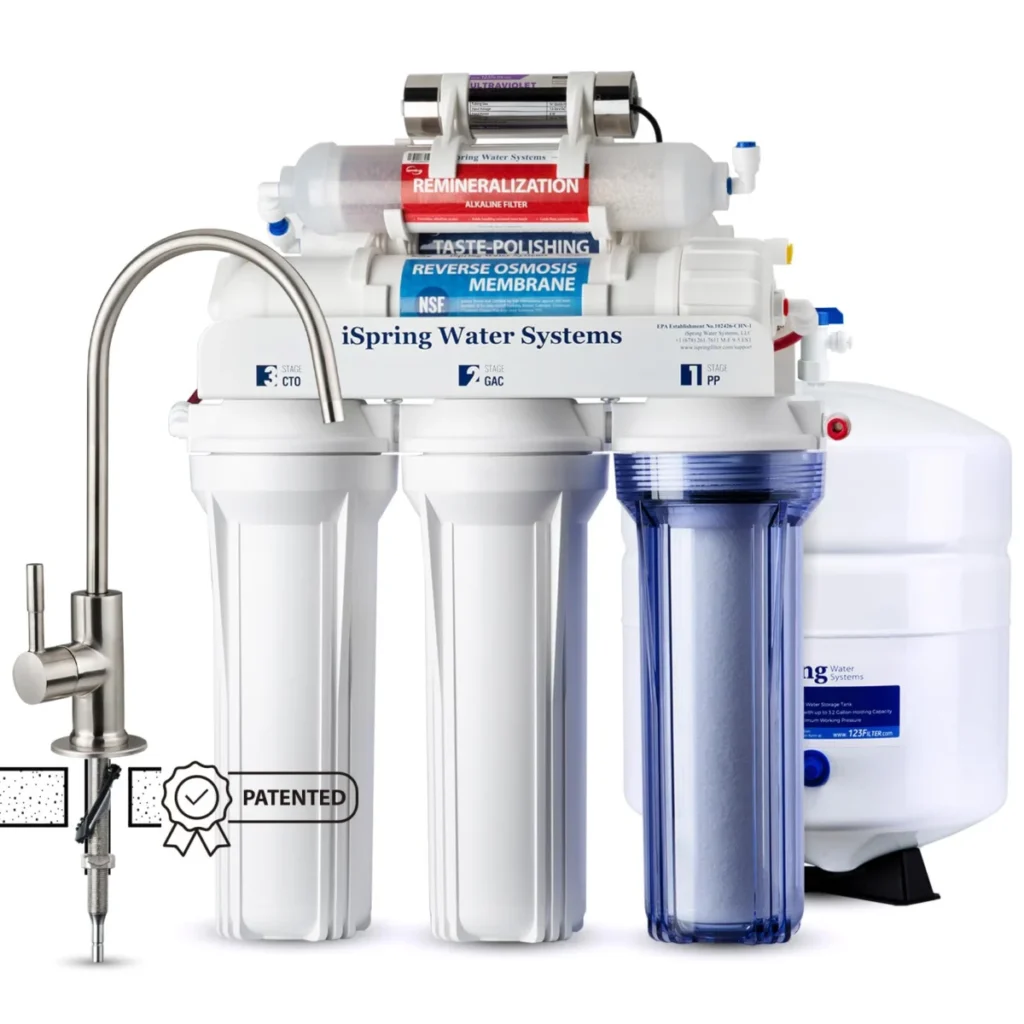
iSpring RCC7AK-UV
- Reverse osmosis system
- NSF/ANSI 58, NSF/ANSI
- 75 gallons
- Lead, Fluoride, Mercury
- DIY install
Best for: Homes wanting an added UV stage and lead-free certification
Skip if: There is no electrical outlet under your sink.
Price range: Mid-range
Check price on AmazonPaid link. We may earn a commission.
Wins Most Stages because seven filtration stages add LED UV treatment and NSF/ANSI 372 lead-free certification on top of remineralization.
What matters in daily use
This is the most layered of the three iSpring RO picks: seven stages combine reverse osmosis, carbon block, an alkaline mineral stage and an 11W LED UV stage. The UV light is flow-activated and mercury-free, so it runs only when water moves. NSF/ANSI 58 covers filtration performance and NSF/ANSI 372 covers lead-free materials, which matters for the wetted parts and faucet.
The catch is that the UV stage needs a corded electric connection, unlike the RCC7-BN and RCC7AK-BN, so you need an outlet under the sink. Output is 75 GPD with a 75 gallon rated filter life, and the unit measures 15 by 8 by 18 inches. Buyers who dislike flat RO water but want no power draw should choose the iSpring RCC7AK-BN instead.
Specifications
| Type | Reverse osmosis system |
|---|---|
| Certifications | NSF/ANSI 58, NSF/ANSI 372 |
| Reduces | Lead, Fluoride, Mercury, Copper (named in listing) |
| Filter life | 75 gallons |
| Stages | 7 stages |
| Installation | DIY install |
Pros
- Most filtration stages of the three RO picks
- UV stage adds a disinfection step
- NSF/ANSI 372 lead-free certification
- Remineralization keeps taste balanced
Cons
- Requires a corded electric outlet
- RO wastewater still applies
- More stages mean more cartridges to track
Best Whole House
iSpring WGB32B
- Whole house filter
- 100,000 gallons
- 15 GPM
- Chlorine, Pesticides
- DIY install

Best for: Houses treating chlorine and sediment at the point of entry
Skip if: You need dissolved contaminant reduction such as fluoride or arsenic at the tap.
Price range: Premium
Check price on AmazonPaid link. We may earn a commission.
The iSpring WGB32B earns Best Whole House because it treats chlorine and sediment at the point of entry, so every tap, shower and appliance sees filtered water at up to 15 GPM.
What matters in daily use
Three stages do the work here: a 5 micron sediment cartridge followed by two coconut shell carbon block filters, all in 20 x 4.5 inch housings with 1 inch NPT ports. The 15 GPM ceiling is the number that matters for a house, because it is sized to feed several fixtures at once rather than one drinking tap. The 100,000 gallon rating spreads cartridge changes over years, not months.
The tradeoff is scope. This is a point-of-entry filter for chlorine, sediment, tastes, odors and herbicides; it keeps minerals in the water and does not lower TDS, so it is not a substitute for the iSpring RCC7-BN if dissolved contaminants such as fluoride or arsenic are the concern. Many owners pair the two: whole house protection upstream, certified reverse osmosis at the kitchen tap.
Specifications
| Type | Whole house filter |
|---|---|
| Reduces | Chlorine, Pesticides, Sediment (named in listing) |
| Filter life | 100,000 gallons |
| Flow rate | 15 GPM |
| Connection | 1 in |
| Installation | DIY install |
Pros
- Protects every tap, shower and appliance at once
- 15 GPM flow suits simultaneous household demand
- 100,000 gallon rating means infrequent cartridge changes
- Standard 20 x 4.5 inch cartridges widen replacement options
Cons
- Does not reduce TDS, fluoride or dissolved metals
- Requires cutting into the main line and plumbing space
- No certification listed for the complete system
Best Value Housing
iSpring HB28B
- Whole house filter
- 20 gallons
- Sediment
Best for: DIY owners building a sediment stage on a budget
Skip if: You want a complete multi-stage system with cartridges chosen for you.
Price range: Budget
Check price on AmazonPaid link. We may earn a commission.
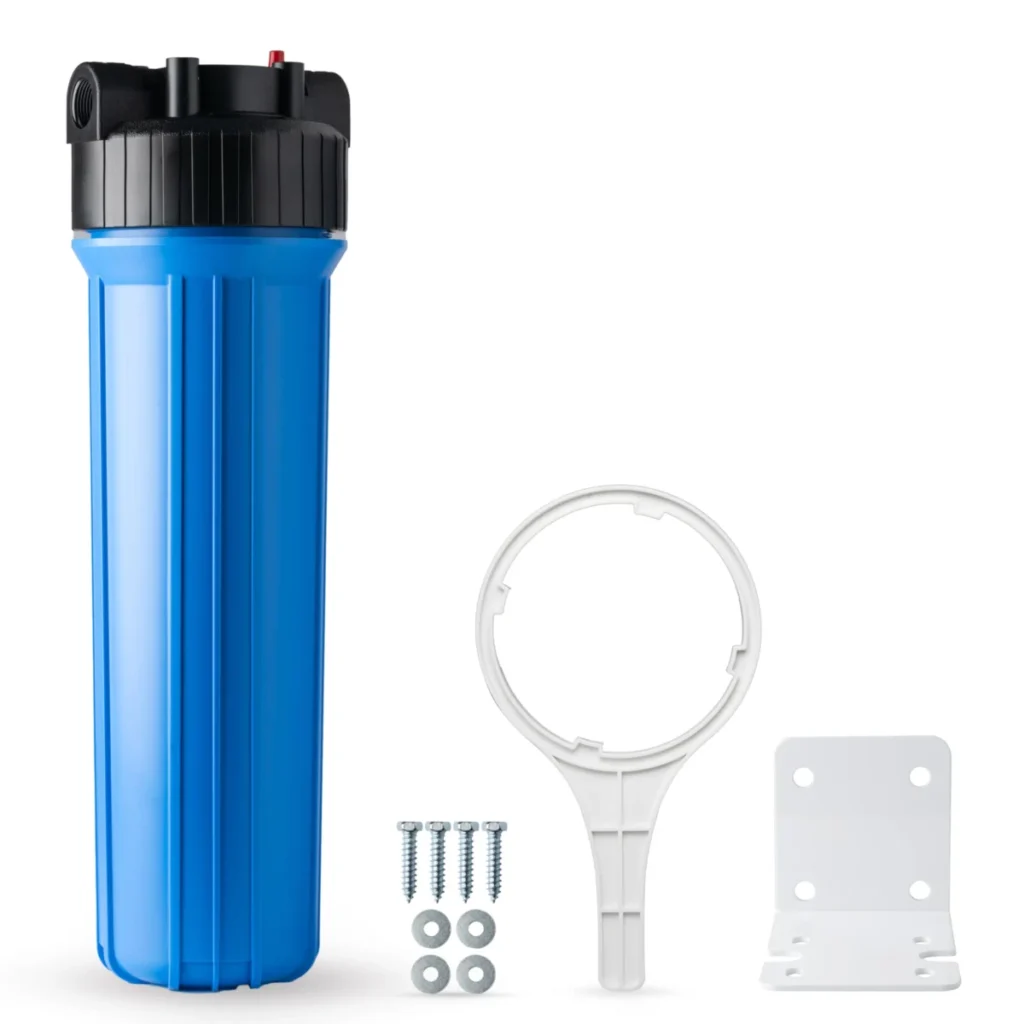
The iSpring HB28B takes Best Value Housing because it lets a DIY owner build a 20 x 4.5 inch sediment stage on the main line with 1 inch ports, a pressure release button and a wrench included.
What matters in daily use
This is a housing, not a complete filtration system: one reinforced polypropylene bowl with 1 inch NPT ports that accepts any standard 20 x 4.5 inch cartridge. That universality is the point. A homeowner can start with a sediment cartridge to catch rust and grit before the water heater and washing machine, then swap media later without buying new hardware. The pressure release button makes opening the bowl for changes safer and quicker.
Compared with the iSpring WGB32B, the HB28B is one stage rather than three, so it will not deliver the same chlorine reduction across the house. Treat it as a building block: stack two or three housings and you approach a multi-stage system, but you supply the cartridges and the plumbing layout. The published 20 gallon capacity figure should be read as listed rather than as a meaningful service life.
Specifications
| Type | Whole house filter |
|---|---|
| Reduces | Sediment (named in listing) |
| Filter life | 20 gallons |
| Connection | 1 in |
Pros
- Accepts any standard 20 x 4.5 inch cartridge
- Pressure release button simplifies safe cartridge changes
- Reinforced polypropylene resists chemicals and pressure
- Cheap way to add a first sediment stage
Cons
- Housing only; cartridges and plumbing sold separately
- Single stage cannot match three-stage chlorine reduction
- No certification listed for contaminant reduction
Best for Low Pressure
iSpring RCC7P-AK
- Reverse osmosis system
- 75 gallons
- Chlorine, Lead, PFAS
- DIY install
Best for: Homes with weak water pressure feeding an RO unit
Skip if: Your home already has strong water pressure and you want fewer electrical parts.
Price range: Mid-range
Check price on AmazonPaid link. We may earn a commission.
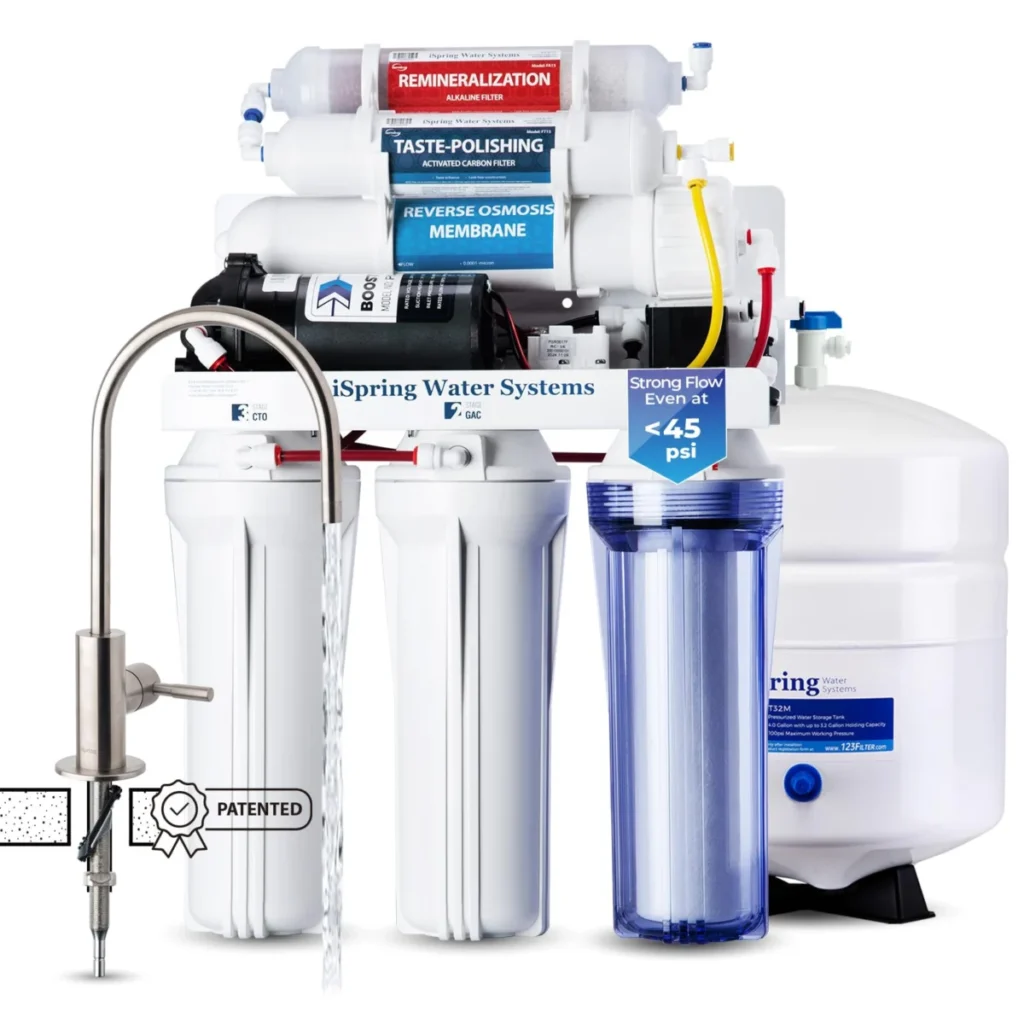
The iSpring RCC7P-AK earns Best for Low Pressure because its booster pump keeps a 6-stage reverse osmosis system producing reliably where household pressure is weak, while the alkaline stage restores minerals.
What matters in daily use
Reverse osmosis membranes need adequate feed pressure to push water through and to keep wastewater in check. The RCC7P-AK adds a 100-240V booster pump, so homes on a well, a top-floor apartment or a long service line can still run a 75 GPD system instead of watching it trickle. The sixth alkaline stage addresses the flat taste that standard RO water often has, and the transparent first housing shows when sediment is building up.
The cost of that pump is electricity and one more part to maintain, which is why the iSpring RCC7-BN remains the simpler pick for homes with normal pressure. The pump buys consistency rather than more daily capacity, so a household that already has strong pressure gains little from it. The system is a DIY install with quick-fit connections.
Specifications
| Type | Reverse osmosis system |
|---|---|
| Reduces | Chlorine, Lead, PFAS, Fluoride, Arsenic, Sediment (named in |
| Filter life | 75 gallons |
| Stages | 6 stages |
| Installation | DIY install |
| Remineralization | Yes |
Pros
- Booster pump sustains output on low household pressure
- Alkaline stage improves the taste of RO water
- 75 GPD matches the other iSpring RO systems here
- Transparent housing makes sediment buildup visible
Cons
- Pump needs a power outlet under the sink
- More components to service than a pump-free RO system
- No certification listed for the complete system
Best No-Install Option
Royal Berkey
- Gravity filter
- 6,000 gallons
Best for: Renters and off-grid homes with no plumbing access
Skip if: You want fast, on-demand flow or certified dissolved-solids removal from a plumbed system.
Price range: Premium
Check price on AmazonPaid link. We may earn a commission.
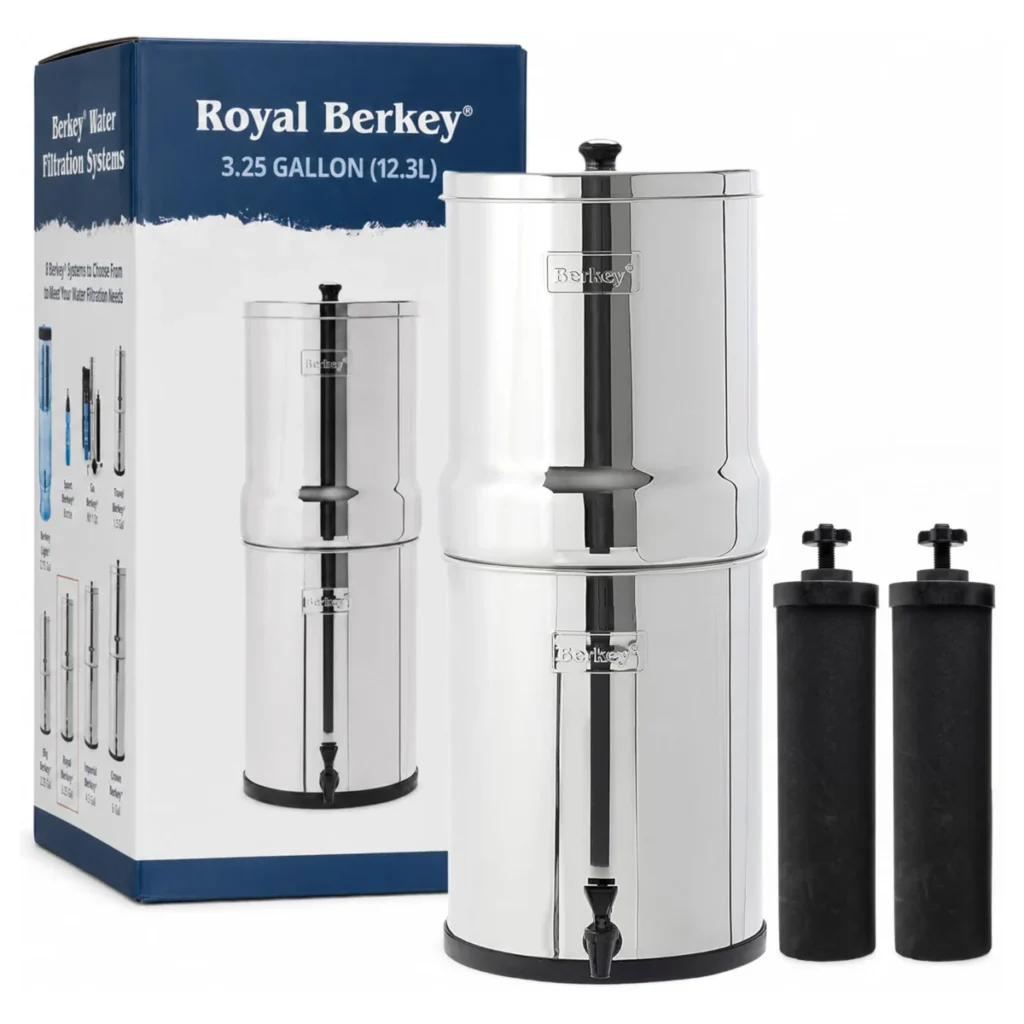
The Royal Berkey earns Best No-Install Option because it filters by gravity alone, needs no plumbing or electricity, and its two Black Berkey BB9-2 elements are rated for up to 6,000 gallons.
What matters in daily use
Gravity does the work here: the Royal Berkey sits freestanding on a countertop, so a renter or an off-grid household gets filtered water without touching a supply line or an outlet. The 3.25 gallon stainless steel upper and lower chambers hold a useful batch, and the two included Black Berkey BB9-2 elements are rated for up to 6,000 gallons per pair, which spreads replacement cost across years rather than months.
The tradeoff is speed and scope. Water moves only as fast as gravity pulls it through the proprietary media, so refills are a wait rather than a tap, and the system is not a reverse osmosis unit: buyers who want dissolved solids, fluoride or arsenic addressed at a certified level should look at the iSpring RCC7-BN, which is NSF/ANSI 58 certified. The Berkey's listing claims reduction of 250+ contaminant types, so ask for the third-party test reports before relying on that.
Specifications
| Type | Gravity filter |
|---|---|
| Filter life | 6,000 gallons |
| Material | Stainless steel |
Pros
- No plumbing, electricity or permanent installation needed
- 6,000 gallon element life keeps replacements infrequent
- Stainless steel chambers suit kitchens and off-grid setups
- Expandable to four elements for more output
Cons
- Gravity flow is slow compared with a faucet or RO tap
- Proprietary elements limit you to Berkey replacements
Which contaminants does each system actually reduce?
Activated carbon handles taste and odor problems: chlorine, chloramine where catalytic carbon is used, and many volatile organic compounds. Reverse osmosis goes further because the membrane rejects dissolved solids, which is why fluoride, arsenic, lead and PFAS reduction claims usually appear on RO systems certified to NSF/ANSI 58. Sediment filters and micron ratings only stop particles, so a 5 micron cartridge does nothing for dissolved lead.
Match the system to your water report rather than to a general promise. If your consumer confidence report lists chlorine and hardness, a carbon whole house unit plus a softener covers the house. If it lists lead service lines or you are on a private well with unknown chemistry, test first, then choose a system whose certification names that contaminant. No single filter type covers every case, and a softener is not a drinking water filter.
Certified or just tested: how to read a filter's claims
NSF/ANSI 42 covers aesthetic effects such as chlorine taste and odor. NSF/ANSI 53 covers health effects including lead and cysts, and PFOA and PFOS when the certificate lists them. NSF/ANSI 58 covers reverse osmosis systems, NSF/ANSI 401 covers emerging contaminants, and NSF/ANSI 372 confirms lead-free wetted materials. A listing that says a system is certified to NSF/ANSI 58 tells you the whole unit was evaluated, not just one cartridge.
The words tested to and certified to are not interchangeable. Ask for the manufacturer performance data sheet, check which standard and which contaminants it names, and compare that list with your own water report. Third-party testing by the maker is weaker evidence than certification by NSF, so treat marketing language about standards as a prompt to look up the certificate.
Decision guide
Which home water filter system fits your house?
The iSpring RCC7-BN and the iSpring RCC7AK-BN share the same 75 GPD rating and 5 versus 6 stage layout, so the choice comes down to taste. The RCC7AK-BN adds a remineralization stage that restores minerals and balances pH, which suits drinkers who find plain RO water flat. The RCC7-BN keeps the simpler stack and is the more direct match if you only want certified reduction at the tap.
The iSpring WGB32B and the iSpring HB28B are not substitutes. The WGB32B is a complete 3-stage point-of-entry system rated at 15 GPM with a 100,000 gallon capacity, built to strip chlorine and sediment from every tap. The HB28B is a single 20 inch housing with 1 inch NPT ports that takes any 20 x 4.5 inch cartridge, so it works as a sediment pre-filter or a budget starting point rather than a whole house treatment system.
Our process
How we chose our Water Filter System for Home picks
The shortlist was built from systems that publish a filter type, a stated reduction list and a certification or standard reference, then ranked on how completely those claims are documented. Reverse osmosis units certified to NSF/ANSI 58 with named contaminants scored above carbon-only systems, and whole house and gravity units were judged on the job they are designed for rather than against RO. Filter life, flow rate, installation demands and cartridge availability decided the order. No product was tested or installed.
Common questions
Frequently asked questions
Do home water filter systems remove fluoride and PFAS?
Reverse osmosis systems are the type that targets fluoride and PFAS, because the membrane rejects dissolved compounds that carbon alone lets through. Among the picks here, the iSpring reverse osmosis models name both in their reduction lists. Carbon pitchers and whole house carbon units are not built for fluoride, so check the performance data sheet before assuming coverage.
How often do I need to change the filter cartridge?
Follow the rated life rather than a fixed calendar: reverse osmosis cartridges here are rated at 75 gallons, the whole house system at 100,000 gallons, and the Black Berkey elements at 6,000 gallons per pair. Sediment and carbon stages usually need changing sooner than the RO membrane, so keep the schedule the manufacturer publishes.
Do I need a plumber to install an under sink water filter?
Not necessarily. The iSpring reverse osmosis systems are listed as DIY installs with quick-fitting connections and a top-mounted faucet fastener designed to be tightened from above the counter. You still need a cold water supply line, cabinet space and a hole for the faucet, so a plumber makes sense if you are unsure about cutting or tapping.
Is a whole house water filter worth it if I only want better-tasting drinking water?
Usually not, because a point-of-entry system treats every gallon in the house when you drink a small fraction of it. The iSpring WGB32B earns its place when chlorine, sediment or odor affects showers, laundry and appliances as well. If taste at the kitchen tap is the only goal, an under sink or countertop unit costs less to run.
Will a water filter system lower my water pressure?
A whole house filter can reduce pressure if the cartridge loads with sediment or the unit is undersized for the home. The iSpring WGB32B is rated up to 15 GPM through 1 inch ports, which is generous for most houses, but pressure drop grows as the cartridges near the end of their life. Under sink and gravity systems do not affect household pressure.
Bottom line
Final verdict
- Most households wanting certified drinking water at one tap: iSpring RCC7-BN. The RCC7-BN pairs NSF/ANSI 58 certification with named reductions for lead, PFAS and fluoride at 75 GPD, and it needs no power or plumber-grade work to fit under a cabinet.
- Buyers who want minerals and a rounder taste from reverse osmosis: iSpring RCC7AK-BN. The RCC7AK-BN adds a remineralization stage to the same 75 GPD platform, which is the reason to pay for it over the simpler RCC7-BN if flat-tasting RO water bothers you.
- Homes treating chlorine and sediment at every tap: iSpring WGB32B. The WGB32B is the only pick here built as a 3-stage point-of-entry system, rated at 15 GPM with a 100,000 gallon capacity, and it deliberately leaves dissolved minerals in the water.
- Renters and households with no plumbing access: Royal Berkey. The Royal Berkey filters by gravity from a freestanding stainless steel countertop unit with 6,000 gallons of element life per pair, so nothing is cut, tapped or connected.
Final decision
Compare two finalists
Choose the two picks you narrowed down to see who each one suits and the main reason to skip it.
Keep reading
Best Drinking Water Filter: 7 Picks Ranked by Certification and Running Cost
The iSpring RCC7-BN is our top pick among 7 drinking water filters, compared on certifications listed, filter type and contaminant reduction stated.
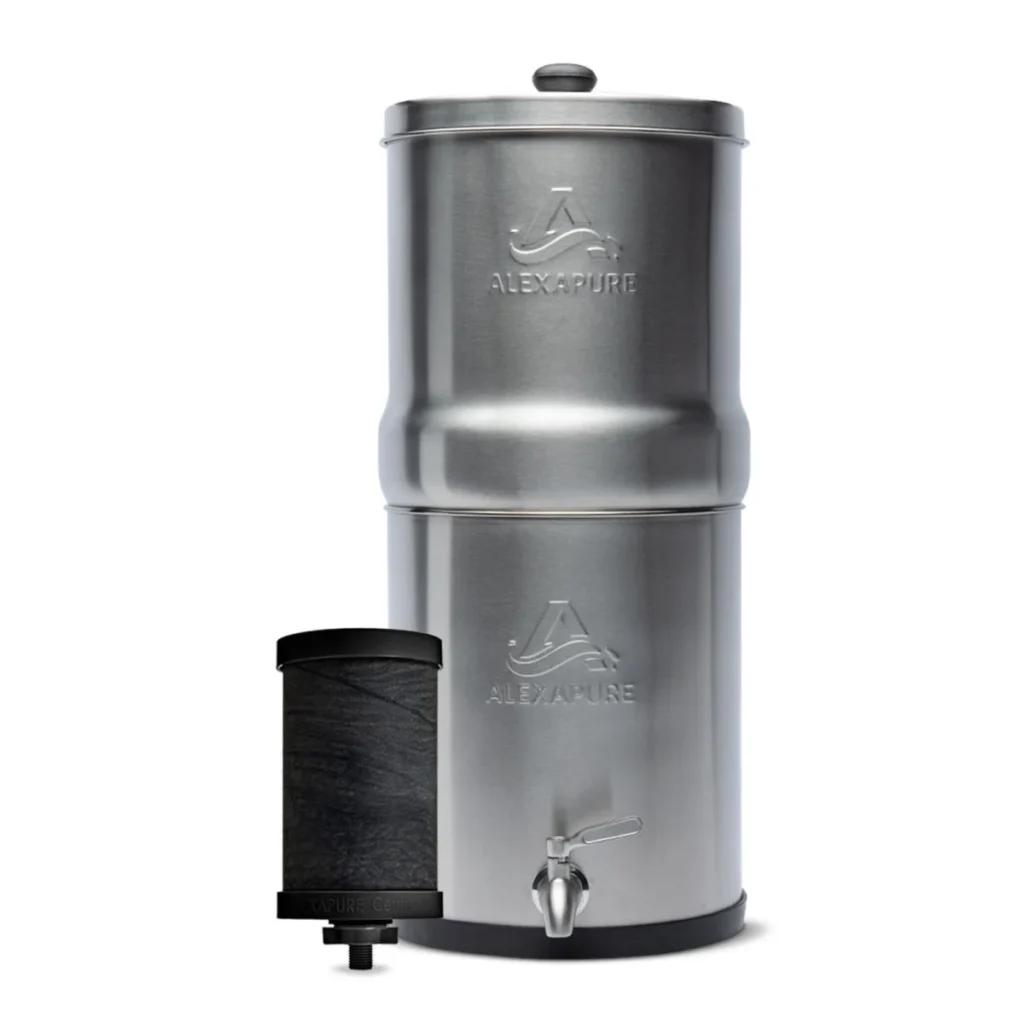
AlexaPure Water Filter: Honest Look at Claims, Cartridge Cost and Fit
AlexaPure Water Filter review: contaminant reduction, filter type and filter life, honest pros and cons, and a clear verdict on who should…
Lifestraw vs Clearly Filtered: Portable or Tap Water Filtration?
Lifestraw filters water outdoors and in emergencies; Clearly Filtered treats tap water at home. Compare certifications, filter life, flow and running cost.