Best Drinking Water Filter: 7 Picks Ranked by Certification and Running Cost
Published October 29, 2026
As an Amazon Associate we earn from qualifying purchases. This never changes which products we recommend.
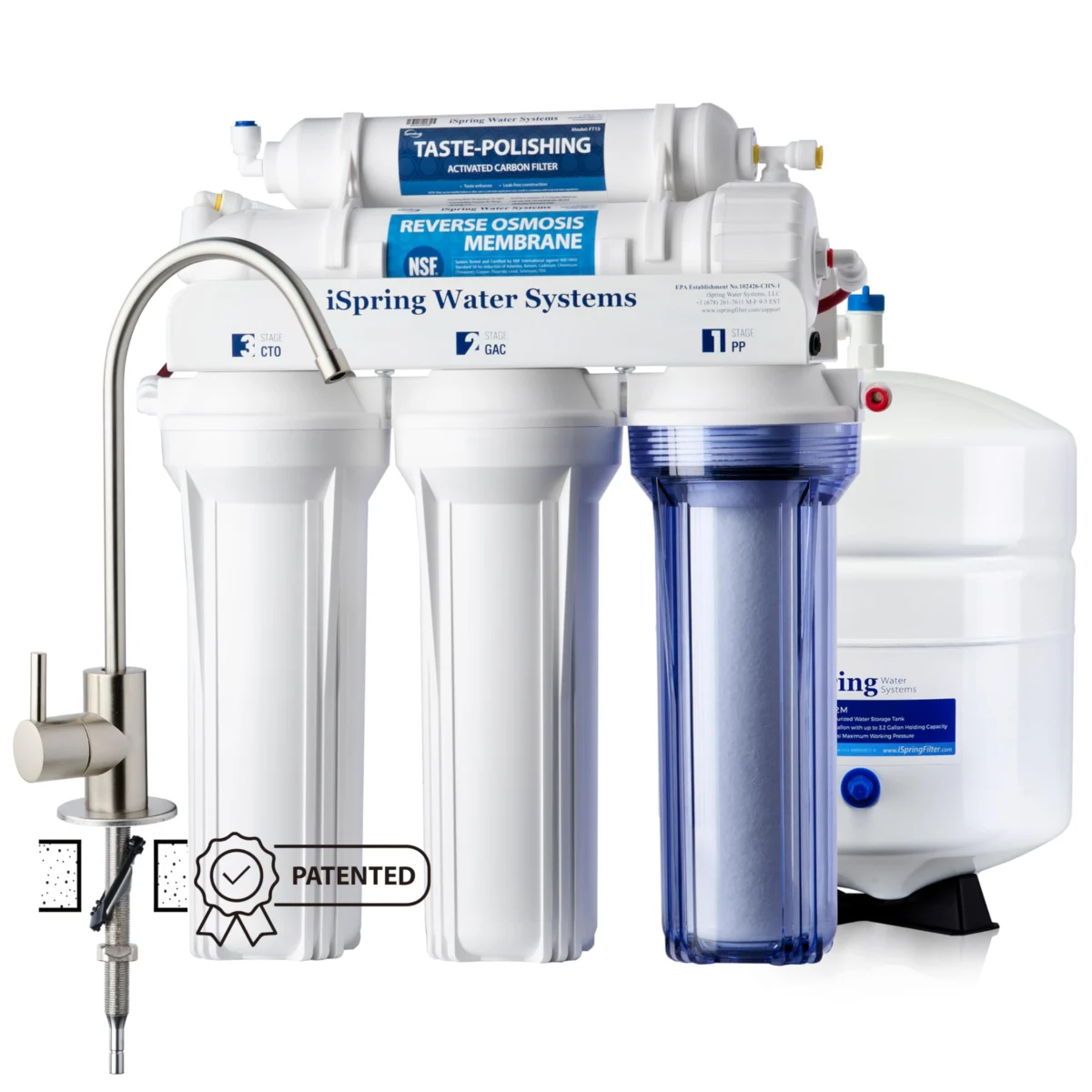
The iSpring RCC7-BN is the best Drinking Water Filter in this guide for a household that can plumb in an under sink system: it is certified to NSF/ANSI 58 as a complete reverse osmosis system, is rated at 75 GPD and names chlorine, lead, PFAS and fluoride among the contaminants it reduces. For a household that wants one under sink unit covering the widest list of dissolved contaminants, it is the closest match among the options here.
The real dividing line is not brand but fit: reverse osmosis handles dissolved contaminants but needs cabinet space, a drain connection and a faucet hole, while carbon under sink filters and pitchers need little or no plumbing and mainly target chlorine, taste and, when certified, lead and PFAS. Decide which contaminants your water report names before you decide which type to buy.
 Best OveralliSpring RCC7-BNHouseholds that can install under sink RO8.9/10
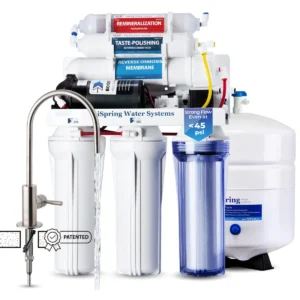 Best for Low Water PressureiSpring RCC7P-AKHomes with weak supply pressure8.8/10
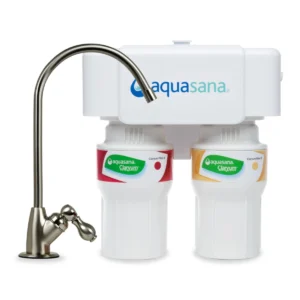 Best Under Sink OptionAquasana AQ-5200.55Lead and PFAS without wastewater8.0/10
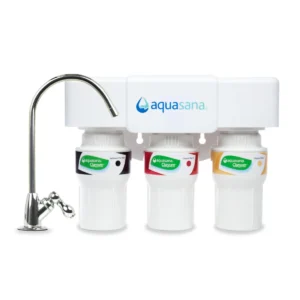 Best Three-Stage CarbonAquasana AQ-5300.56Longer filter life and VOC coverage8.0/10
Table of contents9 sections · tap to expand
At a glance
Our top picks compared
| Product | Best for | Type and size | Key features | Where to buy |
|---|---|---|---|---|
| 1. iSpring RCC7-BN Best Overall 8.9/10 | Households that can install under sink RO | Reverse osmosis system, 75 gallons, 75 GPD | NSF certifiedLead reductionPFAS reductionFluoride | Mid-range Check price |
| 2. iSpring RCC7P-AK Best for Low Water Pressure 8.8/10 | Homes with weak supply pressure | Reverse osmosis system, 75 gallons | Lead reductionPFAS reductionFluorideInstallation | Premium Check price |
| 3. Aquasana AQ-5200.55 Best Under Sink Option 8.0/10 | Lead and PFAS without wastewater | Under sink filter, 500 gallons | Lead reductionPFAS reductionFilter life listed | Budget Check price |
| 4. Aquasana AQ-5300.56 Best Three-Stage Carbon 8.0/10 | Longer filter life and VOC coverage | Under sink filter, 600 gallons | Lead reductionPFAS reductionFilter life listed | Mid-range Check price |
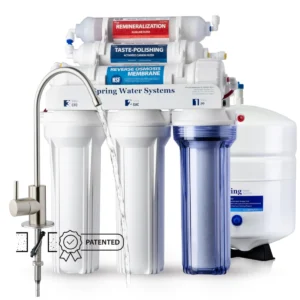 5. iSpring RCC7AK-BN Best RO for Taste 7.8/10 | Readers who dislike flat RO water | Reverse osmosis system, 75 gallons, 75 GPD | NSF certifiedLead reductionPFAS reductionFluoride | Premium Check price |
 6. CuZn UC-200 Best Value on Running Cost 7.7/10 | Low upkeep and no drilling | Under sink filter, 6 months | NSF certifiedLead reductionPFAS reductionInstallation | Budget Check price |
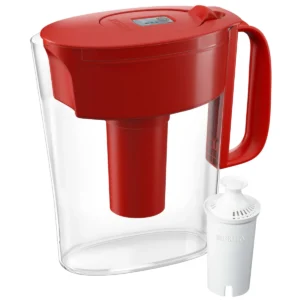 7. Brita Metro Best Pitcher for Renters 7.6/10 | No-install, small-space filtering | Pitcher, 40 gallons, 6 cups | Filter life listed | Budget Check price |
Score: our 0-10 rating from fit for this use, buyer ratings, review volume, completeness of the product details and availability. It is not a lab test.
Buying advice
How to choose a Drinking Water Filter for your home
Start with the contaminants named in your water report
Your local water quality report, or a certified lab test for a private well, tells you whether the problem is chlorine taste, lead from older plumbing, PFAS, fluoride or hardness. That list decides the filter type: carbon pitchers and under sink filters for chlorine and, when certified, lead and PFAS; reverse osmosis when fluoride, arsenic or total dissolved solids are the concern. Buying before you know the contaminants is how households end up with a filter that does not address their water.
Check which standard the whole system is certified to
A certification changes the choice more than a feature list does. NSF/ANSI 42 confirms chlorine taste and odor reduction, NSF/ANSI 53 confirms health-effect claims such as lead, and NSF/ANSI 58 confirms a reverse osmosis system. A model certified for the contaminant you care about is worth more than one with a longer feature list, and a listing that only says components are certified is a weaker claim than whole-system certification.
Weigh filter life and cartridge count against the price
Running cost separates these picks as much as purchase price. The CuZn UC-200 is rated for 6 months of filter life in a single inline cartridge, the Aquasana AQ-5200.55 for 500 gallons and the AQ-5300.56 for 600 gallons, while the Brita Metro is rated at 40 gallons per filter. Reverse osmosis adds a membrane replacement every few years, so compare the yearly cartridge count, not just the sticker.
Match installation to what you are allowed to change
Renters and anyone without cabinet space should start with a pitcher or a countertop option, because an under sink system needs a cold water line tee, roughly 12 inches of cabinet clearance on the Aquasana units, and often a drilled faucet hole. Reverse osmosis adds a drain connection and a storage tank. If you cannot drill or tee a line, no amount of contaminant coverage on an under sink model helps you.
Our picks
Drinking water filters ranked by contaminant coverage and installation fit
Best Overall
iSpring RCC7-BN
- Reverse osmosis system
- NSF/ANSI 58
- 75 gallons
- 75 GPD
- Chlorine, Lead, PFAS
- DIY install
Best for: Households that can install under sink RO
Skip if: You rent, cannot spare under sink space, or object to wastewater from reverse osmosis.
Price range: Mid-range
Check price on AmazonPaid link. We may earn a commission.
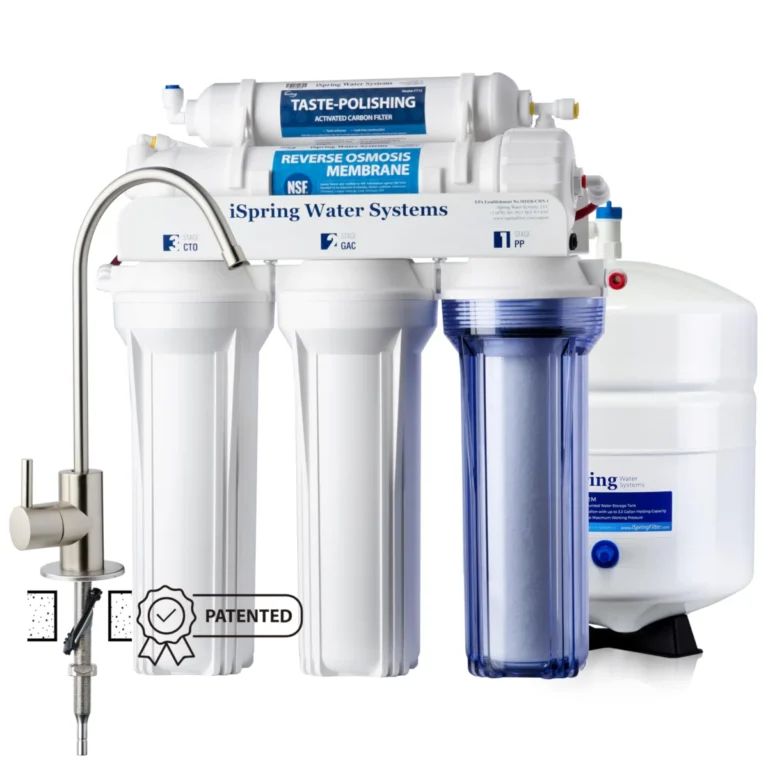
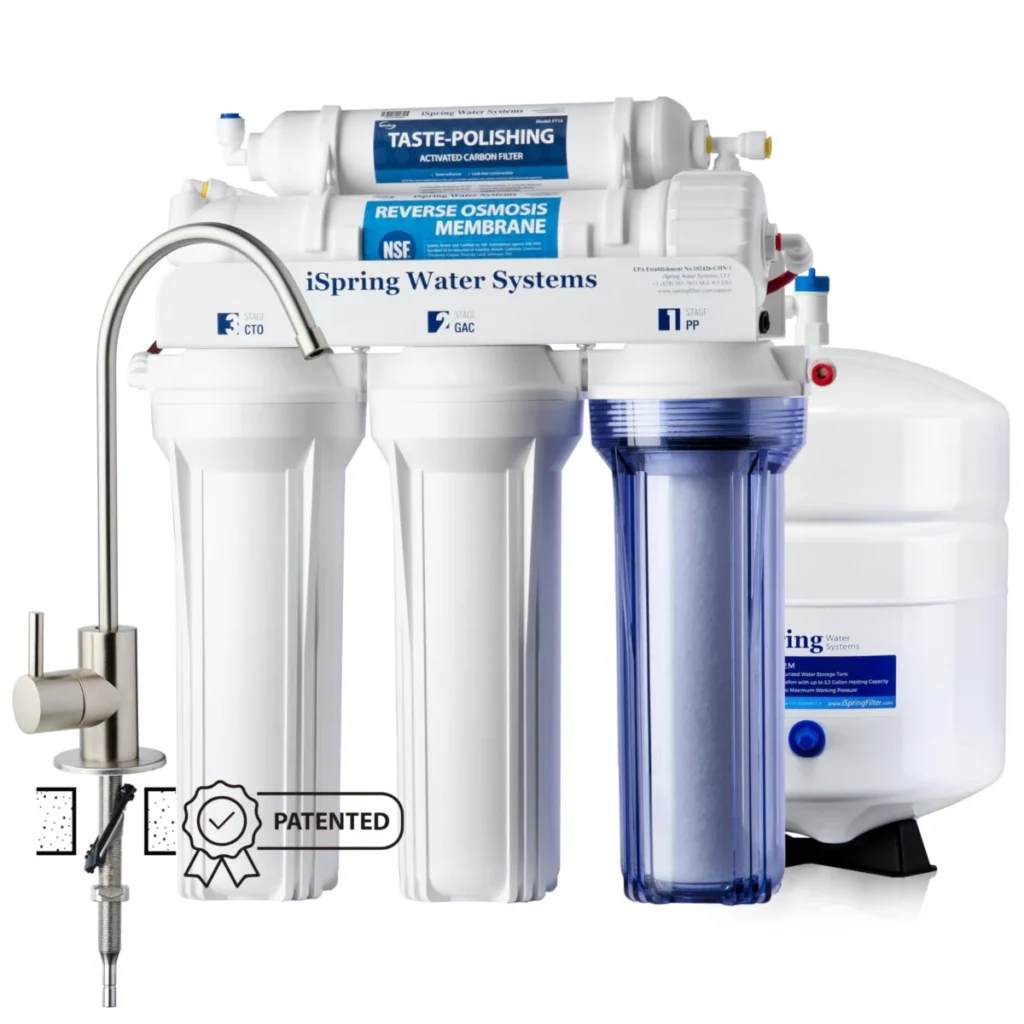
The iSpring RCC7-BN earns Best Overall because it pairs NSF/ANSI 58 certification with a 5-stage reverse osmosis design rated at 75 GPD, covering lead, PFAS and fluoride in one under sink unit.
What matters in daily use
Five stages combine reverse osmosis with activated carbon and a carbon block, so the RCC7-BN addresses dissolved contaminants such as fluoride and arsenic alongside chlorine taste. NSF/ANSI 58 certification applies to the whole system, which is the standard that governs reverse osmosis performance rather than a single cartridge. The 75 GPD daily production figure suits a household filling pitchers and cooking water, though it refills a storage tank rather than flowing at tap speed.
Installation is DIY, and the top-mounted faucet design lets most of the countertop work happen from above the sink rather than reaching underneath. The tradeoff is space and wastewater: an RO system needs cabinet room for housings and a tank, and it sends reject water to the drain. Compared with the Aquasana AQ-5200.55, which filters without wastewater and needs no tank, the RCC7-BN gives broader dissolved-solid reduction at the cost of a more involved install.
Specifications
| Type | Reverse osmosis system |
|---|---|
| Certifications | NSF/ANSI 58 |
| Reduces | Chlorine, Lead, PFAS, Fluoride (named in listing) |
| Filter life | 75 gallons |
| Flow rate | 75 GPD |
| Stages | 5 stages |
| Installation | DIY install |
Pros
- NSF/ANSI 58 certification covers the full system
- Five stages address dissolved contaminants, not just taste
- Top-mounted faucet simplifies countertop installation
- No power needed, so it runs without an outlet
Cons
- Produces wastewater and needs a drain connection
- Requires cabinet space for housings and tank
Best for Low Water Pressure
iSpring RCC7P-AK
- Reverse osmosis system
- 75 gallons
- Chlorine, Lead, PFAS
- DIY install
Best for: Homes with weak supply pressure
Skip if: Your water pressure is already strong and you would rather avoid a powered unit.
Price range: Premium
Check price on AmazonPaid link. We may earn a commission.
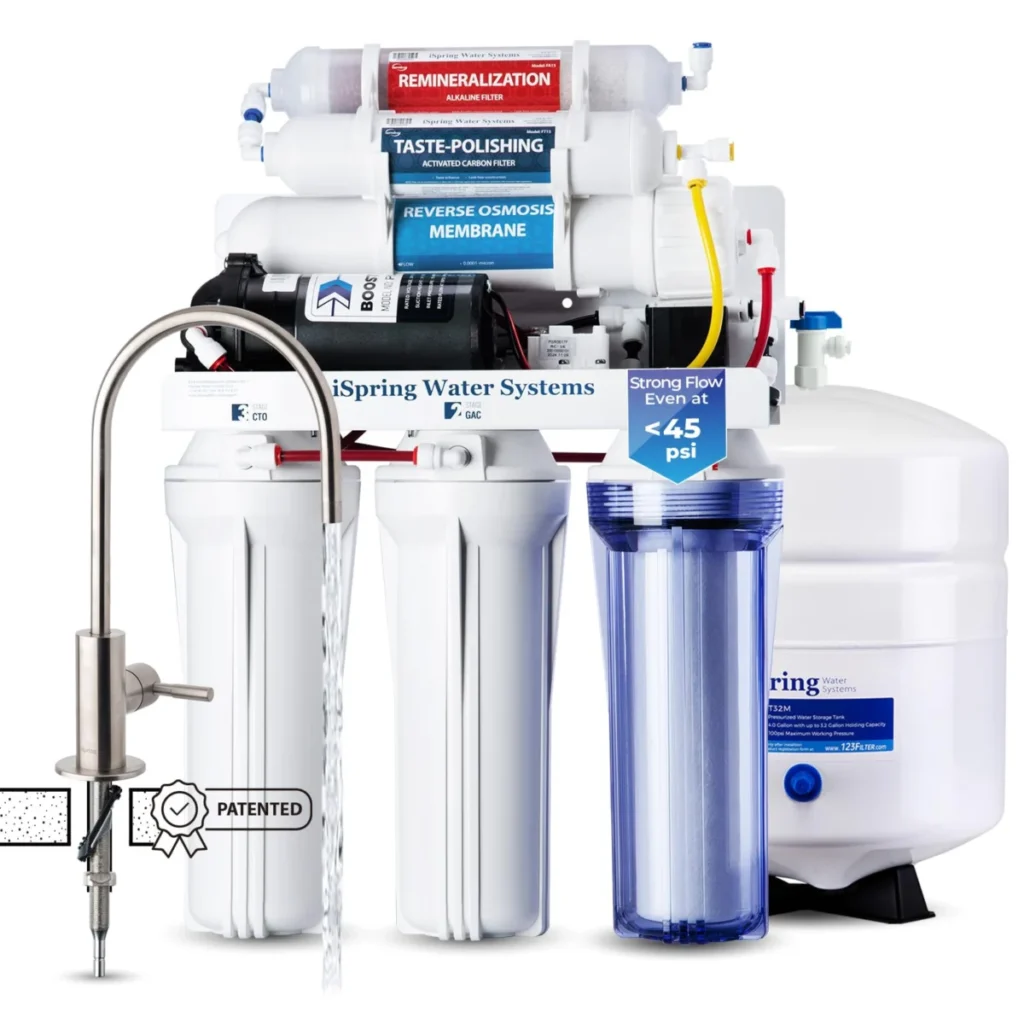
The iSpring RCC7P-AK is the pick for weak supply pressure because its booster pump keeps a 6-stage reverse osmosis system running efficiently where line pressure alone would stall output.
What matters in daily use
A booster pump is the defining feature here. Reverse osmosis depends on incoming pressure to push water through the membrane, so homes with low pressure often see slow production and more wastewater. The pump addresses both, and the 100-240V adapter widens where the unit can be plugged in. Six stages add an alkaline remineralization stage after the membrane, which restores minerals and balances pH in water that RO has stripped.
The RCC7P-AK shares the 75 GPD rating and DIY under sink layout of the iSpring RCC7-BN, but it needs an electrical outlet, which the RCC7-BN does not. That cord is the main tradeoff: you gain consistent performance under low pressure and less wastewater, and you take on a power dependency. Readers with strong pressure who want a simpler install can stay with the RCC7-BN; anyone fighting a weak supply should start here.
Specifications
| Type | Reverse osmosis system |
|---|---|
| Reduces | Chlorine, Lead, PFAS, Fluoride, Arsenic, Sediment (named in |
| Filter life | 75 gallons |
| Stages | 6 stages |
| Installation | DIY install |
| Remineralization | Yes |
Pros
- Booster pump maintains output on low pressure lines
- Pump design reduces wastewater versus unassisted RO
- Sixth alkaline stage restores minerals and balances taste
- Wide-voltage adapter suits varied household wiring
Cons
- Requires a nearby electrical outlet
- Still produces wastewater and needs drain access
Best Under Sink Option
Aquasana AQ-5200.55
- Under sink filter
- 500 gallons
- Chlorine, Lead, PFAS

Best for: Lead and PFAS without wastewater
Skip if: Fluoride or dissolved solids are your main concern, since this filter does not reduce TDS.
Price range: Budget
Check price on AmazonPaid link. We may earn a commission.
The Aquasana AQ-5200.55 takes Best Under Sink Option because it reduces lead and PFAS through a 2-stage carbon design rated for 500 gallons, with no tank, no wastewater and no power.
What matters in daily use
Two carbon stages handle chlorine, lead, PFAS (PFOA and PFOS), mercury, pesticides and microplastics while leaving minerals such as calcium and magnesium in the water. Because it is a filter rather than a reverse osmosis membrane, it does not reduce total dissolved solids, so fluoride stays. The 500 gallon filter life works out to roughly six months of typical use, and the housing twists off for replacement without disconnecting hoses.
Flow is the practical advantage: the system delivers about half a gallon per minute, so filling a pot does not mean waiting on a drip. It needs 12 inches of under sink space plus clearance, and the 3/8 inch compression tee and 1/4 inch tubing suit a standard cold line. Against the iSpring RCC7-BN, the AQ-5200.55 gives up fluoride and dissolved-solid reduction in exchange for faster flow, no wastewater and a simpler install.
Specifications
| Type | Under sink filter |
|---|---|
| Reduces | Chlorine, Lead, PFAS, Microplastics, Mercury, Pesticides |
| Filter life | 500 gallons |
| Stages | 2 stages |
Pros
- No tank, no wastewater and no electricity needed
- Half-gallon-per-minute flow fills containers quickly
- Twist-off housing makes cartridge changes tool-free
- Retains calcium, potassium and magnesium in the water
Cons
- Does not reduce fluoride or total dissolved solids
- Cartridges need replacing roughly every six months
Best Three-Stage Carbon
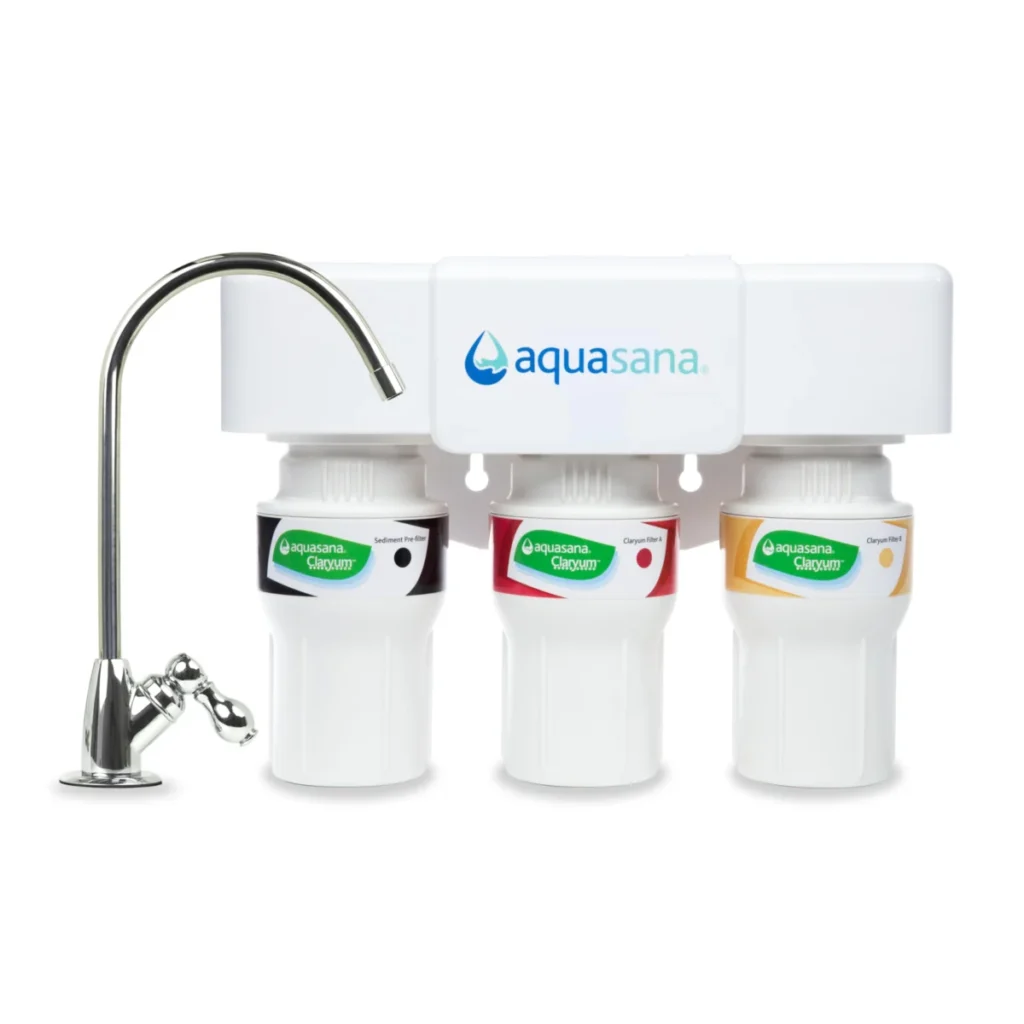
Aquasana AQ-5300.56
- Under sink filter
- 600 gallons
- Chlorine, Lead, PFAS
Best for: Longer filter life and VOC coverage
Skip if: You need fluoride or TDS reduction, which only a reverse osmosis system such as the iSpring RCC7AK-BN provides.
Price range: Mid-range
Check price on AmazonPaid link. We may earn a commission.
The Aquasana AQ-5300.56 earns Best Three-Stage Carbon because its third stage lifts filter life to 600 gallons and adds VOC reduction, giving under sink buyers longer intervals between cartridge changes.
What matters in daily use
The AQ-5300.56 is a three-stage under sink carbon filter rated for 600 gallons, roughly six months of typical kitchen use. The extra stage over the two-stage Aquasana AQ-5200.55 buys 100 more gallons per cartridge set and adds VOCs to the reduction list, so households that cook and fill kettles daily change filters less often. It keeps minerals in the water and produces no wastewater, which separates it from every reverse osmosis pick here.
Aquasana rates the system at about half a gallon per minute and lists reduction of 78 contaminants including lead, PFAS as PFOA and PFOS, microplastics and mercury. The housing twists off without disconnecting hoses, so a cartridge swap takes minutes once the cabinet is cleared. Unlike the iSpring RCC7AK-BN, it will not lower TDS or fluoride, so readers wanting those should look at the RO systems instead.
Specifications
| Type | Under sink filter |
|---|---|
| Reduces | Chlorine, Lead, PFAS, Microplastics, Mercury, VOCs |
| Filter life | 600 gallons |
| Stages | 3 stages |
| Weight | 6.44 lb |
Pros
- 600-gallon filter life means fewer cartridge changes
- Adds VOC reduction over the two-stage Aquasana
- Keeps calcium, potassium and magnesium in the water
- No wastewater and no power needed
Cons
- Does not reduce TDS or fluoride
- Needs 12 inches of cabinet space plus clearance
- Under sink install rules out most renters
Best RO for Taste
iSpring RCC7AK-BN
- Reverse osmosis system
- NSF/ANSI 58
- 75 gallons
- 75 GPD
- Chlorine, Lead, PFAS
- DIY install
Best for: Readers who dislike flat RO water
Skip if: You rent or cannot add a drain line and tank space under the sink.
Price range: Premium
Check price on AmazonPaid link. We may earn a commission.
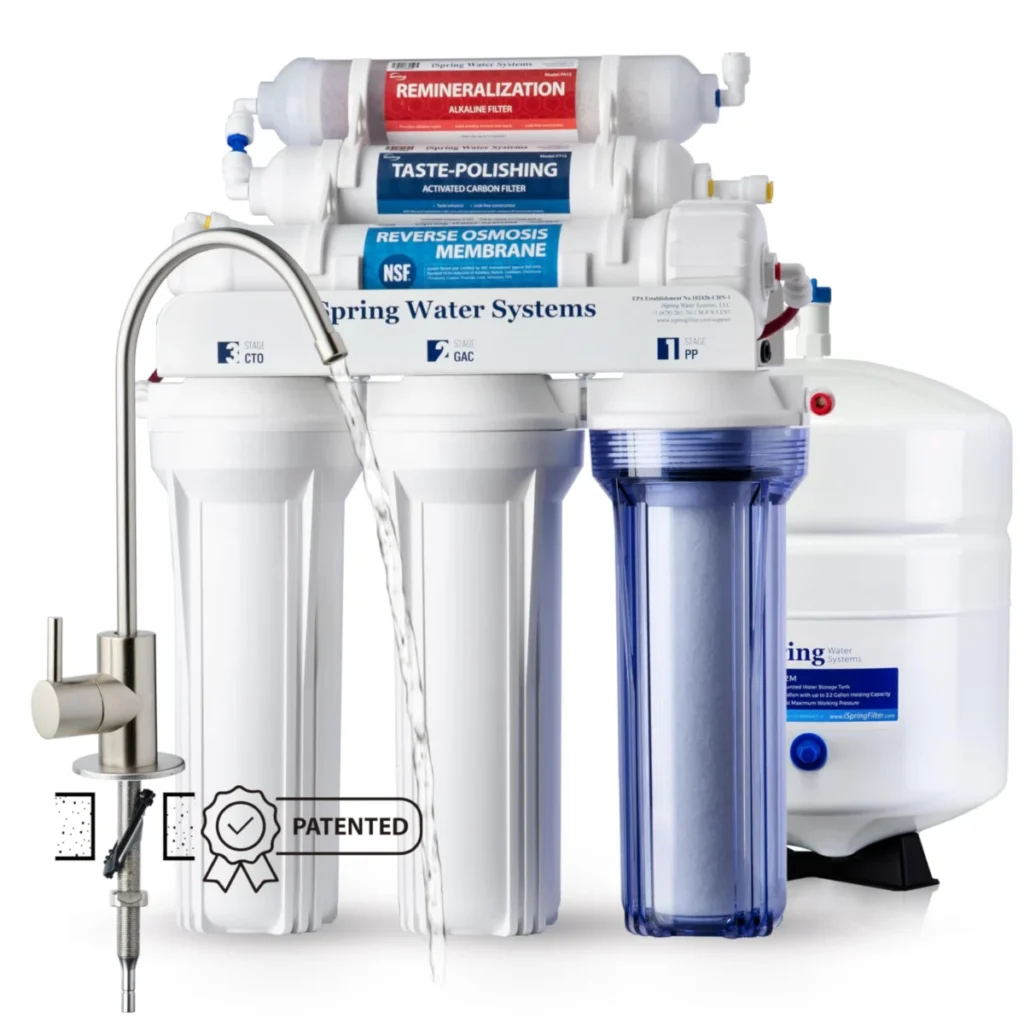
The iSpring RCC7AK-BN takes Best RO for Taste because its sixth alkaline remineralization stage restores minerals and balances pH after reverse osmosis, addressing the flat flavor that standard RO systems leave behind.
What matters in daily use
Six stages separate the RCC7AK-BN from the five-stage iSpring RCC7-BN: sediment and carbon prefilters, the RO membrane, a polishing carbon stage, then a mineral stage that adds back what the membrane strips out. The result is water with a balanced pH rather than the slightly acidic profile typical of plain RO. The system is certified to NSF/ANSI 58 and rated at 75 GPD, enough for drinking and cooking for a family.
The top-mounted faucet fastener lets most of the countertop work happen from above the sink, which shortens a DIY install. The tradeoff is the usual RO footprint: a storage tank, a drain connection and wastewater during production. Buyers who want minerals without plumbing should look at the Aquasana AQ-5300.56, which retains them by never removing them in the first place.
Specifications
| Type | Reverse osmosis system |
|---|---|
| Certifications | NSF/ANSI 58 |
| Reduces | Chlorine, Lead, PFAS, Fluoride, Copper (named in listing) |
| Filter life | 75 gallons |
| Flow rate | 75 GPD |
| Stages | 6 stages |
| Installation | DIY install |
| Remineralization | Yes |
Pros
- Remineralization stage improves taste and pH
- Full-system NSF/ANSI 58 certification
- Faucet mounts from above, simplifying DIY install
- Transparent first-stage housing shows when to change filters
Cons
- Produces wastewater and needs a drain line
- Storage tank and plumbing take cabinet space
- No booster pump, unlike the iSpring RCC7P-AK
Best Value on Running Cost
CuZn UC-200
- Under sink filter
- NSF/ANSI 42, NSF/ANSI
- 6 months
- Chlorine, Lead, PFAS
- DIY install

Best for: Low upkeep and no drilling
Skip if: You want a system whose components are certified to NSF/ANSI 42 and 372 rather than a broader health-effects certification, or you need TDS reduction.
Price range: Budget
Check price on AmazonPaid link. We may earn a commission.
The CuZn UC-200 wins Best Value on Running Cost because its 5-year rated filter life and inline no-drill design cut both cartridge spending and installation effort to the minimum among the picks here.
What matters in daily use
The UC-200 is a three-stage inline filter combining micro sediment membranes, KDF-55 and coconut shell carbon. It connects directly to the kitchen or bathroom faucet supply with the included stainless steel hose and needs no drilling, which makes it the least invasive under sink option in this guide. It keeps beneficial minerals in the water and, per the listing, is independently tested to reduce PFAS, PFOA and PFOS, lead and chlorine.
The headline number is the 5-year filter life, far longer than the 6-month or 500 to 600 gallon intervals of the Aquasana AQ-5300.56 and AQ-5200.55. The tradeoff is certification scope: the components carry NSF/ANSI 42 and 372, which cover aesthetic chlorine reduction and lead-free materials, and the system does not reduce TDS. Readers who want a certified health-effects claim for lead should weigh the Aquasana or iSpring options.
Specifications
| Type | Under sink filter |
|---|---|
| Certifications | NSF/ANSI 42, NSF/ANSI 372 |
| Reduces | Chlorine, Lead, PFAS, Sediment (named in listing) |
| Filter life | 6 months |
| Stages | 3 stages |
| Installation | DIY install |
| Weight | 7.02 lb |
Pros
- Five-year filter life minimizes replacement cost
- Inline design installs without drilling
- Retains beneficial minerals in drinking water
- Works on kitchen or bathroom faucet supply
Cons
- Component certifications cover NSF/ANSI 42 and 372 only, not a broader health-effects standard
- Will not reduce TDS or fluoride
- Single-cartridge design limits stage customization
Best Pitcher for Renters
Brita Metro
- Pitcher
- 40 gallons
- Chlorine, Mercury

Best for: No-install, small-space filtering
Skip if: You need lead, PFAS or fluoride reduction, or you fill more than a few glasses at a time.
Price range: Budget
Check price on AmazonPaid link. We may earn a commission.
The Brita Metro earns Best Pitcher for Renters because it filters with no plumbing, no tools and no permanent change to the kitchen, and its 6-cup body fits a refrigerator shelf.
What matters in daily use
The Metro holds 6 cups and runs on an activated carbon cartridge rated for 40 gallons, roughly two months of typical use. Nothing is installed: fill the reservoir, wait for it to drain through the filter, pour. That is the whole appeal for a renter or a small household that wants better-tasting water without touching the cold line, and the electronic indicator takes the guesswork out of when the cartridge is spent.
The tradeoff is scope and speed. The listing names chlorine, mercury, copper, zinc and cadmium, so this is a taste-and-aesthetics pitcher, not a lead or PFAS answer; readers with those concerns should look at the Aquasana AQ-5200.55 or the iSpring RCC7-BN, both of which state lead and PFAS reduction. A 6-cup reservoir also empties fast in a family, and refilling is slower than a faucet-mounted flow.
Specifications
| Type | Pitcher |
|---|---|
| Reduces | Chlorine, Mercury, Copper (named in listing) |
| Filter life | 40 gallons |
| Capacity | 6 cups |
| Material | BPA-free plastic |
Pros
- No installation, plumbing or tools required
- Slim footprint fits refrigerator door shelves
- Change indicator removes filter-life guesswork
- Low upfront cost for a first filter
Cons
- Does not state lead, PFAS or fluoride reduction
- 6 cups runs out quickly for families
- Slower pour-through than a faucet filter
Which contaminants does each filter type actually reduce?
Activated carbon, the media in pitchers, faucet mounts and most under sink filters, adsorbs chlorine and many taste and odor compounds and is the workhorse for city water that simply tastes off. Lead and PFAS reduction depends on the specific carbon block and on certification, not on the word carbon, so a pitcher and an under sink unit can differ sharply here.
Reverse osmosis adds a membrane that also rejects dissolved fluoride, arsenic and much of the total dissolved solids, which is why RO suits readers whose water report lists those.
What do NSF/ANSI 42, 53, 58 and 401 certifications cover?
NSF/ANSI 42 covers aesthetic effects such as chlorine taste and odor and particulate reduction. NSF/ANSI 53 covers health effects, including lead, cysts and, when the certificate lists them, PFOA and PFOS. NSF/ANSI 58 covers reverse osmosis systems, and NSF/ANSI 401 covers a set of emerging contaminants. NSF/ANSI 372 certifies lead-free wetted materials, which says nothing about how much lead the filter removes.
Certified and tested are not the same claim. A listing that says a system was tested to a standard, or that its components are certified, is weaker than a certificate for the whole system against a named standard. Read the manufacturer performance data sheet for the exact contaminants and reduction claims, and treat any reduction figure without a standard behind it as marketing rather than verification.
Decision guide
Which Drinking Water Filter fits your home: head-to-head notes
The iSpring RCC7-BN and the Aquasana AQ-5200.55 both target lead and PFAS, but they solve different problems. The iSpring is a five-stage reverse osmosis system certified to NSF/ANSI 58 that also names fluoride, and it produces wastewater and needs a drain line and tank space. The Aquasana is a two-stage carbon under sink filter rated at 500 gallons with no wastewater and a smaller footprint, so pick it when fluoride is not on your report or when you cannot fit a tank.
Among the reverse osmosis picks, the iSpring RCC7P-AK adds a booster pump and an alkaline sixth stage, which suits a home with low supply pressure or a reader who finds standard RO water flat, while the RCC7AK-BN delivers the same 75 GPD and remineralization without the pump. The CuZn UC-200 sits apart: a single inline cartridge rated for 6 months, certified to NSF/ANSI 42 and 372, and the simplest install here, but it does not reduce dissolved solids the way a membrane does.
Our process
How we chose our Drinking Water Filter picks
Products were shortlisted from drinking water filters with published specifications and then ranked on what changes a buying decision: the certification listed and the contaminants it covers, the filter type and its installation requirements, rated filter life in gallons or months, flow rate and, for reverse osmosis, wastewater and remineralization, plus footprint and buyer feedback. Price was not scored directly; running cost was judged from rated life and cartridge count. No product was tested or installed for this guide.
Common questions
Frequently asked questions
Do drinking water filters remove fluoride and lead?
Reverse osmosis removes fluoride and lead, and carbon filters can reduce lead when they are certified to NSF/ANSI 53 for it. The iSpring RCC7-BN and RCC7AK-BN name both fluoride and lead, while the Aquasana and CuZn models name lead but not fluoride. Check the performance data sheet for your model.
Is a reverse osmosis system worth it for drinking water?
Reverse osmosis is worth it when your water report lists fluoride, arsenic or high dissolved solids, because a membrane rejects those where carbon cannot. The tradeoff is wastewater, a drain connection, tank space and a membrane replacement every few years. If chlorine taste and lead are the only concerns, a carbon under sink filter does the job with less installation.
What is the best Drinking Water Filter for an apartment or renter?
A pitcher is the safest renter choice because it needs no plumbing and no permanent change. The Brita Metro holds 6 cups and is rated for 40 gallons per filter, reducing chlorine, mercury and copper. A renter worried about lead or PFAS should confirm the specific certification before relying on any pitcher.
How often do you change a Drinking Water Filter cartridge?
Change it at the rated life, not on a calendar guess: 40 gallons for the Brita Metro, 500 gallons for the Aquasana AQ-5200.55, 600 gallons for the AQ-5300.56 and 6 months for the CuZn UC-200. Reverse osmosis systems also need a membrane replacement every few years and prefilter changes sooner than the membrane.
Do I need to test my well water before buying a filter?
Yes. Private well water is not regulated, so the right system depends on a lab test covering bacteria, nitrates, iron, hardness and pH. Testing first tells you whether you need disinfection, a softener or a Drinking Water Filter, and prevents buying a system aimed at the wrong contaminant. The EPA and CDC recommend testing private wells regularly.
Bottom line
Final verdict
- Households that can install under sink and want certified RO coverage: iSpring RCC7-BN. It is certified to NSF/ANSI 58 as a full system and names lead, PFAS and fluoride, the widest dissolved-contaminant coverage here, at the cost of wastewater and a drain connection.
- Renters or anyone who cannot modify plumbing: Aquasana AQ-5200.55. The Aquasana AQ-5200.55 targets lead and PFAS from a two-stage carbon design with no wastewater, though it still needs a cold line tee and cabinet space.
- Readers who want the lowest upkeep and no drilling: CuZn UC-200. The CuZn UC-200 is a single inline cartridge rated for 6 months, the simplest install in this guide, but it will not reduce dissolved solids like fluoride.
- Small households and renters who want zero installation: Brita Metro. The Brita Metro needs no plumbing at all and fits a refrigerator shelf, at the cost of a 40 gallon filter and chlorine-focused reduction rather than fluoride.
Final decision
Compare two finalists
Choose the two picks you narrowed down to see who each one suits and the main reason to skip it.
Keep reading
Best Water Filter System for Home: Under Sink, Whole House or No Install
The iSpring RCC7-BN is our top pick among 7 water filter system for homes, compared on filter type, certifications listed and stated…
AlexaPure Water Filter: Honest Look at Claims, Cartridge Cost and Fit
AlexaPure Water Filter review: contaminant reduction, filter type and filter life, honest pros and cons, and a clear verdict on who should…
Lifestraw vs Clearly Filtered: Portable or Tap Water Filtration?
Lifestraw filters water outdoors and in emergencies; Clearly Filtered treats tap water at home. Compare certifications, filter life, flow and running cost.