Best Water Softener Systems: 7 Picks Sized to Your Hardness and Household
Published October 29, 2026
As an Amazon Associate we earn from qualifying purchases. This never changes which products we recommend.
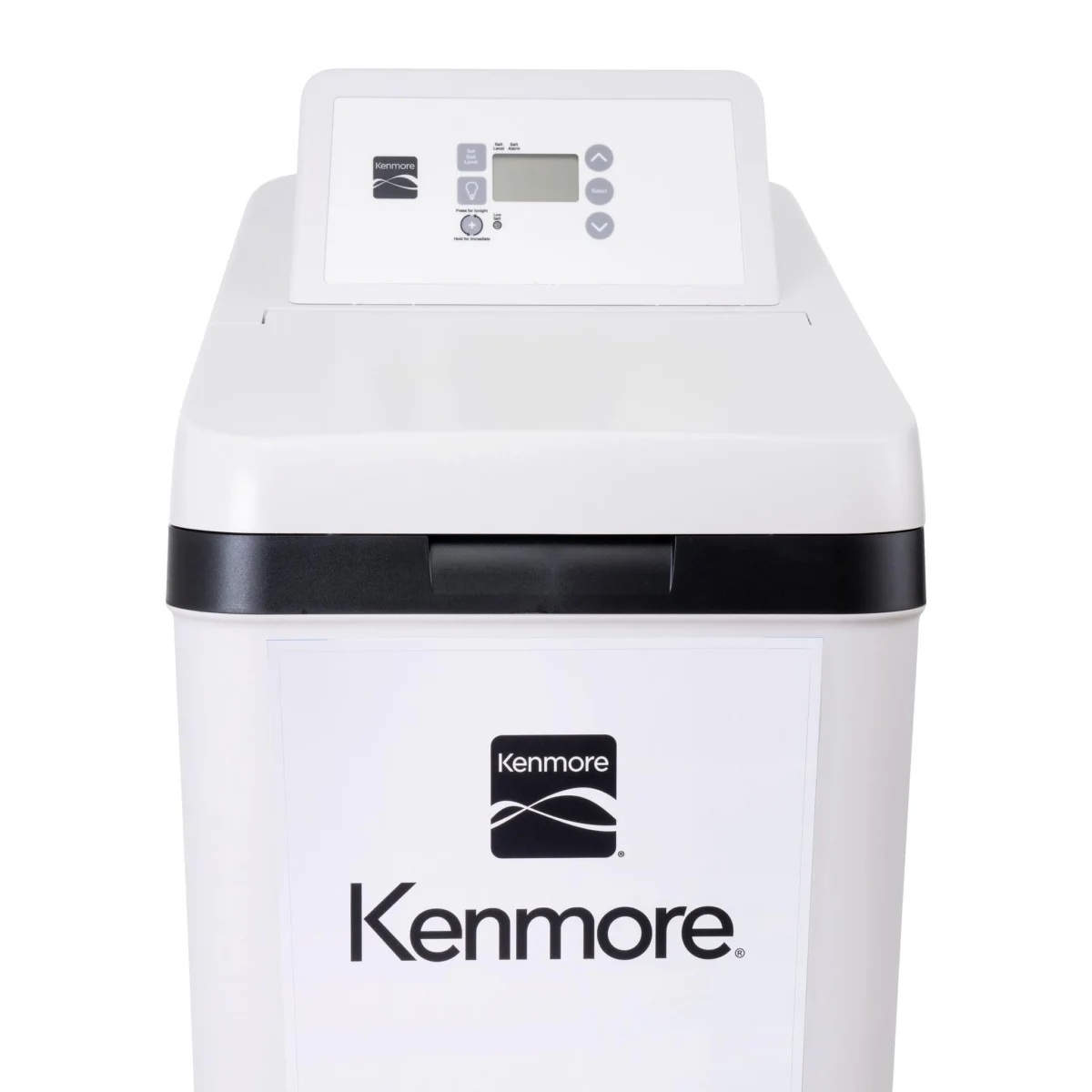
The Kenmore 350 Whole House Water Softener System is the best overall pick for most homes because its 32,000 grain capacity, compact cabinet and DIY installation suit one to four people with hard water, and its IntelliSoft metering regenerates only when needed. It reduces hardness, clear water iron and sediment, and carries an NSF certification per the listing.
The real decision is not brand but fit: grain capacity against your measured hardness, flow rate at peak demand, and whether you can supply a drain line and outlet. Salt based softeners remove hardness minerals; salt free conditioners only reduce scale buildup. Softened water is not filtered water, so chlorine, lead and PFAS need a separate carbon or reverse osmosis stage.
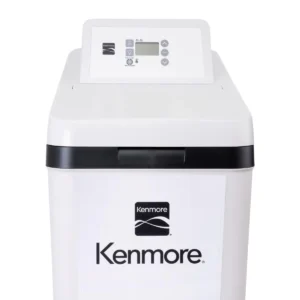 Best OverallKenmore 350One to four people with hard water7.8/10
 Best Portable OptionOn The Go OTG4-DBLSOFTRenters and RV owners who cannot plumb in7.8/10
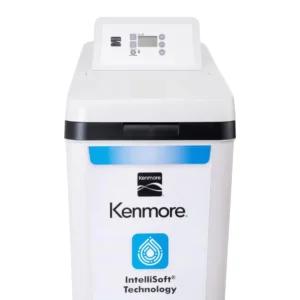 Best for Well WaterKenmore 420Larger families with iron bearing well water7.6/10
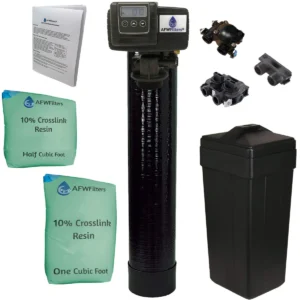 Best for Chlorinated SuppliesAFWFilters Fleck 5600 SXTCity water users who want chlorine resistant resin7.4/10
Table of contents9 sections · tap to expand
At a glance
Our top picks compared
| Product | Best for | Type and size | Key features | Where to buy |
|---|---|---|---|---|
| 1. Kenmore 350 Best Overall 7.8/10 | One to four people with hard water | Water softener | NSF certifiedInstallation | Budget Check price |
| 2. On The Go OTG4-DBLSOFT Best Portable Option 7.8/10 | Renters and RV owners who cannot plumb in | Water softener | Easy install | Budget Check price |
| 3. Kenmore 420 Best for Well Water 7.6/10 | Larger families with iron bearing well water | Water softener, 7.7 GPM | NSF certifiedInstallation | Mid-range Check price |
| 4. AFWFilters Fleck 5600 SXT Best for Chlorinated Supplies 7.4/10 | City water users who want chlorine resistant resin | Water softener | Budget Check price | |
 5. DuraWater Fleck 5600 SXT Best Value 7.3/10 | Budget buyers who want a metered 48,000 grain unit | Water softener | Mid-range Check price | |
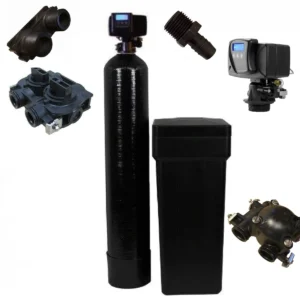 6. DuraWater Iron Blaster Best for Iron Heavy Wells 7.1/10 | Well owners with high clear water iron | Water softener | Premium Check price | |
 7. EcoPure EP42 Best for Tight Install Spaces 6.7/10 | Households needing a slim cabinet and pro install | Water softener | NSF certified | Premium Check price |
Score: our 0-10 rating from fit for this use, buyer ratings, review volume, completeness of the product details and availability. It is not a lab test.
Buying advice
How to choose a water softener that fits your home
Size grain capacity to measured hardness and daily use
Grain capacity is the total hardness a softener can remove before regenerating, so it only means something next to your hardness in grains per gallon and your daily gallons. A 32,000 grain unit suits a small household at moderate hardness, while a 48,000 grain unit such as the DuraWater Fleck 5600 SXT gives more days between regenerations for a larger family or harder water. Oversizing wastes salt and space; undersizing leaves you with hard water before the next cycle.
Check flow rate and pressure drop at peak demand
Continuous flow rate in GPM tells you how much water the softener can treat while several fixtures run at once. The Kenmore 420 lists 7.7 GPM and an operating pressure range of 20 to 125 psi, which suits a household with multiple bathrooms. A unit with a lower flow rating may still soften water, but pressure drop during simultaneous showers and laundry can be noticeable, so match the valve and connection size to your plumbing.
Choose metered regeneration and plan for salt
Metered demand initiated regeneration, used by the Kenmore IntelliSoft models and the Fleck 5600 SXT valve, triggers a backwash and brine draw only after a set volume of water passes, which saves salt compared with a timer that regenerates on a fixed schedule. Salt pellets or potassium chloride are an ongoing cost, and potassium chloride costs more but adds no sodium. Softened water contains a small amount of sodium from ion exchange, which matters if you are on a sodium restricted diet.
Confirm drain, outlet and connection size before buying
Every salt based softener needs a drain line for backwash water, a standard electrical outlet for the control valve, and a bypass valve so you can service the unit without shutting off the house. Connection size varies: the AFWFilters Fleck 5600 SXT uses 1 inch NPT, while the Kenmore 350 uses a 3/4 inch high flow valve. If you cannot supply a drain or outlet, a portable unit such as the On The Go OTG4-DBLSOFT avoids installation entirely.
Our picks
Water Softeners Ranked by Fit for Real Homes
Best Overall
Kenmore 350
- Water softener
- NSF certified
- Sediment, Iron, Hardness
- DIY install

Best for: One to four people with hard water
Skip if: Your household is larger than four people or your water is very hard.
Price range: Budget
Check price on AmazonPaid link. We may earn a commission.
The Kenmore 350 earns Best Overall because its ion exchange tank, IntelliSoft demand regeneration and compact 20.5 by 15 by 48 inch cabinet fit the typical one to four person home without a plumber's redesign.
What matters in daily use
For a household of one to four people, the tank is sized to soften a normal daily draw without regenerating every night, and IntelliSoft learns the pattern so it recharges on demand rather than on a fixed clock. The 3/4 inch high-flow valve is the part that matters in use: it keeps pressure up at showers and appliances while the resin exchanges calcium and magnesium for sodium.
The listing also names clear water iron and sediment reduction, with a built-in sediment shield ahead of the resin.
The tradeoff is capacity headroom. A busy five person home or water above the hardness this tank is rated for will exhaust the resin faster and send the unit into more frequent regeneration, which means more salt.
Specifications
| Type | Water softener |
|---|---|
| Certifications | NSF certified (per listing; standard not stated) |
| Reduces | Sediment, Iron, Hardness (named in listing) |
| Grain capacity | 32,000 grains |
| Installation | DIY install |
Pros
- Capacity matched to one to four person households
- Demand regeneration cuts salt and water waste
- Compact footprint fits tight utility spaces
- Long 10 year tank warranty backs the housing
Cons
- Rated capacity runs short in larger or very hard water homes
- Listing names NSF certification without stating the standard
Best Portable Option
On The Go OTG4-DBLSOFT
- Water softener
- No installation
Best for: Renters and RV owners who cannot plumb in
Skip if: You need whole house capacity or automatic regeneration in a fixed home.
Price range: Budget
Check price on AmazonPaid link. We may earn a commission.
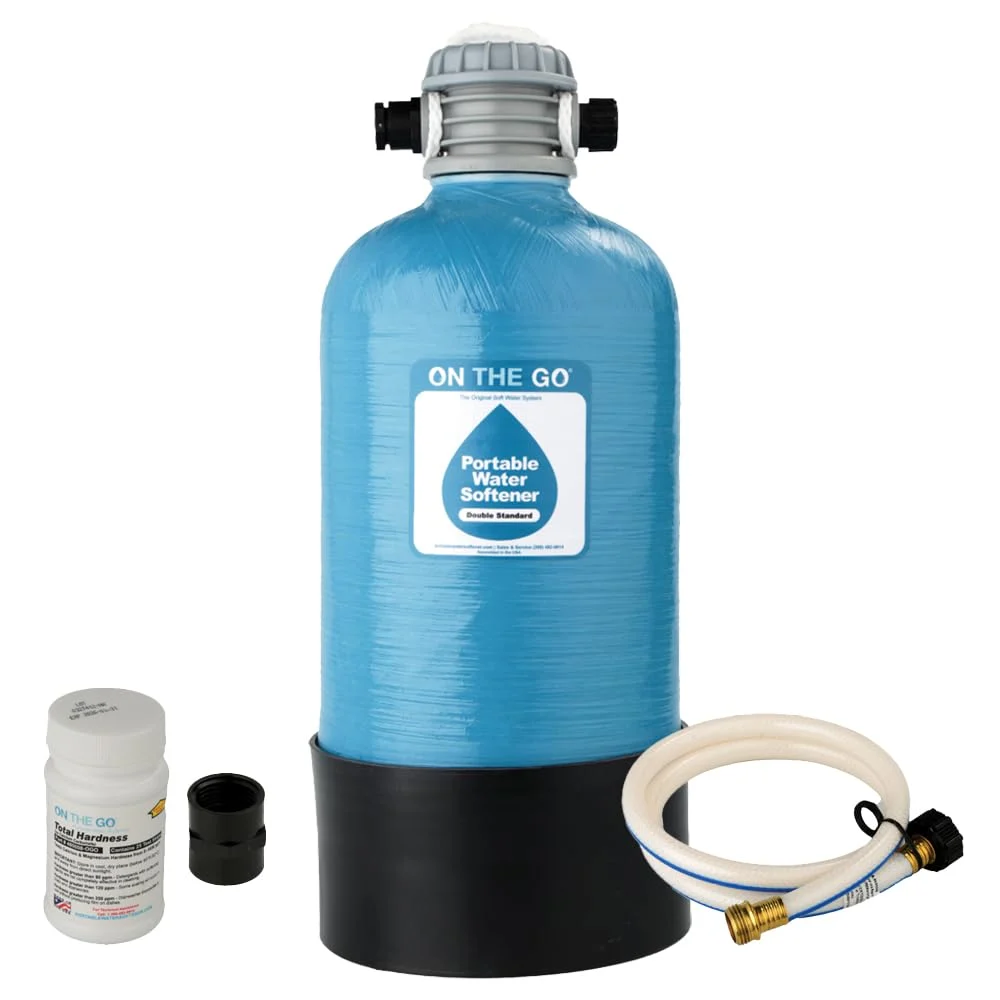
The On The Go OTG4-DBLSOFT takes Best Portable Option because its portable resin bed, garden hose connection and 32 lb body soften water with no plumbing, no tools and no electricity.
What matters in daily use
This is a softener you carry rather than install. The resin bed sits in a 22 inch tall, 9.5 inch diameter tank with a handle on top, and it couples to a park faucet with a standard garden hose thread, so a renter or RV owner can soften a whole rig's supply and then stow the unit in a storage bay.
Regeneration uses two boxes of common table salt and needs no power, which matters at a campsite pedestal. The high grade premium resin and large mouth opening are the practical details: fast salt loading and low pressure drop at normal RV flow.
The limit is volume. A portable unit serves a tank and a shower schedule, not a three bathroom house, and you regenerate by hand rather than on a meter. Choose the On The Go when portability is the requirement, not when capacity is.
Specifications
| Type | Water softener |
|---|---|
| Grain capacity | 16,000 grains |
| Installation | No installation |
| Weight | 32 lb |
Pros
- No plumbing, tools or electricity needed to run
- Handle and cap and plug make it genuinely travel ready
- Manual salt regeneration takes under 30 minutes
- Low pressure drop suits RV and marine flow rates
Cons
- A portable unit cannot cover a whole house
- Regeneration is manual, not metered or automatic
Best for Well Water
Kenmore 420
- Water softener
- NSF certified
- 7.7 GPM
- Sediment, Iron, Hardness
- DIY install
Best for: Larger families with iron bearing well water
Skip if: Your water is municipal or your well test shows low iron and hardness.
Price range: Mid-range
Check price on AmazonPaid link. We may earn a commission.
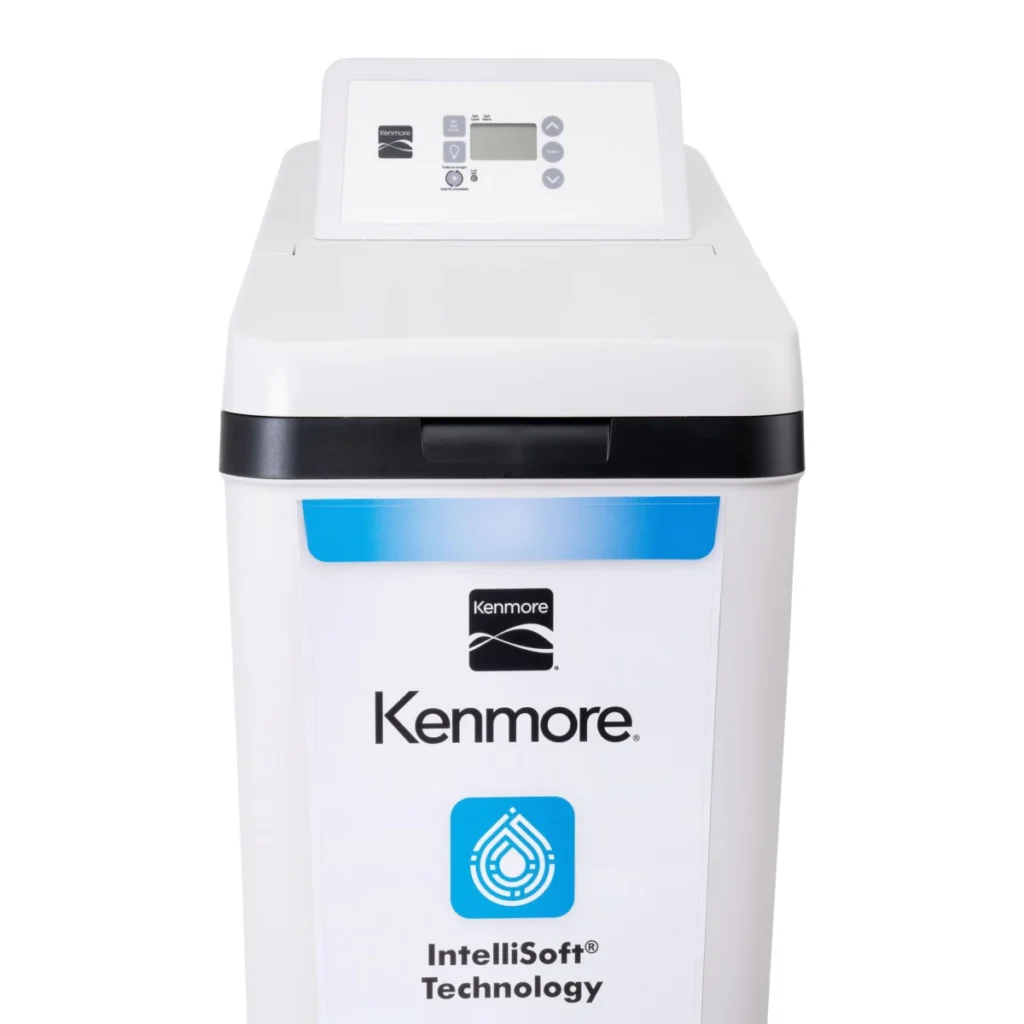
The Kenmore 420 is Best for Well Water because its 40,000 grain ion exchange bed, a 7.7 GPM flow rate and a sediment pre-filter with enhanced iron reduction address the rust and hardness that private wells actually deliver.
What matters in daily use
Well water punishes a softener with two things at once: hardness minerals and clear water iron, which fouls resin if it is not handled. The Kenmore 420 pairs a 40,000 grain bed with a sediment pre-filter and enhanced iron reduction, and the 7.7 GPM flow rate at 20 to 125 psi keeps pressure steady across a larger home's taps.
IntelliSoft regeneration still meters salt use, so the extra capacity does not automatically mean extra salt. It is rated for one to five people, which puts it a step above the Kenmore 350's one to four person sizing.
The cost of that capability is bulk and installation weight: the unit is 102 lb and needs a real utility space plus a drain for regeneration. Buyers with very high iron should compare the DuraWater Iron Blaster, which uses fine mesh resin aimed at iron heavy wells, and anyone on treated city water gains nothing from the iron features and can spend less on the Kenmore 350. Test the well first; the right setting depends on measured hardness and iron, not on a guess.
Specifications
| Type | Water softener |
|---|---|
| Certifications | NSF certified (per listing; standard not stated) |
| Reduces | Sediment, Iron, Hardness (named in listing) |
| Flow rate | 7.7 GPM |
| Grain capacity | 40,000 grains |
| Water pressure | 20-125 psi |
| Installation | DIY install |
| Weight | 102 lb |
Pros
- Capacity and flow suit larger families
- Sediment pre-filter and iron reduction target well water problems
- Demand regeneration limits salt use despite the bigger bed
- 10 year tank warranty covers the pressure vessel
Cons
- 102 lb unit needs space and a drain
- Iron features add cost for city water households
Best for Chlorinated Supplies
AFWFilters Fleck 5600 SXT
- Water softener
- Chlorine, Hardness

Best for: City water users who want chlorine resistant resin
Skip if: Your water is unchlorinated well water, where crosslink resin buys you little.
Price range: Budget
Check price on AmazonPaid link. We may earn a commission.
The AFWFilters Fleck 5600 SXT earns Best for Chlorinated Supplies because its 10% crosslink resin is built to hold up where chlorine attacks standard resin, and the 1.5 cubic foot resin load suits a whole house.
What matters in daily use
Most softener resin degrades faster on chlorinated municipal water, and the 10% crosslink media here is the reason this unit is aimed at city supplies. The 1.5 cubic foot resin load is the working capacity behind this unit, and the Fleck 5600SXT valve meters regeneration instead of running on a fixed clock. For a household on treated water, that combination is the point of the product.
The hardware is sized for standard home plumbing: a 10 inch by 54 inch mineral tank, 62 inches installed height, a 14 inch by 36 inch brine tank holding 250 lb of salt, and 1 inch NPT inlet and outlet. Compared with the DuraWater Fleck 5600 SXT, which shares the valve and grain rating but lists no upgraded resin, this pick costs more complexity for chlorine resistance.
The Kenmore 350, by contrast, is a cabinet unit that houses the resin and brine tank in one footprint.
Specifications
| Type | Water softener |
|---|---|
| Reduces | Chlorine, Hardness (named in listing) |
| Grain capacity | 48,000 grains |
| Connection | 1 in |
Pros
- Crosslink resin resists chlorine degradation
- Metered valve regenerates on actual water use
- Standard 1 inch connections suit typical home plumbing
- Large brine tank cuts refill frequency
Cons
- Two-tank footprint needs more floor space
- No stated certification standard on the listing
Best Value
DuraWater Fleck 5600 SXT
- Water softener
- Hardness
Best for: Budget buyers who want a metered 48,000 grain unit
Skip if: Your supply is heavily chlorinated or iron bearing, where the resin spec matters more.
Price range: Mid-range
Check price on AmazonPaid link. We may earn a commission.
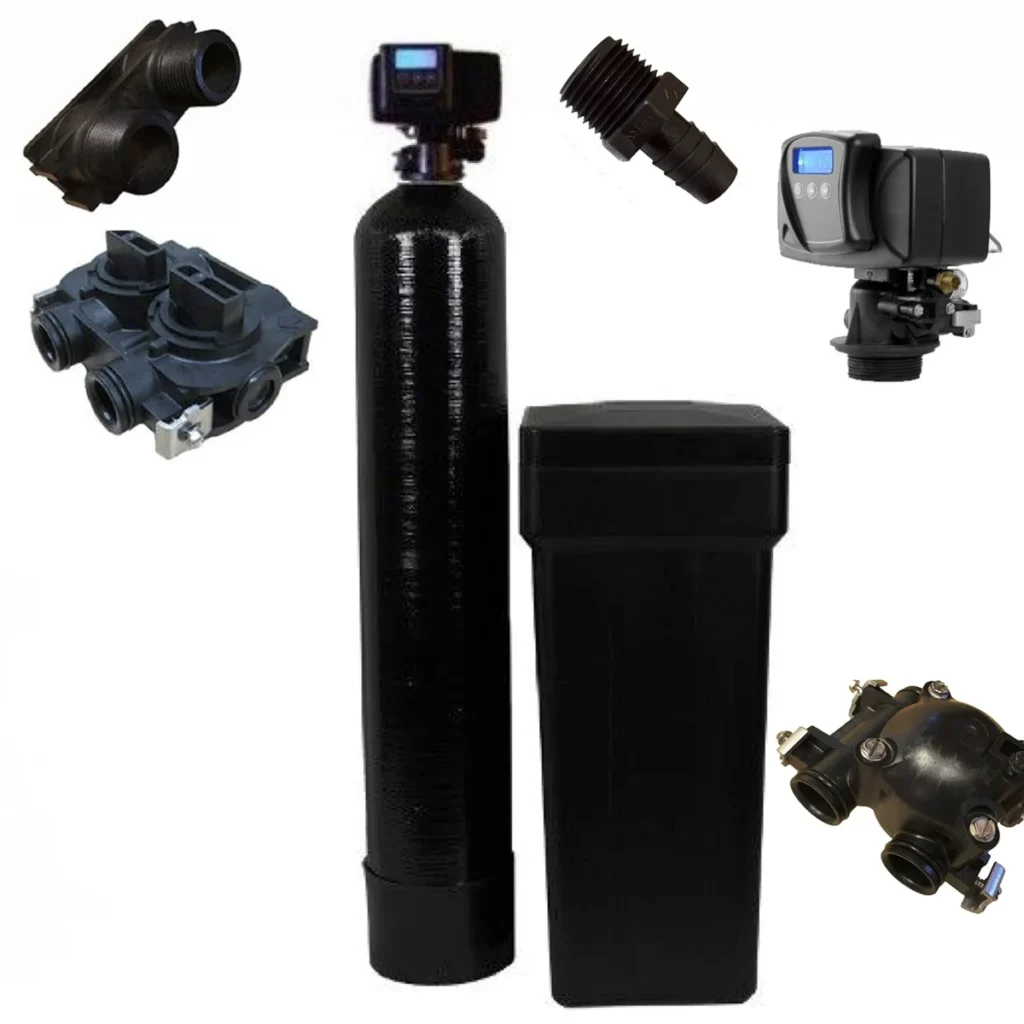
The DuraWater Fleck 5600 SXT takes Best Value by pairing the metered Fleck 5600 SXT valve with a complete tank, bypass and brine tank setup, so a household gets a full metered softener build in one order.
What matters in daily use
This is the straightforward version of a metered softener: high capacity resin in a black mineral tank, the Fleck 5600 SXT on-demand control, a plastic bypass with 1 inch yoke, and a 14 inch by 36 inch brine tank with a safety float. Regeneration is triggered by measured water use rather than a timer, so salt goes toward water you actually ran.
The tradeoff against the AFWFilters Fleck 5600 SXT is resin specification. Both use the same Fleck 5600 SXT valve, but only the AFWFilters unit names 10% crosslink media for chlorine resistance; this one lists standard high capacity resin and names hardness as its only reduction. Households on chlorinated city water should weigh that difference, while well owners with iron should look at the DuraWater Iron Blaster instead.
Specifications
| Type | Water softener |
|---|---|
| Reduces | Hardness (named in listing) |
| Grain capacity | 48,000 grains |
Pros
- Metered regeneration saves salt versus timer models
- Complete kit includes bypass and brine tank
- Same trusted valve as pricier Fleck builds
Cons
- Standard resin, not the chlorine resistant crosslink type
- Listing names hardness reduction only, no iron claim
Best for Iron Heavy Wells
DuraWater Iron Blaster
- Water softener
- Sediment, Iron, Hardness

Best for: Well owners with high clear water iron
Skip if: Your water is municipal and iron free, where fine mesh resin adds nothing.
Price range: Premium
Check price on AmazonPaid link. We may earn a commission.
The DuraWater Iron Blaster is Best for Iron Heavy Wells because its fine mesh resin is specified for well water carrying higher clear water iron, backed by the metered Fleck 5600 SXT valve.
What matters in daily use
Fine mesh resin is the distinguishing part: it is chosen for well supplies where clear water iron would foul or channel standard media, and the listing pairs it with a 10 inch by 54 inch resin tank. The metered Fleck 5600 SXT valve regenerates only as needed, which matters on iron because backwash frequency affects how well the bed keeps working.
The 14 inch square brine tank holds roughly 250 lb of salt with a safety float and overflow drain. Set against the Kenmore 420, the other iron oriented pick, this unit is a two tank freestanding build rather than a compact cabinet, and it names sediment, iron and hardness rather than stating a flow rate or pressure range. Buyers with iron should still test their water first to confirm the iron type and level.
Specifications
| Type | Water softener |
|---|---|
| Reduces | Sediment, Iron, Hardness (named in listing) |
| Grain capacity | 48,000 grains |
Pros
- Fine mesh resin aimed at iron bearing well water
- Metered regeneration cuts salt use
- Large brine tank with overflow protection
- Standard tank sizing fits typical basements
Cons
- No stated flow rate or pressure range
- Two tank layout needs dedicated floor space
Best for Tight Install Spaces
EcoPure EP42
- Water softener
- NSF certified
- Sediment, Iron, Hardness
Best for: Households needing a slim cabinet and pro install
Skip if: Your space is generous and you want to install the softener yourself.
Price range: Premium
Check price on AmazonPaid link. We may earn a commission.
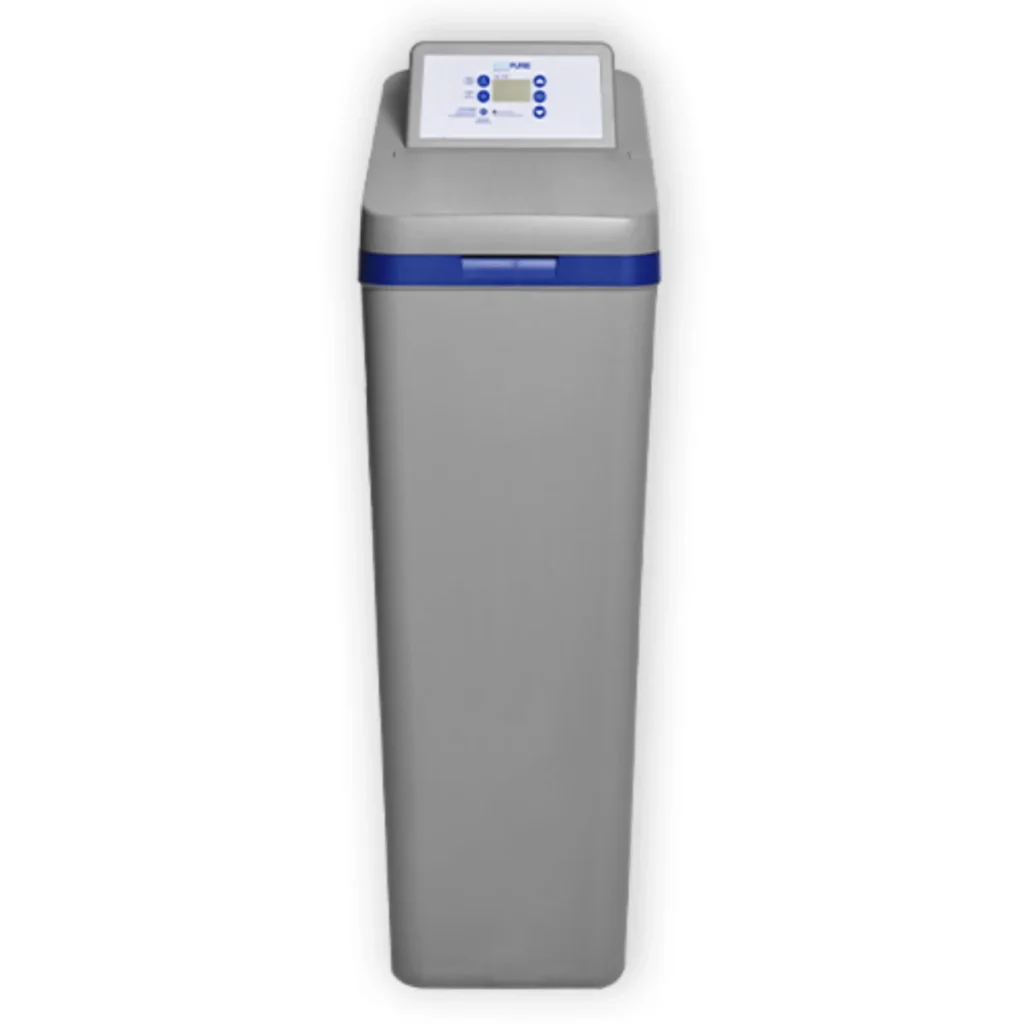
The EcoPure EP42 earns Best for Tight Install Spaces because its cabinet footprint is the smallest among the full-size softeners here, and its AutoSense metering sizes each regeneration to actual use.
What matters in daily use
The EP42 is an ion exchange water softener, and the listing names reduction of sediment, iron and hardness, including up to 11 ppm of clear water iron. For a family on a well with rust staining, that iron figure is the number to check against a lab test before buying.
Its cabinet measures 24 by 18 by 46 inches, the shortest and narrowest footprint among the full-size softeners here, which matters in a utility closet or under-stair alcove. The tradeoff is installation: the listing describes professional installation, so budget for a plumber, unlike the Kenmore 350, which is listed as a DIY install. AutoSense calculates salt and water per regeneration rather than running on a fixed schedule.
Specifications
| Type | Water softener |
|---|---|
| Certifications | NSF certified (per listing; standard not stated) |
| Reduces | Sediment, Iron, Hardness (named in listing) |
| Grain capacity | 42,000 grains |
Pros
- Compact cabinet fits closets that reject taller tanks
- AutoSense metering trims salt and water waste
- Handles both city water and well water per listing
Cons
- Listing describes professional installation, adding plumber cost
- NSF standard number is not stated
- Buyer ratings are mixed from a small number of buyers
How do you size a water softener to your hardness and household?
Sizing a water softener starts with two numbers: your water hardness in grains per gallon and your daily water use in gallons. Multiply hardness by daily gallons to get grains removed per day, then multiply by days between regenerations to find the grain capacity you need.
A family of four using 75 gallons per person per day at 10 grains per gallon removes 3,000 grains daily, so a 32,000 grain unit regenerates roughly every 10 days. Test hardness with a kit or your utility report before buying.
Salt based softener or salt free conditioner: which problem are you
A salt based softener removes hardness minerals through ion exchange resin and regenerates with salt or potassium chloride, so it actually softens water. A salt free conditioner, often called a template assisted crystallization device, changes how minerals behave so they are less likely to stick as scale, but it does not remove calcium or magnesium and does not reduce the grains per gallon reading.
If your complaint is soap that will not lather, stiff laundry or white crust on fixtures, you need ion exchange, not a conditioner.
Decision guide
Which water softener should you buy for your situation?
The Kenmore 350 and Kenmore 420 share a cabinet design and IntelliSoft metering, but the 420 steps up to 40,000 grains, a listed 7.7 GPM flow rate and a sediment pre filter aimed at well water. Pick the 350 for one to four people on treated water who want a compact DIY install; pick the 420 if you have five people, iron in the water or three bathrooms drawing at once.
The AFWFilters Fleck 5600 SXT and the DuraWater Fleck 5600 SXT both use the Fleck 5600 SXT valve, but the AFWFilters version specifies 10 percent crosslink resin, which resists chlorine degradation, while the DuraWater listing does not state a resin type. Choose AFWFilters on chlorinated city water; choose DuraWater if budget is the priority and you accept the standard resin.
Our process
How we chose our Water Softener System picks
Products were shortlisted from whole house ion exchange softeners and portable softeners with published grain capacity, flow rate, connection size and installation requirements. Ranking weighed grain capacity against typical household size, regeneration style, well water features such as iron and sediment tolerance, installation fit including drain and electrical needs, and buyer feedback. Units without a stated certification or flow rate were not penalized but were ranked below models with more complete specifications.
Common questions
Frequently asked questions
Do I need a water softener or a salt free conditioner?
Choose a salt based softener if you want to remove hardness minerals and stop scale, stiff laundry and soap scum. A salt free conditioner only reduces scale buildup and does not lower grains per gallon. If you cannot install a softener, a portable ion exchange unit such as the On The Go OTG4-DBLSOFT is the closer match.
What size water softener do I need for a family of four?
A family of four typically needs 32,000 to 40,000 grains of capacity at moderate hardness, but the right number depends on your measured grains per gallon and daily gallons. Test hardness first, then size so the unit regenerates about once a week.
Does a water softener remove chlorine, lead or PFAS?
No. Ion exchange softening targets calcium and magnesium, and the models here do not state reduction of chlorine, lead or PFAS. The AFWFilters unit lists chlorine among the items it reduces, but that reflects resin durability rather than a drinking water claim. Add a whole house carbon filter or a reverse osmosis system for those contaminants.
Is softened water safe to drink and does it taste salty?
Softened water is generally safe to drink, but ion exchange adds a small amount of sodium, and people on sodium restricted diets should check with a doctor or use potassium chloride. It usually does not taste salty at normal hardness levels. For taste and contaminant concerns, follow EPA or CDC guidance and read your local water quality report.
Can I install a water softener myself or do I need a plumber?
The Kenmore 350, Kenmore 420, AFWFilters and DuraWater units are listed as DIY install, but all require a drain line, an electrical outlet and a bypass valve on your main line. If you are not comfortable cutting into plumbing, hire a plumber. The On The Go OTG4-DBLSOFT needs no installation and connects with a garden hose.
Bottom line
Final verdict
- Most one to four person households on hard water: Kenmore 350. The Kenmore 350 pairs 32,000 grains with a compact cabinet and demand based regeneration, so it fits a standard install without overspending on capacity.
- Larger families with iron bearing well water: Kenmore 420. The Kenmore 420 adds 40,000 grains, a 7.7 GPM flow rate and a sediment pre filter, which matter when five people and well water iron push a smaller unit to regenerate too often.
- Renters and RV owners who cannot cut into plumbing: On The Go OTG4-DBLSOFT. The On The Go OTG4-DBLSOFT softens water through a garden hose connection with no tools or electricity, so it suits temporary setups where a plumbed softener is not an option.
Final decision
Compare two finalists
Choose the two picks you narrowed down to see who each one suits and the main reason to skip it.