7 Water Filters Certified for PFAS, Ranked by What They Actually Remove
Published October 29, 2026
As an Amazon Associate we earn from qualifying purchases. This never changes which products we recommend.
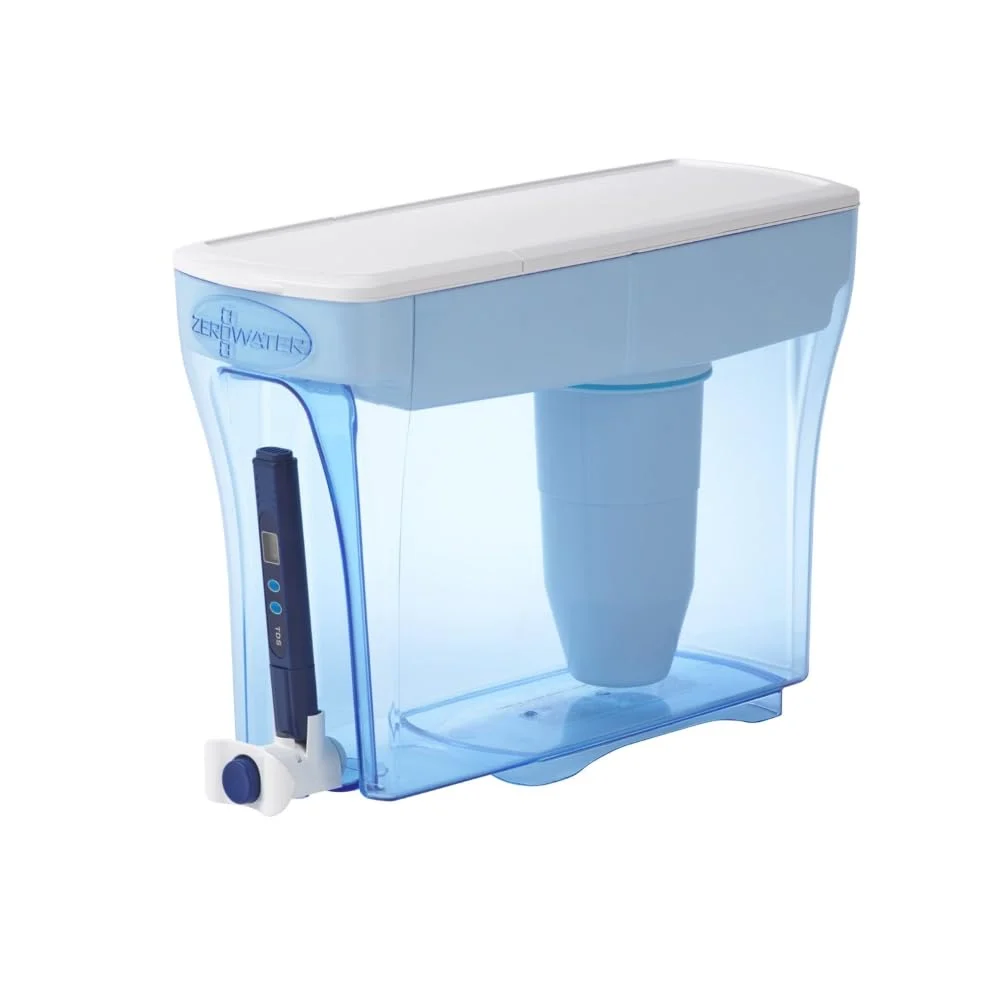
The closest match for most households is the ZeroWater 23-Cup Water Filter Dispenser, a gravity-fed countertop unit whose five-stage ion exchange filter is listed as reducing PFOA and PFOS along with lead and mercury, with no plumbing and no installation. It leads this guide because it delivers a named PFAS claim in the simplest format available.
The real dividing line is certification and installation. A dispenser or pitcher needs no tools but fills slowly and relies on proprietary cartridges; an under sink or reverse osmosis system delivers water on tap and adds fluoride, arsenic and dissolved solids to the coverage, at the cost of a cold water line, cabinet space and, for reverse osmosis, wastewater.
 Best OverallZeroWater 23-Cup DispenserNo-install PFAS reduction for renters and families8.4/10
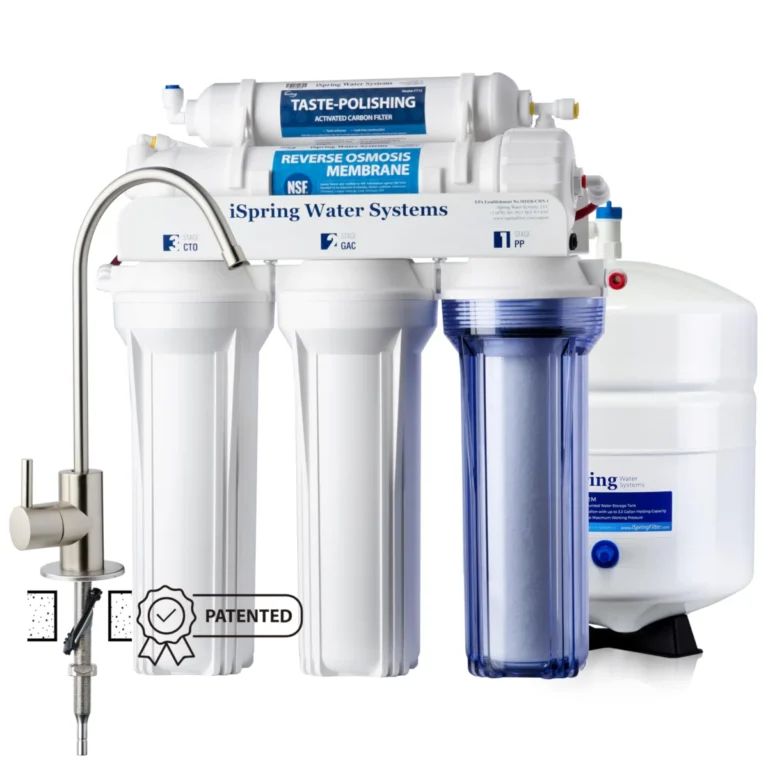
 Best Reverse Osmosis for PFASiSpring RCC7-BNHomeowners wanting PFAS plus fluoride from the tap8.3/10
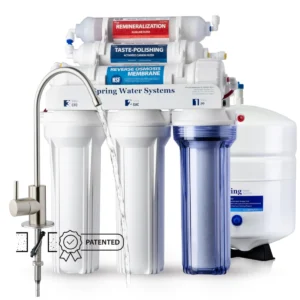 Best with RemineralizationiSpring RCC7AK-BNHouseholds that dislike flat-tasting RO water8.3/10
 Best Long-Life CartridgeCuZn UC-200Low-maintenance under sink filtration without wastewater8.3/10
Table of contents9 sections · tap to expand
At a glance
Our top picks compared
| Product | Best for | Type and size | Key features | Where to buy |
|---|---|---|---|---|
| 1. ZeroWater 23-Cup Dispenser Best Overall 8.4/10 | No-install PFAS reduction for renters and families | Gravity filter, 23 cups | NSF certifiedLead reductionPFAS reduction | Budget Check price |
| 2. iSpring RCC7-BN Best Reverse Osmosis for PFAS 8.3/10 | Homeowners wanting PFAS plus fluoride from the tap | Reverse osmosis system, 75 gallons, 75 GPD | NSF certifiedLead reductionPFAS reductionFluoride | Premium Check price |
| 3. iSpring RCC7AK-BN Best with Remineralization 8.3/10 | Households that dislike flat-tasting RO water | Reverse osmosis system, 75 gallons, 75 GPD | NSF certifiedLead reductionPFAS reductionFluoride | Premium Check price |
| 4. CuZn UC-200 Best Long-Life Cartridge 8.3/10 | Low-maintenance under sink filtration without wastewater | Under sink filter, 6 months | NSF certifiedLead reductionPFAS reductionInstallation | Mid-range Check price |
 5. ZeroWater 10-Cup Pitcher Best Pitcher 8.2/10 | Fridge storage and small households | Pitcher, 10 cups | NSF certifiedLead reductionPFAS reduction | Budget Check price |
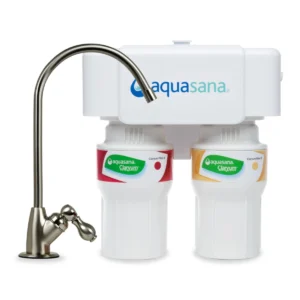 6. Aquasana AQ-5200.55 Best Value Under Sink 8.0/10 | Fast flow at a lower entry point | Under sink filter, 500 gallons | Lead reductionPFAS reductionFilter life listed | Budget Check price |
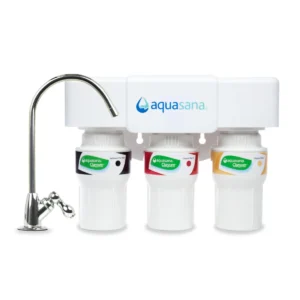 7. Aquasana AQ-5300.56 Best Three-Stage Under Sink 8.0/10 | More media and longer filter life | Under sink filter, 600 gallons | Lead reductionPFAS reductionFilter life listed | Mid-range Check price |
Score: our 0-10 rating from fit for this use, buyer ratings, review volume, completeness of the product details and availability. It is not a lab test.
Buying advice
How to choose a water filter that removes PFAS
Match the certification to the compound, not the slogan
PFAS is a family of thousands of compounds, and a filter claim is only as good as the compounds it names. Look for an NSF/ANSI 53 listing for PFOA and PFOS on a carbon or ion exchange filter, or NSF/ANSI 58 on a reverse osmosis system, and check the performance data sheet for the specific reduction figures.
NSF/ANSI 401 is a separate emerging-contaminant claim and does not substitute for a 53 PFOA/PFOS listing. A vague "reduces PFAS" line without a standard tells you nothing you can act on.
Decide how much installation you will accept
A gravity dispenser or pitcher needs no tools, no cold water line and no cabinet space, which makes it the only realistic option for many renters. An under sink carbon filter needs a cold water line tee and roughly a foot of cabinet clearance, and a reverse osmosis system adds a storage tank, a drain connection and a faucet hole. Each step up buys flow rate and broader contaminant coverage; each step also adds installation work and something to undo when you move.
Compare filter life and cost per gallon, not sticker price
Cartridge life ranges widely across these types, from a few hundred gallons on a two-stage under sink unit to a multi-year inline cartridge, and reverse osmosis adds a membrane replacement every few years. Divide the cartridge price by its rated gallons to get a cost per gallon you can compare across formats. A cheap pitcher with short-lived proprietary cartridges can cost more per gallon than a pricier under sink system with a long filter life.
Check what else the filter covers
Most people shopping for PFAS also care about lead, and some want fluoride or microplastics handled by the same unit. Carbon block under sink filters typically add lead and chlorine; reverse osmosis adds fluoride, arsenic and dissolved solids but strips minerals, which is why remineralization stages exist. Decide which second contaminant matters before you choose a type, because a filter certified for PFAS alone may leave your other concern untouched.
Our picks
Certified PFAS filters ranked by type, certification and running cost
Best Overall
ZeroWater 23-Cup Dispenser
- Gravity filter
- NSF certified
- Lead, PFAS, Mercury
Best for: No-install PFAS reduction for renters and families
Skip if: You want faster flow and a dedicated faucet, or need a certification that names the standard it was tested to.
Price range: Budget
Check price on AmazonPaid link. We may earn a commission.
Earns Best Overall because it reduces lead, PFAS and mercury with no plumbing, no wastewater and no installation, which makes it the only pick here that works in a rental kitchen or a dorm room.
What matters in daily use
The 23-cup reservoir and gravity-fed spigot mean the dispenser sits on a counter and pours without a cold water line, so a renter can put PFAS reduction in place the day it arrives. The five-stage ion exchange media is the same design used across the ZeroWater line, and the included TDS meter lets a household watch dissolved solids climb as the cartridge ages instead of guessing at a calendar date.
The tradeoff is speed and capacity per pour: gravity filtration runs slower than the half-gallon-per-minute flow of the Aquasana AQ-5200.55, and 23 cups covers drinking and cooking for a small household rather than a whole day of use. The listing also states NSF certification without naming the standard, so a buyer who needs documented NSF/ANSI 53 lead reduction should confirm the claim on the performance data sheet before relying on it.
Specifications
| Type | Gravity filter |
|---|---|
| Certifications | NSF certified (per listing; standard not stated) |
| Reduces | Lead, PFAS, Mercury (named in listing) |
| Stages | 5 stages |
| Capacity | 23 cups |
Pros
- No install, no plumbing and no permanent change to a rental
- Certified for PFOA/PFOS, lead, chromium and mercury
- TDS meter shows when the cartridge is spent
- Spigot fills bottles and pitchers without lifting the unit
Cons
- Gravity flow is slower than a plumbed under sink filter
- 23 cups may not cover a large family's daily drinking water
- Listing names NSF certification without stating the standard
Best Reverse Osmosis for PFAS
iSpring RCC7-BN
- Reverse osmosis system
- NSF/ANSI 58
- 75 gallons
- 75 GPD
- Chlorine, Lead, PFAS
- DIY install
Best for: Homeowners wanting PFAS plus fluoride from the tap
Skip if: You rent, cannot tap a cold line, or want drinking water without wastewater.
Price range: Premium
Check price on AmazonPaid link. We may earn a commission.
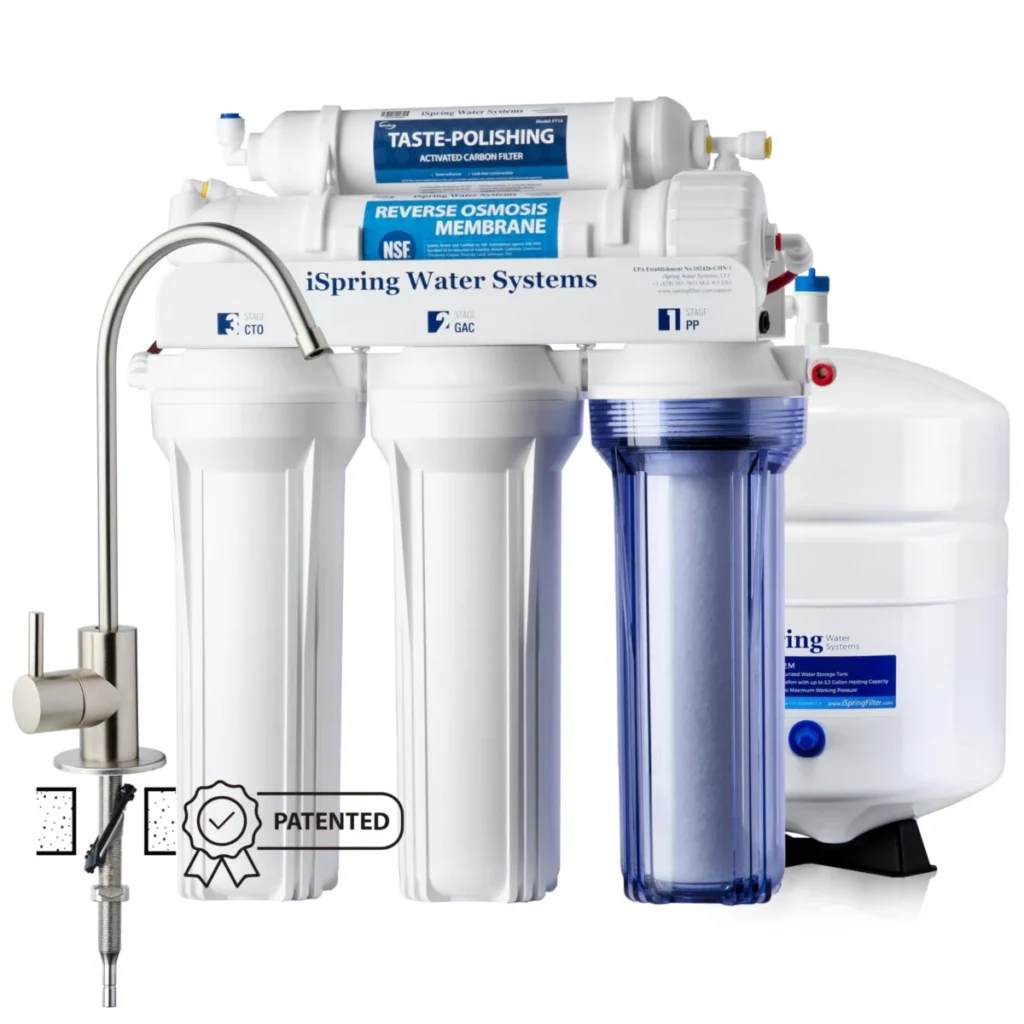
Takes Best Reverse Osmosis for PFAS because NSF/ANSI 58 certification covers the full system and the five stages also address fluoride and lead, which no carbon-only pick in this guide claims.
What matters in daily use
At 75 GPD the RCC7-BN produces roughly three gallons an hour, enough to refill its storage tank overnight for a family's drinking and cooking. The five stages pair sediment and carbon prefilters with the RO membrane, and the listing names PFAS, fluoride, chlorine and lead among the reductions, with lead stated up to 98%. NSF/ANSI 58 certification applies to the system rather than a single cartridge, which is the stronger claim to look for on an RO unit.
The costs are space and wastewater. This is an under sink system that needs a cold supply line, a drain connection and cabinet room, plus a tank that takes up more of that cabinet than the tankless ZeroWater 23-Cup Dispenser takes on a counter. RO also strips minerals along with contaminants, so some households find the taste flat; the iSpring RCC7AK-BN adds a remineralization stage for that reason.
Specifications
| Type | Reverse osmosis system |
|---|---|
| Certifications | NSF/ANSI 58 |
| Reduces | Chlorine, Lead, PFAS, Fluoride (named in listing) |
| Filter life | 75 gallons |
| Flow rate | 75 GPD |
| Stages | 5 stages |
| Installation | DIY install |
Pros
- Full-system NSF/ANSI 58 certification, not just component testing
- Reduces fluoride and PFAS that carbon filters largely pass
- 75 GPD refills the tank quickly for a family
- No electricity draw and a DIY-friendly faucet mount
Cons
- Needs under sink space, a drain line and a supply tee
- Produces wastewater and leaves water tasting flat
- Membrane and prefilter replacements add to long-term upkeep
Best with Remineralization
iSpring RCC7AK-BN
- Reverse osmosis system
- NSF/ANSI 58
- 75 gallons
- 75 GPD
- Chlorine, Lead, PFAS
- DIY install
Best for: Households that dislike flat-tasting RO water
Skip if: Cabinet space is tight, or you want the simplest, fewest-cartridge RO setup.
Price range: Premium
Check price on AmazonPaid link. We may earn a commission.
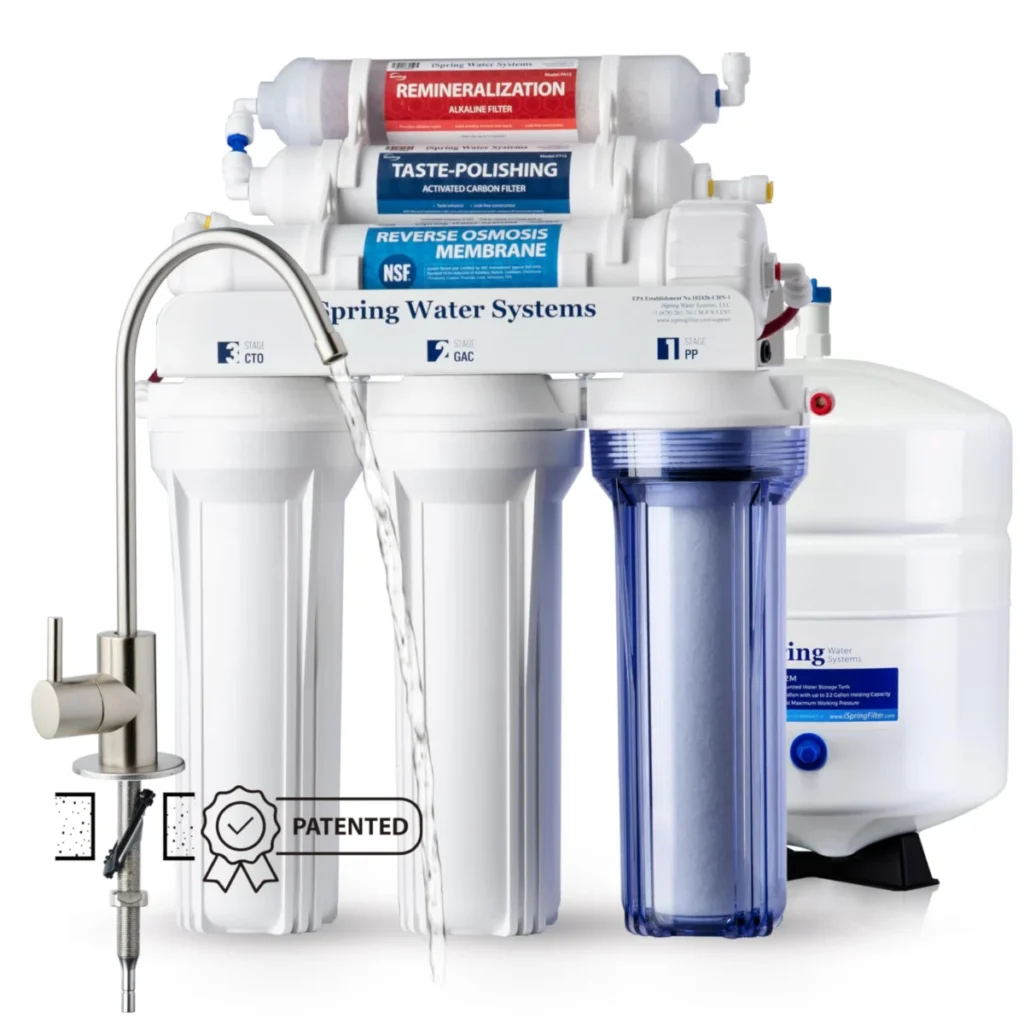
Wins Best with Remineralization because the sixth alkaline stage restores minerals and pH after the membrane, giving RO-level PFAS and fluoride reduction without the flat taste that puts some households off the RCC7-BN.
What matters in daily use
The first five stages mirror the RCC7-BN: sediment and carbon prefilters, the RO membrane, then a polishing stage, all certified to NSF/ANSI 58. The sixth stage adds natural mineral media that the listing describes as balancing pH and returning minerals, which matters because RO water loses the calcium and magnesium that give tap water its body. The listing also names a wider reduction list, including copper, chromium, cadmium and selenium alongside PFAS, fluoride and lead.
Buyers trade a little more hardware for that taste. The RCC7AK-BN measures 15.5 by 16 by 18 inches, so it wants a roomier cabinet than the Aquasana AQ-5300.56, and the extra cartridge means one more item on the replacement schedule. The top-mounted faucet fastener lets most of the install happen above the counter, which shortens the job for a confident DIYer but does not remove the need for a drain saddle and supply connection.
Specifications
| Type | Reverse osmosis system |
|---|---|
| Certifications | NSF/ANSI 58 |
| Reduces | Chlorine, Lead, PFAS, Fluoride, Copper (named in listing) |
| Filter life | 75 gallons |
| Flow rate | 75 GPD |
| Stages | 6 stages |
| Installation | DIY install |
| Remineralization | Yes |
Pros
- Remineralization restores minerals and improves RO taste
- Full-system NSF/ANSI 58 certification
- Broad named reduction list including fluoride and PFAS
- Top-mounted fastener simplifies countertop installation
Cons
- Six stages mean more cartridges to track and replace
- Larger footprint than a two or three stage under sink unit
- Still needs a drain line and produces wastewater
Best Long-Life Cartridge
CuZn UC-200
- Under sink filter
- NSF/ANSI 42, NSF/ANSI
- 6 months
- Chlorine, Lead, PFAS
- DIY install

Best for: Low-maintenance under sink filtration without wastewater
Skip if: You want fluoride or dissolved solids removed, which needs reverse osmosis.
Price range: Mid-range
Check price on AmazonPaid link. We may earn a commission.
The CuZn UC-200 earns Best Long-Life Cartridge because its 5-year filter life and no-wastewater inline design cut maintenance to almost nothing, while still naming PFAS, lead and chlorine reduction.
What matters in daily use
The UC-200 is an inline under sink filter built around a three-stage blend of micro sediment membranes, KDF-55 and coconut shell carbon. That combination targets chlorine taste, sediment and the metals and PFAS the listing names, and because it is not reverse osmosis it sends no wastewater down the drain and needs no tank or power.
The 7.02 lb unit connects to the cold line with the included stainless steel hose and needs no drilling, which suits a homeowner who wants filtered tap water without a plumbing project.
The headline number is the filter life: five years on one cartridge, against 500 gallons or six months for the Aquasana AQ-5200.55. That long interval is the reason it takes the long-life award, but it comes with a narrower scope.
Specifications
| Type | Under sink filter |
|---|---|
| Certifications | NSF/ANSI 42, NSF/ANSI 372 |
| Reduces | Chlorine, Lead, PFAS, Sediment (named in listing) |
| Filter life | 6 months |
| Stages | 3 stages |
| Installation | DIY install |
| Weight | 7.02 lb |
Pros
- Very long service interval between cartridge changes
- No wastewater, storage tank or power required
- Inline DIY connection with no drilling needed
- Retains beneficial minerals, per the listing
Cons
- Certifications cover aesthetics and materials, not a full health-effects roster
- Does not reduce TDS, fluoride or dissolved solids
- Long-life claim sits alongside a 6-month fact sheet figure
Best Pitcher
ZeroWater 10-Cup Pitcher
- Pitcher
- NSF certified
- Lead, PFAS, Mercury

Best for: Fridge storage and small households
Skip if: You fill large bottles daily or want a spigot, so step up to the dispenser.
Price range: Budget
Check price on AmazonPaid link. We may earn a commission.
The ZeroWater 10-Cup Pitcher takes Best Pitcher because its 5-stage ion exchange filter names lead, PFAS and mercury reduction with no installation at all, and the included TDS meter shows when the cartridge is spent.
What matters in daily use
ZeroWater's approach is ion exchange rather than carbon alone, and the listing puts the TDS removal rate at 99.6 percent across five stages. For a renter or a small household, that means a freestanding pitcher that goes from box to counter with no plumbing, no faucet adapter and no permanent change to the kitchen. The bundled TDS meter is the practical part: dissolved solids climb as the resin exhausts, so a reading tells you when to swap the cartridge instead of guessing from taste.
The tradeoff is speed and batch size. Ten cups is a fridge-door or countertop quantity, and gravity-fed pitchers refill slowly, so a family filling bottles all day will spend time waiting. Compare the ZeroWater 23-Cup Dispenser, which uses the same five-stage chemistry with more than double the capacity and a spigot for filling containers. The pitcher's certification is listed as NSF certified without a stated standard number, so check the performance data sheet for the specific PFAS and lead claims before relying on it.
Specifications
| Type | Pitcher |
|---|---|
| Certifications | NSF certified (per listing; standard not stated) |
| Reduces | Lead, PFAS, Mercury (named in listing) |
| Stages | 5 stages |
| Capacity | 10 cups |
Pros
- No installation, plumbing or power needed
- TDS meter takes the guesswork out of cartridge changes
- Names PFAS, lead and mercury reduction
- Compact enough for fridge storage
Cons
- Ten-cup batch is small for larger households
- Gravity flow makes refills slow
- Certification standard number is not stated
Best Value Under Sink
Aquasana AQ-5200.55
- Under sink filter
- 500 gallons
- Chlorine, Lead, PFAS

Best for: Fast flow at a lower entry point
Skip if: You rent and cannot tee into the cold line, or you need fluoride reduction.
Price range: Budget
Check price on AmazonPaid link. We may earn a commission.
The Aquasana AQ-5200.55 is Best Value Under Sink because it delivers a half-gallon-per-minute flow and names PFAS, lead and chlorine reduction from a two-stage system that twists apart for cartridge changes.
What matters in daily use
Aquasana's Claryum two-stage design pairs sediment filtration with carbon media, and the listing states reduction of up to 99 percent of 78 contaminants including PFOA and PFOS, lead, chlorine, mercury and microplastics. The flow rate is the everyday difference: about half a gallon a minute means filling a pot or a bottle without the wait a pitcher imposes. Cartridges are rated for 500 gallons or six months, and the housing twists off without disconnecting water lines, so routine changes stay simple.
Where it gives ground is capacity and media depth. The three-stage Aquasana AQ-5300.56 carries a 600-gallon rating and adds VOC reduction to the named list, so a busy household may prefer the extra stage. The AQ-5200.55 also needs roughly 12 inches of cabinet space plus clearance and a cold water line tee, which rules out renters who cannot modify plumbing. It does not reduce TDS, so anyone chasing fluoride or dissolved solids should compare the iSpring RCC7-BN.
Specifications
| Type | Under sink filter |
|---|---|
| Reduces | Chlorine, Lead, PFAS, Microplastics, Mercury, Pesticides |
| Filter life | 500 gallons |
| Stages | 2 stages |
Pros
- Fast half-gallon-per-minute flow at the tap
- Cartridge housing twists off without disconnecting lines
- Names PFAS, lead, microplastics and mercury reduction
- Retains minerals such as calcium and magnesium, per the listing
Cons
- 500-gallon rating is shorter than the three-stage Aquasana
- Does not reduce TDS or fluoride
- Needs cabinet space and a cold line connection
Best Three-Stage Under Sink
Aquasana AQ-5300.56
- Under sink filter
- 600 gallons
- Chlorine, Lead, PFAS
Best for: More media and longer filter life
Skip if: You rent and cannot plumb a cold line, or you need fluoride and TDS reduction.
Price range: Mid-range
Check price on AmazonPaid link. We may earn a commission.
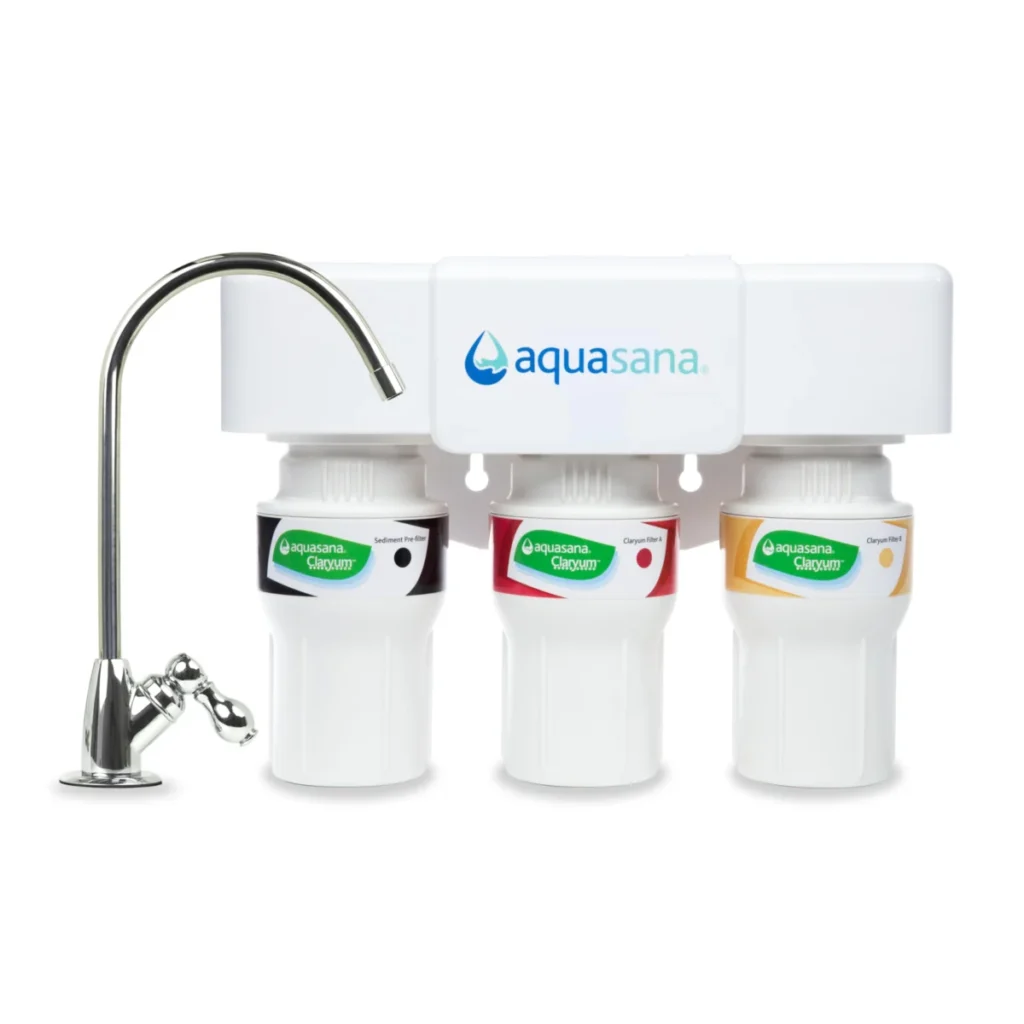
The Aquasana AQ-5300.56 earns Best Three-Stage Under Sink because its third stage lifts rated filter life to 600 gallons, the longest of the under sink picks here, while keeping the fast half-gallon-per-minute flow.
What matters in daily use
The AQ-5300.56 is a three-stage under sink filter rated for 600 gallons, and that extra stage is the whole point: it carries more media than the two-stage Aquasana AQ-5200.55, which is rated for 500 gallons, so a busy kitchen changes cartridges less often. Both share the same half-gallon-per-minute flow, so the gain is in filter life, not speed.
The listing names chlorine, lead, PFAS (PFOA and PFOS), microplastics, mercury, VOCs and pesticides, and states the system will not reduce total dissolved solids. That makes it a taste-and-trace-contaminant filter rather than a fluoride or TDS solution; households that want dissolved solids pulled out should look at the iSpring RCC7-BN. It needs about 12 inches of cabinet space and a cold supply line.
The tradeoff is installation: this is a plumbed under sink unit, so renters who cannot touch the plumbing are better served by the ZeroWater 23-Cup Dispenser, which needs no connection at all. For owners who can install it, the three-stage design buys longer intervals between cartridge changes, and the 600 gallon rating means roughly one cartridge set a year for a household drawing a few gallons a day from the dedicated faucet.
Specifications
| Type | Under sink filter |
|---|---|
| Reduces | Chlorine, Lead, PFAS, Microplastics, Mercury, VOCs |
| Filter life | 600 gallons |
| Stages | 3 stages |
| Weight | 6.44 lb |
Pros
- Half-gallon-per-minute flow fills a glass quickly
- Broad named contaminant list including PFOA and PFOS
Cons
- Needs plumbing and about 12 inches of cabinet space
- Third stage adds cost over the two-stage version
Does NSF/ANSI 401 certification mean a filter removes PFAS?
No. NSF/ANSI 401 covers emerging contaminants such as some pharmaceuticals and pesticides, and it is not the same claim as PFAS reduction. The certification that matters for PFOA and PFOS is an NSF/ANSI 53 listing that names those compounds, or NSF/ANSI 58 for a reverse osmosis system. A page that says "NSF/ANSI 401" without a 53 or 58 listing has not shown you PFAS reduction.
The wording on the label matters too. "Certified to" means an accredited body verified the claim; "tested to" or "reduces PFAS" in marketing copy does not. Before buying, open the manufacturer performance data sheet and look for PFOA and PFOS by name, with a reduction figure and the standard the system was certified against.
How do you check whether your current filter removes PFAS?
Find the model number on the housing or cartridge, then pull that model's performance data sheet from the manufacturer. Search it for PFOA and PFOS. If neither compound is listed with a reduction claim and a certification standard, the filter is not documented to reduce PFAS, whatever the front of the box says.
Next, check the certification body's listing rather than the retailer page, since listings are updated when a claim changes. A pitcher or faucet mount certified only to NSF/ANSI 42 for chlorine taste and odor is a taste filter, not a PFAS filter. If your water report shows PFAS above your state's limit, treat an uncertified filter as no protection and replace it with a system whose data sheet names the compounds.
Decision guide
Which PFAS filter fits your kitchen and plumbing?
The two iSpring systems share a 75 GPD rating, five-stage core and NSF/ANSI 58 certification, so the choice between them is about taste rather than PFAS coverage. The RCC7AK-BN adds a sixth remineralization stage that puts minerals back after the membrane, which suits households that find reverse osmosis water flat. The RCC7-BN keeps the simpler five-stage layout and a smaller footprint, so pick it if you want the same PFAS and fluoride reduction without the extra cartridge to change.
Among the under sink carbon options, the Aquasana pair differ mainly in stage count and rated life: the AQ-5200.55 is a two-stage system rated for 500 gallons, while the AQ-5300.56 adds a third stage and is rated for 600 gallons, with a slightly larger body. The CuZn UC-200 takes a different route, using KDF-55 and coconut shell carbon in an inline housing with a much longer stated filter life.
Choose Aquasana for higher flow and a twist-off cartridge change, and CuZn if you want to touch the system as rarely as possible.
Our process
How we chose our water filter for PFAS picks
Products were shortlisted from filters whose published listings name PFOA or PFOS or carry a PFAS-related certification, then ranked on certification specificity, the compounds named, filter type and installation burden, rated filter life, flow or production rate, additional contaminant coverage and buyer ratings. No product was tested or installed for this guide; the assessment rests on specifications, materials, design and aggregated buyer feedback, and every claim is limited to what the manufacturer states.
See also: How to Remove PFAS From Water: Check Your Supply, Then Pick a Certified Filter.
Common questions
Frequently asked questions
Does a standard water pitcher remove PFAS?
Most standard pitchers are certified to NSF/ANSI 42 for chlorine taste and odor, which is not a PFAS claim. Unless a specific model's performance data sheet names PFOA and PFOS with an NSF/ANSI 53 listing, treat it as a taste filter. Check the model number on the pitcher before relying on it for PFAS.
Does reverse osmosis remove PFAS?
Reverse osmosis membranes reject PFAS compounds effectively, and RO systems certified to NSF/ANSI 58 with PFOA and PFOS on the data sheet are a sound choice. Both iSpring systems here carry that certification. RO also removes fluoride and dissolved solids, so it needs remineralization if you want minerals back in the water.
How often do I change a PFAS filter cartridge?
Follow the rated life, not the calendar: the Aquasana AQ-5200.55 is rated for 500 gallons and the AQ-5300.56 for 600 gallons, while the ZeroWater dispensers rely on a TDS meter to signal when the ion exchange media is spent. Change early if flow drops sharply or taste changes, since loaded carbon stops adsorbing.
Will a PFAS filter lower my water pressure?
An under sink carbon filter can reduce flow somewhat as the cartridge loads, but the Aquasana systems are rated to deliver about half a gallon per minute, which is close to a normal kitchen tap. Reverse osmosis systems store water in a tank and dispense from it, so pressure at the faucet depends on tank charge rather than the membrane.
Do I need a whole house system for PFAS?
Not for drinking water. A certified point-of-use filter at the kitchen tap addresses what you drink and cook with at far lower cost. Whole house treatment makes sense only if you want PFAS reduced in every tap and shower, and it requires larger certified media, plumbing work and more frequent replacement.
Bottom line
Final verdict
- Renters and families who want PFAS reduction with no plumbing: ZeroWater 23-Cup Dispenser. The ZeroWater 23-Cup Dispenser names PFOA and PFOS on its filter and sits on the counter, so it delivers a PFAS claim without a cold water line or a landlord's permission.
- Homeowners who want PFAS plus fluoride and lead from the tap: iSpring RCC7-BN. The iSpring RCC7-BN is certified to NSF/ANSI 58 at 75 GPD, covering PFAS, fluoride and lead in one under sink system, though it needs a drain line and produces wastewater.
- Households that dislike the flat taste of reverse osmosis water: iSpring RCC7AK-BN. The iSpring RCC7AK-BN keeps the same 75 GPD reverse osmosis core and adds a remineralization stage, at the cost of one more cartridge to replace.
- Owners who want long filter life without wastewater: CuZn UC-200. The CuZn UC-200 uses KDF-55 and coconut shell carbon in an inline housing with a much longer stated filter life than the Aquasana cartridges, and it sends no water down the drain.
Final decision
Compare two finalists
Choose the two picks you narrowed down to see who each one suits and the main reason to skip it.
Keep reading
7 Chlorine Test Kits for Drinking Water and Filter Checks
The SJ WAVE 22 in 1 Water Test Kit is our top pick among 7 chlorine test kit for drinking waters, compared…
Best Water Filter for Microplastics: 7 Picks Matched to Micron Rating and Certification
The Aquagear Water Filter Pitcher is our top pick among 7 water filter for microplastics, compared on particle capture, certifications listed and…

Best Water Filter for Chlorine: 7 Picks for Renters, Under Sink and Whole House
The iSpring CKC1C Countertop Filter is our top pick among 7 water filter for chlorines, compared on chlorine reduction evidence and filter…