Best Carbon Water Filter by Format: Pitchers, Under Sink, Whole House and RO
Published October 29, 2026
As an Amazon Associate we earn from qualifying purchases. This never changes which products we recommend.
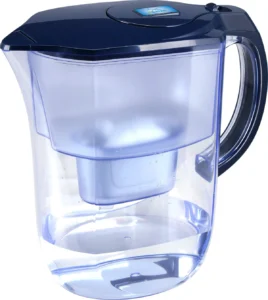
The closest match among the carbon-based options reviewed here is the Ehm Ultra Premium Alkaline Water Filter Pitcher, a BPA-free pitcher with an activated carbon filter that suits renters and small households who want better tasting water with no installation. It leads because it needs no plumbing, holds 3.5 liters and costs little to try.
The real split in this guide is between carbon-only formats, which reduce chlorine, taste and odor, and systems that add a reverse osmosis membrane to take out dissolved contaminants such as fluoride and arsenic. Installation, cartridge life and certification decide the rest.
 Best OverallEhm Ultra Premium Alkaline PitcherRenters wanting no-install taste improvement8.7/10
 Best for Dissolved ContaminantsiSpring RCC7-BNHouseholds with lead, PFAS or fluoride on the report7.8/10
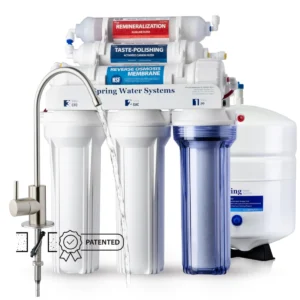 Best with RemineralizationiSpring RCC7AK-BNBuyers who want minerals and pH restored after RO7.8/10
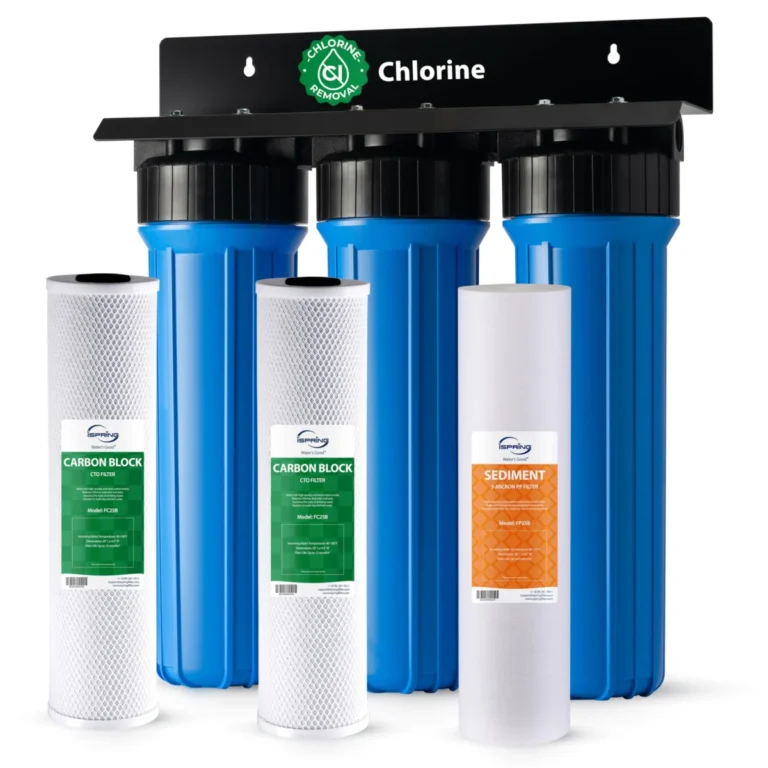
 Best Whole House CarboniSpring WGB32BChlorine reduction at every tap7.8/10
Table of contents9 sections · tap to expand
At a glance
Our top picks compared
| Product | Best for | Type and size | Key features | Where to buy |
|---|---|---|---|---|
| 1. Ehm Ultra Premium Alkaline Pitcher Best Overall 8.7/10 | Renters wanting no-install taste improvement | Pitcher | Budget Check price | |
| 2. iSpring RCC7-BN Best for Dissolved Contaminants 7.8/10 | Households with lead, PFAS or fluoride on the report | Reverse osmosis system, 75 gallons, 75 GPD | NSF certifiedLead reductionPFAS reductionFluoride | Mid-range Check price |
| 3. iSpring RCC7AK-BN Best with Remineralization 7.8/10 | Buyers who want minerals and pH restored after RO | Reverse osmosis system, 75 gallons, 75 GPD | NSF certifiedLead reductionPFAS reductionFluoride | Premium Check price |
| 4. iSpring WGB32B Best Whole House Carbon 7.8/10 | Chlorine reduction at every tap | Whole house filter, 100,000 gallons, 15 GPM | InstallationFilter life listed | Premium Check price |
 5. CuZn UC-200 Best Under Sink Carbon 7.8/10 | Compact under sink chlorine and taste filtering | Under sink filter, 6 months | NSF certifiedLead reductionPFAS reductionInstallation | Mid-range Check price |
 6. Brita Metro Pitcher Best Small Pitcher 7.7/10 | Single users with limited fridge space | Pitcher, 40 gallons, 6 cups | Filter life listed | Budget Check price |
 7. Brita Large 10 Cup Pitcher Best Value Replacement Cartridge 7.6/10 | Families refilling all day on a budget | Pitcher, 120 gallons, 10 cups | NSF certifiedFilter life listed | Budget Check price |
Score: our 0-10 rating from fit for this use, buyer ratings, review volume, completeness of the product details and availability. It is not a lab test.
Buying advice
How to choose a Carbon Water Filter that fits your water and your kitchen
Start with the contaminant, not the format
The contaminant you need reduced decides the format before anything else. Chlorine taste and odor, the most common city water complaint, is a job plain activated carbon handles, so a pitcher, under sink or whole house carbon unit is enough.
Lead, PFAS, fluoride or arsenic require a listing that names those reductions, which in practice means an NSF/ANSI 53 carbon filter or a reverse osmosis system with carbon pre-filters. Buying a carbon pitcher for lead without a 53 claim spends money on a problem it was not built to solve.
Match the format to your installation constraints
Renters who cannot alter plumbing should stay with pitchers and countertop units, which need no permanent change. Under sink carbon filters such as the CuZn UC-200 connect inline and need cabinet space and a cold water line but no drill hole in most cases.
Whole house carbon systems such as the iSpring WGB32B sit at the point of entry with 1 inch connections and larger 20 inch cartridges, so they need a plumber or confident DIY work and room near the main line. Reverse osmosis adds a tank, a drain connection and wastewater.
Compare filter life and yearly cartridge cost, not sticker price
A cheap filter with short cartridge life can cost more over three years than a pricier unit with long intervals. Pitchers typically run 40 to 120 gallons per cartridge depending on the model, under sink carbon units vary widely, and whole house cartridges are rated in tens of thousands of gallons.
Divide the cartridge price by its rated gallons or months to get a running cost per gallon, and factor in reverse osmosis membranes every two to three years. Certification and flow rate should be checked alongside that number.
Check flow rate and pressure drop before you commit
Flow matters most on whole house and under sink units. The iSpring WGB32B is rated up to 15 GPM with 1 inch ports, which suits a household running several fixtures at once, while a small inline under sink filter restricts flow more and is intended for a single drinking faucet. Carbon blocks with tight micron ratings clean water more finely but drop pressure faster than loose granular carbon. If you have low incoming pressure, choose a unit with a published flow rating that leaves headroom.
Our picks
Our 7 Carbon Water Filter picks
Best Overall
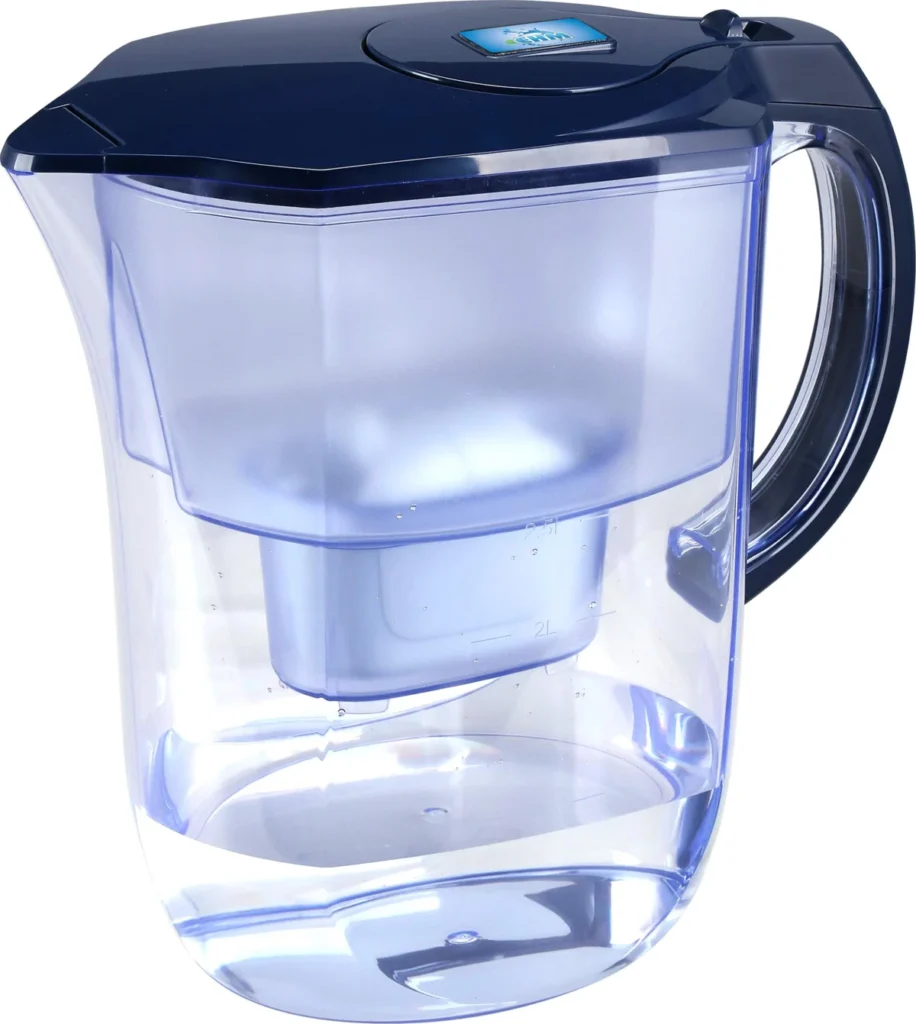
Ehm Ultra Premium Alkaline Pitcher
- Pitcher
- Sediment
Best for: Renters wanting no-install taste improvement
Skip if: your water report lists lead, PFAS or fluoride, since a carbon pitcher is not built for those.
Price range: Budget
Check price on AmazonPaid link. We may earn a commission.
Earns Best Overall as the only pick here that needs no plumbing, no cartridge matching and no under-sink space, so a renter can improve taste the day it arrives.
What matters in daily use
The Ehm Ultra Premium Alkaline Pitcher is a 3.5 liter BPA-free plastic pitcher that holds more than twice the 6 cups of the Brita Metro Pitcher, so a household can fill several glasses before refilling. Its activated carbon stage is listed for sediment reduction, and the listing describes an alkaline, mineralized output rather than a certified health-effect reduction, so treat taste and sediment as the realistic job.
The tradeoff is speed and scope: a gravity pitcher runs far slower than a faucet or under-sink filter, and nothing in the published specifications claims lead, PFAS or fluoride reduction. Buyers who find those contaminants on their water report should look at the iSpring RCC7-BN instead, which is certified to NSF/ANSI 58 and names lead, PFAS and fluoride. The Ehm suits someone who wants better-tasting water with zero installation.
Specifications
| Type | Pitcher |
|---|---|
| Reduces | Sediment (named in listing) |
| Material | BPA-free plastic |
| Weight | 2.27 lb |
Pros
- No installation, plumbing or cartridge matching required
- 3.5 liter capacity serves several glasses per fill
- Fits on a counter or a fridge shelf
- Sturdy lid releases only at the pouring angle
Cons
- Gravity flow is slow compared with a faucet filter
- No certified lead, PFAS or fluoride reduction stated
- Alkaline and micro-clustering claims are not health guarantees
Best for Dissolved Contaminants
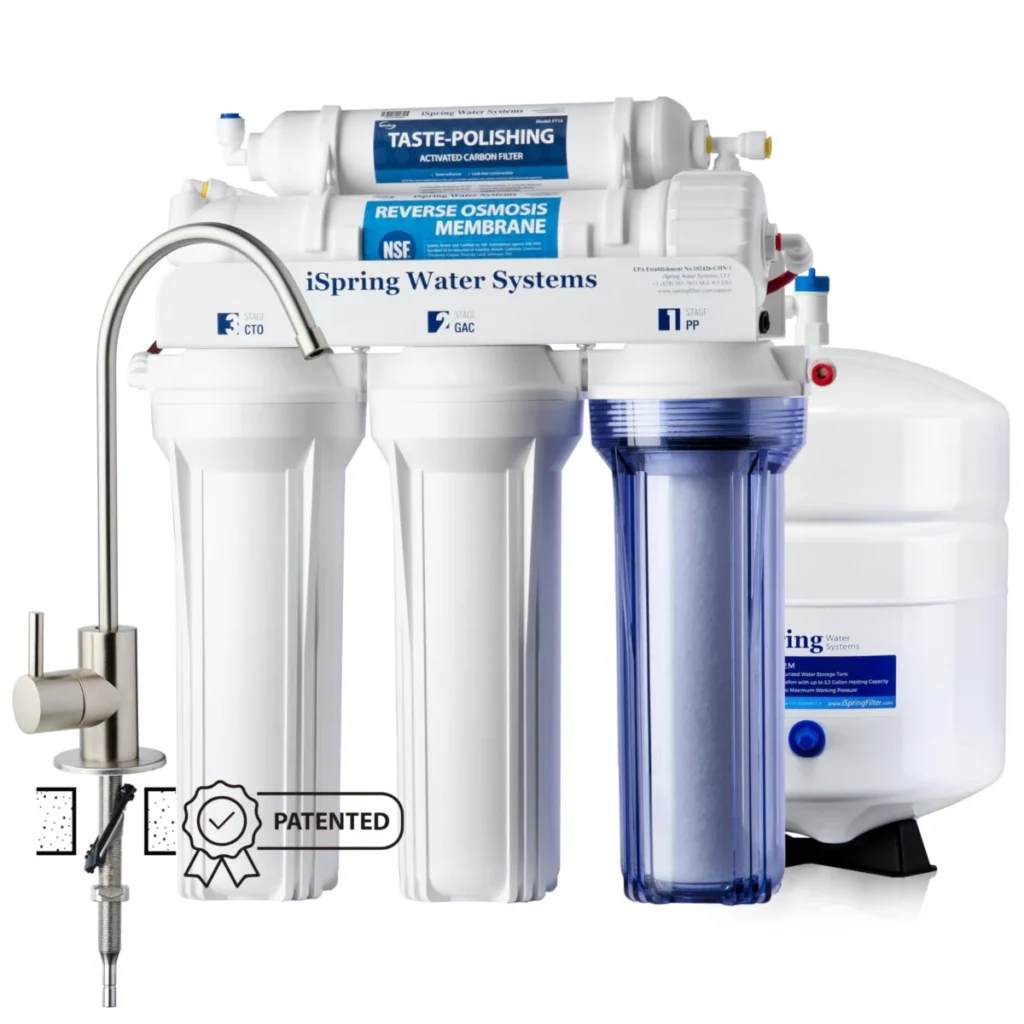
iSpring RCC7-BN
- Reverse osmosis system
- NSF/ANSI 58
- 75 gallons
- 75 GPD
- Chlorine, Lead, PFAS
- DIY install
Best for: Households with lead, PFAS or fluoride on the report
Skip if: you rent and cannot drill a faucet hole or give up under-sink cabinet space.
Price range: Mid-range
Check price on AmazonPaid link. We may earn a commission.
Takes Best for Dissolved Contaminants because it is certified to NSF/ANSI 58 and names lead, PFAS and fluoride, which carbon-only pitchers and inline filters cannot claim.
What matters in daily use
The iSpring RCC7-BN is a 5-stage under-sink reverse osmosis system rated at 75 GPD, with a tank and a brushed nickel faucet included. The listing states up to 98% lead reduction and names chlorine, PFAS and fluoride among the contaminants it targets, and the whole system carries NSF/ANSI 58 certification. That combination is why it handles dissolved contaminants the Ehm Ultra Premium Alkaline Pitcher and the CuZn UC-200 do not address.
The cost of that capability is installation and maintenance: it needs cabinet space, a cold water line and a faucet hole, and the published filter life is 75 gallons, so cartridge changes come around more often than the 100,000 gallon rating of the iSpring WGB32B. It also strips minerals along with contaminants, which is the gap the iSpring RCC7AK-BN fills. Choose this one when the water report, not the taste, is driving the decision.
Specifications
| Type | Reverse osmosis system |
|---|---|
| Certifications | NSF/ANSI 58 |
| Reduces | Chlorine, Lead, PFAS, Fluoride (named in listing) |
| Filter life | 75 gallons |
| Flow rate | 75 GPD |
| Stages | 5 stages |
| Installation | DIY install |
Pros
- NSF/ANSI 58 certification covers the full system
- Targets lead, PFAS and fluoride that carbon pitchers miss
- 75 GPD refills the tank quickly for a family
- Top-mounted faucet design simplifies countertop installation
Cons
- Requires a cold line, cabinet space and a faucet hole
- 75 gallon filter life means frequent cartridge changes
- Removes beneficial minerals along with contaminants
Best with Remineralization
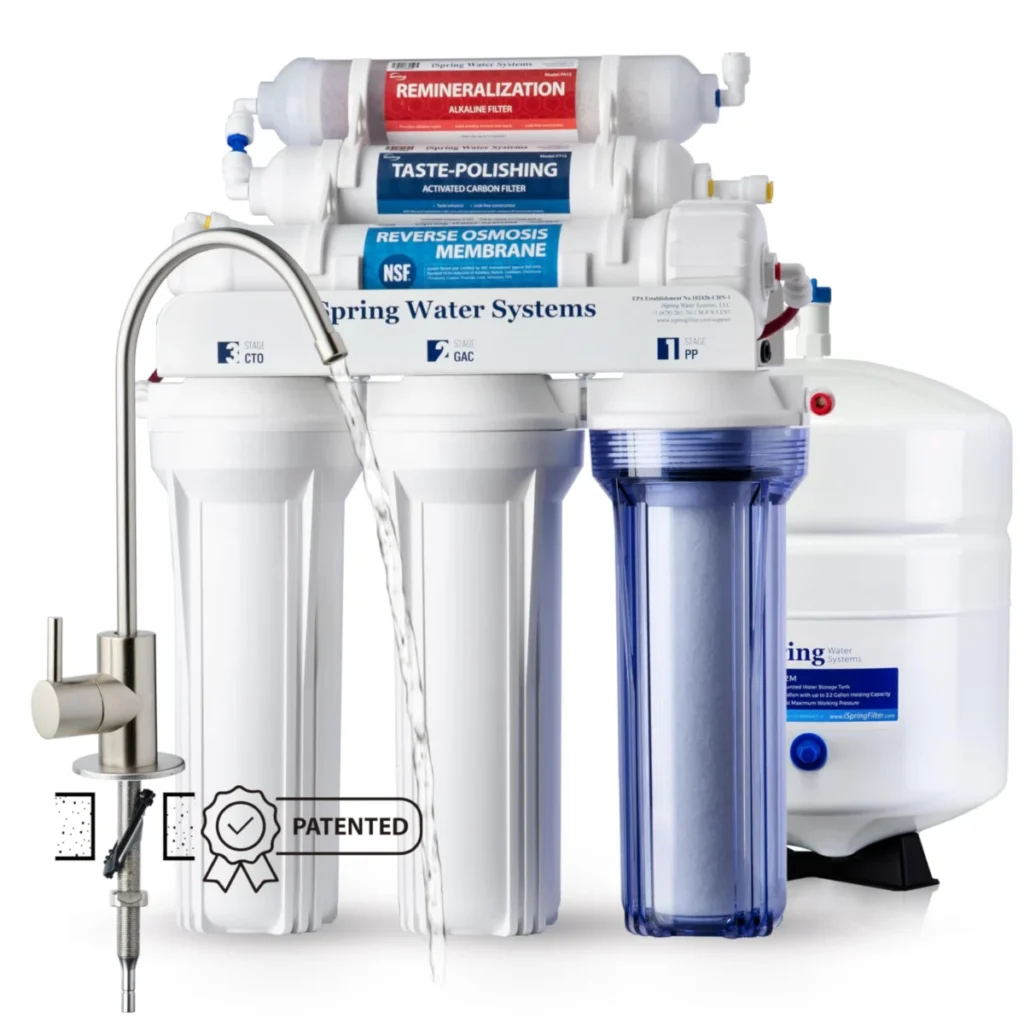
iSpring RCC7AK-BN
- Reverse osmosis system
- NSF/ANSI 58
- 75 gallons
- 75 GPD
- Chlorine, Lead, PFAS
- DIY install
Best for: Buyers who want minerals and pH restored after RO
Skip if: you are satisfied with plain RO taste and would rather not maintain a sixth cartridge.
Price range: Premium
Check price on AmazonPaid link. We may earn a commission.
Wins Best With Remineralization by adding a sixth mineral stage to the same 75 GPD reverse osmosis platform, restoring pH and minerals the standard RCC7-BN leaves out.
What matters in daily use
The iSpring RCC7AK-BN shares the 75 GPD rating and NSF/ANSI 58 certification of the RCC7-BN but adds a sixth alkaline remineralization stage, so the water that reaches the faucet has minerals and a balanced pH rather than the flat taste many people notice after reverse osmosis. The listing quantifies reductions across TDS, PFAS, chlorine, fluoride and lead, and the transparent first-stage housing lets you see when sediment has built up.
That extra stage is the whole reason to pay more than the RCC7-BN, and it is also the extra cartridge to replace. The sixth stage means one more cartridge in the rotation than the five-stage RCC7-BN carries, and installation still calls for cabinet space, a cold line and a faucet opening. If taste after RO is your complaint, this is the version to pick; if you only need dissolved contaminant reduction, the RCC7-BN does the same core job with one less stage.
Specifications
| Type | Reverse osmosis system |
|---|---|
| Certifications | NSF/ANSI 58 |
| Reduces | Chlorine, Lead, PFAS, Fluoride, Copper (named in listing) |
| Filter life | 75 gallons |
| Flow rate | 75 GPD |
| Stages | 6 stages |
| Installation | DIY install |
| Remineralization | Yes |
Pros
- Remineralization restores minerals and pH after RO
- Full-system NSF/ANSI 58 certification
- Clear first-stage housing shows sediment buildup
- Quick-fit connections and step-by-step install guidance
Cons
- Sixth stage adds a cartridge to replace
- Still needs a faucet hole and under-sink space
- More stages to service than the five-stage RCC7-BN
Best Whole House Carbon
iSpring WGB32B
- Whole house filter
- 100,000 gallons
- 15 GPM
- Chlorine, Pesticides
- DIY install

Best for: Chlorine reduction at every tap
Skip if: You rent, or your water report flags fluoride, arsenic or lead rather than chlorine.
Price range: Premium
Check price on AmazonPaid link. We may earn a commission.
The iSpring WGB32B earns Best Whole House Carbon because its 15 GPM flow and 100,000 gallon rating treat chlorine at every tap, not just the kitchen faucet.
What matters in daily use
Three stages do different jobs here: a 5 micron sediment filter catches rust and grit, then two coconut shell carbon block cartridges handle chlorine taste, odor and the pesticides named in the listing. With a 1 inch NPT connection and a rated 15 GPM, the system is sized to sit on the main line and feed showers, laundry and appliances without starving a household of pressure.
The 100,000 gallon capacity is the number that matters for ownership: it spreads cartridge changes across years rather than months, which is why this is a point-of-entry purchase rather than a quick fix. The tradeoff is scope. It is not a reverse osmosis system, so it leaves dissolved solids such as fluoride and TDS in the water; the iSpring RCC7-BN under sink is the pick for those, and the two can run together.
Specifications
| Type | Whole house filter |
|---|---|
| Reduces | Chlorine, Pesticides, Sediment (named in listing) |
| Filter life | 100,000 gallons |
| Flow rate | 15 GPM |
| Connection | 1 in |
| Installation | DIY install |
Pros
- Treats chlorine at every tap, not one faucet
- 15 GPM supports showers and appliances at once
- 100,000 gallon rating means infrequent cartridge swaps
- 1 inch NPT fittings suit standard main lines
Cons
- Does not reduce dissolved solids such as fluoride
- Needs main line plumbing access and space
- Carbon block stages do not soften hard water
Best Under Sink Carbon
CuZn UC-200
- Under sink filter
- NSF/ANSI 42, NSF/ANSI
- 6 months
- Chlorine, Lead, PFAS
- DIY install

Best for: Compact under sink chlorine and taste filtering
Skip if: You want a five-year cartridge or need fluoride and TDS reduction.
Price range: Mid-range
Check price on AmazonPaid link. We may earn a commission.
The CuZn UC-200 takes Best Under Sink Carbon because it fits a 5.5 inch footprint under the sink, carries NSF/ANSI 42 and 372, and needs no drilling.
What matters in daily use
The UC-200 is an inline filter, not a housing you mount on the wall: at 5.5 inches deep and 7.02 lb, it connects directly to a kitchen or bathroom cold line with the included stainless steel hose and no drilling. Three stages combine micro sediment membranes, KDF-55 and coconut shell carbon, a blend aimed at chlorine, taste and the lead and PFAS the listing names, while leaving beneficial minerals in the water.
The catch is filter life. The published specification gives 6 months, so this is a recurring purchase rather than a five-year one, and it does not reduce TDS. Compared with the Brita Metro Pitcher, the CuZn delivers filtered water at the tap on demand instead of a 6 cup reservoir, which matters for cooking and for households that fill pots rather than glasses.
Specifications
| Type | Under sink filter |
|---|---|
| Certifications | NSF/ANSI 42, NSF/ANSI 372 |
| Reduces | Chlorine, Lead, PFAS, Sediment (named in listing) |
| Filter life | 6 months |
| Stages | 3 stages |
| Installation | DIY install |
| Weight | 7.02 lb |
Pros
- Compact 5.5 inch profile fits tight cabinets
- No drilling; stainless steel connection hose included
- NSF/ANSI 42 and 372 certification on record
- Leaves beneficial minerals in the water
Cons
- 6 month filter life means frequent replacements
- Does not reduce TDS
- No faucet or tank included in the box
Best Small Pitcher
Brita Metro Pitcher
- Pitcher
- 40 gallons
- Chlorine, Mercury

Best for: Single users with limited fridge space
Skip if: You fill pots for cooking or serve a family of three or more.
Price range: Budget
Check price on AmazonPaid link. We may earn a commission.
The Brita Metro Pitcher is Best Small Pitcher because its 6 cup capacity and 4.45 inch width slide onto a crowded fridge shelf where larger pitchers will not fit.
What matters in daily use
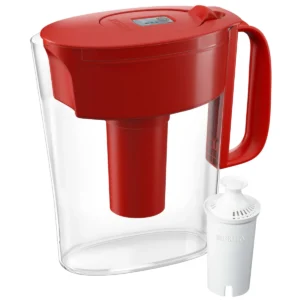
At 9.8 inches tall and 4.45 inches wide, the Metro is built for one person's fridge door or a packed shelf. The activated carbon filter is rated for 40 gallons, roughly two months of typical use, and the listing names chlorine taste and odor, mercury and copper among the reductions. An electronic indicator takes the guesswork out of when to swap the cartridge.
Capacity is the honest limitation: 6 cups empties fast if you are filling a kettle or cooking, and refills run at pitcher speed rather than tap speed. The Brita Large 10 Cup Pitcher holds 10 cups and accepts a 120 gallon Longlast cartridge, so a family that refills all day should start there; the Metro suits a single user or a second pitcher for the bedroom.
Specifications
| Type | Pitcher |
|---|---|
| Reduces | Chlorine, Mercury, Copper (named in listing) |
| Filter life | 40 gallons |
| Capacity | 6 cups |
| Material | BPA-free plastic |
Pros
- 4.45 inch width fits crowded fridge shelves
- Electronic indicator removes filter guesswork
- No installation; fill and pour
- BPA-free plastic body
Cons
- 6 cups runs out quickly for cooking
- 40 gallon filter life means frequent cartridge buys
- Slower than a faucet or under sink filter
Best Value Replacement Cartridge
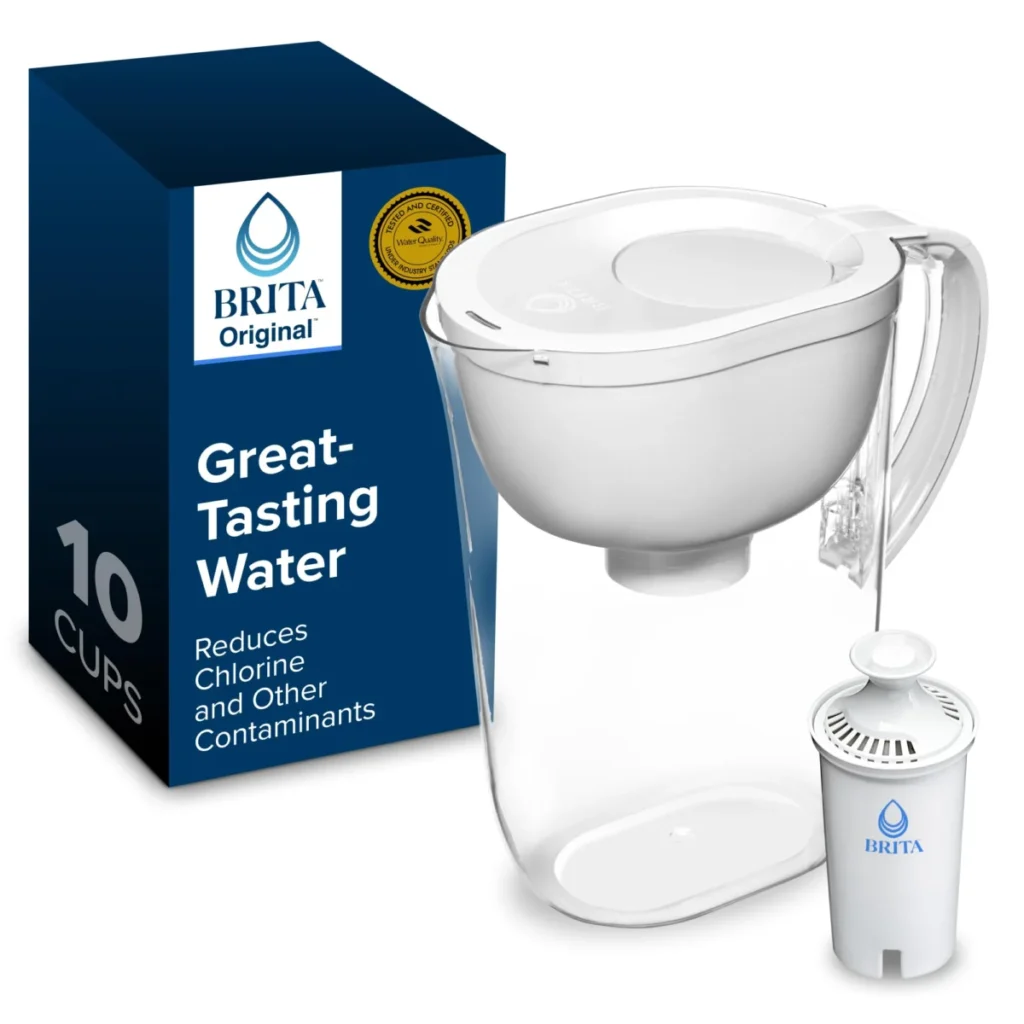
Brita Large 10 Cup Pitcher
- Pitcher
- WQA listed
- 120 gallons
- Chlorine, Mercury
Best for: Families refilling all day on a budget
Skip if: You need certified lead, PFAS or fluoride reduction, which a carbon pitcher does not provide.
Price range: Budget
Check price on AmazonPaid link. We may earn a commission.
The Brita Large 10 Cup Pitcher earns Best Value Replacement Cartridge because its 120 gallon filter life spreads cartridge spending across roughly six months of daily family refills.
What matters in daily use
Ten cups of reservoir capacity means a family can fill several glasses before refilling, and the pitcher fits standard refrigerator shelves at 10.7 inches long and 10.1 inches high. The granular activated carbon filter is rated for 120 gallons, so a busy household replacing the cartridge about twice a year spends far less than on pitchers rated for 40 gallons.
The tradeoff is scope: this Brita reduces chlorine taste and odor plus mercury and copper, and the listing carries a WQA listing, but it does not address lead, PFAS or fluoride. Compared with the Brita Metro Pitcher, which holds 6 cups and runs a 40 gallon filter, this model suits families refilling all day; the Ehm Ultra Premium Alkaline Pitcher adds an alkaline stage but names only sediment reduction.
Specifications
| Type | Pitcher |
|---|---|
| Certifications | WQA listed (per listing) |
| Reduces | Chlorine, Mercury, Copper (named in listing) |
| Filter life | 120 gallons |
| Capacity | 10 cups |
Pros
- 120 gallon filter life cuts yearly cartridge changes
- 10 cup reservoir serves several glasses per fill
- Slim footprint fits standard fridge shelves
- WQA listing backs the chlorine and metals claims
Cons
- No stated reduction for lead, PFAS or fluoride
- Manual pouring and refilling, no faucet connection
What does a Carbon Water Filter remove and what does it leave behind?
Activated carbon works by adsorption: chlorine, many taste and odor compounds and a range of volatile organic compounds (VOCs) bind to the carbon's enormous internal surface as water passes through. Granular activated carbon (GAC) is loose media used in pitchers and some whole house cartridges, while a carbon block is compressed carbon that also traps sediment and typically carries a micron rating. Catalytic carbon is a treated form aimed at chloramine, which ordinary carbon breaks down more slowly.
What carbon does not do matters just as much. Dissolved fluoride, arsenic, nitrate, perchlorate and hardness minerals pass through carbon largely untouched, because adsorption does not capture them the way a reverse osmosis membrane or ion exchange resin does. If your water report lists those contaminants, carbon alone is the wrong tool and you need a reverse osmosis stage or a dedicated treatment. Check the manufacturer performance data sheet and your local water quality report before you buy.
Which NSF/ANSI certification should you look for on a carbon filter?
NSF/ANSI 42 covers aesthetic effects: chlorine taste and odor, sediment and similar. NSF/ANSI 53 covers health effects, and a filter only earns a 53 claim for lead, cysts or PFOA/PFOS if that specific reduction is listed on the certification. NSF/ANSI 401 covers some emerging contaminants, and NSF/ANSI 372 certifies lead-free materials rather than what the water ends up containing. A vague "NSF certified" label tells you nothing until you know which standard and which contaminant.
Match the standard to your concern. If you want better tasting water from chlorinated city supplies, 42 is the baseline. If you live in an older building with lead service lines or worry about PFAS, look for a listing that names NSF/ANSI 53 with that contaminant. Whole house and under sink carbon units often carry 42 only, which is honest: they improve taste and reduce chlorine but are not certified for lead. Ask for the standard number, not the logo.
Decision guide
Which carbon filter fits your water and your installation?
Choose the Ehm pitcher over the Brita models if you want a larger reservoir and an alkaline claim, since it holds 3.5 liters against 6 or 10 cups, but accept that its listing names only sediment reduction while the Brita pitchers name chlorine, mercury and copper. Choose either Brita if a documented chlorine reduction claim and a change indicator matter more than capacity, and pick the 10 cup version for a family.
Between the two iSpring reverse osmosis systems, the RCC7-BN is the simpler five-stage choice for buyers who only want dissolved contaminants reduced, while the RCC7AK-BN adds a sixth remineralization stage for those who dislike flat-tasting RO water. The WGB32B is a different job entirely: it treats every tap for chlorine and sediment at up to 15 GPM but does not reduce dissolved solids, so it complements rather than replaces an RO drinking water system.
Our process
How we chose our Carbon Water Filter picks
Products were shortlisted from carbon-based drinking water and whole house filters with published specifications, then ranked on carbon media and stage design, listed certifications, filter life, flow rate, installation requirements and buyer feedback. Reverse osmosis systems were included because their carbon pre-filters do the chlorine work and the membrane extends what carbon alone cannot reach. No product was tested first-hand; the assessment rests on specifications, materials, design and reported buyer sentiment.
Common questions
Frequently asked questions
Do carbon filters remove fluoride?
No, standard activated carbon does not remove dissolved fluoride. Only a reverse osmosis membrane or a dedicated fluoride-selective media reduces it, so look for an NSF/ANSI 58 system or a filter listing fluoride reduction. Check the performance data sheet and your local water report before assuming any pitcher handles it.
How often should I change a Carbon Water Filter cartridge?
Follow the rated life rather than a calendar habit: pitchers commonly run 40 to 120 gallons, under sink cartridges vary by model, and whole house cartridges are rated in tens of thousands of gallons. Change sooner if flow slows or taste returns, since spent carbon stops adsorbing chlorine even when water still passes through.
Do I need a plumber to install an under sink carbon filter?
Most inline under sink carbon filters are DIY projects that connect to the cold water line with the included fittings and need no drill hole. Whole house systems with 1 inch connections and larger housings are heavier work and often warrant a plumber. Renters should confirm their lease before altering any supply line.
Does a carbon filter lower water pressure?
Any filter adds some restriction, and carbon blocks with tight micron ratings restrict more than loose granular carbon. Whole house units publish a flow rating such as 15 GPM that shows the headroom available. If pressure drops noticeably after installation, a clogged cartridge or a kinked line is the usual cause.
Is a carbon filter enough for well water?
Carbon alone rarely solves well water problems such as iron, sulfur odor, sediment or bacteria. Private wells are not regulated, so the EPA and CDC recommend a certified lab test first, then treatment matched to the results. Carbon can polish taste after iron and sediment are handled, but it is not a disinfection step.
Bottom line
Final verdict
- Renters and small households on chlorinated city water: Ehm Ultra Premium Alkaline Pitcher. It needs no plumbing and no permanent change, so you get carbon filtration with almost no commitment.
- Households whose water report lists lead, PFAS or fluoride: iSpring RCC7-BN. The NSF/ANSI 58 reverse osmosis stage reduces dissolved contaminants that carbon alone leaves in the water.
- Homeowners wanting chlorine reduction at every tap: iSpring WGB32B. Its 1 inch ports and 15 GPM rating treat the whole house, though it will not lower dissolved solids.
Final decision
Compare two finalists
Choose the two picks you narrowed down to see who each one suits and the main reason to skip it.
Keep reading
7 Chlorine Test Kits for Drinking Water and Filter Checks
The SJ WAVE 22 in 1 Water Test Kit is our top pick among 7 chlorine test kit for drinking waters, compared…
Best Water Filter for Microplastics: 7 Picks Matched to Micron Rating and Certification
The Aquagear Water Filter Pitcher is our top pick among 7 water filter for microplastics, compared on particle capture, certifications listed and…
7 Water Filters Certified for PFAS, Ranked by What They Actually Remove
Seven filters ranked by the PFAS compounds they are certified to reduce, from a no-install ZeroWater dispenser to the iSpring RCC7-BN reverse…