Aquasana Shower Filter Review: What It Cuts, What It Leaves, What It Costs
Published October 29, 2026
As an Amazon Associate we earn from qualifying purchases. This never changes which products we recommend.
Verdict

Worth considering
The Aquasana AQ-4100 is worth buying if your goal is to cut the chlorine smell and dry-skin feel of chlorinated city water at the shower head without plumbing work. It is not a softener, it is not certified for lead or PFAS, and it will not fix iron or sulfur in well water, so buyers with those problems should look at other treatment.
- Best for: Renters and homeowners on chlorinated city water who notice a chlorine smell or dry skin after showering, Anyone with a standard 1/2 inch shower arm who wants a screw-on filter with no plumbing or permanent change, Households that want a fixed shower head with built-in filtration rather than a separate cartridge housing
- Not for: Households on a private well with iron, sulfur smell or hardness, who need testing and different treatment first, Buyers who need verified reduction of lead, PFAS, fluoride or bacteria in the shower, Anyone expecting a shower filter to stop scale or replace a water softener
Key takeaways
- Filter life is 10,000 gallons, which the manufacturer frames as about six months of typical use, so budget for two cartridges a year.
- It does not soften water, does not stop scale, and is not the right tool for iron, sulfur, lead, PFAS or bacteria.
- The unit is rated at 2.5 GPM and includes a shower head, so it replaces your existing head rather than sitting behind it.
Table of contents12 sections · tap to expand
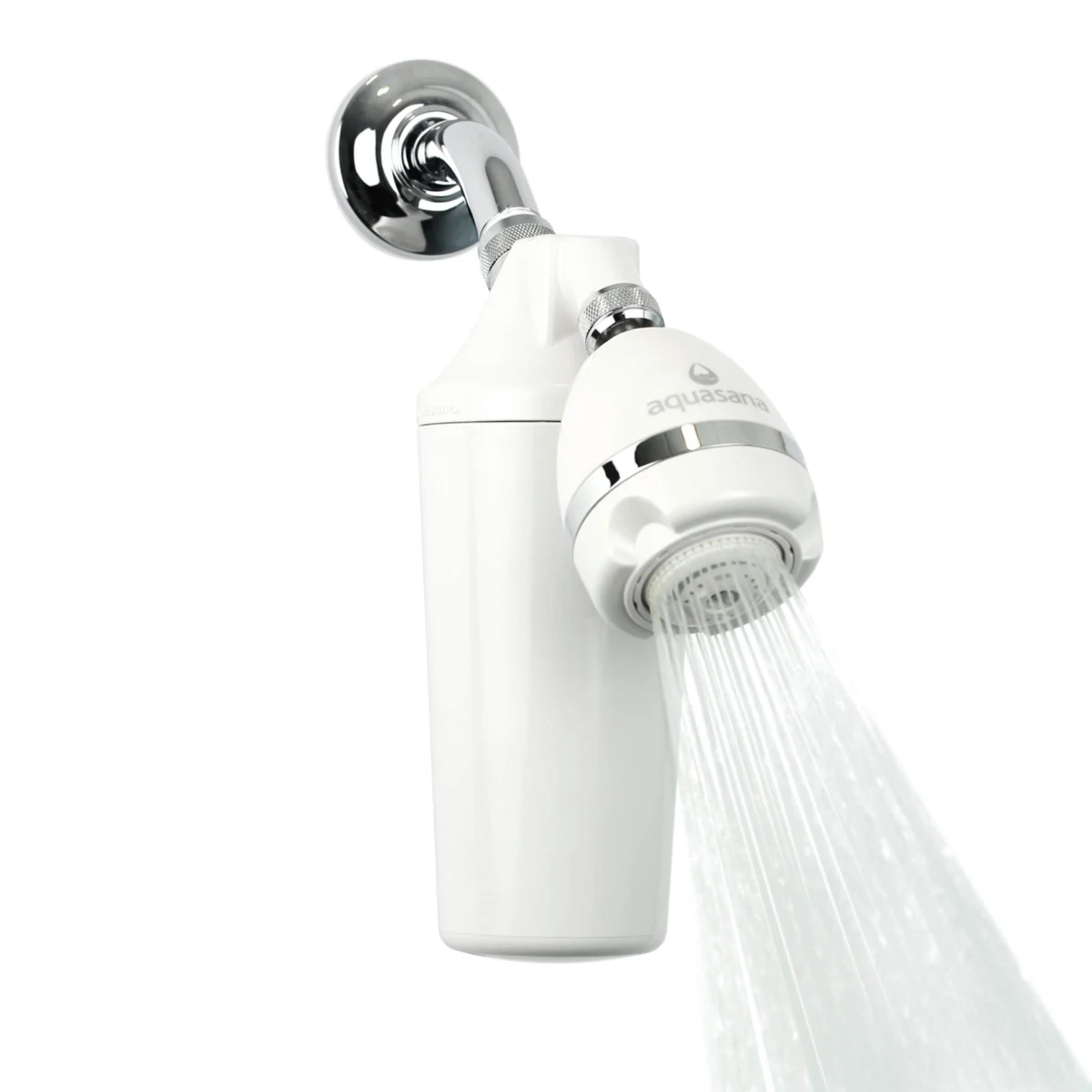
The Aquasana shower filter, sold as the AQ-4100, is a screw-on shower head with a filter built into the housing. Water passes through coconut shell activated carbon and a copper-zinc medium before it reaches the spray face, and the manufacturer states the unit reduces 90 percent of chlorine over a 10,000 gallon filter life. It attaches to a standard 1/2 inch shower arm and includes the shower head, so it replaces the head you have rather than hiding behind it.
Is it worth it? For a renter or homeowner on treated city water who mainly wants less chlorine smell and a less drying shower, yes: it is a low-commitment change that needs no plumber and no permanent modification. It is not worth it if you are trying to solve hardness, iron, lead or PFAS, because a screw-on carbon filter is not built for those and the published performance claims do not cover them.
Specifications
Key specifications
| Specification | Detail | Why it matters |
|---|---|---|
| Type | Shower filter | It treats water at the shower head only, so it does nothing for the kitchen tap, the washing machine or the rest of the house. |
| Filter life | 10,000 gallons | This is the number to plan replacements around, and it converts to roughly two cartridges a year for a typical household. |
| Flow rate | 2.5 GPM | A 2.5 GPM rating matches common shower head flow, so the filter is not designed to throttle the shower. |
| Installation | No installation | It threads onto an existing shower arm by hand, which keeps it rental-friendly and plumber-free. |
What the Aquasana shower filter reduces, and what it does not
The Aquasana shower filter is built around two media: coconut shell activated carbon, which adsorbs chlorine and many taste and odor compounds, and a copper-zinc medium, which the manufacturer pairs with it for chlorine reduction. The published claims name chlorine, copper and sediment as the targets, with chlorine reduction stated at 90 percent. That is a realistic scope for a screw-on carbon filter, and it is the reason the product makes sense for chlorinated municipal water.
What it does not do matters just as much. The listing does not state reduction of lead, PFAS, fluoride or bacteria, and a shower filter of this design is not the tool for those in any case.
If your water report shows lead, PFOA and PFOS, or arsenic, the treatment decision belongs at the kitchen tap with an under sink or reverse osmosis system, not at the shower head. Check the manufacturer performance data sheet and your local water quality report before assuming any reduction beyond what is stated.
Certification: what the Aquasana shower filter is tested to
That distinction is worth understanding: NSF/ANSI 42 is the standard for aesthetic effects such as chlorine taste and odor, NSF/ANSI 53 covers health effects such as lead and cysts, and NSF/ANSI 372 covers lead-free materials. A claim of testing to a standard is not the same as third-party certification to it, and the listing does not name 42, 53 or 372.
In practice this means you should treat the chlorine figure as the manufacturer's stated performance rather than a certified reduction. For a shower filter aimed at comfort and smell, that is a reasonable basis for a buying decision, but it is not a reason to rely on the unit for a health-related contaminant. Buyers who want certification paperwork should ask the manufacturer for the performance data sheet before ordering.
Filter life, replacement schedule and yearly cost
Filter life is rated at 10,000 gallons, which the manufacturer presents as about six months of use, and the instructions call for replacing the filter every six months for optimal performance. That works out to two replacements a year for a typical household, though a large family or long showers will reach the gallon rating sooner.
The manufacturer describes the cost as low as 25 cents per day, which is a per-day framing rather than a cartridge price, so confirm the current cartridge cost before you budget.
The practical point is that the shower head and the filter are not separate purchases in the usual sense: the filtering element sits inside the unit and is replaced on a six-month rhythm. Over several years the cartridges, not the initial purchase, are the recurring cost. If you want a lower long-term outlay, compare the replacement rhythm with other shower filters before deciding, because a cheaper head with frequent cartridge changes can cost more across a year.
Installation, fit and rented bathrooms
Installation is a hand-tight screw-on job: the unit fits standard 1/2 inch shower arms and the manufacturer describes a four-step setup with no plumbing skills needed. After installing, run the water briefly to clear carbon fines, the fine carbon dust that can appear in the first flush. Because nothing is drilled or permanently altered, the filter suits a rented bathroom, and you can take it with you when you move.
The tradeoff is that the Aquasana unit is a fixed shower head with the filter built in, so you are replacing your existing head rather than adding a filter behind it. If you use a handheld shower head, or want to keep the head you already have, this design will not accommodate that. Check the thread on your shower arm before ordering; standard 1/2 inch fittings are the norm, but older or imported fixtures occasionally differ.
Flow rate and shower pressure
The Aquasana shower filter is rated at a maximum flow rate of 2.5 GPM, which is in line with common shower head flow, so the design is not intended to reduce pressure. In use, a shower filter can still feel like it weakens the spray when the cartridge is loaded with sediment or past its rated life, or when household pressure is already low. If flow drops suddenly, change the cartridge first and check for debris at the inlet screen before blaming the plumbing.
If your shower was weak before the filter went on, the filter is not the cause, and a shower filter will not raise pressure. In that case the issue is household pressure or a clogged shower head, and the fix is elsewhere. A 2.5 GPM rating also means the unit stays within the flow most North American showers are built around, so you should not notice a step down from a comparable unfiltered head.
Shower filter versus whole house filter versus softener
A shower filter treats water at one fixture; a whole house water filter treats everything entering the home, and a water softener addresses hardness minerals that cause scale. These solve different problems, and the Aquasana shower filter is the narrowest of the three.
It is the right choice when the complaint is chlorine smell or the feel of chlorinated water in the bathroom and the rest of the house is fine. It is the wrong choice when the complaint is scale on glass and fixtures, which points to a softener or salt-free conditioner.
For a household on a private well, a shower filter is a comfort measure, not a treatment solution. Well water is not regulated, and iron, sulfur smell, hardness and bacteria all need a lab test before any equipment is chosen. If a test shows iron or sulfur, a shower filter will not remove them, and if it shows bacteria, disinfection is the issue, not filtration. Start with the test, then decide whether a shower filter is even part of the answer.
Strengths and weaknesses
Pros and cons
Pros
- Screws onto a standard 1/2 inch shower arm by hand, so no plumber and no permanent change to a rented bathroom
- Rated for 10,000 gallons with a stated six-month replacement rhythm, which is easy to plan around
- Includes the shower head, so there is no separate housing to fit behind an existing head
- Targets chlorine, the contaminant most relevant to smell and the feel of chlorinated water on skin and hair
- Rated at 2.5 GPM, matching common shower flow rather than throttling the spray
Cons
- Does not soften water or stop scale, and is not stated to reduce lead, PFAS, fluoride or bacteria
- Fixed shower head design means you cannot keep a handheld or existing head
- Recurring cartridge cost every six months is the real long-term expense, not the initial purchase
Other options
Alternatives to consider
FEELSO Filtered Shower Head
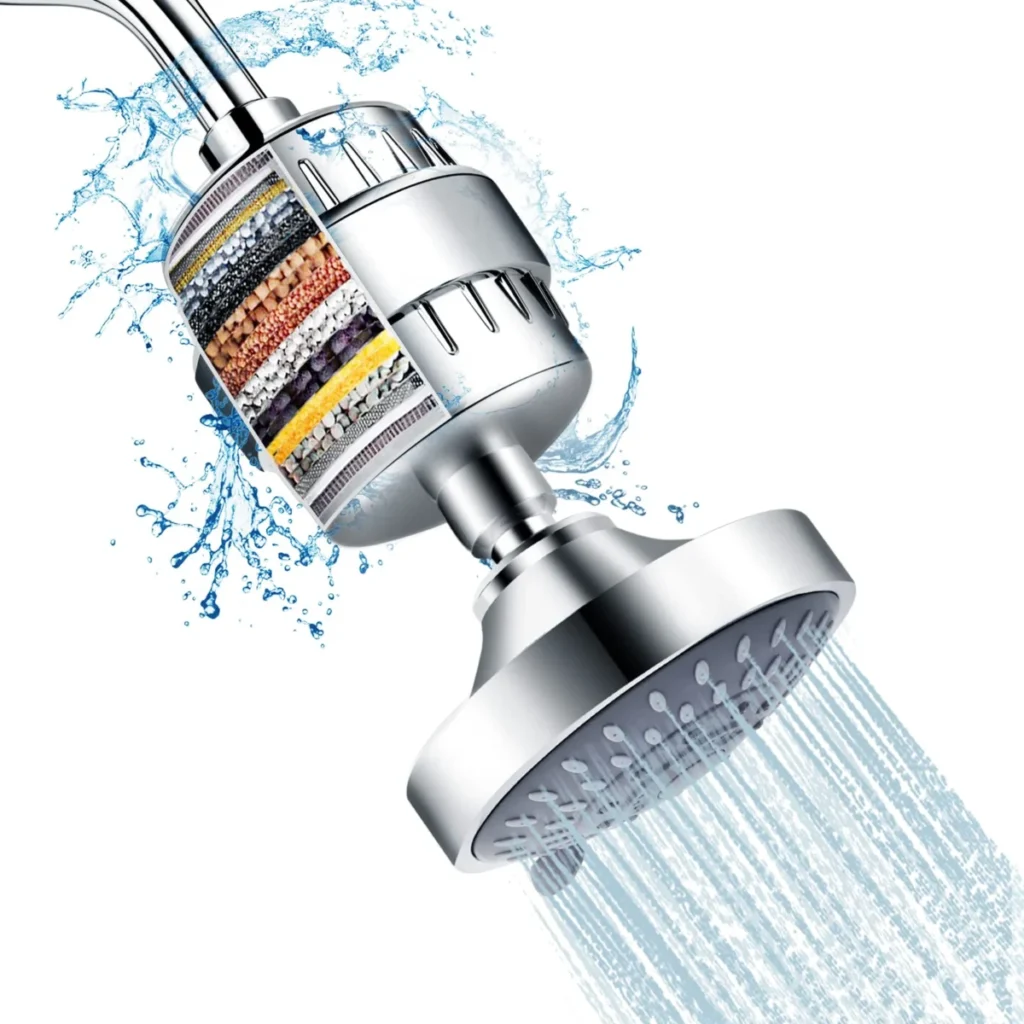
Choose the FEELSO if you want a filtered shower head that also names lead and other heavy metals in its reduction claims, though its 1.8 GPM rating is lower than the Aquasana unit.
AquaHomeGroup Filtered Shower Head
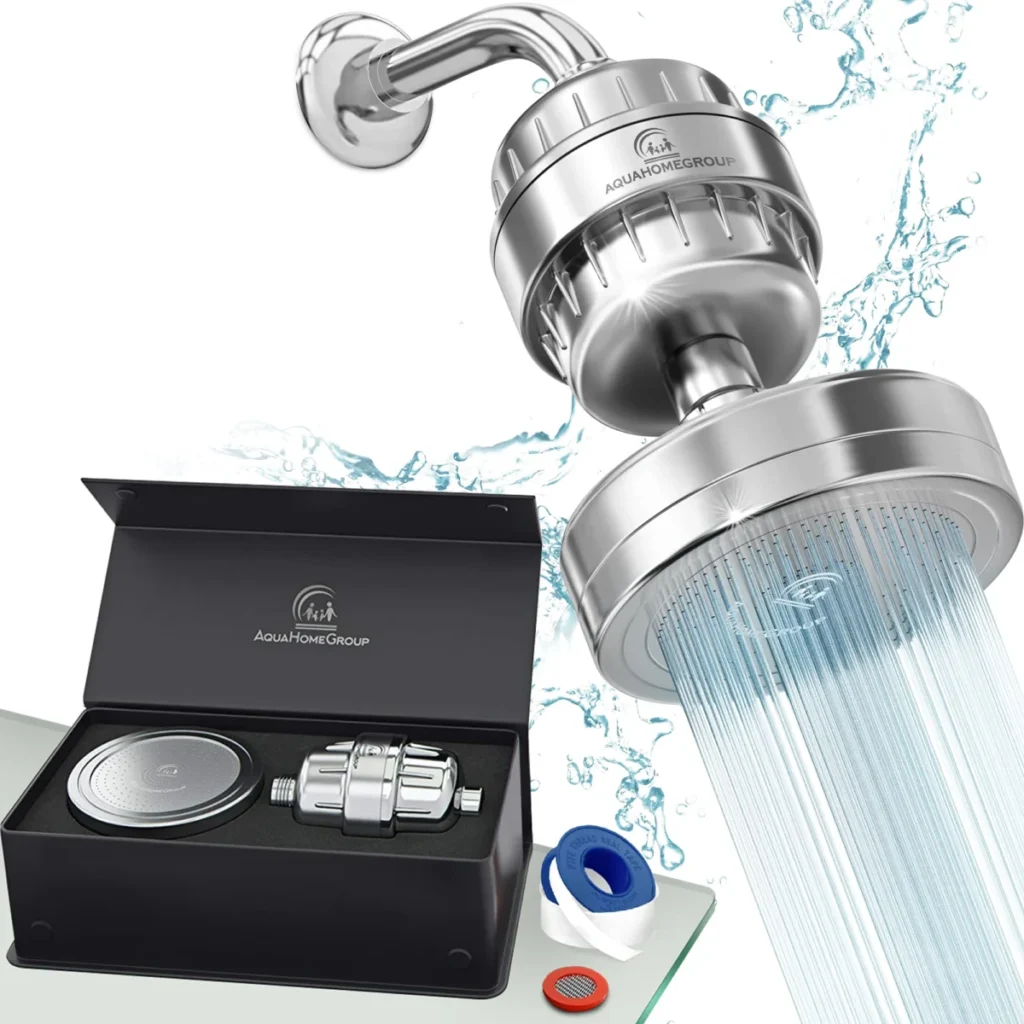
Choose the AquaHomeGroup if you prefer a handheld shower head with multi-stage filtration, a different form factor from the fixed Aquasana design.
The Aquasana AQ-4100 Shower Filter also appears in
Common questions
Frequently asked questions
Is a shower filter the same as a water softener?
No. A shower filter reduces chlorine and sediment at one fixture, while a water softener removes the hardness minerals that cause scale. If you see white buildup on glass and fixtures, a softener or salt-free conditioner is the relevant purchase, not a shower filter.
How often should I replace the Aquasana shower filter cartridge?
Replace the cartridge every six months or when you reach the 10,000 gallon rating, whichever comes first. Large households or long showers will hit the gallon limit sooner, so track both the calendar and your water use.
Does the Aquasana shower filter remove lead or PFAS?
No. The published claims cover chlorine, copper and sediment, and do not state reduction of lead, PFAS, fluoride or bacteria. For those contaminants, check your local water report and consider an under sink or reverse osmosis system at the kitchen tap.
Will the Aquasana shower filter work on a private well?
It can reduce chlorine if your well water is chlorinated, but it will not remove iron, sulfur, hardness or bacteria. Well water is not regulated, so test it with a certified lab before choosing any treatment equipment.
Does the Aquasana shower filter lower water pressure?
The unit is rated at 2.5 GPM, which matches common shower head flow, so it is not designed to reduce pressure. A sudden drop usually means a spent cartridge or debris at the inlet screen, so change the cartridge first.
Bottom line
Should you buy the Aquasana AQ-4100 Shower Filter?
Buy the Aquasana shower filter if your water is treated municipal supply and your complaint is chlorine: the smell in the bathroom, the dry feel after showering, or fading color-treated hair. It installs by hand on a standard shower arm, is rated for 10,000 gallons, and needs a new cartridge roughly every six months, so plan for two replacements a year as the real running cost.
Skip it if you are on a private well with iron, sulfur or hardness, or if you are worried about lead, PFAS or bacteria, because a screw-on carbon filter is not built for those and the published claims do not cover them. In those cases, test the water first and put your budget into a softener, a whole house filter or an under sink system instead.