AquaGear Water Filter Pitcher Review: What It Reduces and What It Costs
Published October 29, 2026
As an Amazon Associate we earn from qualifying purchases. This never changes which products we recommend.
Verdict
Worth considering
The AquaGear Water Filter Pitcher is a sensible buy for renters and small households whose main complaint is chlorine taste, lead or microplastics and who want no plumbing and no installation. Its 120 gallon filter life spreads replacement cost across a long stretch, but the pitcher cannot soften hard water, treat bacteria in a well and does not state fluoride reduction, so anyone with those problems should look at a different filter type.
- Best for: Renters who cannot install an under sink system but want better-tasting drinking water, Households in older buildings concerned about lead in tap water, Families who want cold filtered water in the fridge without a built-in refrigerator dispenser
- Not for: Households with hard water looking for scale reduction or softening, Well water owners who have not yet tested for bacteria, nitrates or iron
Key takeaways
- The AquaGear pitcher is tested to reduce lead, chlorine, PFOA/PFOS and microplastics, but it does not state fluoride reduction and is not a softener or a bacteria treatment.
- Each filter is rated for 120 gallons, which is longer than most standard pitcher cartridges and lowers the yearly replacement cost.
- The 10 cup capacity and freestanding design suit a fridge door or a small counter, and renters need no plumbing or permanent change.
- The main drawback is scope: a pitcher improves taste and targets named contaminants, but it cannot fix hardness scale or make well water safe on its own.
Table of contents12 sections · tap to expand
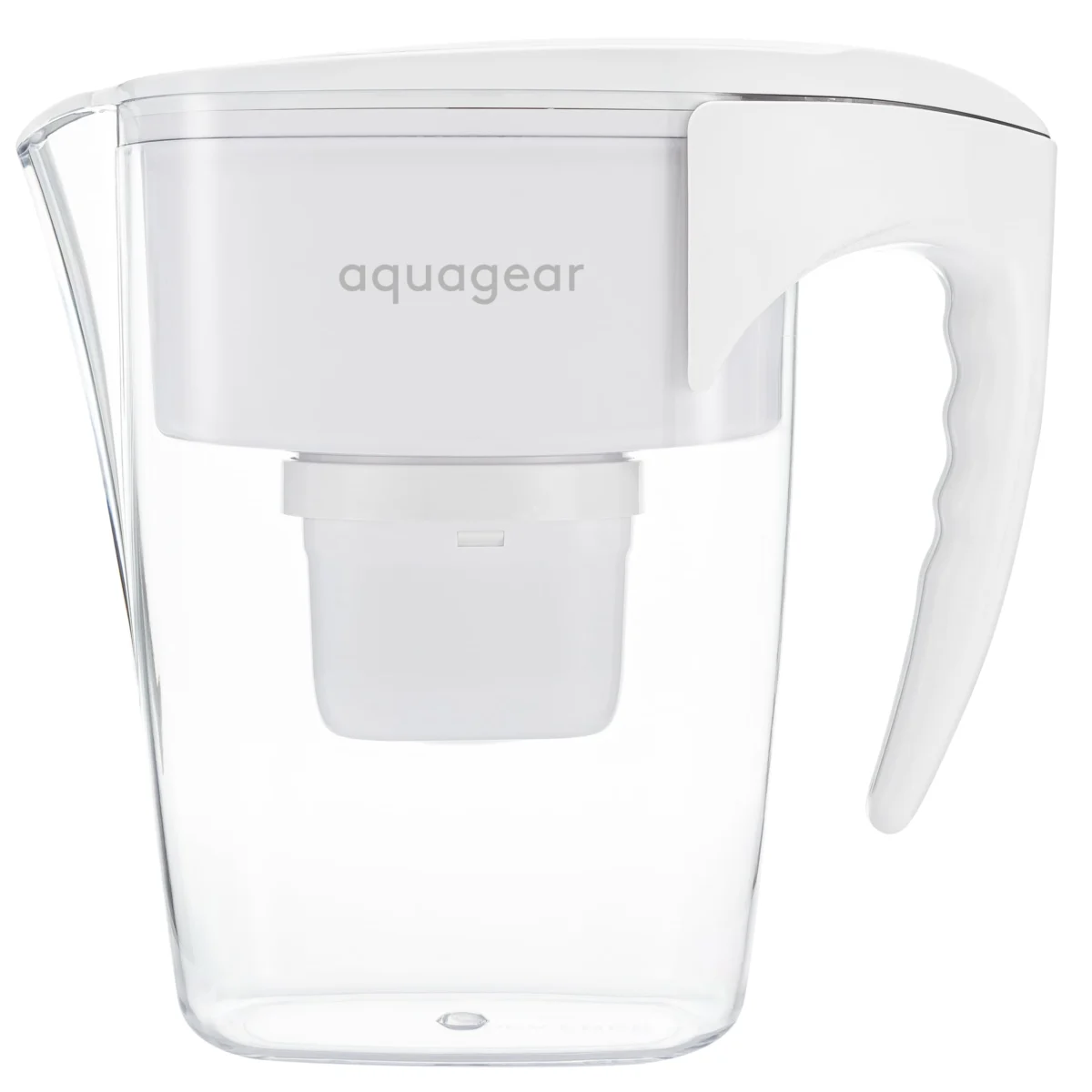
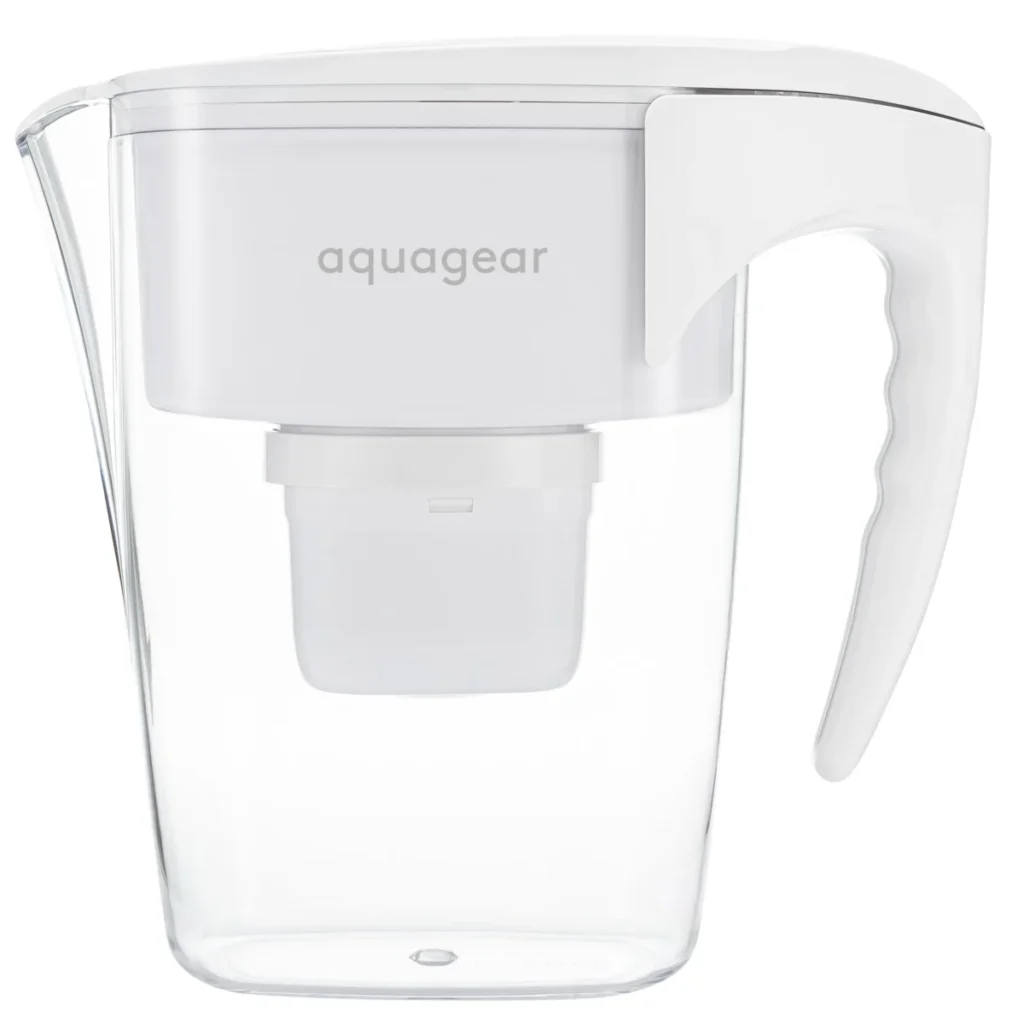
The AquaGear Water Filter Pitcher is a freestanding 10 cup pitcher that uses activated carbon and ion exchange media to improve tap water, and this AquaGear Water Filter Pitcher review focuses on what it actually reduces, what it costs to keep running and whether a pitcher is the right filter type at all.
The short answer: it is worth buying if your complaint is chlorine taste, lead or microplastics and you want no installation, and it is the wrong purchase if you need softening, fluoride reduction or well water treatment.
The pitcher is tested to reduce lead, chlorine, PFOA/PFOS and microplastics, and its 120 gallon filter life is longer than most standard pitcher cartridges, which matters more to the yearly cost than the sticker price does. What it does not do is just as important: it does not soften hard water, does not treat bacteria and does not state fluoride reduction, so buyers with those problems should look at reverse osmosis or a dedicated softener instead.
Specifications
Key specifications
| Specification | Detail | Why it matters |
|---|---|---|
| Type | Pitcher | A pitcher needs no plumbing, so it suits renters and small kitchens, but it filters slowly and holds a limited volume. |
| Capacity | 10 cups | Ten cups is enough for a few glasses or a kettle at a time, so a larger household will refill often. |
| Filter life | 120 gallons | A long rated life means fewer cartridge changes and a lower cost per gallon than short-life pitcher filters. |
| Purification Method | Activated Carbon, Ion Exchange | Activated carbon handles chlorine taste and odor while ion exchange media is typically used for metals such as lead. |
| Product Dimensions | 11"L x 6"W x 11"H | An 11 inch height and 6 inch width fit most fridge doors and narrow counters, though check your shelf clearance first. |
| Installation Type | Freestanding | No cold line, drill hole or plumber is needed, which is the main reason renters choose a pitcher. |
| Material | Plastic | A plastic body keeps the pitcher light and inexpensive, but it is not a durable glass or stainless dispenser. |
What the AquaGear pitcher reduces and what it leaves behind
The AquaGear pitcher is tested to reduce lead, chlorine, PFOA/PFOS and microplastics, which covers the contaminants most city water drinkers notice as taste or worry about in older plumbing. The filter combines activated carbon, which adsorbs chlorine and many taste and odor compounds, with ion exchange media, the material typically used to capture dissolved metals such as lead. That combination is why the pitcher can improve both flavor and a specific health-related contaminant at once.
What the pitcher does not state is equally important. There is no fluoride reduction stated, no PFAS beyond PFOA and PFOS named, and no bacteria or cyst treatment, so a well water owner should not treat it as a safety barrier. The listing does not name an NSF/ANSI certification number, so buyers who need documented lead or PFAS reduction should read the manufacturer performance data sheet and compare it with their local water quality report before relying on the pitcher.
How much does the AquaGear pitcher cost to run each year?
Each AquaGear filter is rated for 120 gallons, which is roughly three times the life of many standard pitcher cartridges, so replacement happens less often. The exact yearly cost depends on how much water a household drinks and on the current cartridge price, which the page shows live; the useful calculation is to divide your weekly drinking water by 120 gallons to see how many filters a year you will actually buy.
That math is where the pitcher earns its keep. A short-life cartridge that needs changing every month or two adds up faster than a 120 gallon filter, even when the pitcher itself costs more up front. The manufacturer also includes a postage-paid label for returning used filters for recycling, which is a practical detail for households trying to cut plastic waste rather than add to it.
Capacity, filtration speed and everyday use
The pitcher holds 10 cups, or 80 fluid ounces, which is enough for a few glasses, a kettle or a small family's morning routine before a refill. Gravity pitchers filter slowly by design, so a full reservoir takes noticeably longer than a faucet mount or under sink filter to produce the same volume; the practical habit is to refill after pouring rather than waiting when you are thirsty.
In daily use the payoff is taste. Activated carbon is effective against the chlorine that gives municipal water its swimming-pool note, so most buyers notice a cleaner flavor and less odor. The pitcher keeps minerals such as calcium and magnesium in the water rather than stripping them, which is a taste and mouthfeel advantage over reverse osmosis, but it also means the pitcher does nothing about hardness scale.
Installation, space and renter friendliness
The AquaGear pitcher is freestanding and needs no plumbing, so a renter can use it without touching the cold line or drilling a hole. At 11 inches long, 6 inches wide and 11 inches high, it fits most refrigerator doors and narrow counters, though you should measure your shelf clearance and door bin before assuming it slides in.
That no-install design is the pitcher's strongest argument against a faucet mount or under sink filter. A faucet mount needs a compatible threaded spout and adds bulk at the sink, while an under sink system needs cabinet space and a cold water connection. The tradeoff is throughput: the pitcher cannot supply a whole household's cooking and drinking water at tap speed the way an under sink filter can.
AquaGear versus Brita and other no-install options
Against the Brita Everyday Elite, a 10 cup pitcher with a six month filter life, the AquaGear's 120 gallon rating is the clearer long-run figure because it is stated in gallons rather than months. The Brita listing names chlorine, lead, microplastics and mercury reduction; the AquaGear listing names chlorine, lead, PFOA/PFOS and microplastics. Which matters more depends on your water report, so compare the named contaminants rather than the marketing language.
For larger households, the Brita XL 27 cup dispenser holds far more water and also rates its Elite filter at 120 gallons, which reduces refills but takes up more counter or fridge space. Choose the AquaGear pitcher if you want a compact 10 cup unit with a long filter life and PFAS named in its reduction claims; choose the larger dispenser if volume, not footprint, is your constraint.
Where a pitcher stops being the right filter type
A pitcher is the wrong tool for three common problems. It cannot soften hard water, because softening requires ion exchange in a dedicated softener or salt-free conditioner, not a drinking water cartridge. It does not treat bacteria, so a private well should be tested by a certified lab before anyone relies on a pitcher for safety. And it does not state fluoride reduction, so households specifically worried about fluoride need reverse osmosis, which is the filter type built to remove dissolved fluoride.
If your water report shows lead, chlorine or PFAS and you want a simple no-install fix, the pitcher is a reasonable choice. If it shows hardness, bacteria, nitrates or fluoride, spend the money on the right system instead, and follow EPA or CDC guidance plus your local consumer confidence report when interpreting results.
Strengths and weaknesses
Pros and cons
Pros
- Tested to reduce lead, chlorine, PFOA/PFOS and microplastics, covering the contaminants most city water drinkers care about
- 120 gallon filter life is longer than most standard pitcher cartridges, lowering the cost per gallon
- Freestanding design needs no plumbing, making it renter friendly
- Keeps minerals such as calcium and magnesium in the water rather than stripping them
- Postage-paid filter recycling label reduces landfill waste from used cartridges
Cons
- No fluoride reduction stated, so it is not the right choice for fluoride concerns
- Cannot soften hard water or treat bacteria in well water
- Gravity filtration is slow and the 10 cup capacity means frequent refills for larger households
- No NSF/ANSI certification number is named in the listing, so buyers should check the performance data sheet
Other options
Alternatives to consider
Brita Everyday Elite
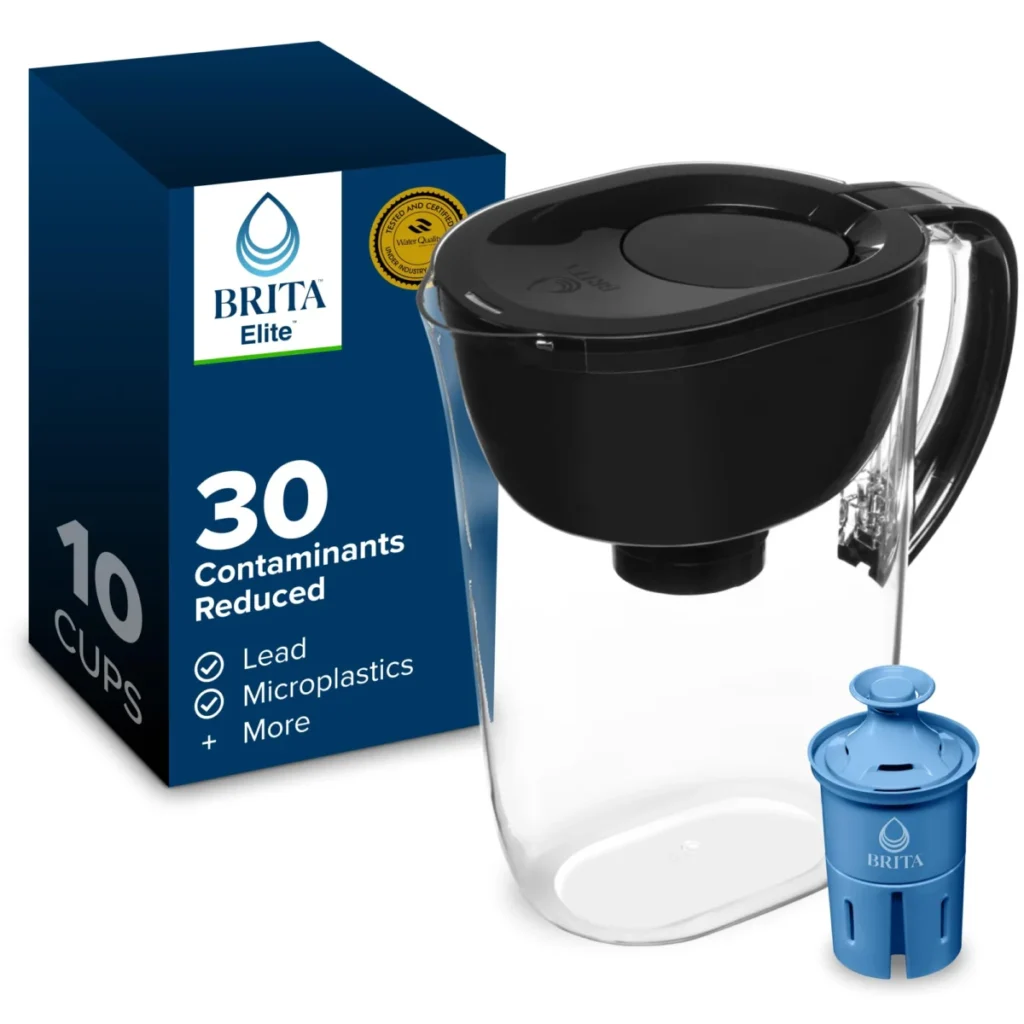
Choose the Brita Everyday Elite if you want a 10 cup pitcher with a six month filter life and mercury named among its reduction claims.
Brita XL 27 Cup Dispenser
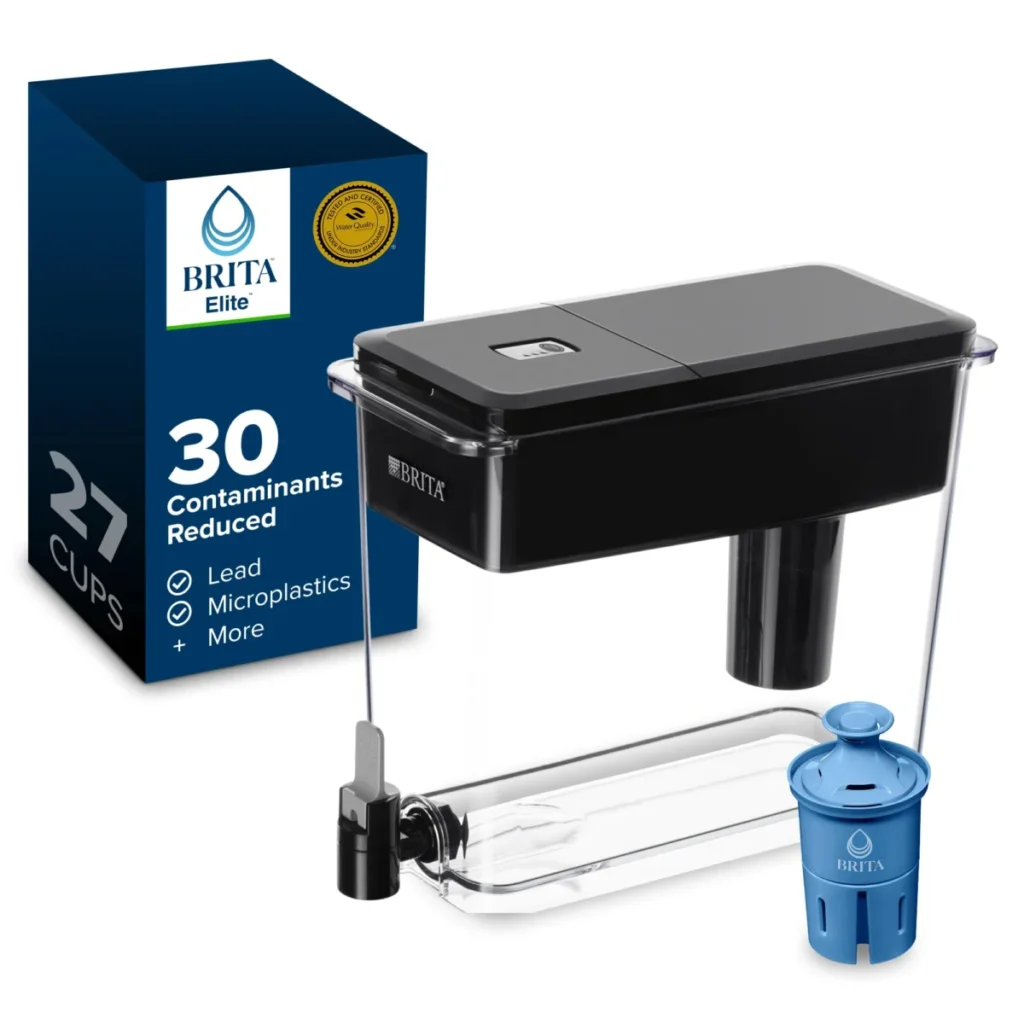
Choose the Brita XL dispenser if your household drinks enough water that a 27 cup capacity and spigot matter more than a compact footprint.
The AquaGear Water Filter Pitcher also appears in
- Best Water Filter for Microplastics: 7 Picks Matched to Micron Rating and Certification
- Best Water Filter for Chlorine: 7 Picks for Renters, Under Sink and Whole House
- 7 Water Filters Certified to Reduce Lead, Ranked by Yearly Cartridge Cost
- 7 Water Filter Pitchers Ranked by Certification and Yearly Cartridge Cost
Common questions
Frequently asked questions
What does the AquaGear Water Filter Pitcher actually remove from tap water?
The manufacturer states the filter reduces lead, chlorine, PFOA/PFOS and microplastics using activated carbon and ion exchange media. It does not state fluoride, bacteria or full PFAS coverage, so check the performance data sheet against your local water report.
Does the AquaGear pitcher remove lead and is it certified for it?
Lead reduction is named in the product listing, and ion exchange media is the material typically used to capture dissolved lead. The listing does not name an NSF/ANSI certification number, so confirm the specific lead claim on the manufacturer performance data sheet before relying on it.
How often do you replace the AquaGear filter, and what does it cost per year?
Each filter is rated for 120 gallons, so replacement frequency depends on how much water you drink. Divide your weekly drinking water by 120 gallons to estimate filters per year, then multiply by the current cartridge price shown on the page.
Does the AquaGear pitcher remove fluoride or PFAS?
The listing names PFOA and PFOS reduction but does not state fluoride reduction.
Is the AquaGear pitcher good for well water?
A pitcher is not a well water treatment. Private wells should be tested by a certified lab for bacteria, nitrates, iron and hardness first, because a pitcher cannot treat bacteria or soften hard water.
How does the AquaGear pitcher compare with a faucet mount or under sink filter?
A faucet mount or under sink filter delivers water at tap speed and handles more volume, while the AquaGear pitcher needs no plumbing and suits renters. Choose the pitcher for simplicity and the under sink option if you want filtered water on demand for cooking.
Bottom line
Should you buy the AquaGear Water Filter Pitcher?
Buy the AquaGear Water Filter Pitcher if you rent or have a small kitchen, your water report shows chlorine, lead or PFAS, and you want a no-install filter with a long 120 gallon cartridge life. It is a practical, low-commitment way to improve taste and target named contaminants without touching the plumbing.
Skip it if you have hard water, a private well you have not tested or a specific fluoride concern, because a pitcher cannot soften water, treat bacteria or state fluoride reduction. In those cases, spend the money on a softener, a lab test or a reverse osmosis system instead.