How Long Do Brita Filters Last, and How to Tell Yours Is Spent
Published October 29, 2026
Quick answer
A standard Brita pitcher filter is rated for 40 gallons, or about two months for a typical household, and a Brita Elite filter is rated for 120 gallons, or about six months. How long do Brita filters last in practice depends on which cartridge you own and how much water you draw: the rating is whichever limit, gallons or months, you hit first. A household that refills the pitcher several times a day will burn through the gallon allowance well before the calendar catches up.
Table of contents11 sections · tap to expand
Key takeaways
- Standard Brita cartridges are rated at 40 gallons and Brita Elite at 120 gallons, so the Elite lasts roughly three times as long per cartridge.
- The gallon limit, not the calendar, is what most busy kitchens reach first, and the indicator light tracks time and volume rather than water quality.
- Sealed cartridges keep for years in cool, dry storage, but heat and damp shorten that window and you cannot inspect the carbon inside.
- A pitcher is the cheapest way into filtered water but the slowest and the least capable; a faucet mount or under sink filter costs more up front and covers more contaminants.
How long does a Brita filter last?
Brita rates its two pitcher cartridge lines differently, and that difference is the single most useful fact for planning replacements. The standard Brita pitcher filter carries a 40 gallon rating, which Brita presents as roughly two months of use. The Brita Elite filter carries a 120 gallon rating, presented as roughly six months.
Those month figures assume ordinary household consumption, so treat them as a default rather than a promise. A single person who fills a pitcher once a day will often reach the calendar limit first. A family that keeps a dispenser on the counter and refills it constantly will hit the gallon limit in a fraction of the stated months.
The cartridge itself is a block of activated carbon, sometimes with ion exchange resin, that adsorbs chlorine and the organic compounds behind taste and odor. Once the carbon's binding sites are occupied, water still passes through, which is why a spent filter does not usually fail dramatically. It simply stops improving the water, and flow may slow as sediment packs the surface.
Brita standard vs Brita Elite filter life
Brita Elite lasts about three times as long as the standard cartridge, 120 gallons against 40, and the two are certified for different reductions. The standard filter is certified to NSF/ANSI 42 for chlorine taste and odor, and Brita also lists reduction claims for copper and mercury on that cartridge. The Elite line extends the same aesthetic chlorine reduction and adds certification under NSF/ANSI 53, the health-effects standard, for named contaminants.
The practical consequence is cost per gallon rather than sticker price. A standard cartridge that lasts 40 gallons and an Elite cartridge that lasts 120 gallons are not comparable on price alone: divide the cartridge price by its gallon rating to see which is cheaper per gallon of filtered water. In most listings the Elite works out cheaper per gallon despite costing more at the till.
Pick the standard filter if you change cartridges on a fixed schedule anyway, or if your pitcher is a backup appliance that sees light use. Pick the Elite if your household drinks a lot of pitcher water and you want fewer changes and the broader certification. Neither cartridge reduces fluoride, PFAS or hardness minerals, so if those are your concerns the choice between the two lines does not solve it.
Gallons or months: which limit comes first?
Whichever limit arrives first ends the cartridge's useful life, so the gallon rating is the one to watch in a busy kitchen. Brita's month figures are a convenience estimate built around average use; they are not a guarantee that a cartridge is still working on day 61 or day 181.
Do the arithmetic once and you will know your own number. Count how many times the pitcher or dispenser is filled in a day, multiply by its capacity in gallons (a typical pitcher holds well under a gallon, a dispenser more), and divide the cartridge rating by that daily figure. A household drawing a gallon a day from a standard 40 gallon cartridge gets about 40 days, not two months.
Heavy use is not the only accelerator. Water with high sediment or hardness loads the carbon surface faster, and a pitcher kept in a warm kitchen or filled with cloudy tap water will often clog before its rated gallons are spent. If flow slows noticeably while the indicator still reads fine, trust the flow.
How to tell your Brita filter needs changing
Taste and smell coming back is the most reliable signal, because chlorine breakthrough is exactly what the cartridge exists to prevent. If the water starts tasting or smelling of chlorine again, the carbon is exhausted regardless of what the indicator says.
Slower flow and visible particles in the reservoir are the next signs. A cartridge that takes noticeably longer to drain, or that leaves flecks of carbon or sediment in the water, is either clogged or no longer seated properly. Lift it out, reseat it firmly and flush a couple of pitchers; if the problem persists, replace it.
The indicator light or sticker is a timer, not a sensor. It counts days and, on some models, the volume of water dispensed, then estimates when the rated life is up. It cannot detect chlorine breakthrough, so it can read green on a cartridge that is already spent, and it can read red on one that has seen little use. Use it as a reminder and your nose as the test.
If you have just changed the cartridge and the water still tastes odd, run two or three pitchers through and discard them. Fresh carbon sheds fine dust and trapped air, and the first fill or two after a change is not representative.
- Taste and smell the water: returning chlorine is the clearest sign of exhaustion.
- Check the flow rate against how the pitcher behaved when new.
- Lift and reseat the cartridge, then flush two pitchers if flow is poor.
- Replace the cartridge if taste, smell or flow do not recover.
Do Brita filters expire or go bad unopened?
Sealed Brita cartridges do not carry a hard expiry date the way food does, but they do degrade with storage conditions. The carbon is stable when kept dry, so an unopened box stored in a cool, dry cupboard will generally still perform years later.
Heat and damp are what shorten that window. A garage, shed or boiler cupboard that swings between humid and hot can let moisture into the packaging, and damp carbon is a poor adsorber and a good place for mould and bacteria to settle. A cartridge that smells musty, has a swollen or stained wrapper, or shows condensation inside the seal should be discarded rather than installed.
When you find an old box in a cupboard, judge it on the packaging and the smell rather than the print date. If the wrapper is intact, the cartridge is dry and it smells of nothing in particular, it is reasonable to use it and to watch the first few pitchers for taste. If you are unsure, the cost of a replacement cartridge is small next to the doubt.
What a Brita filter reduces and what it does not
A Brita pitcher filter is an aesthetic and light-duty filter: it reduces chlorine taste and odor under NSF/ANSI 42, and the Elite line adds NSF/ANSI 53 certification for specific named contaminants. It is not a broad-spectrum purifier, and the list of things it leaves in the water is longer than the list it takes out.
Fluoride, PFAS such as PFOA and PFOS, arsenic, nitrate and hardness minerals pass through pitcher carbon largely untouched. Lead reduction is not something to assume from a pitcher cartridge: check the manufacturer's performance data sheet for the exact model and look for NSF/ANSI 53 lead reduction on the label.
If your local water quality report, the consumer confidence report your utility publishes each year, shows lead, PFAS or nitrate at levels you want to address, a pitcher is the wrong tool and you need a technology matched to that contaminant.
For private well water, no pitcher decision should come before a lab test. The EPA and CDC both recommend testing a private well for bacteria, nitrate and other parameters, because a well is not regulated and the right treatment depends entirely on what the test finds. A Brita pitcher will improve the taste of well water; it will not make microbiologically unsafe water safe.
Cost per year and when to switch filter types
Turn the gallon rating into a yearly cartridge count and the comparison between filter types becomes clear. A household drinking a gallon of pitcher water a day needs roughly nine standard cartridges a year at 40 gallons each, or about three Elite cartridges at 120 gallons each. Multiply by the current cartridge price on the page to get your annual figure.
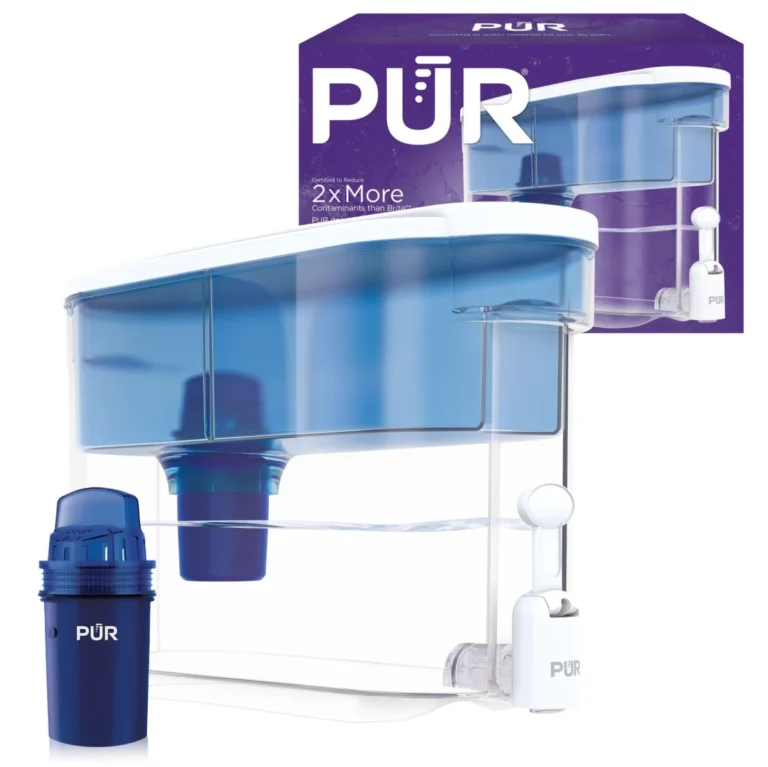
That annual figure is the honest basis for deciding whether to keep the pitcher. A faucet mount water filter connects to the tap and typically flows far faster than a pitcher, so a family that fills the pitcher several times a day gets its counter space and its patience back.
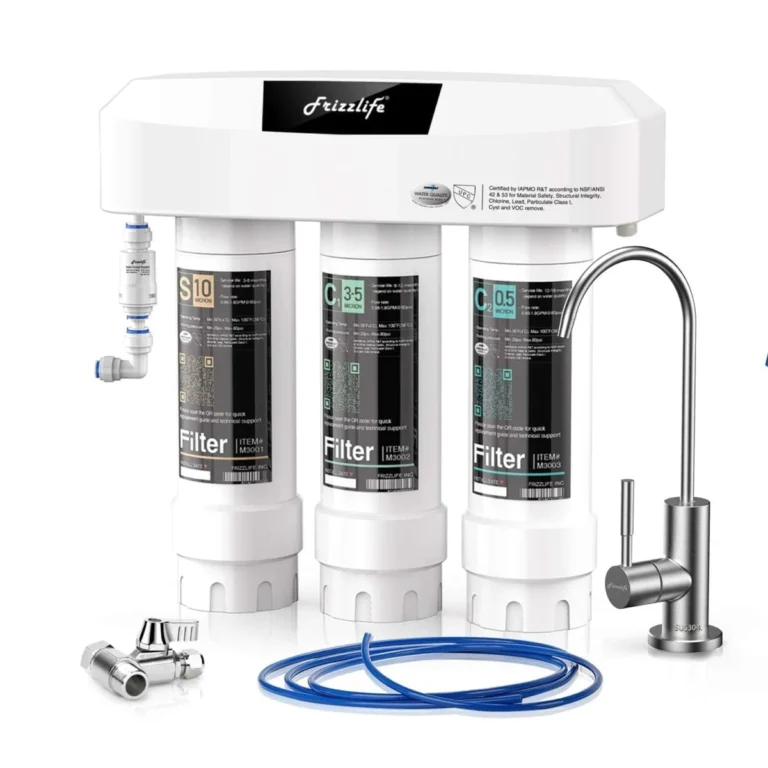
An under sink water filter moves the cartridge out of sight, delivers the best flow of the three and usually carries a longer rated life, at the cost of installation under the cabinet and, for renters, a conversation with the landlord.
Keep the pitcher if you rent a room, move often, or want cold filtered water in the fridge with no plumbing at all. Switch to a faucet mount if the pitcher is constantly empty and the refilling has become a chore. Go under sink if you own the place, drink a lot of tap water and want the cartridge change to be an annual errand rather than a monthly one.
Replacement schedule by household size
Use these as starting points and adjust for how much water actually leaves the pitcher. A light user is one fill a day, a heavy user is four or more fills of a standard pitcher, and a dispenser in a busy kitchen can move a gallon or more a day on its own.
One person, light use: a standard cartridge lasts close to its two month estimate, an Elite close to six months. A couple drinking mainly at meals: expect the standard cartridge to run out around the two month mark and the Elite around five to six months.
A family of four filling the pitcher at every meal: the standard 40 gallon rating can be gone in three to five weeks, and the Elite in three to four months. A heavy-use kitchen with a dispenser: count gallons rather than months, and expect to replace the standard cartridge monthly.
If you are weighing a different pitcher system, ZeroWater works on a different principle: its cartridges use ion exchange and carbon to bring dissolved solids down to near zero, and its own meter tells you when the reading climbs. Those cartridges are rated in gallons too but are consumed faster by hard or high-solids water, so the cost per gallon is usually higher than Brita's.
The tradeoff is real: ZeroWater targets dissolved solids that Brita leaves in, and neither is a substitute for a reverse osmosis system if fluoride or arsenic is the concern.
Avoid these
Common mistakes to avoid
- Trusting the indicator light as a water quality test. Treat the light as a calendar reminder and judge the cartridge by taste, smell and flow, replacing it as soon as chlorine returns.
- Comparing standard and Elite cartridges on sticker price alone. Divide each cartridge price by its gallon rating (40 for standard, 120 for Elite) to compare cost per gallon of filtered water.
- Storing spare cartridges in a hot garage or damp basement. Keep sealed cartridges in a cool, dry cupboard and discard any whose wrapper is swollen, stained or musty.
- Assuming a Brita pitcher handles lead, PFAS or fluoride. Check the performance data sheet and certification for the exact model, and choose a technology matched to the contaminant your water report shows.
See also: Pur vs Brita: Pitcher, Dispenser and Faucet Filters Compared by Capacity and Cartridge Cost; Are All Brita Filters the Same? Which Cartridge Fits Your Pitcher, Faucet or Fridge; Berkey vs Brita: Gravity Dispenser or Pitcher, and What Each Really Reduces.
Common questions
Frequently asked questions
How often should I change my Brita filter?
Change a standard Brita cartridge at 40 gallons or about two months, and a Brita Elite cartridge at 120 gallons or about six months, whichever comes first. Heavy households should count gallons, because a family filling the pitcher daily can exhaust a standard cartridge in under a month.
Do unopened Brita filters expire?
Sealed cartridges have no hard expiry date, but they keep best in cool, dry conditions and can degrade in heat or humidity. If the wrapper is intact, the cartridge is dry and it has no musty smell, it is reasonable to use even after long storage.
How do I know if my Brita filter is bad?
The clearest sign is chlorine taste or smell returning to water that previously tasted clean. Slower flow, visible carbon or sediment in the reservoir, or an indicator that has run out all point to replacement, but taste is the test that matters.
Does a Brita filter remove fluoride?
No. Brita pitcher cartridges are not rated to reduce fluoride, which is a dissolved mineral that carbon does not capture. Removing fluoride requires reverse osmosis or a filter specifically certified for fluoride reduction, so check the performance data sheet before buying.
Can I clean and reuse a Brita filter?
No. The cartridge is a sealed block of activated carbon, and once its adsorption sites are full there is no way to regenerate them at home. Rinsing the outside removes dust but does not restore capacity, so replace the cartridge instead.
Is Brita Elite worth the extra cost over the standard filter?
For heavy users, usually yes: the Elite's 120 gallon rating against the standard's 40 gallons means fewer changes and often a lower cost per gallon. Light users who change on a fixed schedule anyway may not gain enough to justify the higher cartridge price.
Next step
Work out your household's daily pitcher use, divide the cartridge's gallon rating by that number, and note the replacement date on the calendar. Then compare the annual cartridge cost with a faucet mount or under sink filter, since a family that refills the pitcher several times a day often spends more per year on cartridges than a plumbed filter would cost.