7 Well Water Systems Ranked by What They Remove, From Prefilter to Reverse Osmosis
Published October 29, 2026
As an Amazon Associate we earn from qualifying purchases. This never changes which products we recommend.
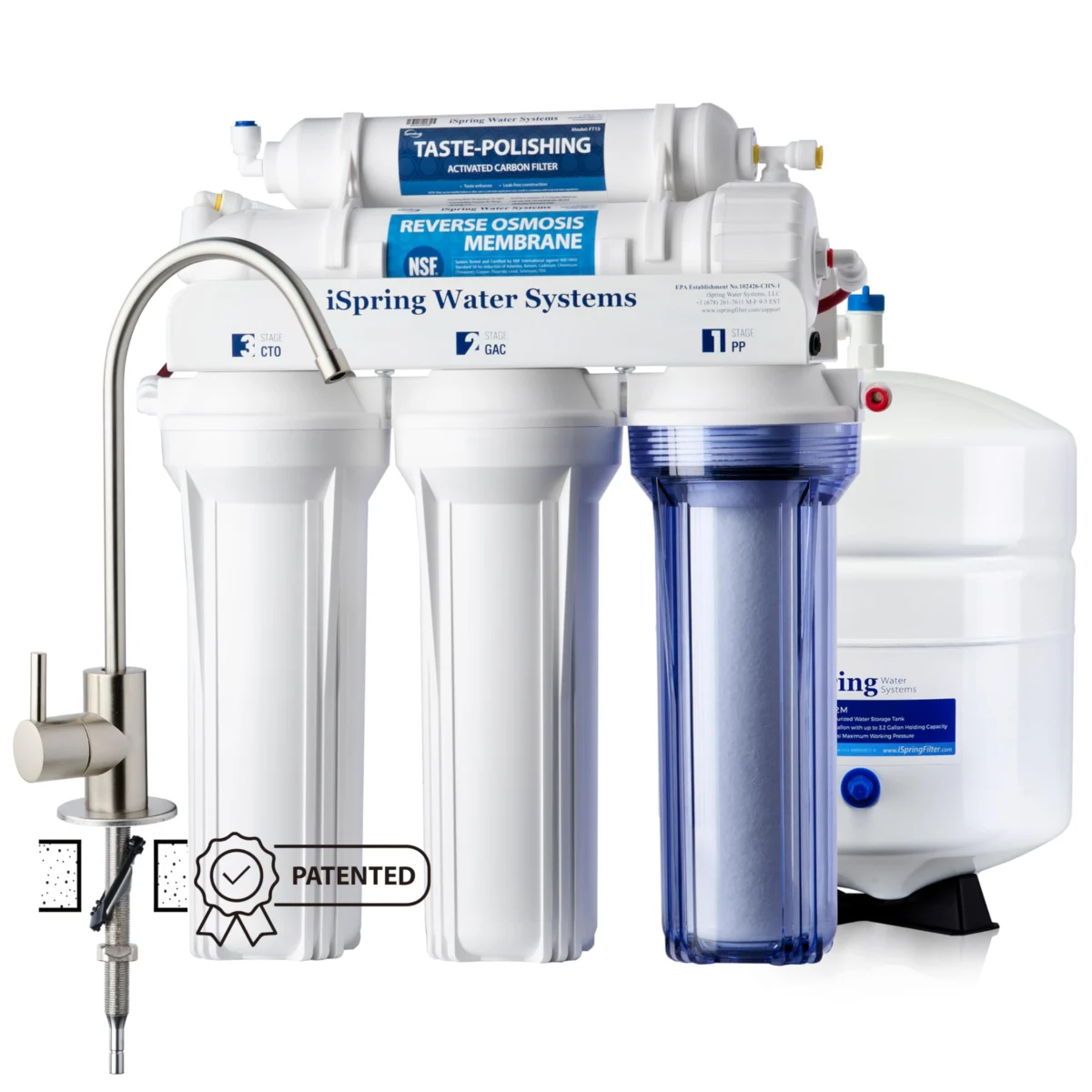
The right water purifier system for well water starts with a lab test, not a product page. Once you know what is in the water, the picks below cover each stage: the iSpring RCC7-BN leads as the drinking water stage because it is NSF/ANSI 58 certified and states reduction of lead, PFAS and fluoride at 75 GPD.
What separates these systems is where they sit and what they can actually treat. A whole house carbon filter protects every tap from chlorine and sediment but leaves dissolved arsenic and nitrates alone, while a reverse osmosis unit at the kitchen sink handles those dissolved contaminants but treats one faucet. Iron, sulfur and hardness each need their own stage.
 Best OveralliSpring RCC7-BNWell owners who need a certified drinking water stage7.8/10
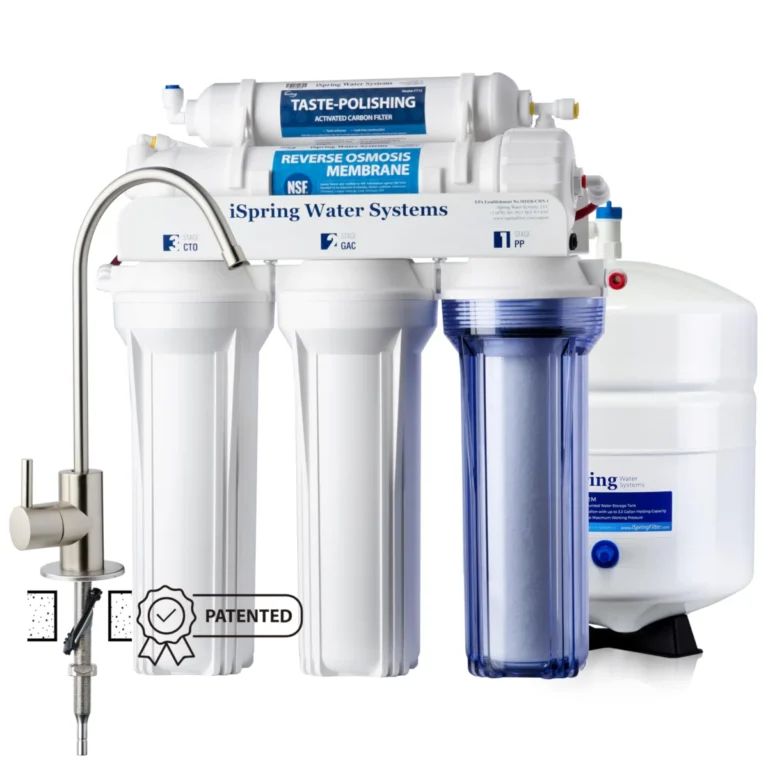
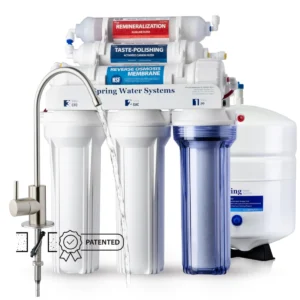 Best with RemineralizationiSpring RCC7AK-BNHouseholds that dislike flat-tasting RO water7.8/10
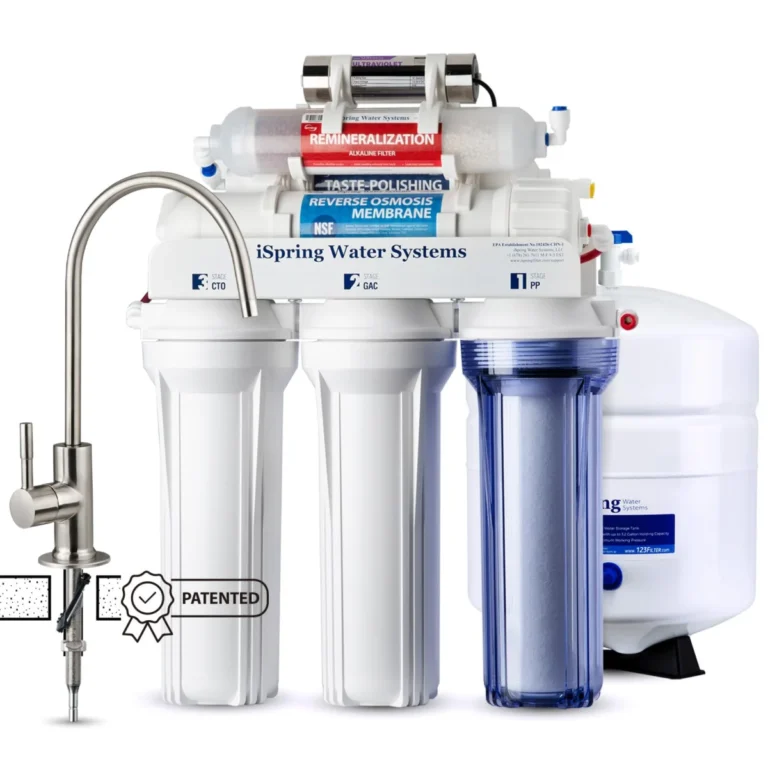
 Most Treatment StagesiSpring RCC7AK-UVWell owners who want UV plus minerals at the tap7.7/10
 Best Whole House StageiSpring WGB32BProtecting every tap from sediment and chlorine7.7/10
Table of contents9 sections · tap to expand
At a glance
Our top picks compared
| Product | Best for | Type and size | Key features | Where to buy |
|---|---|---|---|---|
| 1. iSpring RCC7-BN Best Overall 7.8/10 | Well owners who need a certified drinking water stage | Reverse osmosis system, 75 gallons, 75 GPD | NSF certifiedLead reductionPFAS reductionFluoride | Budget Check price |
| 2. iSpring RCC7AK-BN Best with Remineralization 7.8/10 | Households that dislike flat-tasting RO water | Reverse osmosis system, 75 gallons, 75 GPD | NSF certifiedLead reductionPFAS reductionFluoride | Budget Check price |
| 3. iSpring RCC7AK-UV Most Treatment Stages 7.7/10 | Well owners who want UV plus minerals at the tap | Reverse osmosis system, 75 gallons | NSF certifiedLead reductionFluorideInstallation | Mid-range Check price |
| 4. iSpring WGB32B Best Whole House Stage 7.7/10 | Protecting every tap from sediment and chlorine | Whole house filter, 100,000 gallons, 15 GPM | InstallationFilter life listed | Premium Check price |
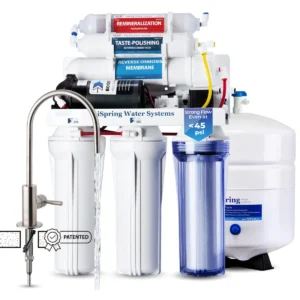 5. iSpring RCC7P-AK Best for Low Pressure 7.7/10 | Homes with weak well pressure feeding an RO unit | Reverse osmosis system, 75 gallons | Lead reductionPFAS reductionFluorideInstallation | Mid-range Check price |
 6. Aquaboon Whole House System Best Sediment Prefilter 7.5/10 | A first-stage housing ahead of other treatment | Whole house filter, 100 gallons | InstallationFilter life listed | Budget Check price |
 7. Royal Berkey Best No-Plumbing Option 7.5/10 | Renters and outages with no power or plumbing | Gravity filter, 6,000 gallons | Filter life listed | Premium Check price |
Score: our 0-10 rating from fit for this use, buyer ratings, review volume, completeness of the product details and availability. It is not a lab test.
Buying advice
How to choose a well water filter system for your home
Match the stage to the problem, not the price
Where a system sits decides what it can fix. A point-of-entry whole house filter treats every tap but is built for sediment, chlorine and taste, while a point-of-use reverse osmosis unit at the kitchen sink is the stage that states reduction of dissolved contaminants such as lead, fluoride and PFAS. Iron, manganese and hydrogen sulfide need their own oxidation or media stage before either, so a household with rust stains should budget for that first rather than upgrading the drinking water filter.
Check the certification and the contaminants it names
NSF/ANSI 42 covers aesthetic effects such as chlorine taste and odor, NSF/ANSI 53 covers health effects such as lead and cysts, and NSF/ANSI 58 covers reverse osmosis systems. A page that says NSF certified without naming the standard tells you little. Look for the standard number and the specific contaminants the manufacturer states, then confirm them on the performance data sheet before you buy, because a carbon filter does not remove arsenic or nitrates no matter how it is marketed.
Plan for flow rate, filter life and yearly cost
A whole house unit rated at 15 GPM with 1 inch connections keeps showers and appliances supplied, while a 75 GPD reverse osmosis system serves drinking water only and stores it in a tank. Filter life drives running cost: a 100,000 gallon whole house rating spreads replacements over years, whereas RO cartridges and a membrane are a recurring annual expense. Add backwash water and salt if a softener joins the setup.
Know what each system does not do
A softener trades hardness minerals for sodium and does not improve drinking water quality, a salt-free conditioner limits scale without removing hardness, and a UV stage disinfects but leaves chemicals in place. Whole house carbon improves taste across the home but is not a substitute for reverse osmosis on arsenic or nitrates. Being clear about these limits is what stops a well owner from buying the same problem twice.
Our picks
Well water treatment picks by stage and job
Best Overall
iSpring RCC7-BN
- Reverse osmosis system
- NSF/ANSI 58
- 75 gallons
- 75 GPD
- Chlorine, Lead, PFAS
- DIY install
Best for: Well owners who need a certified drinking water stage
Skip if: You want minerals restored or UV disinfection, which the RCC7AK-BN and RCC7AK-UV add.
Price range: Budget
Check price on AmazonPaid link. We may earn a commission.
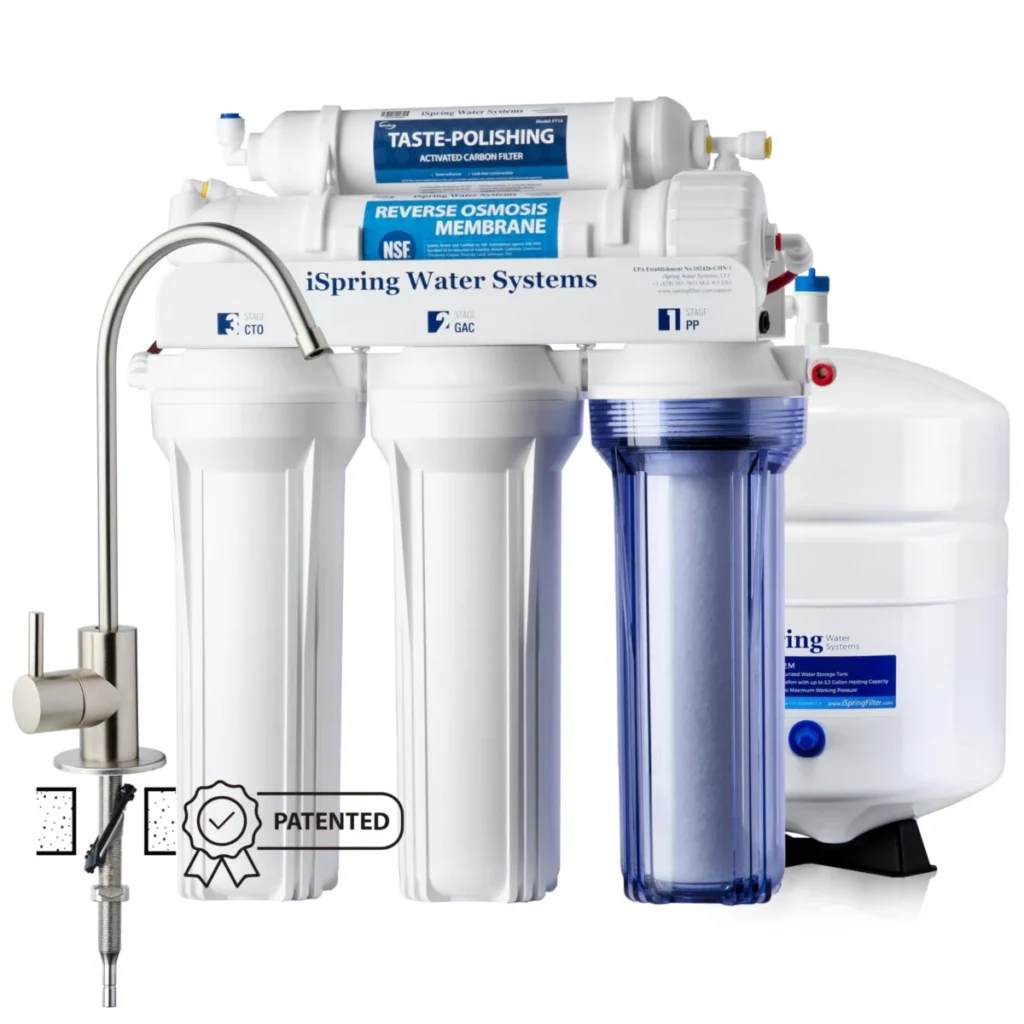
The iSpring RCC7-BN earns Best Overall because it pairs NSF/ANSI 58 certification with a 5-stage design rated at 75 GPD, giving well owners a certified drinking water stage without paying for extras they may not need.
What matters in daily use
The RCC7-BN is a reverse osmosis system rated at 75 gallons per day across 5 stages, and its NSF/ANSI 58 certification covers the whole system rather than a single component. For a well owner, that matters because the RO membrane is the stage that pulls dissolved contaminants out of water a carbon filter cannot touch. The listing names chlorine, lead, PFAS and fluoride among the contaminants it reduces, so check the performance data sheet against your own lab results before you commit.
The tradeoff is that this is the plainest of the three iSpring RO picks here: no remineralization stage and no UV. RO water tends toward a flat taste because minerals are stripped along with the contaminants, which is exactly the gap the iSpring RCC7AK-BN fills with its alkaline sixth stage. If your well test shows bacteria, the iSpring RCC7AK-UV adds a UV stage on top. Installation is DIY, and the system needs a cold water line and cabinet space under the sink.
Specifications
| Type | Reverse osmosis system |
|---|---|
| Certifications | NSF/ANSI 58 |
| Reduces | Chlorine, Lead, PFAS, Fluoride (named in listing) |
| Filter life | 75 gallons |
| Flow rate | 75 GPD |
| Stages | 5 stages |
| Installation | DIY install |
Pros
- NSF/ANSI 58 certification covers the full system
- 5 stages at 75 GPD suit a household drinking tap
- No power required, so it runs during outages
- Transparent first-stage housing makes cartridge checks easy
Cons
- No remineralization stage, so taste may read flat
- No UV stage for well water with bacteria concerns
Best with Remineralization
iSpring RCC7AK-BN
- Reverse osmosis system
- NSF/ANSI 58
- 75 gallons
- 75 GPD
- Chlorine, Lead, PFAS
- DIY install
Best for: Households that dislike flat-tasting RO water
Skip if: Your well test flags bacteria, or your well pressure is weak enough to slow RO output.
Price range: Budget
Check price on AmazonPaid link. We may earn a commission.
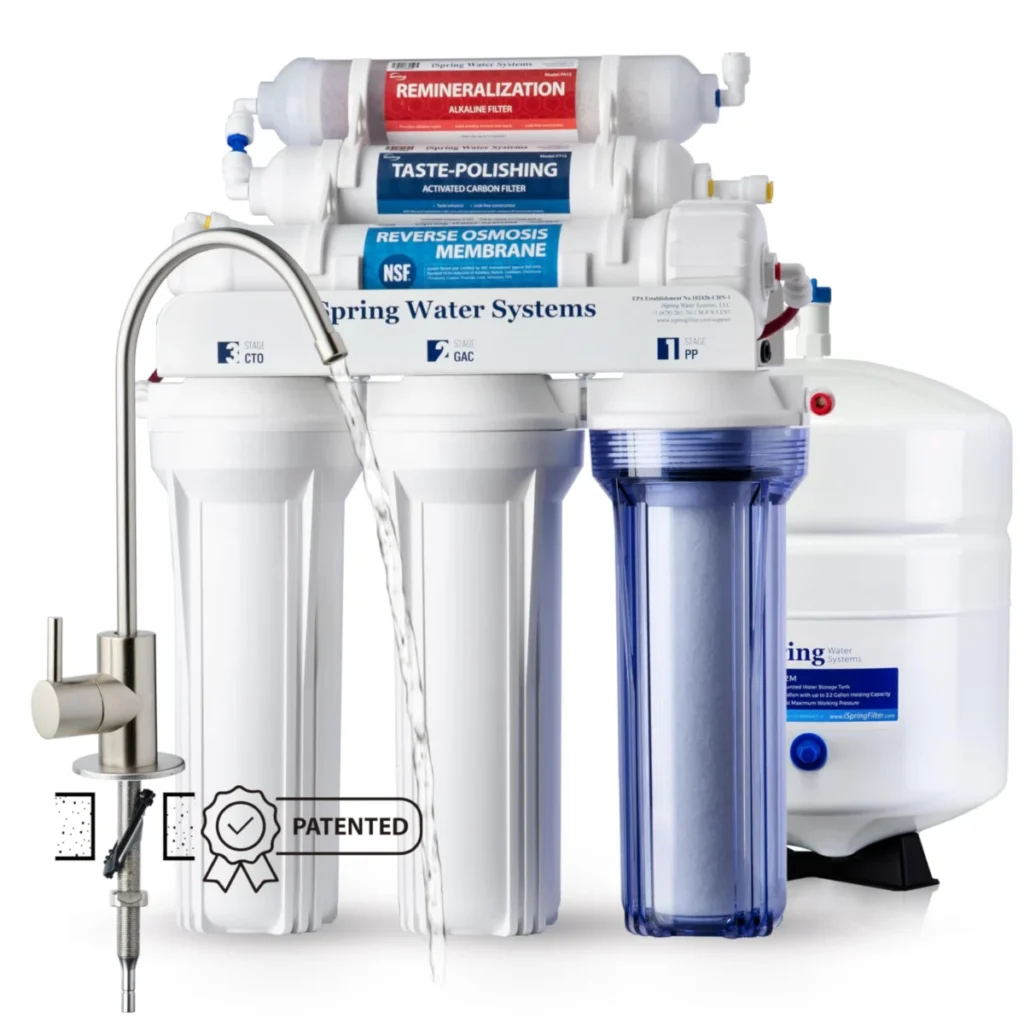
The iSpring RCC7AK-BN takes Best with Remineralization because its sixth alkaline stage restores minerals to 75 GPD RO output, addressing the flat taste that standard reverse osmosis leaves behind.
What matters in daily use
Where the RCC7-BN stops at five stages, the RCC7AK-BN adds a mineral stage that returns an alkaline balance to the water after the RO membrane strips dissolved solids. The listing reports reductions across a wide list, including fluoride above 97 percent and lead above 98 percent, and the system carries NSF/ANSI 58 certification. For a household that drinks a lot of tap water, that sixth stage is the difference between water people reach for and water they avoid.
The tradeoff is maintenance: the alkaline cartridge is one more filter to track and replace, and the system still produces wastewater like any RO unit. It also lacks the UV stage found on the iSpring RCC7AK-UV, so it does not address bacteria on a well. If your well pressure runs low, the iSpring RCC7P-AK adds a booster pump instead. Otherwise this is the sensible middle of the three iSpring RO options.
Specifications
| Type | Reverse osmosis system |
|---|---|
| Certifications | NSF/ANSI 58 |
| Reduces | Chlorine, Lead, PFAS, Fluoride, Copper (named in listing) |
| Filter life | 75 gallons |
| Flow rate | 75 GPD |
| Stages | 6 stages |
| Installation | DIY install |
| Remineralization | Yes |
Pros
- Alkaline stage restores minerals and balances taste
- Certified to NSF/ANSI 58 as a complete system
- Six stages at the same 75 GPD rating as the base model
- Quick-fitting connections and step-by-step setup guidance
Cons
- Extra alkaline cartridge adds to the replacement schedule
- No UV stage for bacteria in well water
Most Treatment Stages
iSpring RCC7AK-UV
- Reverse osmosis system
- NSF/ANSI 58, NSF/ANSI
- 75 gallons
- Lead, Fluoride, Mercury
- DIY install
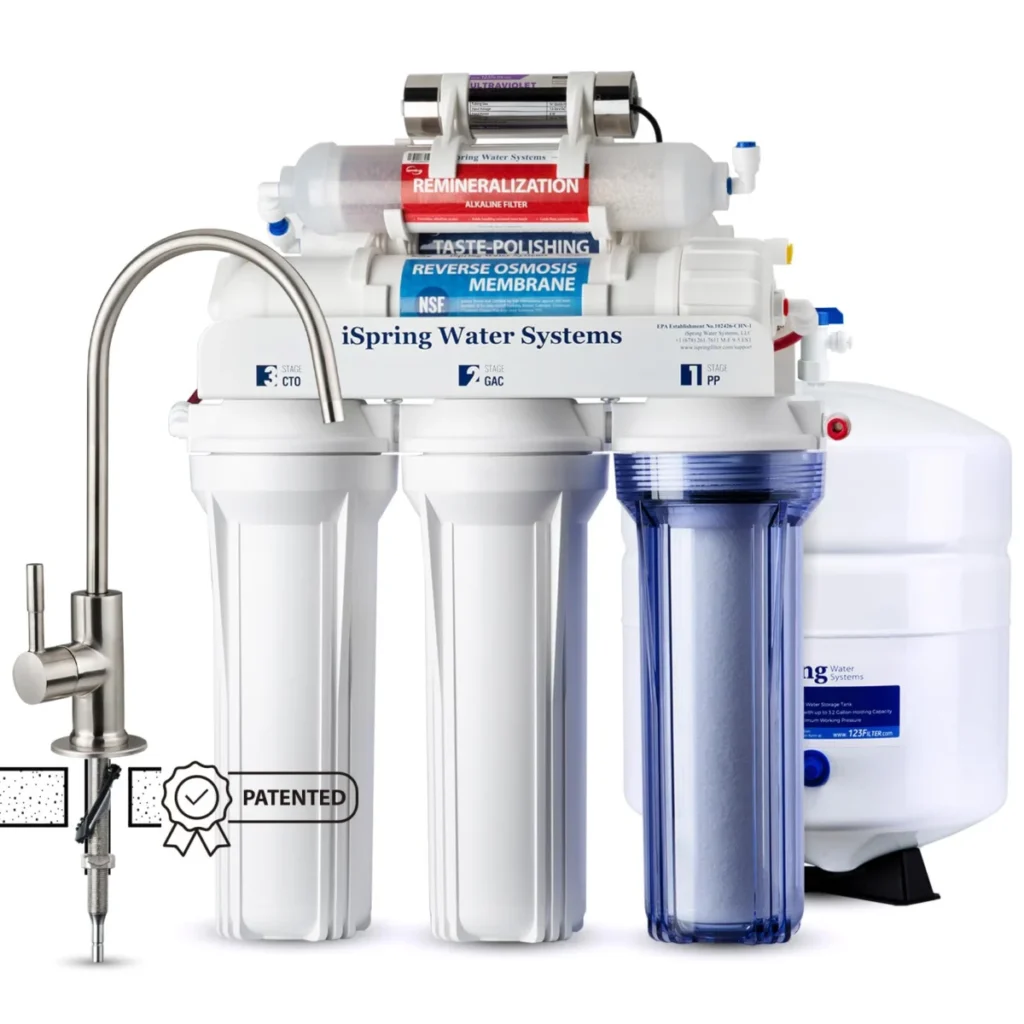
Best for: Well owners who want UV plus minerals at the tap
Skip if: Your well test shows no bacteria and you would rather avoid a powered unit.
Price range: Mid-range
Check price on AmazonPaid link. We may earn a commission.
The iSpring RCC7AK-UV earns Most Treatment Stages because its 7-stage design stacks alkaline remineralization and an LED UV stage onto certified RO, covering taste, minerals and biological concerns in one unit.
What matters in daily use
This is the most layered of the three iSpring RO systems, with 7 stages and dual NSF/ANSI 58 and NSF/ANSI 372 certification. The UV stage is mercury-free and flow-activated, switching on only when water moves through, and the listing names lead, fluoride, mercury and copper among the contaminants reduced. For a well owner whose lab test shows bacteria alongside dissolved contaminants, that combination is the reason to step up from the iSpring RCC7AK-BN.
Two practical points separate it from the cheaper picks. It draws corded electric power for the UV lamp, so it needs an outlet under the sink, and the 11W lamp is another component in the maintenance cycle. The alkaline stage still restores minerals after RO, matching the RCC7AK-BN on taste. If your well water tests clean for bacteria, the RCC7AK-BN delivers the same mineral boost without the electrical requirement.
Specifications
| Type | Reverse osmosis system |
|---|---|
| Certifications | NSF/ANSI 58, NSF/ANSI 372 |
| Reduces | Lead, Fluoride, Mercury, Copper (named in listing) |
| Filter life | 75 gallons |
| Stages | 7 stages |
| Installation | DIY install |
Pros
- UV stage adds biological treatment to certified RO
- Alkaline stage restores minerals for better taste
- Dual NSF/ANSI 58 and 372 certification
- Flow-activated UV draws power only during use
Cons
- Requires an electrical outlet under the sink
- UV lamp and alkaline cartridge both need replacement
Best Whole House Stage
iSpring WGB32B
- Whole house filter
- 100,000 gallons
- 15 GPM
- Chlorine, Pesticides
- DIY install

Best for: Protecting every tap from sediment and chlorine
Skip if: Your well problem is dissolved contaminants like arsenic or fluoride, which need reverse osmosis.
Price range: Premium
Check price on AmazonPaid link. We may earn a commission.
Earns Best Whole House Stage because it treats every tap at up to 15 GPM with a 5 micron sediment stage plus two carbon block stages, rated for 100,000 gallons.
What matters in daily use
The WGB32B is a point-of-entry filter, not a drinking water purifier. Its three stages run a 5 micron sediment cartridge ahead of two coconut shell carbon block cartridges, which is the order that matters on a well: grit and rust drop out first so the carbon is not blinded before it can work on chlorine, tastes, odors and the herbicides named in the listing. At up to 15 GPM through 1 inch NPT ports it can feed a whole house without throttling showers.
The tradeoff is scope. It keeps minerals in the water by design, so it does not touch fluoride, arsenic or the dissolved solids a reverse osmosis membrane handles; the listing itself points TDS removal to RO.
Pair it with an under sink unit such as the iSpring RCC7-BN for drinking water, or with the Aquaboon Whole House System if you only need a single sediment housing ahead of other treatment. The 100,000 gallon rating is a system capacity, so cartridge changes still come sooner than that figure suggests.
Specifications
| Type | Whole house filter |
|---|---|
| Reduces | Chlorine, Pesticides, Sediment (named in listing) |
| Filter life | 100,000 gallons |
| Flow rate | 15 GPM |
| Connection | 1 in |
| Installation | DIY install |
Pros
- Protects every tap, appliance and fixture at once
- Sediment stage ahead of carbon suits gritty well water
- Up to 15 GPM keeps household flow strong
- DIY install with 1 inch NPT connections
Cons
- Does not reduce dissolved solids, fluoride or arsenic
- 100,000 gallon figure is system capacity, not cartridge life
- No certification listed for the complete system
Best for Low Pressure
iSpring RCC7P-AK
- Reverse osmosis system
- 75 gallons
- Chlorine, Lead, PFAS
- DIY install
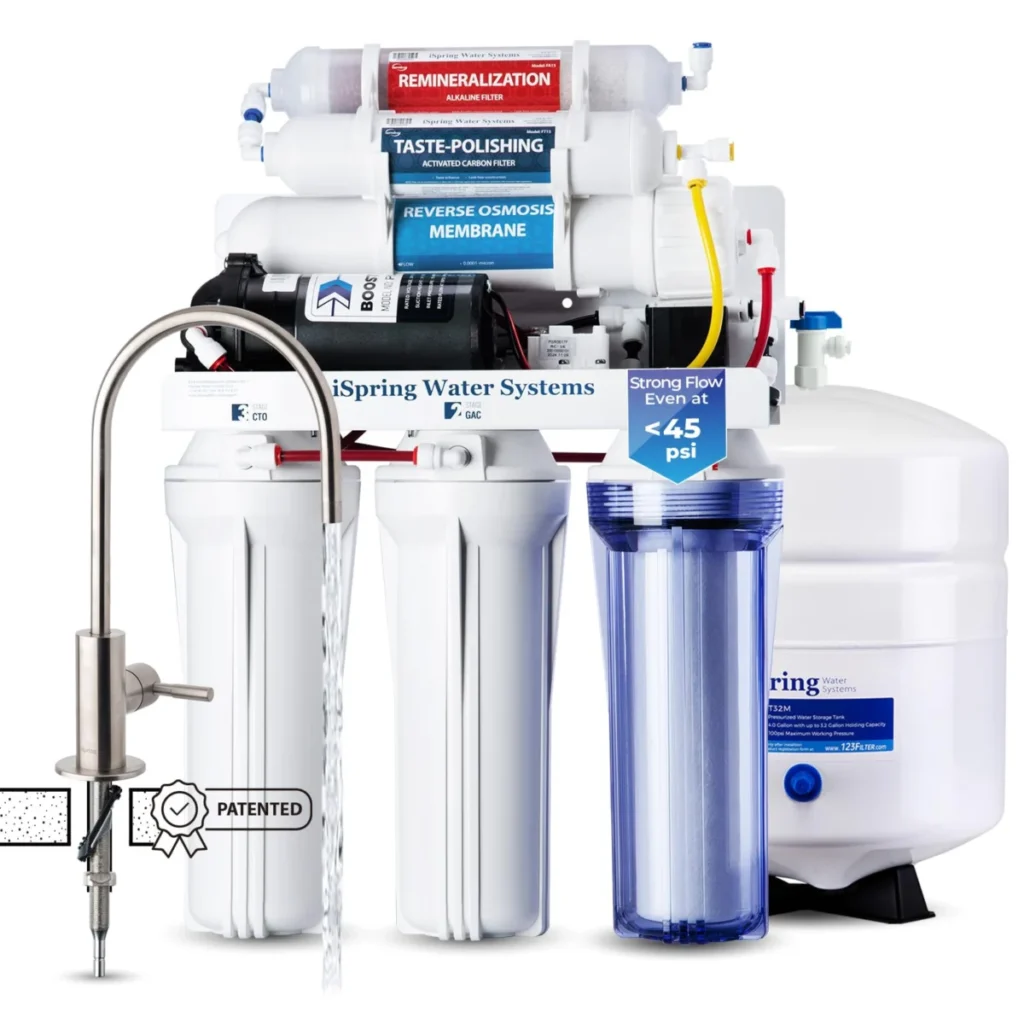
Best for: Homes with weak well pressure feeding an RO unit
Skip if: Your well pressure is strong and you would rather avoid an electrical connection under the sink.
Price range: Mid-range
Check price on AmazonPaid link. We may earn a commission.
Takes Best for Low Pressure because the booster pump keeps a 6-stage, 75 GPD reverse osmosis system producing when well pressure sags, and the sixth stage adds minerals back.
What matters in daily use
Wells with weak pressure are where tankless and pump-less RO systems stall. The RCC7P-AK adds a corded electric booster pump with a 100-240V 50/60Hz adapter, which the listing says keeps filtration efficient at low inlet pressure and cuts wastewater. The six stages combine reverse osmosis with carbon block and an alkaline remineralization stage, and the listing names chlorine, lead, PFAS, fluoride, arsenic and sediment among the reductions, with lead at 98%.
The pump is also the catch: this unit needs a power outlet under the sink, unlike the iSpring RCC7-BN, which runs on line pressure alone. If your well pressure is healthy, the RCC7-BN gives you the same 75 GPD RO core without the electrical dependency. If you want minerals plus disinfection rather than pressure support, the iSpring RCC7AK-UV adds a UV stage instead. Expect the usual RO maintenance, including membrane replacement over time.
Specifications
| Type | Reverse osmosis system |
|---|---|
| Reduces | Chlorine, Lead, PFAS, Fluoride, Arsenic, Sediment (named in |
| Filter life | 75 gallons |
| Stages | 6 stages |
| Installation | DIY install |
| Remineralization | Yes |
Pros
- Booster pump sustains output on low well pressure
- Remineralization stage counters flat RO taste
- Listing names arsenic and PFAS among reductions
- Transparent housing makes cartridge checks easy
Cons
- Requires a power outlet under the sink
- No NSF certification listed for this model
- RO membrane and cartridges add ongoing maintenance
Best Sediment Prefilter
Aquaboon Whole House System
- Whole house filter
- 100 gallons
- Chlorine
- DIY install
- Geekpure
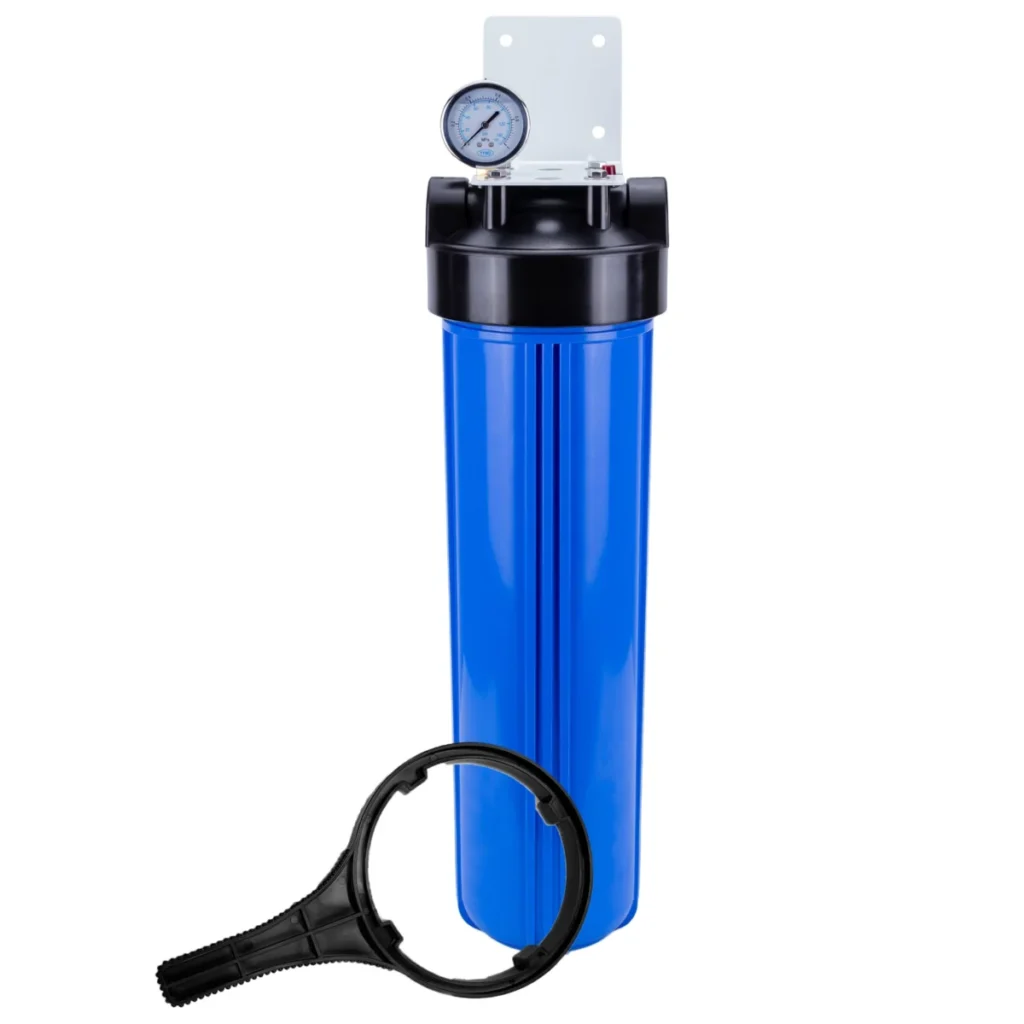
Best for: A first-stage housing ahead of other treatment
Skip if: You want one whole house unit that handles chlorine and sediment together without a second stage.
Price range: Budget
Check price on AmazonPaid link. We may earn a commission.
Earns Best Sediment Prefilter as a single-stage 20 inch housing with 1 inch ports and a pressure release, built to catch grit before it reaches your main treatment.
What matters in daily use
A single-stage housing has one job, and this Aquaboon does it with a reinforced polypropylene body, 1 inch inlet and outlet ports and a 90 PSI maximum pressure rating. The pressure release button is the practical detail: it lets you bleed pressure before opening the housing to swap a cartridge, which matters on a well system where a charged line can make housings stubborn. The listing describes chlorine reduction through activated carbon, so cartridge choice sets what the stage actually does.
The published capacity reads 100 gallons, far below the iSpring WGB32B's 100,000 gallon figure, so treat this as a prefilter housing rather than a whole house workhorse on its own. Its value is placement: put it ahead of a carbon block system or an RO unit so sediment arrives at the expensive stages already filtered. The listing also names compatibility with Geekpure housings, so confirm your cartridge fit before buying.
Specifications
| Type | Whole house filter |
|---|---|
| Reduces | Chlorine (named in listing) |
| Filter life | 100 gallons |
| Connection | 1 in |
| Installation | DIY install |
| Fits | Geekpure (per listing) |
Pros
- Pressure release simplifies cartridge changes
- 1 inch ports suit high-flow well lines
- Reinforced polypropylene resists chemical wear
- Useful first stage ahead of carbon or RO
Cons
- Single stage reduces only what its cartridge targets
- 100 gallon capacity figure is far below multi-stage systems
- Cartridge compatibility must be checked before purchase
Best No-Plumbing Option
Royal Berkey
- Gravity filter
- 6,000 gallons
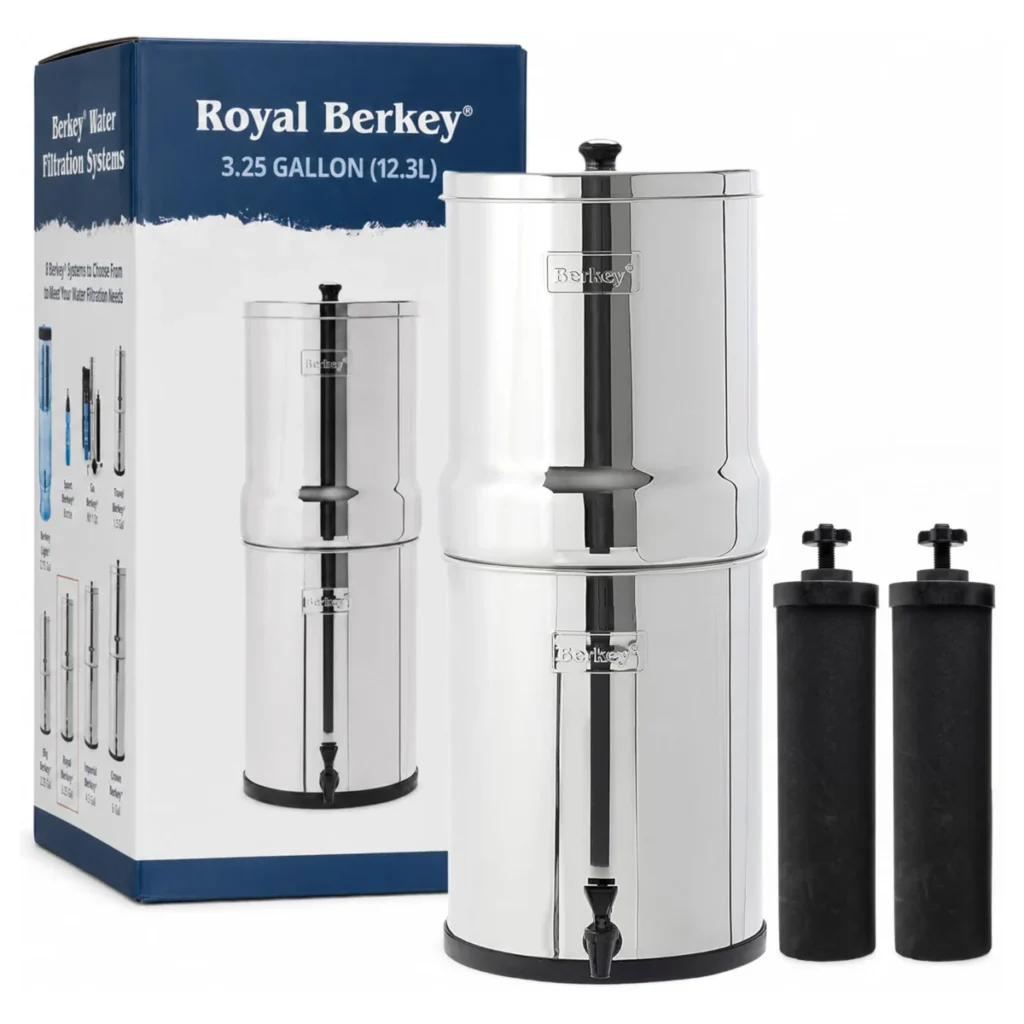
Best for: Renters and outages with no power or plumbing
Skip if: You want every tap filtered or need certified reduction data for specific well contaminants.
Price range: Premium
Check price on AmazonPaid link. We may earn a commission.
The Royal Berkey earns Best No-Plumbing Option because it filters by gravity alone, needs no electricity or permanent installation, and its two BB9-2 elements are rated for up to 6,000 gallons.
What matters in daily use
The Royal Berkey is a gravity filter, so it works when the power is out or when a renter cannot touch the plumbing. Water pours into the upper chamber and drips through two Black Berkey BB9-2 elements into the lower chamber, and the spigot dispenses from there.
The tradeoff is speed and scope. Gravity produces no pressure, so refilling a glass means waiting, and the unit takes countertop space at 9.5 inches wide and 23 inches tall. It is also a point-of-use dispenser rather than a whole house or under sink system: it treats only the water you pour in, unlike the iSpring WGB32B, which filters every tap.
The polished AISI 304 stainless steel body suits a kitchen counter, and the system accepts up to four elements for more output. For well owners, a gravity filter is a taste and sediment solution, not a substitute for a lab test or disinfection.
Specifications
| Type | Gravity filter |
|---|---|
| Filter life | 6,000 gallons |
| Material | Stainless steel |
Pros
- Works without power or plumbing
- Element life rated up to 6,000 gallons per pair
- Stainless steel body suits kitchen counters
- Accepts up to four elements for more capacity
Cons
- Gravity flow is slow; no tap pressure
- Treats only water poured into it
- No NSF/ANSI certification listed for the system
What should you test your well water for before buying anything?
Private well water is not regulated the way city water is, so the EPA and CDC both direct well owners to test on their own schedule and to treat the results as the starting point for any equipment decision. A certified lab test should cover bacteria (total coliform and E. coli), nitrates, iron, manganese, hardness, pH and arsenic at minimum, and your local health department can name any regional concerns such as uranium, radon or fluoride.
The results decide the order of treatment, not the other way around. Clear water with a sulfur smell points to carbon or aeration, orange staining points to iron, and a high arsenic or nitrate number points to reverse osmosis at the tap because carbon cannot remove either. Buy nothing until the lab report is in hand, and retest after any treatment change to confirm it is working.
Which stage treats which problem: iron, sulfur, hardness or drinking water?
Sediment and turbidity are handled first, by a spin-down or cartridge prefilter rated in microns, because grit fouls every stage behind it. Iron and manganese need oxidation or dedicated media, not a standard carbon cartridge, and hydrogen sulfide (the rotten egg smell) needs aeration or catalytic carbon rather than plain activated carbon. Hardness in grains per gallon is a job for an ion exchange softener; a salt-free conditioner limits scale but does not remove the hardness minerals.
Dissolved contaminants such as arsenic, fluoride, nitrates and PFAS belong to a drinking water stage at the kitchen tap, usually a reverse osmosis membrane, because whole house carbon is not built to strip dissolved solids. Matching each problem to its stage is what keeps a well owner from buying a carbon filter for iron or a softener for arsenic, two of the most common and most expensive mistakes.
Decision guide
Whole house, under sink or gravity: which setup fits your well?
The iSpring RCC7-BN and the iSpring RCC7AK-BN share a 75 GPD rating and NSF/ANSI 58 certification, so the choice comes down to taste. The RCC7AK-BN adds a sixth alkaline remineralization stage that restores minerals and balances pH, which suits a household that finds standard RO water flat. The RCC7-BN keeps the simpler five-stage layout and remains the straightforward drinking water pick.
For whole home protection, the iSpring WGB32B is rated at 15 GPM through 1 inch connections with a 100,000 gallon capacity, which makes it a point-of-entry stage rather than a drinking water filter. The Aquaboon housing is a single-stage 1 inch unit better read as a sediment prefilter ahead of other treatment. Neither removes dissolved arsenic or nitrates, so a well with those results still needs a reverse osmosis stage at the tap.
Our process
How we chose our Water Purifier System for Well Water picks
Options were shortlisted from systems that state a clear treatment stage, a published flow rate or capacity, and a named certification where one applies. Each was scored on what it is built to reduce, where it sits in a well water setup, filter life in gallons, installation demands and running cost. Buyer ratings were weighed as supporting evidence only, and no system was credited with a reduction its published data does not state.
Common questions
Frequently asked questions
Do I need a whole house filter or just an under sink filter for well water?
It depends on the problem. Sediment, chlorine taste and rust that affect every tap call for a whole house stage, while dissolved contaminants such as arsenic, nitrates or fluoride are handled at the kitchen tap by a reverse osmosis system. Many well homes end up with both, in that order.
Will a water softener fix iron in well water?
A softener removes hardness minerals through ion exchange resin and is not designed as an iron treatment. Small amounts of dissolved iron can foul the resin, and larger amounts need oxidation or dedicated iron media ahead of the softener. Test the iron level before assuming a softener will solve staining.
How do I get rid of sulfur smell in well water?
Hydrogen sulfide, the rotten egg smell, is usually treated with aeration or catalytic carbon rather than plain activated carbon. If the smell appears only from the hot tap, the cause may be the water heater rather than the well. A lab test confirms which situation you have before you buy media.
Does a carbon filter remove arsenic or nitrates from well water?
No. Activated carbon adsorbs chlorine, taste and odor compounds and some organic chemicals, but it does not reliably remove dissolved arsenic or nitrates. Those require reverse osmosis or a dedicated media, and the manufacturer performance data sheet should state the reduction before you rely on it.
Is well water safe to drink without treatment?
Not automatically. The EPA and CDC recommend testing private wells regularly because they are not covered by public water regulations. Whether your water is suitable to drink depends on the lab results for bacteria, nitrates and other parameters, so test first and follow local health department guidance.
Bottom line
Final verdict
- Most well households needing a certified drinking water stage: iSpring RCC7-BN. NSF/ANSI 58 certification with stated lead, PFAS and fluoride reduction at 75 GPD makes it the clearest single answer for dissolved contaminants at the tap.
- Households that want minerals and pH balance restored: iSpring RCC7AK-BN. The added alkaline remineralization stage addresses the flat taste of standard RO water while keeping the same 75 GPD capacity and NSF/ANSI 58 certification.
- Owners who want every tap protected from sediment and chlorine: iSpring WGB32B. A 15 GPM flow rate, 1 inch connections and a 100,000 gallon capacity make it the point-of-entry stage, though it leaves dissolved arsenic and nitrates to a reverse osmosis unit.
- Renters and households without plumbing or power: Royal Berkey. Gravity operation and a 6,000 gallon filter life per pair of elements mean no installation and no electricity, at the cost of batch-by-batch filling and no dissolved solids removal claim.
Final decision
Compare two finalists
Choose the two picks you narrowed down to see who each one suits and the main reason to skip it.
Keep reading
Dirty Sediment Filter: What the Color Means and Which Cartridge to Buy
The iSpring WSP-50 Spin Down is our top pick among 7 dirty sediment filters, compared on micron rating, cartridge type and rated…
Whole House Water Filter Replacements: Match the Cartridge to Your Housing
The iSpring WGB32B is our top pick among 7 whole house water filter replacements, compared on correct fit, filtration type and certification…

Best RV Water Filters: 7 Picks Ranked by What They Remove and the Flow They Cost
The Camco Tastepure leads our RV water filter picks on NSF/ANSI 42, 53 and 372 listings. Compare 7 options by what they…