Whole House Water Filter Leaking? Find the Source, Then the Fix
Published October 29, 2026
Quick answer
A whole house water filter leaking is almost always coming from one of five places: the sump O-ring, the cap or top seam, the inlet and outlet fittings, the red pressure-release button, or the bypass and drain valves. Shut off the inlet valve and depressurize the housing before you touch anything, then trace the drip to its exact source, because a seal leak, a cracked housing and a failed pressure-release valve each need a different fix. Most seal and fitting leaks are a do-it-yourself repair; a cracked cap, stripped threads or a housing with no stated pressure rating means replacement.
Table of contents13 sections · tap to expand
Key takeaways
- Shut off the inlet and release pressure before opening any housing; a pressurized sump can dump several gallons the moment it unseats.
- Where the water appears tells you the cause: the top seam points to the O-ring or cap, the side ports to thread sealant or a cracked port, the red button to a vent that is not seating.
- Repeat leaks after a cartridge change usually mean a dry, pinched or grit-covered O-ring, a cartridge that is not fully seated, or incoming pressure above the housing rating.
- Repair when only the O-ring or a fitting seal has failed; replace when the housing is cracked, threads are stripped, parts are discontinued, or the unit has no stated pressure rating.
- A replacement housing with brass 1 inch NPT ports, a double O-ring seal and a stated pressure range removes the two most common leak points.
Our pick for this
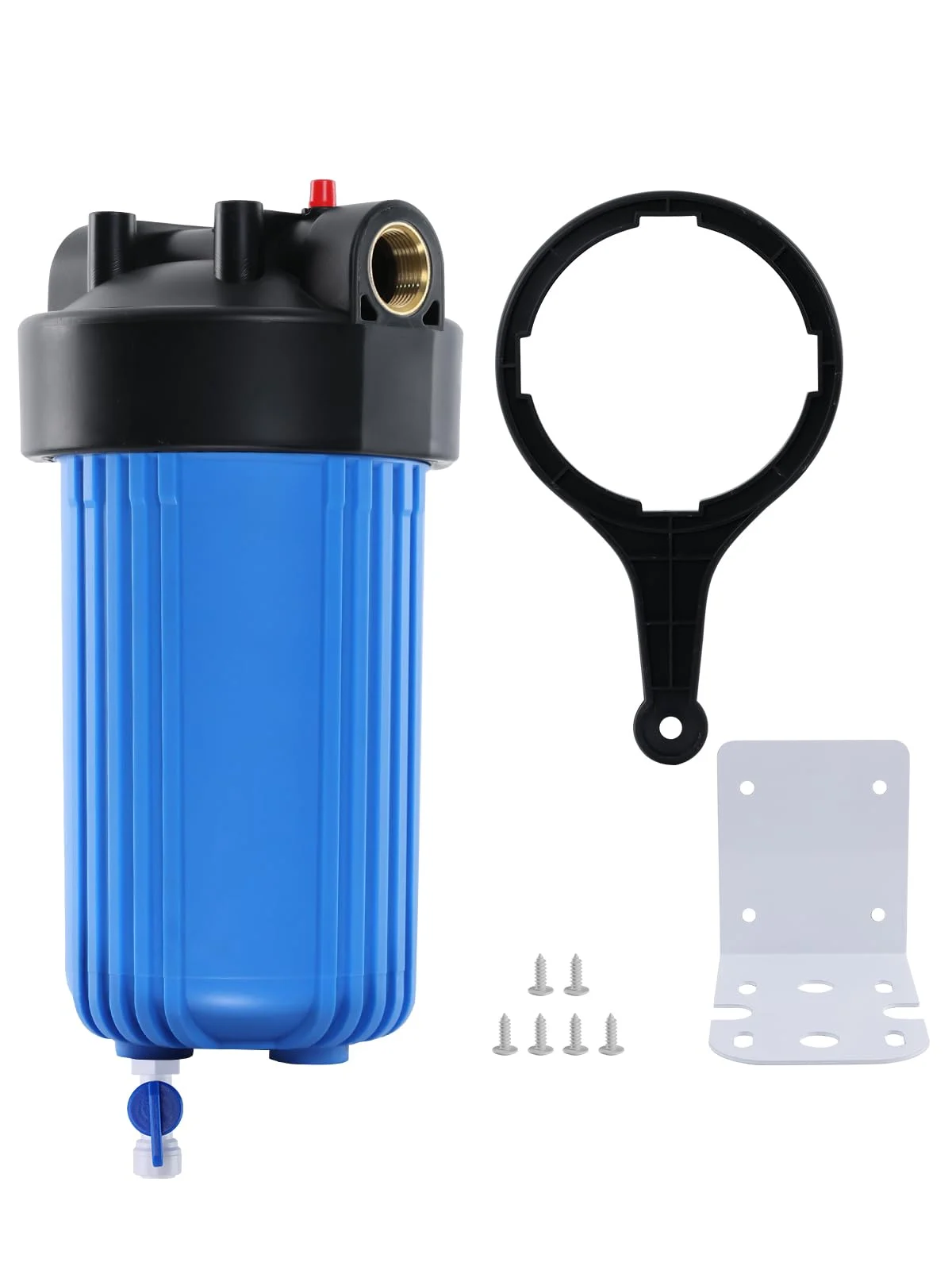
Purcooflow WHF1045B Housing
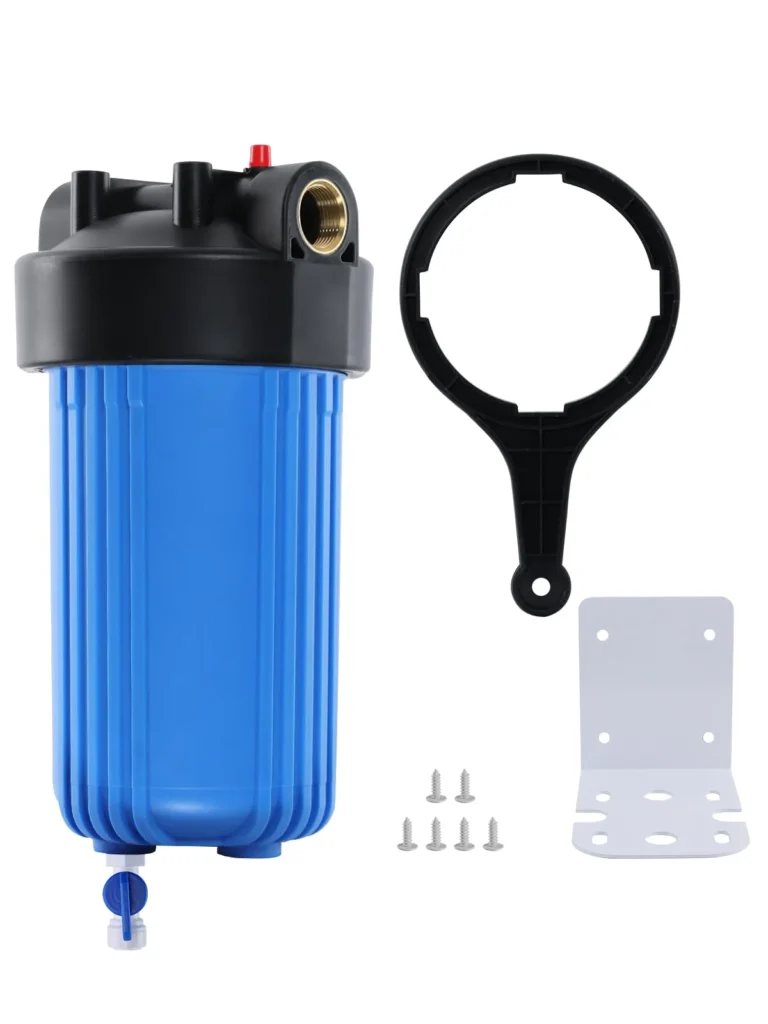
- Why we pick it: Brass 1 inch NPT ports, a double O-ring seal, a red pressure-release valve and a bottom drain valve address the most common leak points, and the 0 to 90 psi range is stated.
- Best for: Replacing a housing that leaks at cracked plastic ports or a worn sump seal
- Keep in mind: Housing only, so the cartridge is bought separately, and pressure must stay within the 0 to 90 psi range.
As an Amazon Associate we earn from qualifying purchases. This never changes which products we recommend.
Recommended products
Products that fit this
| Product | Best for | Where to buy |
|---|---|---|
| Purcooflow WHF1045B Housing | Replacing a housing that leaks at cracked plastic ports or a worn sump seal | Check price on Amazon |
| Antrys AO-WH-LG-OR O-Rings | Resealing a sound housing whose sump O-ring has failed | Check price on Amazon |
| Purcooflow WHF2045C Clear Housing | Replacing a housing on a well where you want to see cartridge loading | Check price on Amazon |
Why is my Whole House Water Filter Leaking?
The leak almost always comes from one of five places: the sump O-ring, the cap or top seam, the inlet or outlet fittings, the red pressure-release button, or the bypass and drain valves. Where the water shows up narrows the cause fast.
Water running down the outside of the sump points to the O-ring; water at the top of the cap points to the cap seal, a cross-threaded sump or a cracked cap; water at a side port points to the fitting seal or a cracked plastic port; a steady drip from the red button means the vent is not seating.
A leak is rarely the filter cartridge itself. Sediment and carbon block cartridges do not hold pressure; the housing does. That is why the fix is almost always in the seal, the threads or the pressure, and why a cartridge change that leaves the O-ring dry or pinched so often produces a drip.
Pressure is the hidden cause behind repeat leaks. A housing rated for a stated operating pressure can weep at the seam when household pressure runs above that range, when a pressure regulator is missing or has failed, or when thermal expansion from a tankless water heater pushes pressure up after the water is heated. If the same seam leaks again within weeks of a reseal, check the pressure before you tighten anything further.
Before any repair, confirm the source with the system dry: shut the water off, depressurize, wipe the housing, then restore water briefly and watch where the first drop forms. That one step separates a seal problem from a cracked housing and saves you from resealing a part that needs replacing.
Shut off the water and depressurize before you touch anything
Closing the inlet valve is not enough on its own; the housing stays pressurized until you vent it. Follow these steps in order every time you open a whole house filter, whether for a cartridge change or a leak repair.
If the housing has no working shutoff valve or pressure-release button, treat it as a plumbing job and call a plumber rather than forcing the sump. A sump wrench on a pressurized housing can crack the cap and turn a drip into a flood.
- Close the inlet valve on the supply side of the housing, and close the outlet valve if the system has one.
- Open a downstream cold tap, such as a laundry sink or utility faucet, to drain pressure from the line.
- Press the red pressure-release button on top of the cap until water stops spitting and air stops hissing.
- Place a bucket under the sump and a towel around the base, since a small amount of water always remains in the bowl.
- Confirm the housing is not under pressure by pressing the release button a second time before you turn the sump wrench.
Want to skip the research? The Purcooflow WHF1045B Housing is the model we would start with.
Leaking from the top or the cap seam
A leak at the top of the housing or along the cap seam is a seal problem in most cases: an O-ring that is unseated, dry, pinched, covered in grit, or sitting in a groove with debris in it. Cross-threading the sump and overtightening both distort the seal and cause weeping that gets worse the harder you turn. A cracked cap is the exception, and no amount of tightening fixes it.
Clean the groove with a soft cloth and warm water, check the O-ring for flat spots, nicks and stretching, then coat it lightly with silicone lubricant made for potable water systems. Seat the O-ring evenly in the groove, hand-tighten the sump until it contacts the cap, then snug it with the wrench only about a quarter turn more. Overtightening flattens the ring and can crack the cap.
Replace the O-ring rather than reusing a stretched or hardened one. A nitrile replacement ring sized for a 4.5 inch sump, such as the Antrys AO-WH-LG-OR three-pack, restores the seal on housings it is listed to fit, including A. O. Smith whole house models and the Lowes Project Source PS-WHL-H housing. Check the diameter against your housing before ordering, because a ring that is close but not exact will leak again.
If the cap itself is cracked, or the threads on the cap or sump are chewed, stop resealing. A cracked cap cannot be repaired with lubricant or tape, and a housing with damaged threads will keep weeping no matter how carefully you seat the ring.
Helpful tool
Antrys AO-WH-LG-OR O-Rings
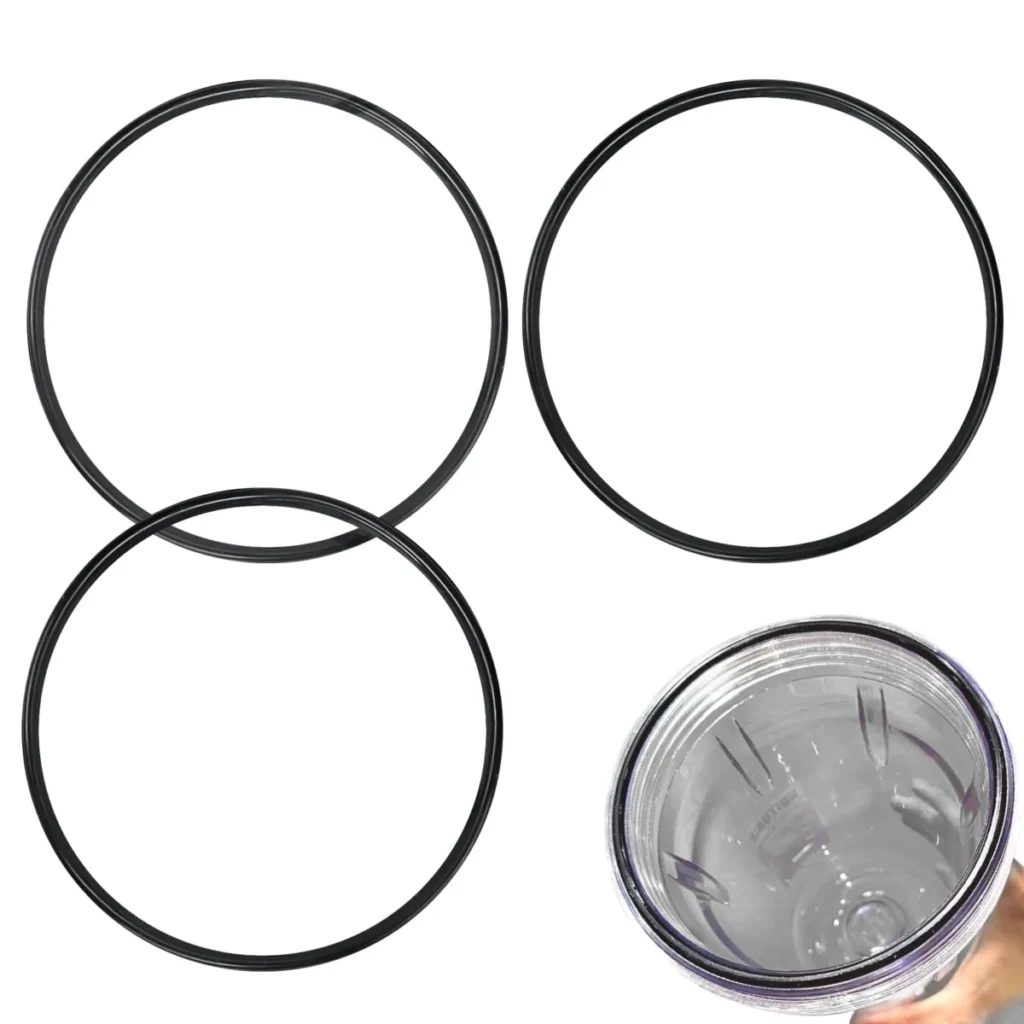
- Helps with: Resealing a sound housing whose sump O-ring has failed
- Why it fits: A three-pack of nitrile rings listed to fit A. O. Smith whole house filters and the Lowes Project Source PS-WHL-H housing, giving a spare for the next change.
- Keep in mind: Fits only housings it is listed for; check the 5.48 inch diameter against your sump before ordering.
Leaking at the fittings or threads
Leaks at the inlet and outlet fittings come from the thread seal, not the housing seal: too little PTFE tape, too much tape bunched at the start of the thread, pipe dope applied over tape, a fitting threaded in at an angle, or a plastic port cracked by overtightening. Plastic ports are the weak point on many big-box housings, and a hairline crack at the port threads will drip steadily no matter how much tape you add.
For threaded connections, remove the fitting, clean the old tape and dope off both threads, wrap PTFE tape clockwise around the male thread two to three turns, and thread the fitting in by hand before snugging it. Do not combine tape and pipe dope on the same joint. Support the pipe so the fitting is not carrying the weight of the run, and do not use the fitting to pull a misaligned pipe into place.
Push-fit connections leak for a different reason: the tube is not pushed fully into the collet, the tube end is scored or cut at an angle, or the internal O-ring is worn. Cut the tube square, deburr it, and push it in firmly until it seats.
Call a plumber when the joint is soldered, when a shutoff valve is seized, or when a plastic port is cracked, since a cracked port means a new housing or a repair fitting rather than a reseal. Brass ports avoid the cracked-plastic problem entirely, which is one reason a housing built with 1 inch NPT brass threads is worth considering when you are replacing a failed unit.
Dripping from the red pressure-release button
The red button is a vent, not a seal, so a drip there means the button is not closing fully. Debris caught under the seat, a worn button seal, or trapped pressure that keeps pushing water past the seat are the usual causes. A button that drips only right after a cartridge change often just needs a flush.
Press and release the button several times with the water on to flush grit from the seat. If the drip continues, shut off the inlet, depressurize, and inspect the button and its seat for sediment or a torn seal. On many housings the button assembly can be replaced; on others it is molded into the cap, and a failed button means a new cap or housing.
A button that weeps continuously after flushing, or one that will not hold pressure at all, points to a failed valve assembly. Do not plug or cap the vent to stop the drip, because the housing needs that vent to depressurize safely at the next cartridge change.
Why the filter keeps leaking: pressure, expansion and cartridge seating
A housing that leaks again within days or weeks of a reseal usually has a root cause beyond the O-ring. Incoming pressure above the housing's stated operating range is the most common: a failed or missing pressure regulator lets municipal or well pressure climb, and the seam weeps under load. Thermal expansion from a tankless heater or a check valve on the supply line pushes pressure up after heating, and water hammer from a fast-closing valve spikes it briefly.
A cartridge that is not fully seated, or one that is the wrong length for the housing, holds the sump off its seat and creates a gap at the O-ring. Confirm the cartridge is the size the housing is built for, push it down onto the centering post, and check that it sits below the rim before you thread the sump back on.
If pressure is the cause, add or replace a pressure regulator set within the housing's rated range and consider a thermal expansion tank on a closed system. Tightening the sump harder is not a fix for a pressure problem and often cracks the cap instead.
On a private well, sediment load and pressure swings from the pump make repeat leaks more likely. Have the pressure checked at a downstream tap and confirm the housing rating covers it before deciding the housing itself has failed.
Repair or replace: how to decide
Repair the housing when the only failure is the O-ring, a fitting seal, or a pressure-release button that can be replaced, and the housing still has sound threads and a stated pressure rating that covers your household pressure. Those are inexpensive fixes that restore the unit.
Replace the housing when the cap or sump is cracked, when the threads are stripped or cross-threaded beyond cleaning, when replacement parts are discontinued, or when the unit has no stated pressure rating at all. A housing with no published rating gives you no way to know whether it is being run beyond its limit, which is exactly the condition that causes repeat leaks.
Replacing the housing rather than the whole system is often enough, since the cartridge, bracket and plumbing can stay. Choose a housing with the same connection size and cartridge size so the swap is a direct fit, and check the pressure range against your measured household pressure before you buy.
What to look for in a replacement whole house filter
Turn the diagnosis into a buying decision by prioritizing the parts that failed: the seal, the ports and the pressure rating. Look for a housing with a stated operating pressure range that sits above your measured household pressure, a serviceable O-ring you can clean and lubricate, and metal or reinforced ports rather than thin plastic threads. Match the connection size to your plumbing, check the flow rate in GPM against your household demand, and confirm the cartridge size so replacements stay easy to find.
The Purcooflow WHF1045B is a 10 inch by 4.5 inch whole house housing rated at 15 GPM with 1 inch NPT brass ports, a double O-ring seal, a red pressure-release valve and a built-in bottom drain valve, with an operating pressure range of 0 to 90 psi. The brass ports address the cracked-plastic-port leak directly, the double O-ring adds a second seal at the sump, and the bottom drain lets you empty the bowl before opening it, which reduces the spill that often follows a cartridge change.
It fits standard 10 inch by 4.5 inch sediment and carbon block cartridges. The tradeoff is that it is a housing only, so you still choose and buy the cartridge, and the 0 to 90 psi range is the ceiling you must stay under.
The Purcooflow WHF2045C is the 20 inch by 4.5 inch clear version, rated at 15 GPM with 1 inch NPT ports, a double O-ring seal and a pressure-release button, with a stated range of 25 to 90 psi and DIY installation. The clear bowl lets you see when a sediment cartridge is loaded, which suits a well with heavy sediment, but the taller housing needs more vertical space and the clear body shows every speck, so it is not the choice for a tight cabinet.
If your existing housing is sound and only the ring has failed, start with the Antrys AO-WH-LG-OR O-ring three-pack instead of a new housing. It is listed to fit A. O. Smith whole house filters and the Lowes Project Source PS-WHL-H housing, and the three-pack leaves you a spare for the next cartridge change. Confirm the 5.48 inch diameter matches your sump before ordering, since a ring that is close but not exact will not seal.
Avoid these
Common mistakes to avoid
- Opening the sump while the housing is still pressurized. Close the inlet valve, open a downstream tap and press the red release button until the housing stops hissing before you turn the wrench.
- Overtightening the sump to stop a seam leak. Clean and lubricate the O-ring, seat it evenly, hand-tighten, then snug about a quarter turn with the wrench; if it still weeps, check the incoming pressure.
- Adding more PTFE tape to a fitting that keeps dripping. Remove the old tape and dope, clean both threads, wrap two to three turns clockwise and hand-thread before snugging; a cracked plastic port needs a new housing, not more tape.
- Capping or plugging a dripping pressure-release button. Flush the button, replace the valve assembly if it still weeps, and never block the vent the housing needs to depressurize.
- Resealing a housing with a cracked cap or stripped threads. Replace the housing, and choose one with a stated pressure range and serviceable O-ring so the same failure does not return.
Useful tools
Tools that help
As an Amazon Associate we earn from qualifying purchases. This never changes which products we recommend.
Helpful tool
Purcooflow WHF2045C Clear Housing
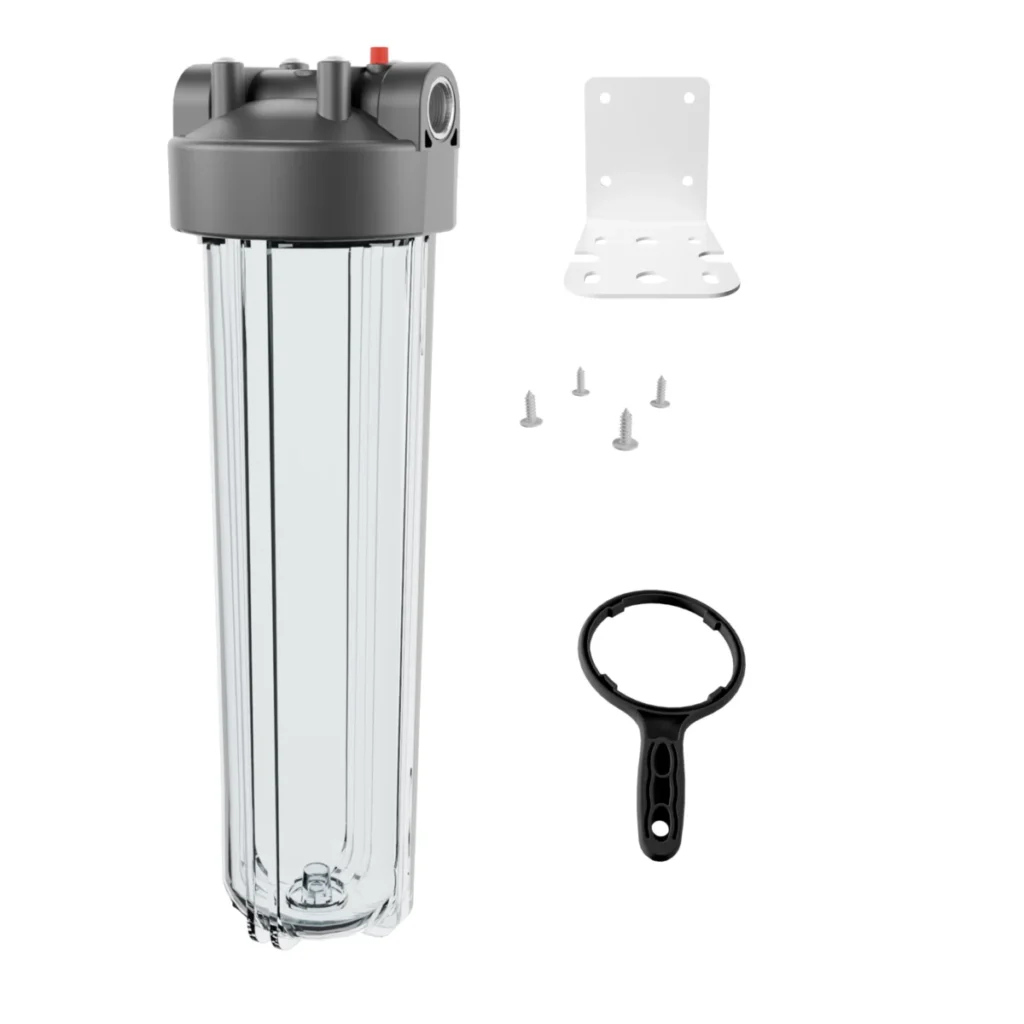
- Helps with: Replacing a housing on a well where you want to see cartridge loading
- Why it fits: A 20 inch clear bowl with 1 inch NPT ports, a double O-ring seal and a pressure-release button, rated 15 GPM with a stated 25 to 90 psi range.
- Keep in mind: The taller 20 inch body needs more vertical space, and the clear bowl shows sediment quickly.
Common questions
Frequently asked questions
How often should a whole house water filter O-ring be replaced?
Replace the O-ring at the first sign of flat spots, nicks, stretching or hardening, and inspect it at every cartridge change. Many owners keep a spare on hand so a worn ring never forces a second trip to the store.
Can a whole house water filter leak cause low water pressure?
A leak can lower pressure at the taps, but low flow more often comes from a clogged sediment or carbon block cartridge or a partially closed valve. If pressure drops without a visible leak, check the cartridge first, then the valves.
Does a whole house water filter need a pressure regulator?
A regulator is needed when household pressure runs above the housing's stated operating range, which is a common cause of repeat seam leaks. Measure pressure at a downstream tap and compare it with the housing rating before deciding.
Is it normal for a whole house filter to drip after a cartridge change?
A brief drip right after a change is common and usually stops once the O-ring seats and trapped air vents. A drip that continues past a few minutes points to a dry or pinched O-ring, a cartridge that is not fully seated, or a cross-threaded sump.
Can I use petroleum jelly on a filter housing O-ring?
No. Petroleum-based products can degrade the rubber, so use a silicone lubricant made for potable water systems instead, applied thinly and evenly around the ring.
Does a leaking whole house filter affect water safety?
A leak does not change what the cartridge reduces, but it can let unfiltered water bypass the seal and can introduce contamination at the leak point. Fix the leak before relying on the filter, and check the manufacturer performance data sheet and your local water quality report for what the system is rated to reduce.
Next step
Shut off the inlet, depressurize and trace the drip to its exact source before buying anything. If the housing is cracked, the threads are stripped or the unit has no stated pressure rating, start with the Purcooflow WHF1045B for its brass 1 inch NPT ports and double O-ring seal; if only the ring has failed, start with the Antrys AO-WH-LG-OR O-ring set.