7 Best Tap Water Filter (2026), Matched to How You Use Them
Published October 29, 2026
As an Amazon Associate we earn from qualifying purchases. This never changes which products we recommend.
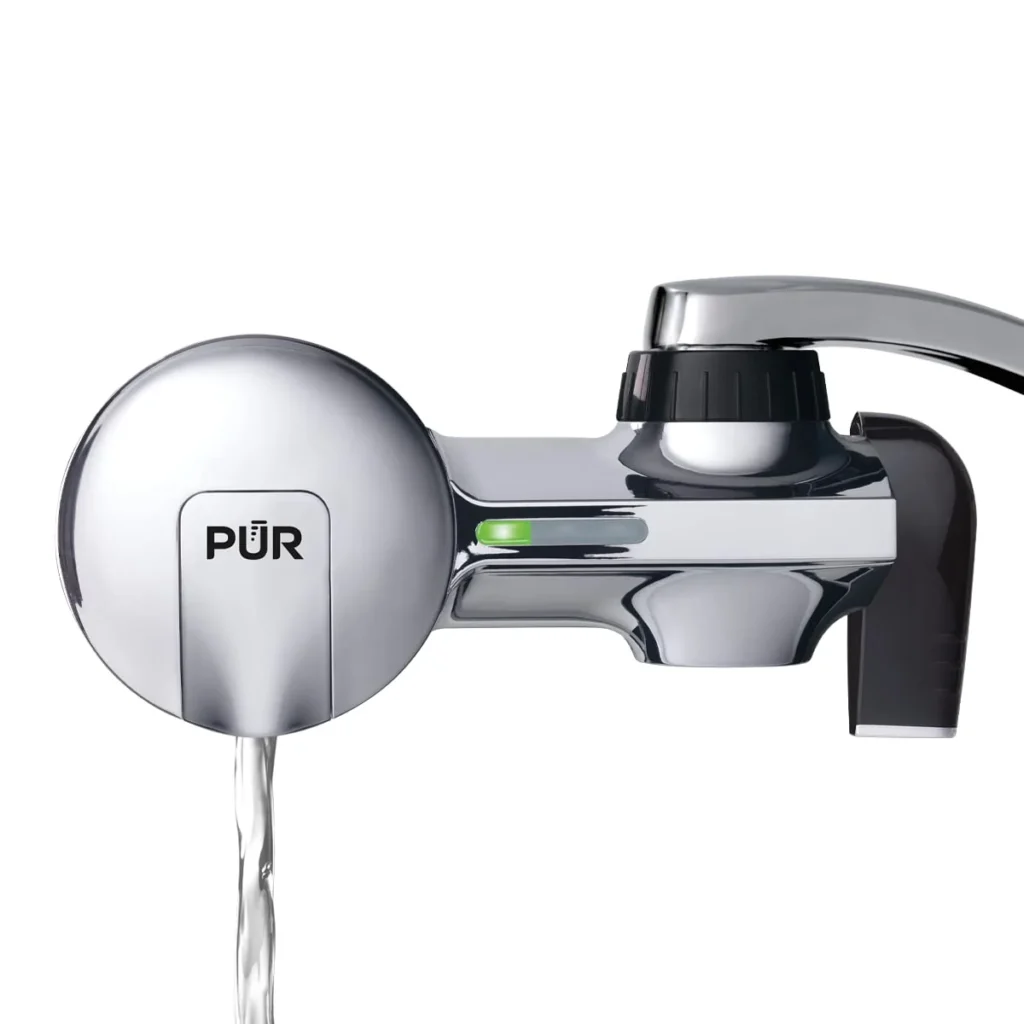
The PUR PLUS Horizontal Faucet Mount is the closest match to what most kitchen taps need: it installs without tools, is certified for lead and microplastics, and lasts 100 gallons, so it improves taste and addresses a lead concern without plumbing work. It is the best Tap Water Filter for a renter or a household that wants filtered water on demand at the sink.
The real dividing line is what you need removed and how much installation you will accept. A faucet mount or pitcher handles chlorine taste and light lead duty, an under sink carbon unit gives higher flow with no wastewater, and a reverse osmosis system is the option that also states fluoride and PFAS reduction, at the cost of under sink space and some wasted water.
 Best OverallPUR PLUS Faucet MountRenters and no-install kitchens8.4/10
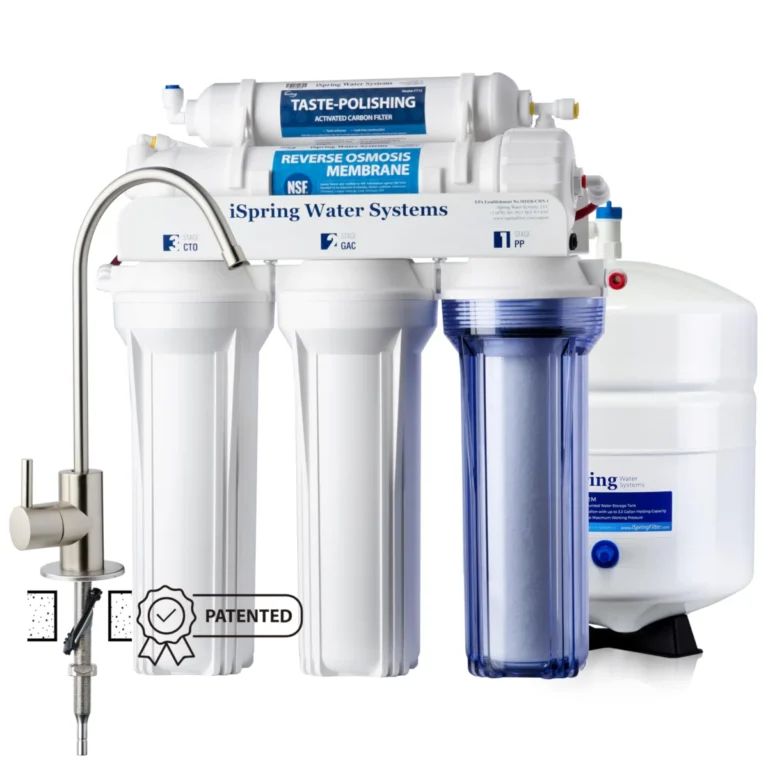
 Best Reverse OsmosisiSpring RCC7-BNOwners wanting fluoride and PFAS reduction7.8/10
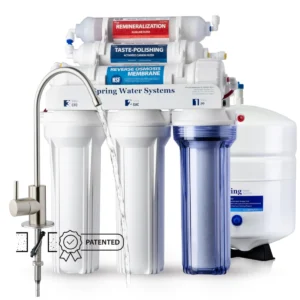 Best with RemineralizationiSpring RCC7AK-BNRO buyers who dislike flat-tasting water7.8/10
 Best Under SinkCuZn UC-200High-flow filtered water without wastewater7.8/10
Table of contents9 sections · tap to expand
At a glance
Our top picks compared
| Product | Best for | Type and size | Key features | Where to buy |
|---|---|---|---|---|
| 1. PUR PLUS Faucet Mount Best Overall 8.4/10 | Renters and no-install kitchens | Faucet mount filter, 100 gallons | NSF certifiedLead reductionEasy installFilter life listed | Mid-range Check price |
| 2. iSpring RCC7-BN Best Reverse Osmosis 7.8/10 | Owners wanting fluoride and PFAS reduction | Reverse osmosis system, 75 gallons, 75 GPD | NSF certifiedLead reductionPFAS reductionFluoride | Premium Check price |
| 3. iSpring RCC7AK-BN Best with Remineralization 7.8/10 | RO buyers who dislike flat-tasting water | Reverse osmosis system, 75 gallons, 75 GPD | NSF certifiedLead reductionPFAS reductionFluoride | Premium Check price |
| 4. CuZn UC-200 Best Under Sink 7.8/10 | High-flow filtered water without wastewater | Under sink filter, 6 months | NSF certifiedLead reductionPFAS reductionInstallation | Mid-range Check price |
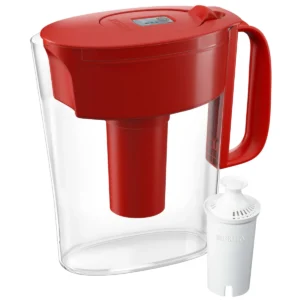 5. Brita Metro Pitcher Best Small Pitcher 7.7/10 | Tight fridges and single drinkers | Pitcher, 40 gallons, 6 cups | Filter life listed | Budget Check price |
 6. Brita Large 10 Cup Pitcher Best Family Pitcher 7.6/10 | Households filling several glasses a day | Pitcher, 120 gallons, 10 cups | NSF certifiedFilter life listed | Budget Check price |
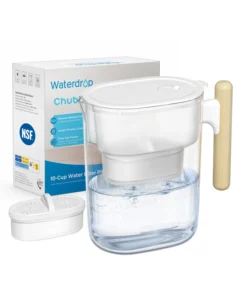 7. Waterdrop PT-04C Pitcher Longest Pitcher Filter Life 7.6/10 | Lowest cartridge turnover in a pitcher | Pitcher, 200 gallons, 10 cups | NSF certifiedPFAS reductionFilter life listed | Budget Check price |
Score: our 0-10 rating from fit for this use, buyer ratings, review volume, completeness of the product details and availability. It is not a lab test.
Buying advice
How to choose a Tap Water Filter for your kitchen
Start with your water report, not the product page
Your utility's Consumer Confidence Report tells you which contaminants are actually detected, and that list decides which certification matters. Chlorine taste alone points to any NSF/ANSI 42 carbon filter; a detected lead level points to a unit with an NSF/ANSI 53 lead reduction claim; fluoride or PFAS in the report points toward reverse osmosis, which is certified to NSF/ANSI 58. On a private well, a lab test comes first, because guessing at iron, hardness or bacteria wastes money on the wrong device.
Decide how much installation you will accept
A pitcher or faucet mount needs no plumbing and comes off when you move, which is why they suit renters and shared kitchens. An under sink filter or reverse osmosis system connects to the cold water line and needs cabinet space plus, on RO units, a drain connection and a faucet hole.
The iSpring models use a top-mounted fastener designed to be tightened from above the counter, which reduces the awkward work under the sink but does not remove the need for a feed line and drain.
Compare filter life and yearly cartridge count, not sticker price
Filter life in gallons and the number of cartridges per year decide the running cost. The PUR PLUS faucet mount is rated for 100 gallons, the Brita Metro for 40 gallons, the Brita 10 cup for 120 gallons with a Longlast filter, and the Waterdrop PT-04C for 200 gallons, so a pitcher with a long rating can cost less over two years than a cheaper one changed every two months.
Reverse osmosis adds a membrane replacement every few years on top of the sediment and carbon stages.
Weigh flow rate, wastewater and taste
A pitcher filters slowly by design, a faucet mount delivers filtered water as fast as you fill a glass, and an under sink carbon unit keeps normal tap flow without a storage tank. Reverse osmosis is rated in gallons per day, and the iSpring units are listed at 75 GPD with a storage tank, so they refill a tank rather than pour instantly, and they send some water to the drain.
The RCC7AK-BN adds a remineralization stage because RO water can taste flat after dissolved minerals are removed.
Our picks
The tap water filters ranked, from faucet mount to reverse osmosis
Best Overall
PUR PLUS Faucet Mount
- Faucet mount filter
- WQA listed
- 100 gallons
- Lead, Microplastics
- No installation
Best for: Renters and no-install kitchens
Skip if: Your faucet is a pull-out model or has an internal aerator, since the mount will not fit.
Price range: Mid-range
Check price on AmazonPaid link. We may earn a commission.
Best Overall for renters and no-install kitchens: it screws onto a standard faucet in minutes, needs no plumbing, and is listed as reducing lead and microplastics on a 100 gallon filter.
What matters in daily use
The PUR PLUS Faucet Mount earns the top spot because it asks nothing of the building. It attaches to most standard faucets with visible, external aerators and installs without tools, so a renter can filter drinking water and take the unit to the next apartment. The listing names lead and microplastics among the substances it is certified to reduce, and a filter change light removes the guesswork from replacement.
The tradeoff is throughput and fit. A 100 gallon rated filter is modest next to the 200 gallon Waterdrop PT-04C Pitcher, and the unit will not work on pull-out faucets or faucets with internal aerators, so check your tap before buying. For dissolved contaminants such as fluoride, the iSpring RCC7-BN is the relevant pick; the PUR PLUS is a taste, lead and microplastics filter at the tap, not a reverse osmosis system.
Specifications
| Type | Faucet mount filter |
|---|---|
| Certifications | WQA listed (per listing) |
| Reduces | Lead, Microplastics (named in listing) |
| Filter life | 100 gallons |
| Installation | No installation |
| Material | Stainless steel |
| Weight | 1.15 lb |
Pros
- No plumbing, no permanent change, renter friendly
- Filter change light signals replacement timing
- On/off lever gives filtered water on demand
- Fits most standard faucets with external aerators
Cons
- 100 gallon filter life is shorter than the Waterdrop pitcher's
- Not compatible with pull-out or internal-aerator faucets
- Does not address fluoride the way reverse osmosis does
Best Reverse Osmosis
iSpring RCC7-BN
- Reverse osmosis system
- NSF/ANSI 58
- 75 gallons
- 75 GPD
- Chlorine, Lead, PFAS
- DIY install
Best for: Owners wanting fluoride and PFAS reduction
Skip if: You rent, cannot plumb under the sink, or only need chlorine and taste reduction.
Price range: Premium
Check price on AmazonPaid link. We may earn a commission.
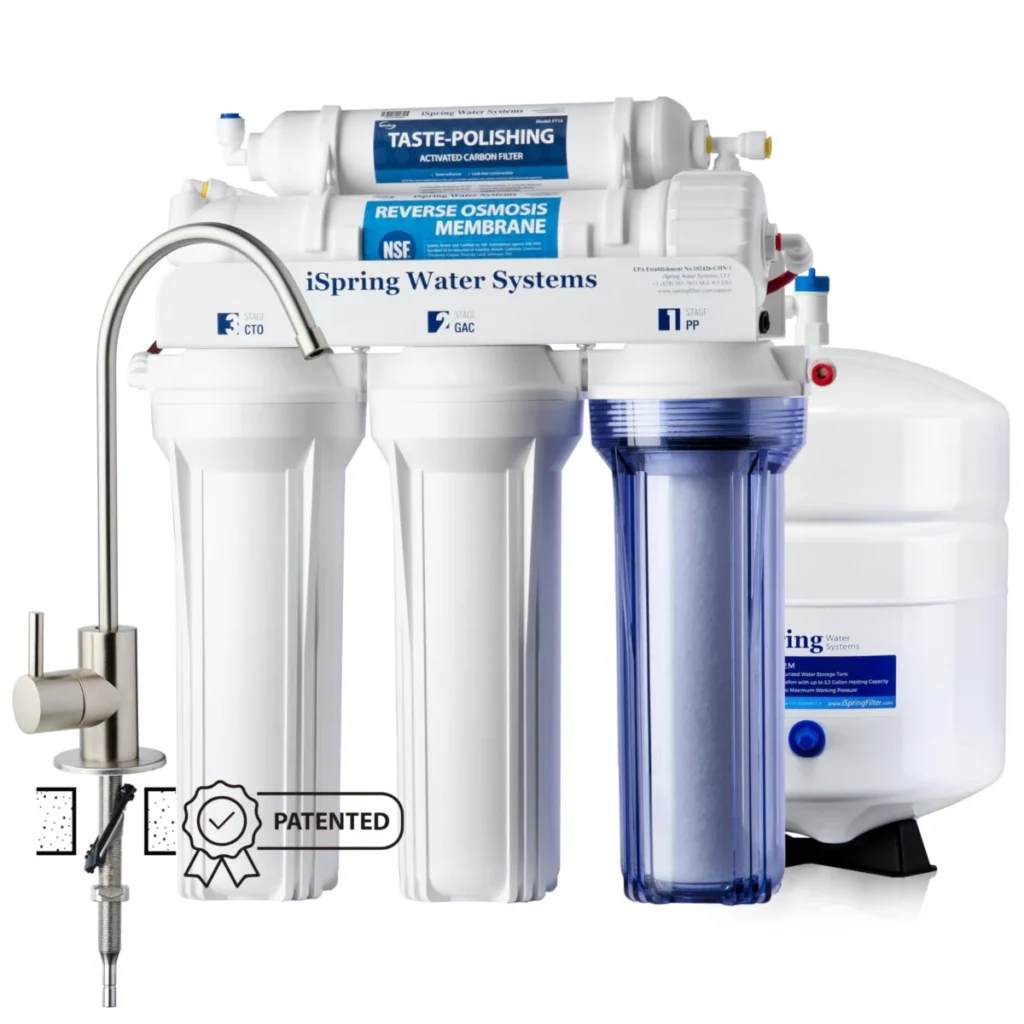
Best Reverse Osmosis: a 5-stage, NSF/ANSI 58 certified system rated at 75 GPD that names PFAS, fluoride, lead and chlorine among the contaminants it reduces.
What matters in daily use
The RCC7-BN is the pick for households whose water report lists dissolved contaminants that carbon alone will not touch. Its 5 stages combine reverse osmosis with activated carbon and a carbon block, and the whole system is certified to NSF/ANSI 58, the standard that covers reverse osmosis performance. The listing names PFAS, fluoride, lead and chlorine among the substances it reduces, which is the reason to accept the plumbing work.
That work is the tradeoff. This is a DIY under sink install that occupies cabinet space, and reverse osmosis produces wastewater while stripping minerals, which is why the iSpring RCC7AK-BN adds a remineralization stage. Output is rated at 75 GPD, so it fills a storage tank rather than delivering an open faucet flow like the CuZn UC-200. Buyers who only want better-tasting chlorine-free water can skip the complexity.
Specifications
| Type | Reverse osmosis system |
|---|---|
| Certifications | NSF/ANSI 58 |
| Reduces | Chlorine, Lead, PFAS, Fluoride (named in listing) |
| Filter life | 75 gallons |
| Flow rate | 75 GPD |
| Stages | 5 stages |
| Installation | DIY install |
Pros
- NSF/ANSI 58 certification covers the full system
- Names PFAS, fluoride, lead and chlorine reduction
- Transparent first-stage housing shows when to change filters
- No electricity required to operate
Cons
- DIY under sink install takes cabinet space
- Reverse osmosis wastes water and removes minerals
- 75 GPD output is slower than a non-RO under sink filter
Best with Remineralization
iSpring RCC7AK-BN
- Reverse osmosis system
- NSF/ANSI 58
- 75 gallons
- 75 GPD
- Chlorine, Lead, PFAS
- DIY install
Best for: RO buyers who dislike flat-tasting water
Skip if: You want filtered water without wastewater, or your cabinet cannot fit a 6-stage RO system.
Price range: Premium
Check price on AmazonPaid link. We may earn a commission.
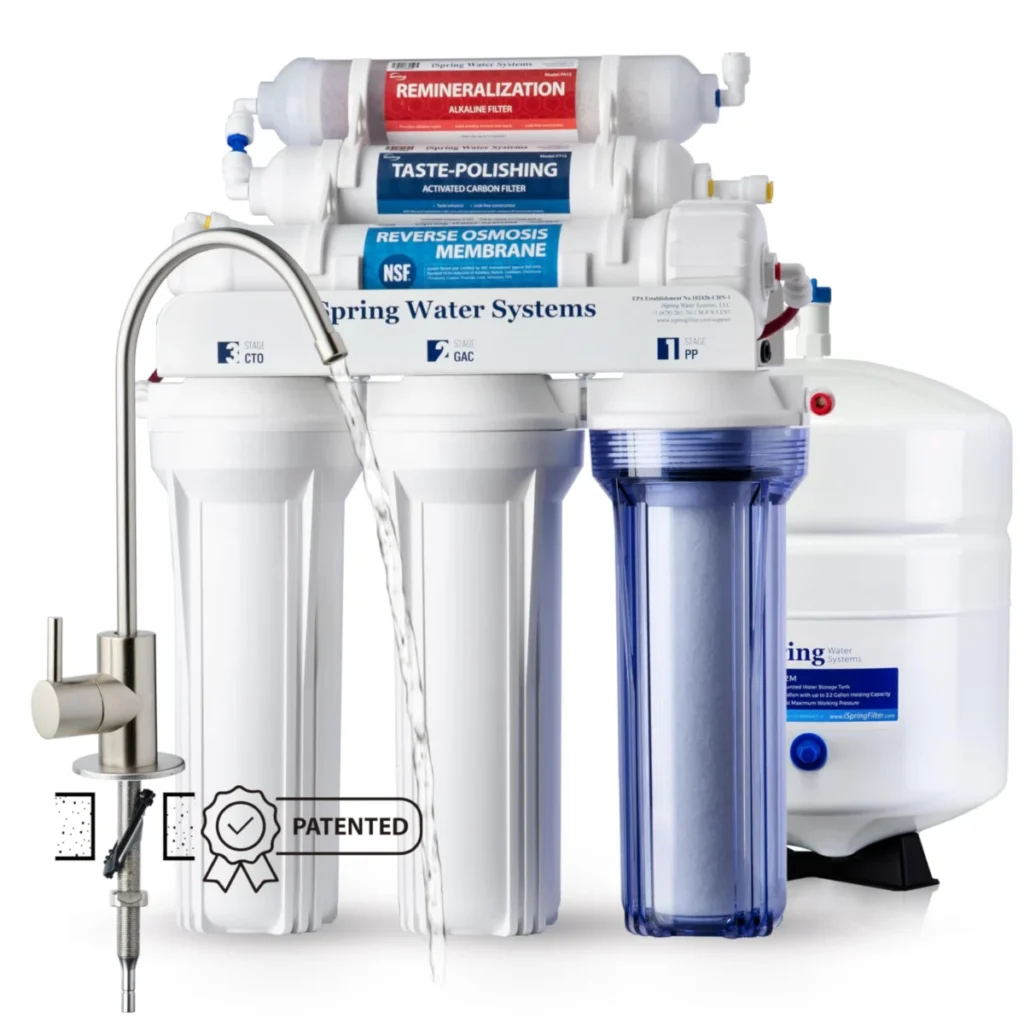
Best With Remineralization: the same 75 GPD, NSF/ANSI 58 platform as the RCC7-BN, plus a sixth mineral stage for buyers who find reverse osmosis water flat.
What matters in daily use
The RCC7AK-BN answers the most common objection to reverse osmosis: taste. A sixth alkaline stage adds minerals back after the membrane, and the listing describes a balanced pH result. Everything else follows the RCC7-BN recipe, including NSF/ANSI 58 certification, a 75 GPD rating and named reduction of PFAS, fluoride, lead, chlorine and copper. The top-mounted fastener lets you tighten the faucet from above the counter.
Choosing between the two iSpring systems comes down to one question. If flat-tasting water bothers you, the extra stage justifies the taller 6-stage footprint; if you mainly want documented contaminant reduction at the lowest complexity, the 5-stage RCC7-BN does the same core job. Neither matches the CuZn UC-200 for open faucet flow, and both need under sink space and a drain connection.
Specifications
| Type | Reverse osmosis system |
|---|---|
| Certifications | NSF/ANSI 58 |
| Reduces | Chlorine, Lead, PFAS, Fluoride, Copper (named in listing) |
| Filter life | 75 gallons |
| Flow rate | 75 GPD |
| Stages | 6 stages |
| Installation | DIY install |
| Remineralization | Yes |
Pros
- Mineral stage restores taste after reverse osmosis
- Full-system NSF/ANSI 58 certification
- Faucet installs from above the counter
- Names PFAS, fluoride, lead and copper reduction
Cons
- Still produces wastewater like any RO system
- Needs under sink space and a drain line
- Costs more complexity than a carbon-only filter
Best Under Sink
CuZn UC-200
- Under sink filter
- NSF/ANSI 42, NSF/ANSI
- 6 months
- Chlorine, Lead, PFAS
- DIY install

Best for: High-flow filtered water without wastewater
Skip if: Choose reverse osmosis instead if you need fluoride or TDS reduction.
Price range: Mid-range
Check price on AmazonPaid link. We may earn a commission.
The CuZn UC-200 earns Best Under Sink because it delivers high-flow filtered water straight from the tap with no storage tank, no wastewater and no drain line.
What matters in daily use
The UC-200 is an inline under sink filter, not a reverse osmosis system, so it sends water to the faucet at line pressure and produces no wastewater. Its 3-stage build pairs micro sediment membranes with KDF-55 and coconut shell carbon, a combination aimed at chlorine, sediment and metals rather than dissolved minerals. The published specifications list NSF/ANSI 42 and NSF/ANSI 372, and the listing states PFOA/PFOS and lead reduction.
The tradeoff is scope. Because it does not reduce TDS, it is not the pick for anyone whose water report shows high fluoride or arsenic, where the iSpring RCC7-BN and its NSF/ANSI 58 certification are the relevant comparison. The published filter life is 6 months, so cartridge changes come twice a year, and the 7.02 lb unit needs clearance under the sink. For a renter or owner who wants fast, unsoftened-tasting water without a tank, that is a fair exchange.
Specifications
| Type | Under sink filter |
|---|---|
| Certifications | NSF/ANSI 42, NSF/ANSI 372 |
| Reduces | Chlorine, Lead, PFAS, Sediment (named in listing) |
| Filter life | 6 months |
| Stages | 3 stages |
| Installation | DIY install |
| Weight | 7.02 lb |
Pros
- No wastewater and no storage tank to fit
- Uses existing faucet pressure for steady flow
- Simple DIY inline connection, no drilling required
- Keeps beneficial minerals in the water
Cons
- Does not reduce TDS, fluoride or dissolved solids
- Cartridge rated for 6 months, not years
- Needs under-sink clearance for a 7.02 lb unit
Best Small Pitcher
Brita Metro Pitcher
- Pitcher
- 40 gallons
- Chlorine, Mercury

Best for: Tight fridges and single drinkers
Skip if: Pick the 10-cup Brita or a faucet mount if several people draw water daily.
Price range: Budget
Check price on AmazonPaid link. We may earn a commission.
The Brita Metro takes Best Small Pitcher because its 6-cup body fits where larger pitchers will not, and its 40-gallon filter life keeps replacement simple for one or two drinkers.
What matters in daily use
At 6 cups, the Metro holds enough for two 24-ounce bottles before a refill, which suits a single drinker or a small fridge shelf. The activated carbon filter is rated for 40 gallons, and the electronic indicator tracks when that runs out, so the change schedule is visible rather than guessed. The published dimensions of 9.8" by 9.37" by 4.45" describe a narrow footprint built for tight refrigerator space.
The main tradeoff is throughput. A gravity pitcher filters slowly and holds only 6 cups, so a family pouring several glasses at once will refill constantly; the Brita Large 10 Cup Pitcher covers that case better. The Metro also reduces chlorine taste and odor plus mercury and copper as listed, but it is not a route to lead, PFAS or fluoride reduction. Buyers wanting longer pitcher intervals should look at the Waterdrop PT-04C Pitcher and its 200-gallon rating.
Specifications
| Type | Pitcher |
|---|---|
| Reduces | Chlorine, Mercury, Copper (named in listing) |
| Filter life | 40 gallons |
| Capacity | 6 cups |
| Material | BPA-free plastic |
Pros
- Slim footprint fits crowded fridge shelves
- Filter change indicator removes the guesswork
- No installation: fill, wait, pour
- Low cartridge turnover for one or two people
Cons
- 6-cup capacity empties fast for families
- Gravity flow is slow between refills
- No stated reduction for lead, PFAS or fluoride
Best Family Pitcher
Brita Large 10 Cup Pitcher
- Pitcher
- WQA listed
- 120 gallons
- Chlorine, Mercury
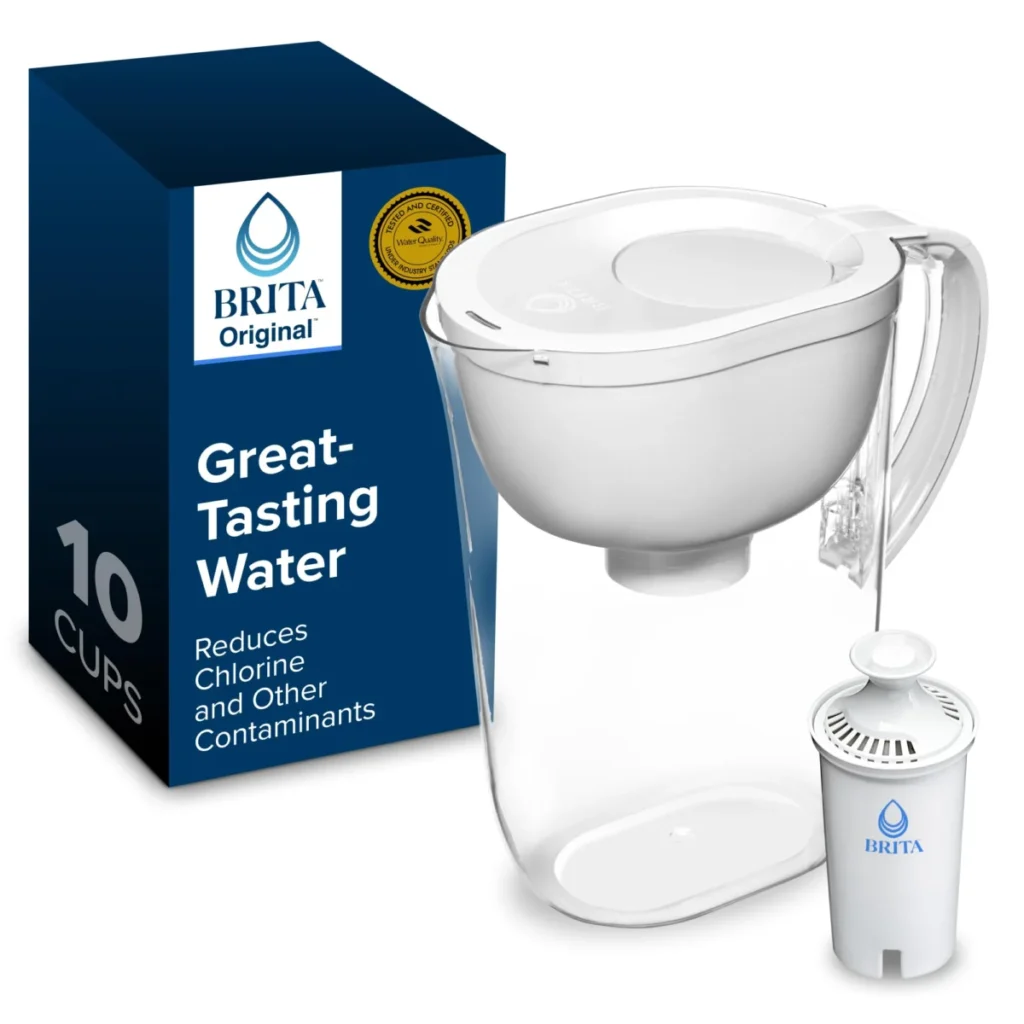
Best for: Households filling several glasses a day
Skip if: Step up to a faucet mount or under sink filter if you need faster flow or a larger daily volume than a gravity pitcher can pour.
Price range: Budget
Check price on AmazonPaid link. We may earn a commission.
The Brita Large 10 Cup Pitcher earns Best Family Pitcher because 10 cups of capacity and a 120-gallon filter life cut the refill and replacement rhythm a busy household lives with.
What matters in daily use
Ten cups fills three 24-ounce bottles per batch, so a family can pour several glasses before refilling. The listing states compatibility with both Longlast and Standard filters, with the Longlast rated at 120 gallons or about 6 months and the Standard at 40 gallons or about 2 months, which lets a household trade upfront cost against change frequency. Granular activated carbon handles chlorine taste and odor, and the listing names mercury and copper reduction.
Compared with the Brita Metro Pitcher, this model doubles capacity and triples filter life on the Longlast option, at the cost of a wider body: 10.7" by 5.4" by 10.1" and 2.29 lb. It remains a gravity pitcher, so it is slower than the PUR PLUS Faucet Mount and does not address lead, PFAS or fluoride. Households with those concerns in their water report need a certified under sink or reverse osmosis system instead.
Specifications
| Type | Pitcher |
|---|---|
| Certifications | WQA listed (per listing) |
| Reduces | Chlorine, Mercury, Copper (named in listing) |
| Filter life | 120 gallons |
| Capacity | 10 cups |
Pros
- 10-cup capacity suits multi-person households
- Longlast option stretches changes to about 6 months
- Two filter options let buyers choose change frequency
- Locking lid and easy-pour design for daily use
Cons
- Wider body takes more refrigerator shelf space
- Gravity flow is slower than a faucet filter
- No stated reduction for lead, PFAS or fluoride
Longest Pitcher Filter Life
Waterdrop PT-04C Pitcher
- Pitcher
- NSF/ANSI 42, NSF/ANSI
- 200 gallons
- Chlorine, PFAS, Iron

Best for: Lowest cartridge turnover in a pitcher
Skip if: Choose the iSpring RCC7-BN instead if you need fluoride reduction from a plumbed system.
Price range: Budget
Check price on AmazonPaid link. We may earn a commission.
The Waterdrop PT-04C earns Longest Pitcher Filter Life because its 200 gallon rating outlasts every other pitcher here, cutting how often you buy a replacement cartridge.
What matters in daily use
The 200 gallon filter life is the headline: at roughly the same daily pour as the Brita Large 10 Cup Pitcher, the Waterdrop PT-04C needs a new cartridge far less often, so the chore of tracking filter changes drops and the per-gallon cost of the cartridge spreads over more water. The 10 cup capacity matches the Brita Large, so it suits a household filling several glasses a day without constant refilling.
Certification sets it apart from the Brita pitchers. NSF/ANSI 42 and NSF/ANSI 372 are listed, and the listing names chlorine, PFAS and iron reduction, so it addresses more than chlorine taste. The tradeoff is speed and volume: a gravity pitcher still filters slowly, and the 2.4 liter reservoir is smaller than a family may want at mealtimes. It also does not carry the reverse osmosis depth of the iSpring RCC7-BN for fluoride.
Specifications
| Type | Pitcher |
|---|---|
| Certifications | NSF/ANSI 42, NSF/ANSI 372 |
| Reduces | Chlorine, PFAS, Iron (named in listing) |
| Filter life | 200 gallons |
| Capacity | 10 cups |
Pros
- 200 gallon filter life means fewer cartridge changes
- NSF/ANSI 42 and 372 certifications listed
- Names PFAS and iron reduction, not just chlorine
- Hands-free spout lid simplifies refilling
Cons
- Gravity pitcher filters slowly, so refills take time
- 2.4 liter reservoir is modest for larger households
- No fluoride reduction claim, unlike reverse osmosis systems
Which contaminants does a Tap Water Filter actually reduce?
Activated carbon, the media in pitchers, faucet mounts and most under sink filters, adsorbs chlorine and many taste and odor compounds, and a carbon block rated at a tight micron size also catches sediment and some microplastics.
Dissolved lead, PFAS such as PFOA and PFOS, and fluoride are a different problem: carbon alone does not reliably take them out, so you need a unit whose published performance data lists that reduction, usually a carbon block certified to NSF/ANSI 53 for lead or PFOA/PFOS, an ion exchange stage, or a reverse osmosis membrane.
What the NSF/ANSI certifications on the box mean
Each NSF/ANSI standard covers a defined set of claims. NSF/ANSI 42 covers aesthetic effects such as chlorine taste and odor and sediment. NSF/ANSI 53 covers health effects, including lead, cysts and, when specifically listed, PFOA and PFOS. NSF/ANSI 58 covers reverse osmosis systems, NSF/ANSI 401 covers a list of emerging contaminants, and NSF/ANSI 372 certifies that wetted materials meet lead-free content requirements rather than that the filter removes lead. A unit can hold 42 and 372 and still make no lead reduction claim.
Read the wording carefully, because "tested to" and "certified to" are not the same thing. A certification means an independent body verified the reduction claim for a named contaminant; a test result may cover only the material or a single lab run. Before you buy, open the manufacturer performance data sheet and confirm the standard number, the contaminant and the reduction figure line up with what you need. A certification does not make any water supply safe in every circumstance.
Decision guide
Which Tap Water Filter fits your kitchen and your water?
Pick the PUR PLUS over the Brita pitchers if lead is a concern or you want filtered water without waiting: it carries a lead reduction claim and dispenses on demand, while the Brita Metro and Brita 10 cup are certified for chlorine taste and odor plus copper, mercury and cadmium, and each glass waits on the reservoir. Pick a Brita if you want the lowest upfront spend and only taste is at issue.
Between the two iSpring systems, the RCC7-BN is the simpler five-stage choice, and the RCC7AK-BN adds a sixth remineralization stage for buyers who find RO water flat. Choose either over the CuZn UC-200 only if you need dissolved contaminants such as fluoride reduced, since the CuZn is an NSF/ANSI 42 and 372 carbon unit that keeps minerals in the water and produces no wastewater, but makes no fluoride claim.
Our process
How we chose our Tap Water Filter picks
Options were shortlisted from faucet mount, under sink, reverse osmosis and pitcher categories, then ranked on published specifications: the certification standard and named contaminants, filter life in gallons, flow rate or daily capacity, installation requirements, footprint and buyer feedback. Where a listing named a reduction, that claim was recorded as stated rather than upgraded, and units were compared within their own type so a pitcher was not scored against a reverse osmosis system on flow.
Common questions
Frequently asked questions
Do faucet filters remove lead?
Some do, but only when the unit carries a lead reduction claim under NSF/ANSI 53 or an equivalent certification. The PUR PLUS Faucet Mount is listed with lead reduction and microplastics reduction. Check the performance data sheet for the specific contaminant before relying on any faucet filter for lead.
Do tap water filters remove fluoride?
Carbon pitchers, faucet mounts and standard under sink filters generally do not remove fluoride; reverse osmosis does. The iSpring RCC7-BN and RCC7AK-BN are certified to NSF/ANSI 58 and list fluoride among the contaminants they reduce. Confirm the figure on the manufacturer data sheet if fluoride is your reason for buying.
How often do you change a Tap Water Filter cartridge?
Follow the rated life in gallons or months, whichever comes first, and change sooner if flow drops or taste returns. Ratings in this guide range from 40 gallons on the Brita Metro to 200 gallons on the Waterdrop PT-04C, with the PUR PLUS faucet mount rated at 100 gallons or about three months of regular use.
Do I need a plumber to install an under sink water filter?
Most under sink and reverse osmosis systems are designed for DIY installation with push-fit connections, and the iSpring units include a top-mounted fastener meant to be tightened from above. You need a cold water supply tee, cabinet space and, for reverse osmosis, a drain saddle and faucet hole. Hire a plumber if you lack those or are unsure about the drain connection.
Is a pitcher or a faucet mount better for a renter?
Both are renter friendly because neither alters plumbing permanently. A faucet mount gives filtered water on demand and needs a standard faucet with a visible external aerator, while a pitcher needs only fridge space and works in any kitchen. Choose the faucet mount for speed and lead reduction, the pitcher for zero installation.
Bottom line
Final verdict
- Renters and anyone who wants filtered water at the tap without plumbing: PUR PLUS Faucet Mount. It installs tool-free, carries a lead and microplastics reduction claim, and comes off when you move, which no under sink option can match.
- Owners who need fluoride and PFAS reduction and have cabinet space: iSpring RCC7-BN. It is certified to NSF/ANSI 58 and lists fluoride, PFAS and lead reduction, trading under sink space and some wastewater for the broadest dissolved-contaminant coverage here.
- Pitcher buyers who want the fewest cartridge changes: Waterdrop PT-04C Pitcher. Its 200 gallon filter rating is the longest of the pitchers in this guide, so it needs fewer replacements than the 40 gallon Brita Metro.
Final decision
Compare two finalists
Choose the two picks you narrowed down to see who each one suits and the main reason to skip it.
Keep reading
7 Water Filters for Apartments, Ranked by What a Renter Can Actually Install
The iSpring RCC7-BN is our top pick among 7 water filter for apartments, compared on installation footprint, contaminants reduced and certifications named…

Countertop Water Filters: 7 Certified Picks for Lead, PFAS and Chlorine
The iSpring CKC1C is our top pick among 7 countertop water filters, compared on certified contaminant reduction, filter type and filter life…

Which Under Sink Filter Fits Your Water? 7 Picks by Contaminant and Certification
The Waterdrop 10UA is our top pick among 7 under sink water filters, compared on certified contaminant reduction, filter type and filter…