Doulton Ceramic Filter Review: What It Removes and What It Leaves Behind
Published October 29, 2026
As an Amazon Associate we earn from qualifying purchases. This never changes which products we recommend.
Verdict
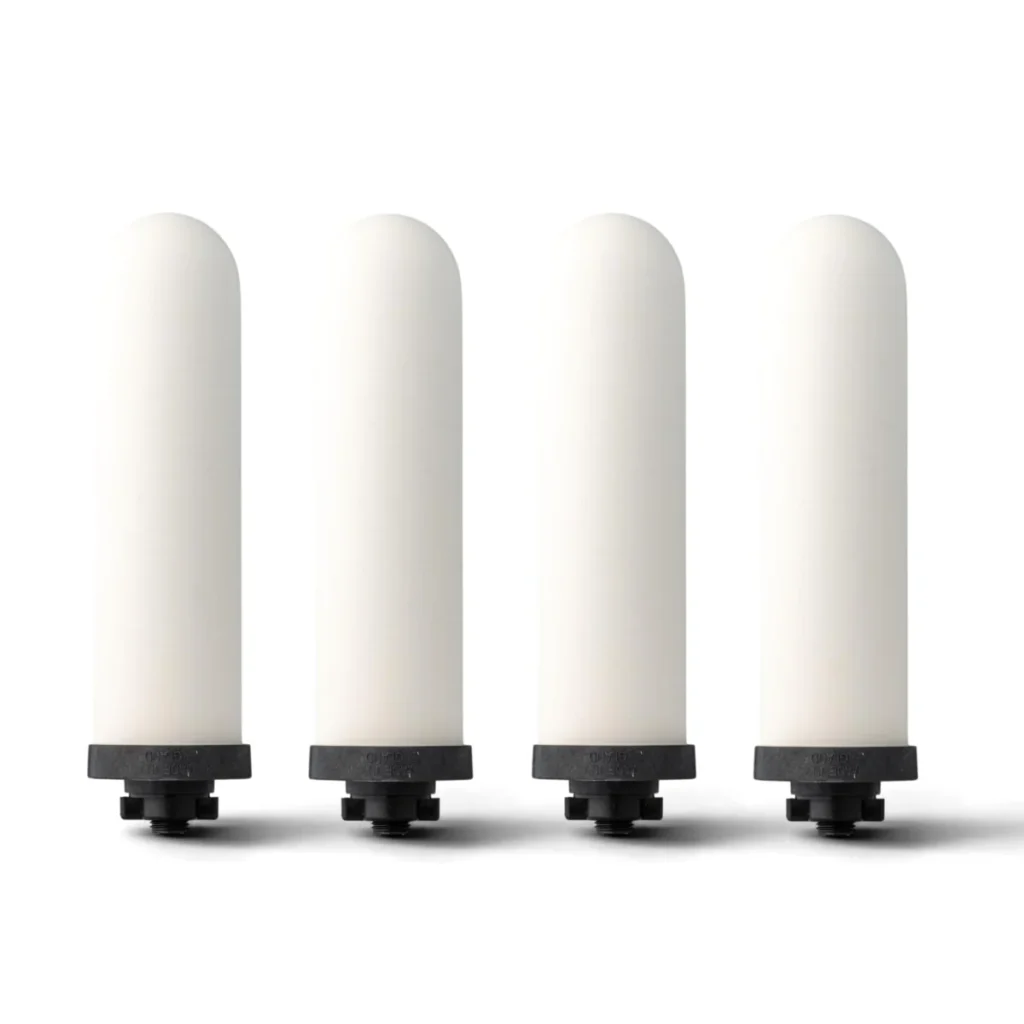
Worth considering
The Doulton Ultra Sterasyl ceramic candle is a solid choice for gravity-filter owners who want a cleanable ceramic barrier that also reduces chlorine, lead and cysts, but it is not a complete solution for fluoride, PFAS or dissolved solids. Buy it if you already run a compatible gravity system and want a long-lasting, brushable candle; skip it if you need broad contaminant coverage or whole-house flow.
- Best for: Owners of a British Berkefeld or compatible gravity water filter system who want a cleanable ceramic candle with carbon., Renters or campers who want no plumbing and a reversible setup., Households on treated city water that want a physical barrier plus chlorine and lead reduction.
- Not for: Anyone who needs fluoride, PFAS or arsenic reduction, because the candle does not claim those., Large families or anyone expecting fast flow from a tap., People without a compatible gravity housing, since this is a replacement part.
Key takeaways
- The Doulton Ultra Sterasyl candle combines a ceramic microfilter with carbon to reduce sediment, bacteria, cysts, chlorine and lead, but it does not reduce fluoride, PFAS or dissolved solids.
- It is a replacement candle for gravity-fed stainless steel systems, not a standalone countertop or under sink unit, so you need a compatible housing.
- The main drawback is that the candle is rated for six months and gravity flow is slow, so it suits small households rather than high-demand kitchens.
Table of contents11 sections · tap to expand
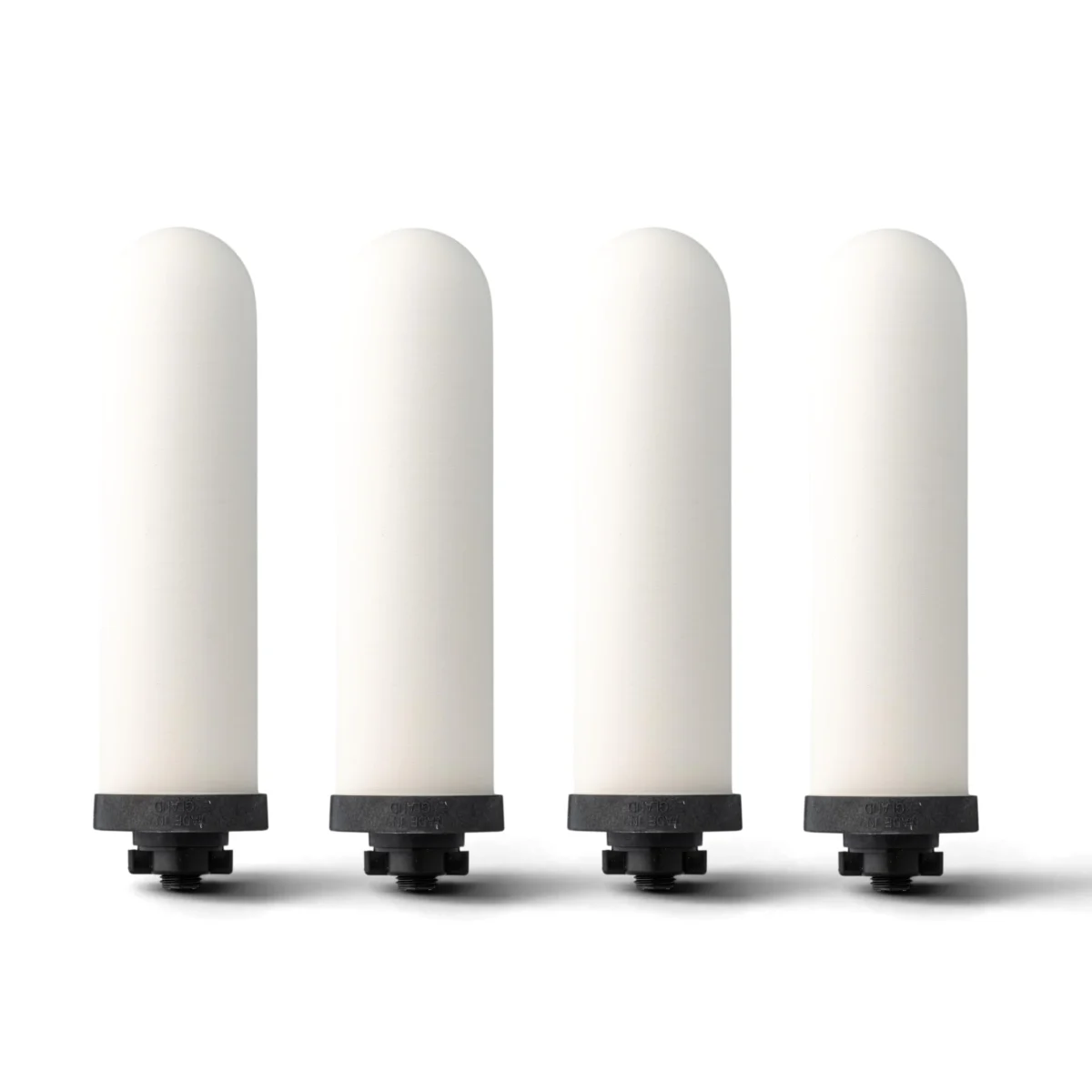
The Doulton Ultra Sterasyl ceramic filter candle is a replacement element for gravity-fed water filter systems. It pairs a ceramic microfilter with carbon to reduce sediment, bacteria, cysts, chlorine and lead, and it can be cleaned with a brush to extend its life.
Is it worth it? For a gravity-system owner who wants a cleanable candle and does not need fluoride or PFAS removal, yes. For anyone expecting a complete under sink solution or broad contaminant coverage, it is not the right purchase.
Specifications
Key specifications
| Specification | Detail | Why it matters |
|---|---|---|
| Type | Gravity filter | It relies on gravity rather than line pressure, so it works without plumbing but flows slowly. |
| Reduces | Chlorine, Lead, Cysts, Bacteria, Sediment (named in listing) | These are the contaminants the manufacturer names, so you can match them to your water report. |
| Filter life | 6 months | You will replace the candle twice a year, which sets the running cost. |
| Material | Ceramic | The ceramic shell can be scrubbed, which helps maintain flow between replacements. |
| Number of packs | 4 | This listing is a four-pack, enough for two years of replacements at the six-month interval. |
| External testing certification | NSF | The listing states an NSF certification, but you should confirm the specific standard on the performance data sheet. |
What the ceramic and carbon stages reduce, and what they do not
The Doulton candle uses a ceramic microfilter to trap sediment, cysts and bacteria, while the carbon content targets chlorine, taste, odor and lead. The manufacturer names chlorine, lead, cysts, bacteria and sediment as reductions, so it covers the basics for treated municipal water. It does not claim to reduce fluoride, PFAS (PFOA and PFOS) or dissolved solids, so if those are your concern, you need reverse osmosis or a dedicated media.
The listing states an NSF certification, but it does not specify which standard. Ask for the performance data sheet to see exactly which contaminants are certified and to what level. Do not assume the candle removes everything just because it is ceramic.
Filter life, cleaning and the real yearly cost
Doulton rates the candle for six months, and the outer ceramic shell can be scrubbed with a brush or scouring pad to keep flow up between replacements. That cleaning step is what separates a ceramic candle from a sealed carbon block: you can see and remove the surface layer of sediment. The tradeoff is that cleaning takes time and the candle still needs replacing twice a year.
Because this listing is a four-pack, it covers two years at the recommended interval. To work out your yearly cost, divide the pack price by two. Compare that with the cost of pitcher cartridges, which often last two months, or a reverse osmosis membrane that lasts two to three years. The ceramic candle sits in the middle: cheaper than many proprietary pitcher systems per year, but not as cheap as a large gravity filter element rated for thousands of gallons.
Flow rate and pressure: why gravity and ceramic are slow
A gravity filter relies on water weight, not line pressure, so flow is slow by design. The ceramic microfilter adds resistance, and as the shell clogs with sediment, flow drops further until you clean it. Expect to fill the upper chamber and wait, rather than turning a tap. That is fine for a household that keeps a dispenser full, but frustrating if you need a fast refill for cooking.
There is no minimum line pressure because there is no connection. The upside is that it works during a power outage and in a cabin or camper. The downside is that you cannot speed it up without a larger housing or a different filter type. If fast flow matters, an under sink carbon block or reverse osmosis system is a better fit.
Installation and space: a replacement part, not a complete system
This Doulton candle is a replacement element for gravity water filter systems, and the listing names Aquacrest Gravity Water Filter System as a compatible model. It is not a countertop or under sink unit on its own. You need an existing gravity housing, typically a stainless steel upper and lower chamber, and you swap the candle in without plumbing or tools beyond your hands.
Because there is no permanent connection, the setup is renter-friendly and reversible: you can pack it away or move it without leaving a hole in a counter or a tapped line. The catch is that you must already own a compatible housing. If you are starting from scratch, budget for the full gravity system, not just the candle.
City water versus private well: when ceramic makes sense
On treated city water, the Doulton candle is a reasonable choice for chlorine taste, sediment and the lead and cyst reductions the manufacturer names. Check your local water quality report (Consumer Confidence Report) to see whether lead or cysts are listed, and confirm the candle's certification covers them. If your report shows fluoride or PFAS above levels you want to address, this candle will not help.
On a private well, ceramic filtration can act as a physical barrier against bacteria and cysts, but it is not a substitute for testing. Well water is not regulated, so test for bacteria, nitrates, iron, hardness and pH before buying any filter. If your test shows high hardness or iron, a softener or iron filter may be needed first. The candle reduces sediment and microorganisms, but it does not soften water or remove dissolved nitrate.
Strengths and weaknesses
Pros and cons
Pros
- The ceramic shell can be cleaned with a brush, which helps maintain flow between replacements.
- It reduces chlorine, lead, cysts, bacteria and sediment as named by the manufacturer.
- No plumbing or electricity is required, so it works in rentals, cabins and during outages.
- The four-pack covers two years at the six-month replacement interval.
Cons
- It does not reduce fluoride, PFAS or dissolved solids, so it is not a complete solution for those contaminants.
- Gravity flow is slow and slows further as the ceramic clogs.
- It is a replacement candle only, so you need a compatible gravity housing to use it.
Other options
Alternatives to consider
Royal Berkey Gravity System
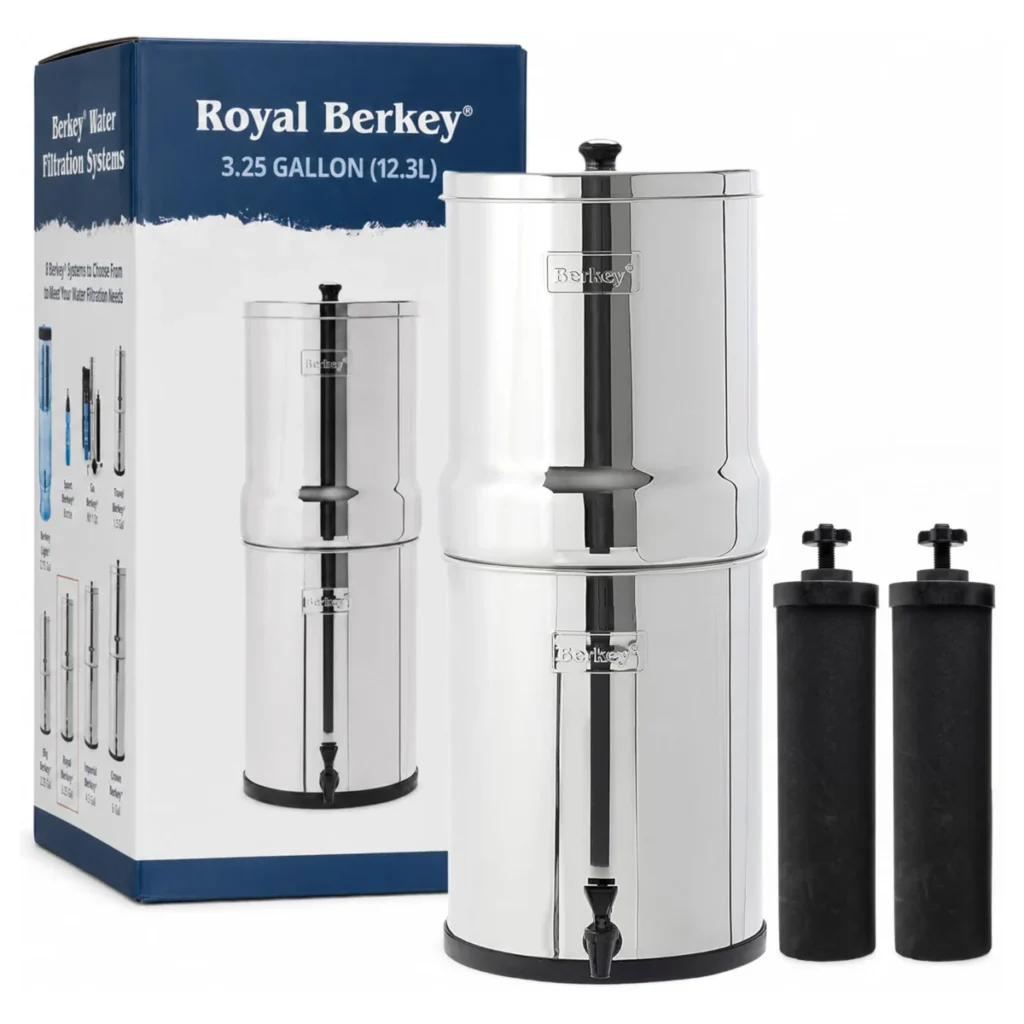
Choose the Royal Berkey if you want a complete gravity system with a much longer filter life rated in thousands of gallons, though it costs more upfront.
Travel Berkey with Fluoride Filters
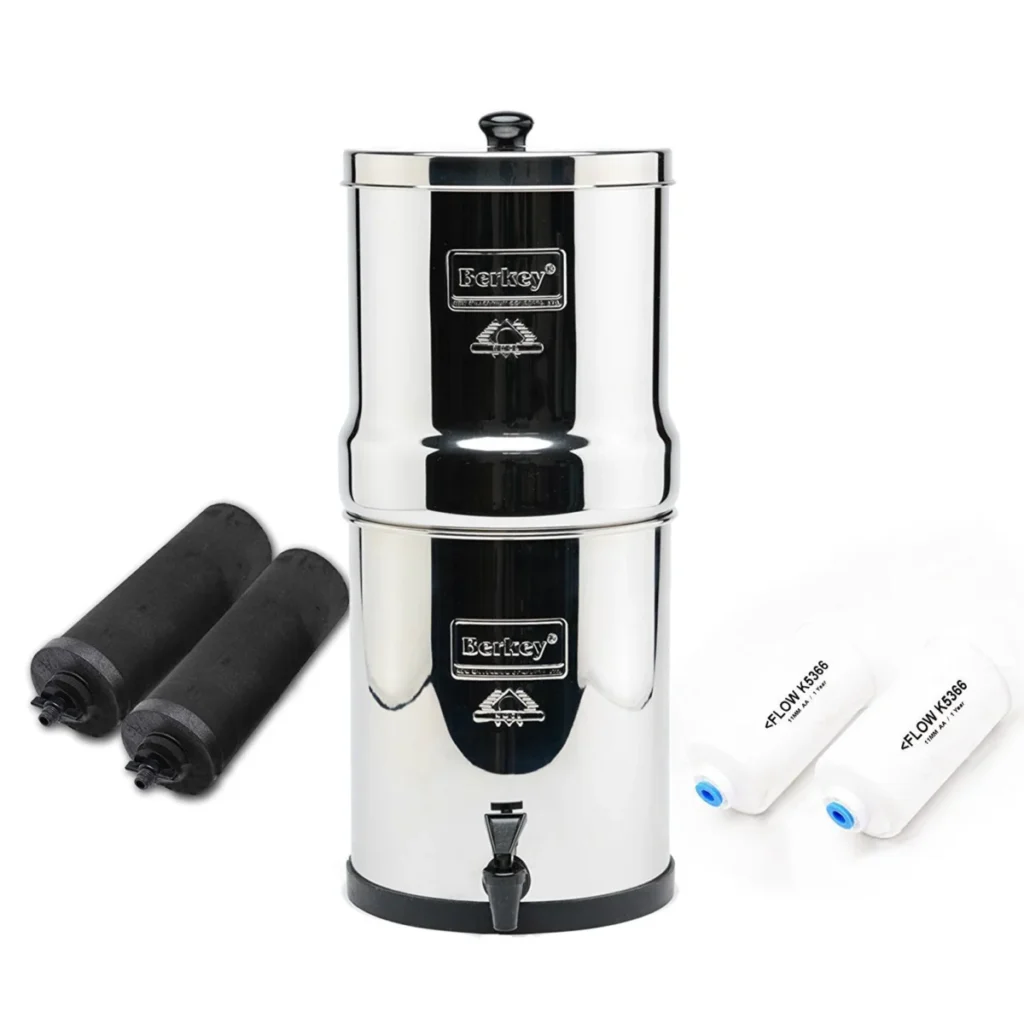
Choose the Travel Berkey if you specifically need fluoride reduction and a compact stainless steel gravity setup, since it includes PF-2 fluoride filters.
The Doulton Ultra Sterasyl Candle also appears in
Common questions
Frequently asked questions
What does a Doulton ceramic filter remove from drinking water?
The manufacturer names chlorine, lead, cysts, bacteria and sediment as reductions for the Ultra Sterasyl candle. It uses a ceramic microfilter for particles and microorganisms, plus carbon for chlorine, taste, odor and lead. Check the performance data sheet for the exact certified levels.
Does a Doulton filter remove fluoride or PFAS?
No, the Ultra Sterasyl candle does not claim to reduce fluoride or PFAS (PFOA and PFOS). Ceramic and carbon are not designed for those dissolved contaminants. If you need fluoride or PFAS reduction, look for reverse osmosis or a filter specifically certified for them.
How often do you replace the ceramic candle and carbon cartridge?
Doulton recommends replacing the candle every six months for maximum efficiency. The outer ceramic shell can be cleaned with a brush or scouring pad in between to prolong its life. This listing is a four-pack, so it covers two years at that schedule.
Do I need a plumber to install a Doulton under sink filter?
This Doulton candle is for gravity systems, not under sink installation, so no plumber is needed. It drops into a compatible gravity housing without plumbing. If you want an under sink filter, you would need a different product that connects to a cold water line.
Is a Doulton filter good for well water?
It can help with sediment, bacteria and cysts as a physical barrier, but well water should be tested first for bacteria, nitrates, iron, hardness and pH. The candle does not soften water or remove dissolved nitrate. Use a certified lab test to decide whether ceramic alone is enough.
Why is my Doulton filter so slow?
Gravity systems are slow because they rely on water weight, not pressure, and the ceramic microfilter adds resistance. As the ceramic clogs with sediment, flow drops further. Cleaning the outer shell with a brush usually restores some speed; if not, the candle may be due for replacement.
Bottom line
Should you buy the Doulton Ultra Sterasyl Candle?
The Doulton Ultra Sterasyl ceramic candle is worth considering if you already own a compatible gravity filter and want a cleanable element that reduces chlorine, lead, cysts, bacteria and sediment. It is renter-friendly, needs no plumbing and the four-pack covers two years. But it is not a solution for fluoride, PFAS or dissolved solids, and gravity flow is slow.
If you need broader contaminant coverage or faster flow, look at a reverse osmosis system or a gravity system with added fluoride filters, such as the Travel Berkey. For a simple, reversible setup on treated water, the Doulton candle is a practical choice.
Keep reading
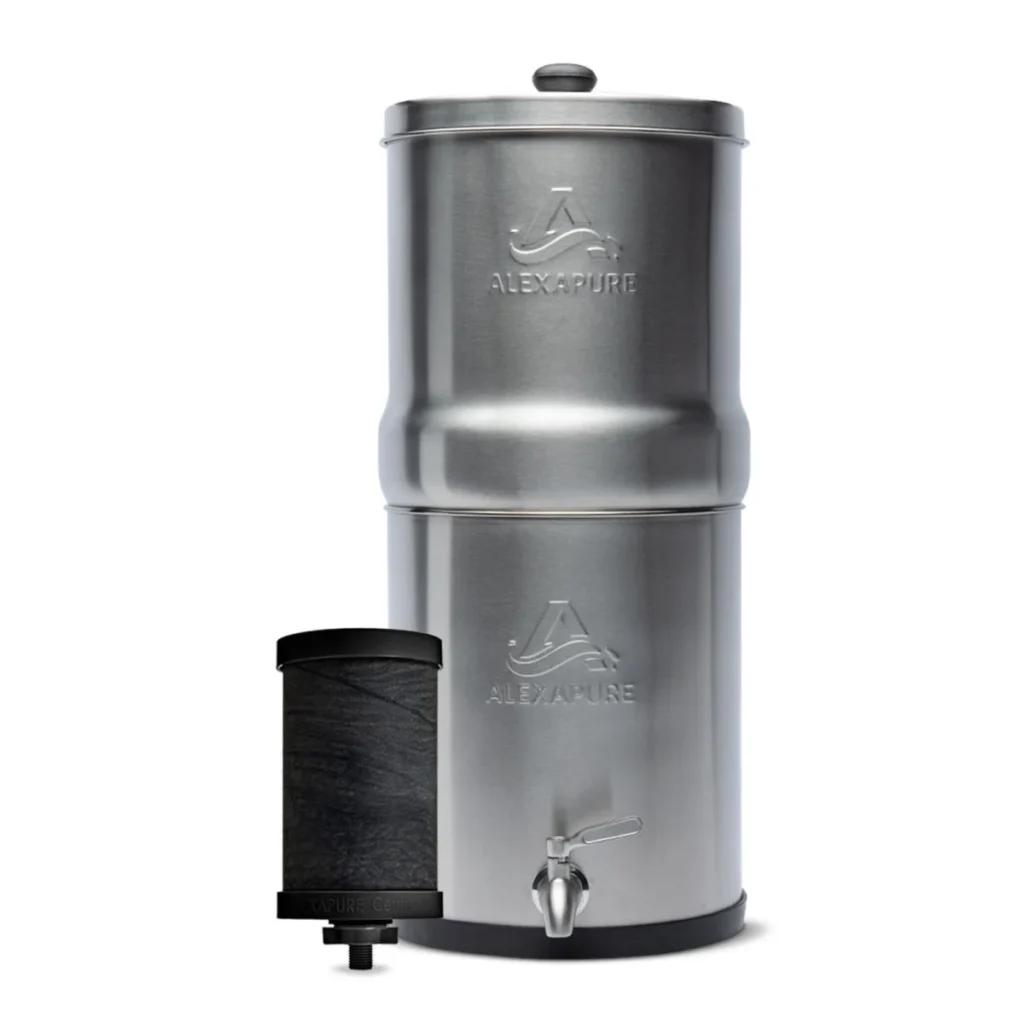
AlexaPure Water Filter: Honest Look at Claims, Cartridge Cost and Fit
AlexaPure Water Filter review: contaminant reduction, filter type and filter life, honest pros and cons, and a clear verdict on who should…
Epic Water Filter Pitcher Review: What the Nano XP Reduces and What It Costs
Epic Water review: certifications held by, contaminants reduced and filter life in, honest pros and cons, and a clear verdict on who…
Best Brita Filter Review: Who It Suits and Who Should Skip It
Best Brita Filter review: filter type, contaminants reduced and filter life in, honest pros and cons, and a clear verdict on who…