Should You Buy an A.O. Smith Water Softener? Salt-Based vs Salt-Free Explained
Published October 29, 2026
As an Amazon Associate we earn from qualifying purchases. This never changes which products we recommend.
Verdict

Worth considering
An A.O. Smith softener is worth buying only if you have a measured hardness problem and you pick the grain capacity that matches your household, because the salt-based models remove calcium and magnesium rather than merely reducing scale. The decisive limitation is that a softener is not a drinking water filter: it leaves chlorine, lead, PFAS and fluoride in the water, so most homes still need a separate carbon or reverse osmosis stage.
- Best for: Homeowners on city water or a tested private well with confirmed hardness and visible scale on fixtures and appliances, Households of three or more people who want soft water at every tap and can give up floor space and a drain connection, Families building a two-stage setup, with the softener at the point of entry and a carbon or reverse osmosis filter at the kitchen tap
- Not for: Renters and condo owners who cannot cut into the main line or add a drain, Anyone whose main complaint is chlorine taste, lead, PFAS or fluoride, which a softener does not address, Households with low hardness who only see occasional spotting and would do better with a salt-free conditioner
Key takeaways
- A.O. Smith's salt-based units are ion exchange softeners that remove hardness minerals; the salt-free option conditions water to limit scale but does not take the calcium and magnesium out.
- Grain capacity has to be matched to your measured grains per gallon and daily water use, or the unit regenerates too often and burns through salt.
- A softener adds a small amount of sodium or potassium to the water and leaves chlorine, lead, PFAS and fluoride untouched, so pair it with a carbon or reverse osmosis filter for drinking water.
- Installation needs a cold water line, a drain, a power outlet and floor space for the brine tank, which rules it out for most renters and many condos.
Table of contents11 sections · tap to expand
An A.O. Smith water softener is a point-of-entry appliance that treats hardness at the main line, not at the tap. The salt-based models use ion exchange resin to swap calcium and magnesium for sodium or potassium, which is what actually stops scale from forming in the water heater, dishwasher and pipes. The company also offers a salt-free conditioner, and the two are often sold under similar language, so the first decision is which type you are buying.
Is it worth it? For a home with measured hardness and a plumbing setup that can take a softener, yes, provided you size it correctly and accept that it is half of a water treatment plan rather than the whole thing. For a renter, a condo, or a household whose real problem is taste or a contaminant like lead, the money is better spent on a filter that targets that problem.
Specifications
Key specifications
| Specification | Detail | Why it matters |
|---|---|---|
| Type | Water softener | Confirms this is point-of-entry hardness treatment, not a drinking water filter. |
| Grain capacity | 40,000 grains | Sets how much hardness the resin can hold between regenerations, and therefore how often the unit draws salt. |
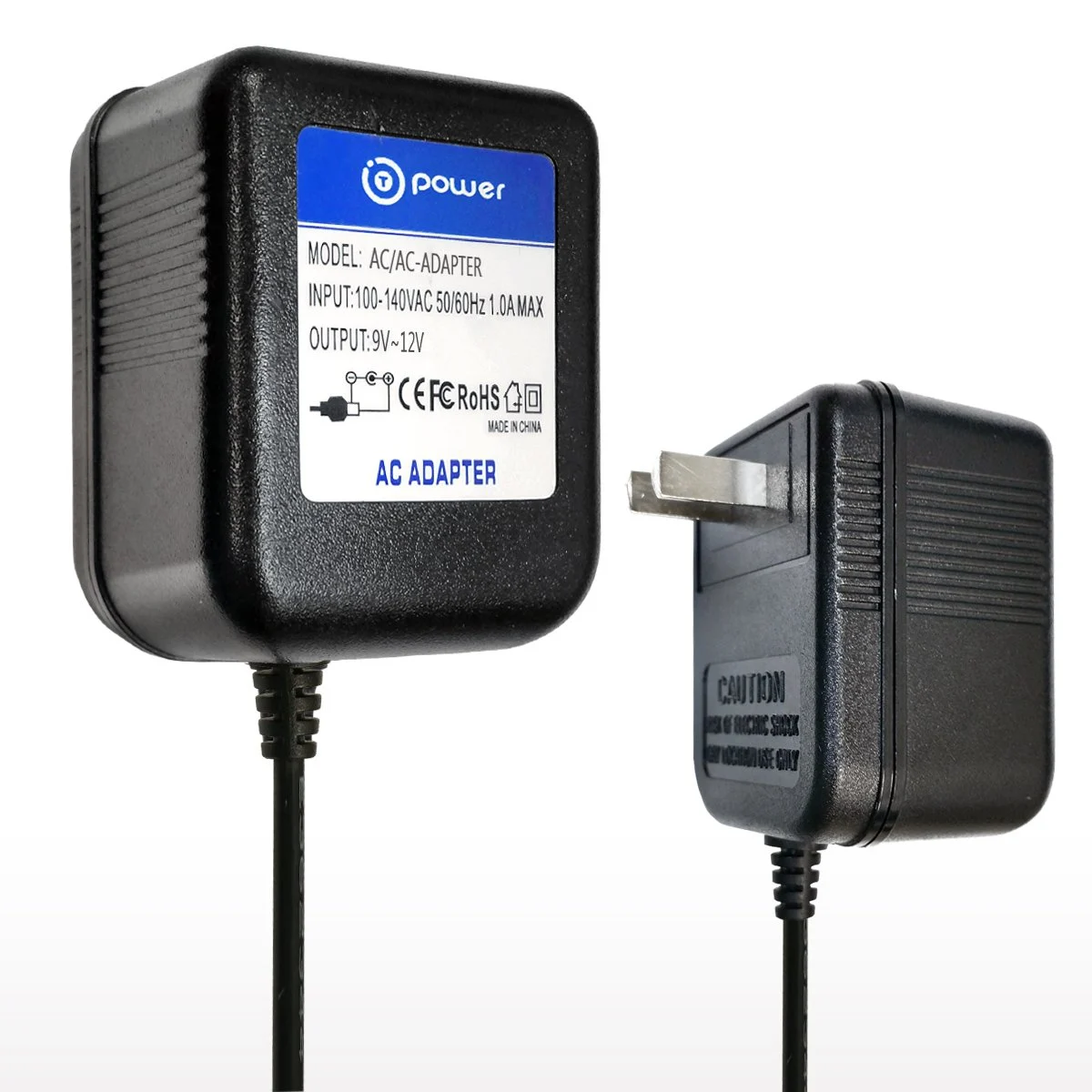
| Fits | A. O. Smith (per listing) | Tells you the unit is built for A.O. Smith softener cabinets rather than a universal housing. |
Salt-based softener or salt-free conditioner: which A.O. Smith unit
The salt-based ion exchange models are the ones that remove hardness. Resin beads capture calcium and magnesium and release sodium or potassium in their place, and a brine cycle periodically recharges the resin. The salt-free conditioner works differently: it changes how hardness minerals behave so they are less likely to cling to surfaces as scale, but the minerals stay in the water. If your goal is soft water on your skin and in the washing machine, only the ion exchange unit delivers it.
Choose based on a measured number, not a label. A lab test or a hardness strip gives you grains per gallon, and that figure, multiplied by daily household use, tells you the grain capacity you need.
Oversizing wastes salt on unnecessary regenerations, and undersizing leaves you with hard water between cycles.
What a water softener does not fix in your drinking water
Softening changes hardness and nothing else. Chlorine and chloramine taste, lead from older plumbing, PFAS, fluoride, arsenic and microplastics all pass through an ion exchange softener essentially unchanged, because the resin is charged to grab calcium and magnesium, not those contaminants. That is why a softener is not a substitute for a drinking water filter, and why pairing it with one is the standard approach.
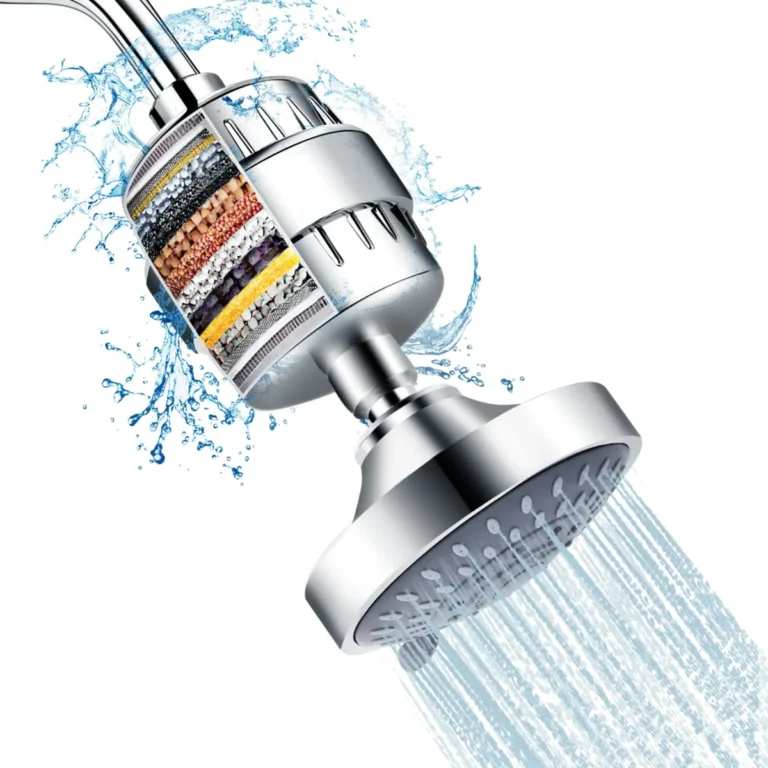
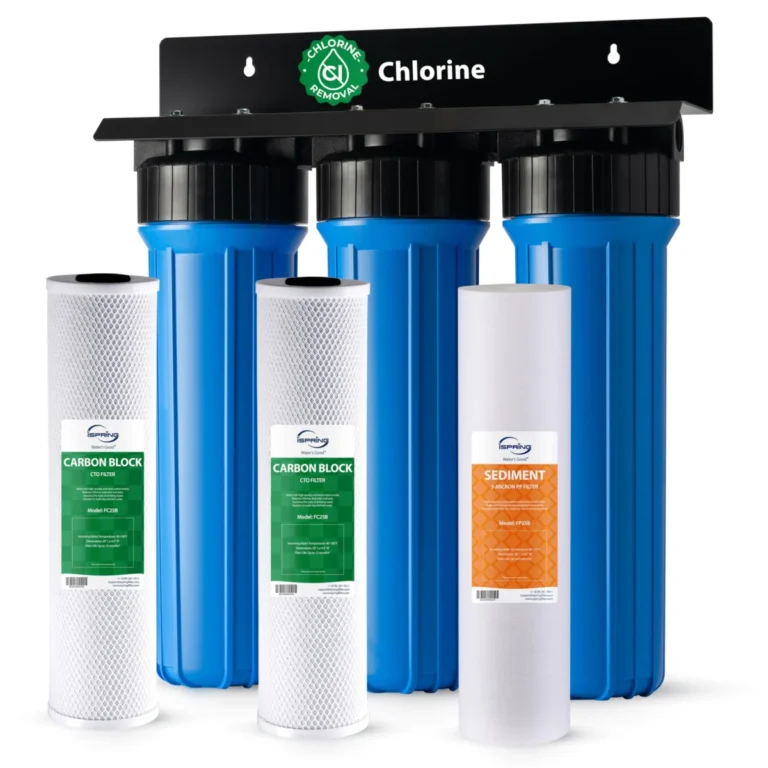
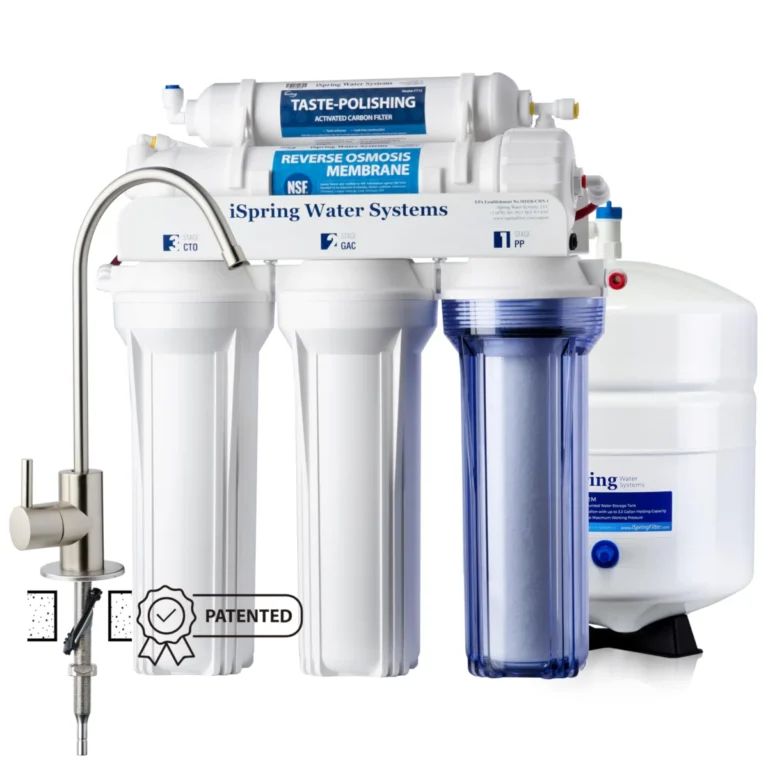
The usual pairing is a carbon block under sink filter or a reverse osmosis system at the kitchen tap, fed by the already-softened water so the membrane is not fighting scale. A whole house carbon filter ahead of the softener protects the resin from chlorine, which degrades it over time; that protection comes from the carbon stage, not from the softener itself.
If you want fluoride or arsenic reduction, that is reverse osmosis territory, and you should confirm the specific reduction on the manufacturer performance data sheet before relying on it.
Grain capacity, salt use and what regeneration costs you
Salt consumption follows directly from grain capacity and hardness. A unit regenerates when its resin is exhausted, and each regeneration uses a brine draw of salt or potassium chloride. Harder water and higher daily use exhaust the resin faster, so a correctly sized unit regenerates less often than an oversized one running on a fixed schedule. Metered controllers that regenerate on actual gallons used generally use less salt than timers.
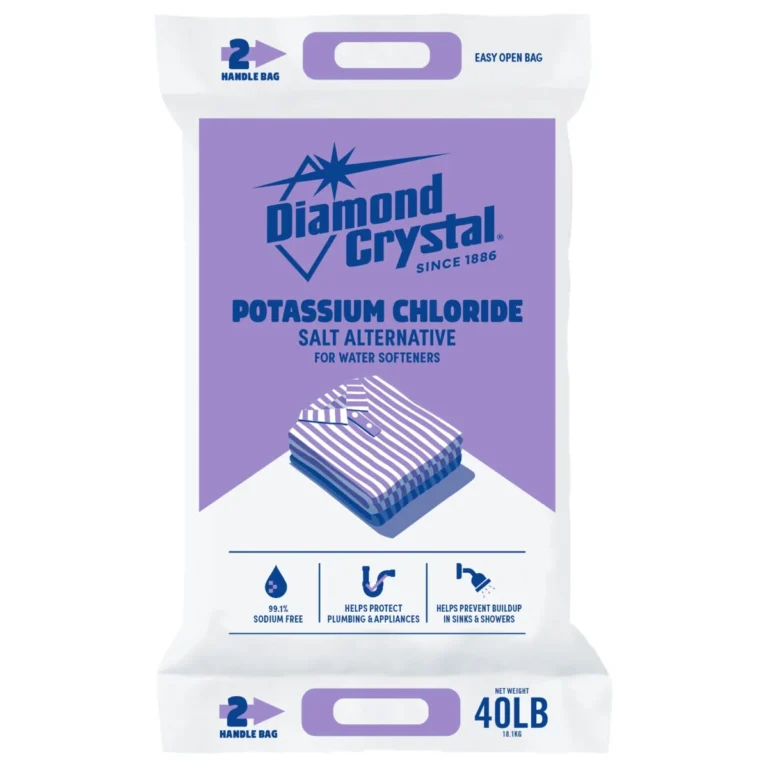
Budget for salt as a recurring cost, not a one-time purchase, and note that potassium chloride pellets cost more than sodium chloride. The tradeoff is real: softened water carries a small amount of sodium, which matters for anyone on a sodium-restricted diet, and potassium is the alternative at a higher price. Neither changes the fact that the water still needs filtration for taste and contaminants.
Installation: cold water line, drain, brine tank footprint and power
A softener installs at the point of entry, on the cold water main after the meter or pressure tank, and needs four things: a cut into that line, a drain for the regeneration discharge, a standard electrical outlet for the controller, and floor space beside the unit for the brine tank. The brine tank is the bulky part, and it has to be reachable for loading salt. In a tight utility room or a condo with shared plumbing, that combination is often the dealbreaker.
This is plumber work for most homeowners, and in many jurisdictions a permit is required. Renters and condo owners generally cannot make a permanent cut into the main line, so a softener is not a realistic option for them; a salt-free conditioner that installs on the line has the same plumbing constraint. If you cannot touch the main line, the practical alternative is treating only the water you drink and bathe in.
Controller faults, units full of water and service before you buy
The controller is the part that fails, and it is worth knowing that before you spend money. A softener full of water in the brine tank, a unit that stops softening, or a controller that will not advance through its cycles usually points to a stuck valve, a blocked brine line, salt bridging or a failed controller board. Salt bridging, where a crust forms above a hollow pocket of salt, is a maintenance issue rather than a defect, and breaking it up restores normal operation.
Parts availability is the other half of the decision. A.O. Smith softeners use model-specific controller components, and replacement parts are sold by model number, so confirm that your exact model is supported before buying.
The published specifications for the salt-based models do not list NSF/ANSI 44 certification, so ask the manufacturer for the certification listing and the performance data sheet rather than assuming it. If service in your area is thin, a brand with a local dealer network may be the safer choice.
Strengths and weaknesses
Pros and cons
Pros
- Salt-based models use ion exchange resin, which removes calcium and magnesium rather than only changing how they behave
- A 40,000 grain capacity gives a typical family room to run between regenerations, provided your measured hardness and daily gallons fit it
- Point-of-entry treatment protects the water heater, dishwasher and plumbing from scale at every tap
- A salt-free conditioner option exists for households that want to limit scale without adding sodium
Cons
- A softener does not reduce chlorine, lead, PFAS or fluoride, so a separate drinking water filter is still needed
- Installation requires a cold water line cut, a drain, power and floor space for the brine tank, which excludes most renters
- Salt or potassium chloride is a recurring cost, and softened water carries a small amount of sodium
- Controller and valve faults are the common failure point, and parts are model-specific
Other options
Alternatives to consider
Aquasure Harmony Series 48,000
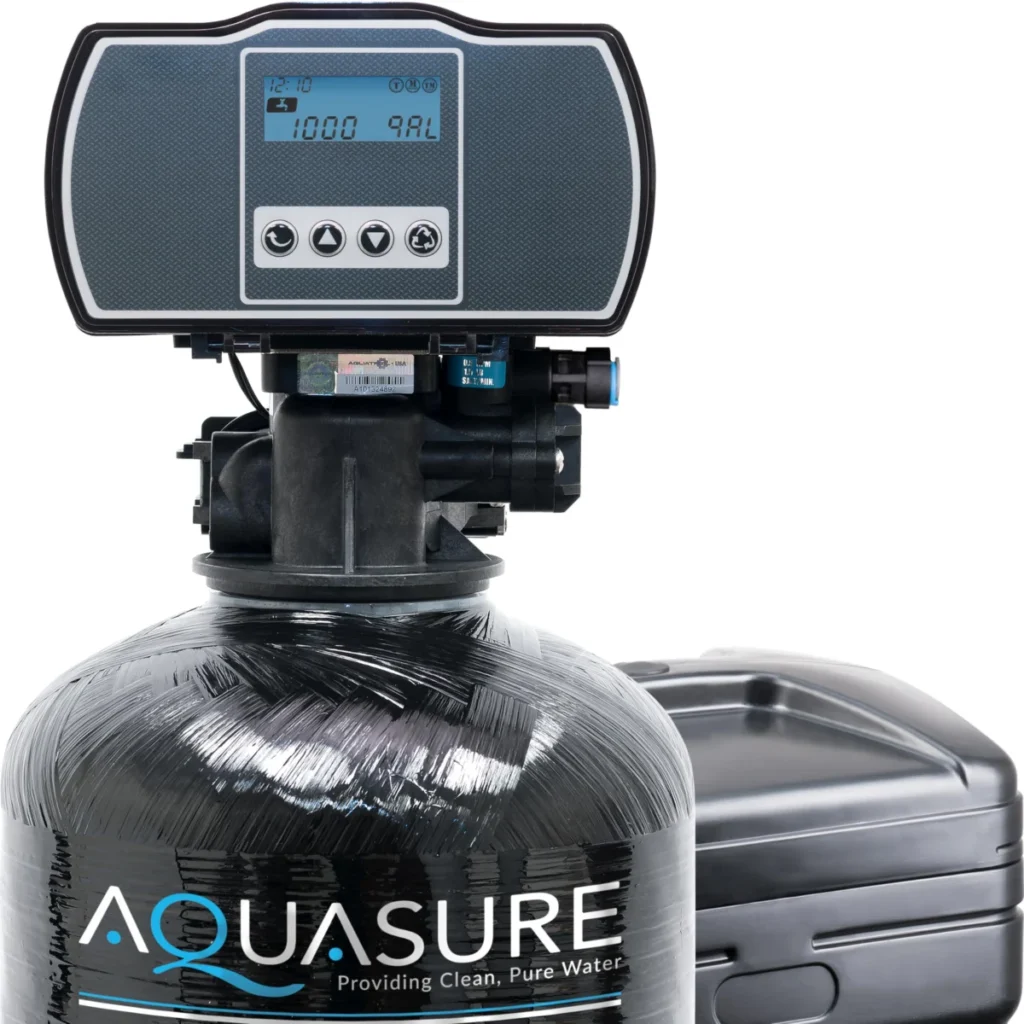
Choose it if your household is larger or your hardness is higher and you want a metered control head with a higher grain capacity than the A.O.
Aquasure Harmony Series 50,000
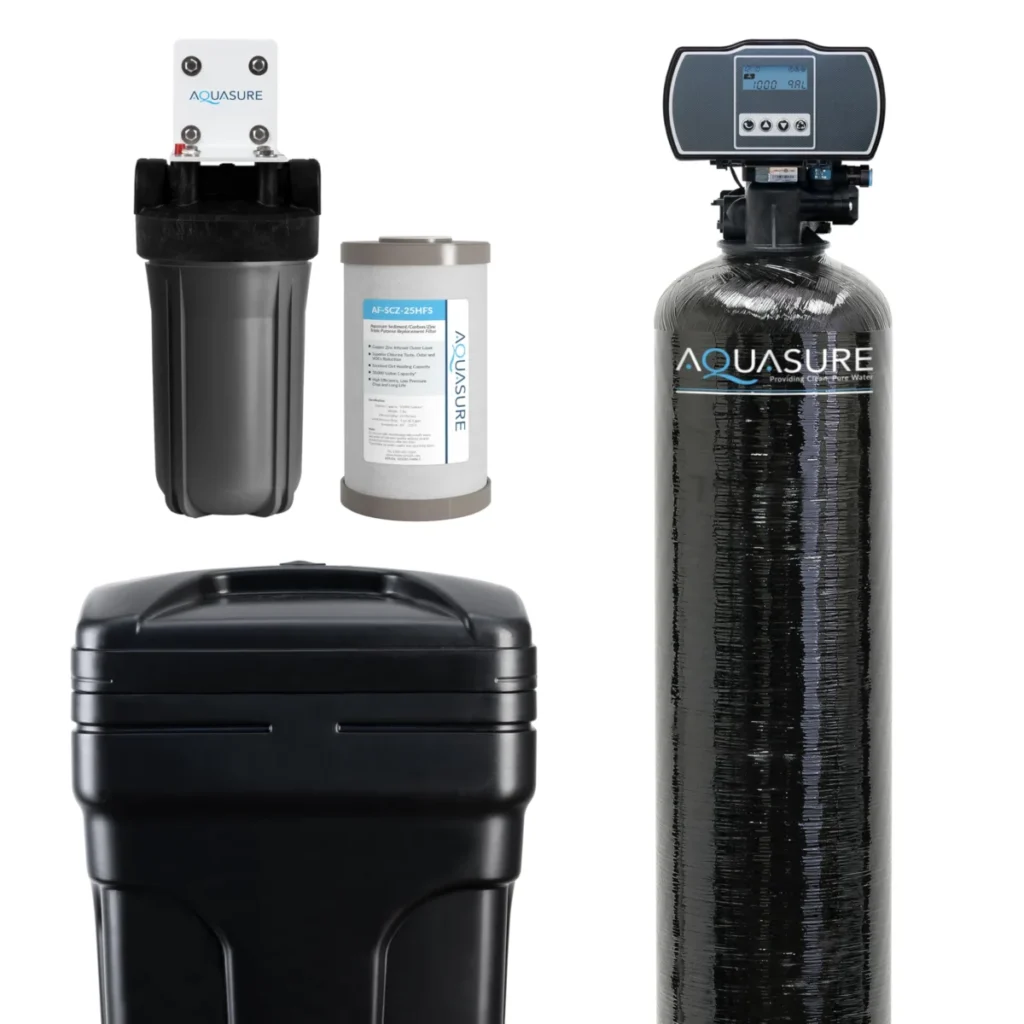
Choose it if you want softening plus a pre-filter stage for chlorine, sediment and taste in one installation rather than adding a separate whole house carbon filter.
See also: EcoPure Water Softener Review: What It Removes and Who Should Buy It.
Common questions
Frequently asked questions
Does an A.O. Smith water softener remove hardness or just reduce scale?
The salt-based ion exchange models remove hardness minerals, swapping calcium and magnesium for sodium or potassium. The salt-free conditioner only limits how those minerals form scale, so the hardness stays in the water. Check which type the model number refers to before buying.
Does a water softener make the water safe to drink?
No. A softener treats hardness only and leaves chlorine, lead, PFAS, fluoride and bacteria untouched. For drinking water, check your local water quality report, add a carbon or reverse osmosis filter for the contaminants listed, and for a private well start with a certified lab test.
Why is my A.O. Smith water softener full of water?
A brine tank holding standing water usually means a stuck or blocked brine valve, a kinked brine line or a controller that is not advancing through its cycle. Salt bridging can produce the same symptom. Check the brine line and the salt bed first, then the controller.
How much salt does a water softener use per month?
Salt use depends on grain capacity, your hardness in grains per gallon and how many gallons the household uses, because each regeneration draws a fixed brine dose. A metered controller that regenerates on actual gallons used typically consumes less than a fixed timer.
Do I need a plumber to install a water softener?
In most homes, yes. Installation requires cutting the cold water main, running a drain line for regeneration discharge and providing an outlet, and many areas require a permit. Renters and condo owners usually cannot make that permanent change.
Are A.O. Smith water softeners any good?
The salt-based models are conventional ion exchange softeners, so performance depends mainly on correct sizing and installation. Confirm the certification listing and parts availability for your exact model before buying.
Bottom line
Should you buy the A.O. Smith Water Softener?
Buy an A.O. Smith softener if you have a measured hardness problem, a utility space that can take a brine tank and drain, and a plan to add a carbon or reverse osmosis filter at the kitchen tap for drinking water. Size it from your grains per gallon and daily gallons rather than picking the largest unit, and confirm the certification and parts support for the specific model first.
Skip it if you rent, live in a condo with shared plumbing, or your real complaint is taste, chlorine, lead or PFAS, because a softener will not touch any of those. In those cases, put the budget into an under sink or reverse osmosis filter that targets the contaminant you actually have.