Practical guide
How to Choose a Water Filter in 2026: A Practical Guide
Choosing the right water filter starts with understanding what is actually in your water. No single filter targets only the contaminants identified in the exact model evidence, so the best first step is to identify your water source and test for specific impurities. Once you know your contaminants, you can match the filter technology to your needs, considering installation, maintenance, and certifications.
This guide walks you through the key decisions: from pitcher filters for taste and odor to under-sink systems for targeted contaminant reduction. We explain what certifications like NSF/ANSI 42 and 53 mean, how to compare flow rates and replacement costs, and common mistakes to avoid. By the end, you will have a clear framework to choose a filter that fits your home, budget, and water quality goals.
Buying framework
How to compare the options
| Criterion | Why it matters | What to choose | Watch for |
|---|---|---|---|
| Identify your water source and contaminants | This determines which contaminants you need to reduce and guides your filter choice. | Match your filter to the specific contaminants found in your water test results. | Verify the current specification on the exact product listing before buying. |
| Determine which contaminants you need to reduce | Different filters target different contaminants, so knowing your specific needs is essential. | Select a filter certified to reduce the contaminants present in your water. | Verify the current specification on the exact product listing before buying. |
| Choose the appropriate filtration technology | Technology determines what the filter can remove and its trade-offs. | Match the technology to your contaminant profile and household needs. | Verify the current specification on the exact product listing before buying. |
| Check certifications for your target contaminants | Certifications provide independent verification of performance claims. | Look for NSF/ANSI certification for the specific contaminants you need to reduce. | Verify the current specification on the exact product listing before buying. |
| Consider installation location and space | Installation complexity and space requirements affect feasibility and cost. | Choose a filter type that fits your space and installation capabilities. | Verify the current specification on the exact product listing before buying. |
| Evaluate flow rate and capacity for your household | Flow rate and capacity determine how much filtered water you can access and how often you need replacements. | Match flow rate and capacity to your household's water consumption. | Verify the current specification on the exact product listing before buying. |
What is a water filter and how does it work?
A water filter is a device that removes impurities from water by physical, chemical, or biological means. Common technologies include activated carbon, which adsorbs organic compounds like chlorine and improves taste; reverse osmosis, which forces water through a semipermeable membrane to remove dissolved solids; and UV light, which inactivates bacteria and viruses. Filters can be installed at the point of use, such as under a sink, or at the point of entry for whole-house treatment.
Each technology targets specific impurities. For example, carbon filters reduce chlorine and some volatile organic compounds, but they do not remove dissolved minerals or heavy metals unless specially treated. Reverse osmosis removes a wide range of contaminants, including lead and PFAS, but also removes beneficial minerals. UV systems are effective against microorganisms but require pre-filtration to remove particles that could shield microbes.
What are the main types of water filters for home use?
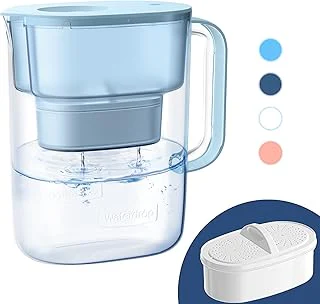
Pitcher filters are the simplest and most portable. They require no installation and are ideal for renters or small households. The Waterdrop PT-07B pitcher filter, for example, is NSF certified and reduces chlorine and PFAS, with a 200-gallon filter life. However, they have a low flow rate and need frequent refilling.
Faucet-mounted filters attach directly to the faucet and are easy to install. They offer a higher flow rate than pitchers and are suitable for drinking and cooking. Under-sink systems, like the Waterdrop 10UA, connect directly to your faucet and provide filtered water on demand. They are more expensive but have a longer filter life and higher capacity. Countertop filters sit on the counter and connect to the faucet, offering a balance of convenience and performance.
Whole-house filters treat all water entering your home, reducing sediment, chlorine, and other contaminants throughout the house. They require professional installation and are best for addressing widespread issues like hard water or sediment. Reverse osmosis systems provide the most comprehensive contaminant reduction, but they are more complex and produce wastewater.
What contaminants should you test for before choosing a filter?
Before buying a filter, identify what is in your water. For municipal water, request your Consumer Confidence Report (CCR) from your water utility. This report lists detected contaminants and their levels. Common issues include chlorine, lead, and PFAS. For well water, test for bacteria, nitrates, iron, and hardness, as these are common in private wells.
Home test kits are available for specific contaminants, or you can send a sample to a certified laboratory for a comprehensive analysis. Testing is especially important if you have a well, because water quality can change seasonally. Once you know your contaminants, you can select a filter certified to reduce them. For example, if lead is a concern, look for a filter certified under NSF/ANSI 53 for lead reduction.
How do filter certifications and standards guide your choice?
Certifications provide independent verification that a filter meets specific performance standards. NSF/ANSI Standard 42 covers aesthetic effects like taste and odor reduction. Standard 53 covers health-related contaminants like lead and PFAS. Standard 58 applies to reverse osmosis systems. When a product is 'NSF certified,' it has been tested and verified to meet the standard. 'NSF tested' may only mean that testing was performed, not that the product passed or is certified.
Always check the specific contaminant reduction claims on the certification. For example, the Waterdrop 10UA under-sink filter is NSF/ANSI 42 certified, meaning it reduces chlorine and improves taste, but it may not be certified for lead or PFAS. The Waterdrop PT-07B pitcher is NSF certified and claims to reduce PFOA/PFOS and chlorine, but verify the exact standard. Do not assume a filter targets only the contaminants identified in the exact model evidence just because it has one certification.
What are the key decision criteria for selecting a water filter?
Start with contaminant reduction: choose a filter certified for the specific contaminants in your water. Next, consider flow rate and capacity. Flow rate determines how quickly you get filtered water; pitchers have low flow, while under-sink systems are faster. Capacity is the total gallons a filter can treat before replacement. The Waterdrop PT-07B has a 200-gallon capacity, which is longer than typical pitcher filters.
Installation and space are practical concerns. Pitchers need no installation, while under-sink systems require plumbing access. Evaluate initial and ongoing costs: a pitcher may be cheap upfront but require frequent replacements. Under-sink filters have higher upfront costs but lower per-gallon costs. Finally, assess maintenance: all filters need regular replacement. Choose a filter with a replacement schedule you can maintain.
How do you choose between a pitcher, faucet, under-sink, or whole-house filter?
Your choice depends on budget, space, water usage, and contaminant needs. If you are on a tight budget or rent, a pitcher filter like the Waterdrop PT-07B is a low-cost, no-installation option. It is suitable for improving taste and reducing chlorine and PFAS, but it has a low flow rate and needs frequent refilling.
For a balance of convenience and performance, a faucet-mounted filter is easy to install and provides filtered water on demand. Under-sink systems, such as the Waterdrop 10UA, offer higher capacity and a dedicated faucet, making them ideal for households with higher water usage. Whole-house filters are best for addressing issues like sediment or chlorine throughout the home, but they require professional installation and a larger budget.
What are common mistakes to avoid when buying a water filter?
One common mistake is ignoring certifications. A filter may claim to reduce contaminants, but without certification, you cannot verify its performance. Always look for NSF/ANSI certification for your target contaminants. Another mistake is buying for the wrong contaminants. For example, a basic carbon filter will not remove dissolved minerals or heavy metals. Test your water first to know what you need.
Neglecting maintenance is another pitfall. Filters must be replaced regularly to remain effective. Overdue filters can harbor bacteria and reduce water quality. Also, underestimate installation complexity. Under-sink and whole-house systems may require professional installation, adding to the cost. Finally, do not assume a filter targets only the contaminants identified in the exact model evidence. No filter does, so choose one that targets your specific concerns.
How do you install and maintain your water filter?
Installation varies by type. Pitcher filters require no installation; just fill and use. Faucet-mounted filters attach to the faucet with simple adapters. Under-sink systems, like the Waterdrop 10UA, connect to the cold water line and require a dedicated faucet or a diverter. Whole-house filters are installed at the main water line and often need a plumber.
Maintenance is straightforward: replace filters according to the manufacturer's schedule. Pitcher filters typically last 2-3 months, under-sink filters 6-12 months, and RO membranes 2-3 years. Keep a log of replacement dates to avoid forgetting. If you notice a drop in flow or a change in taste, it may be time to replace the filter. For leaks, check connections and O-rings.
What are the limitations of water filters?
No water filter targets only the contaminants identified in the exact model evidence. Each technology has trade-offs. Carbon filters reduce chlorine and taste but not dissolved minerals. Reverse osmosis removes many contaminants but also removes beneficial minerals and produces wastewater. UV systems inactivate microbes but do not remove chemicals or particles. Additionally, filters have a finite capacity; once exhausted, they must be replaced to avoid bacterial growth.
Consider these limitations when choosing a filter. If you are concerned about minerals, you may need a remineralizer after RO. If you have hard water, a water softener may be more appropriate than a filter. Always match the filter to your specific water quality issues and be realistic about what it can achieve.
Common questions
Frequently asked questions
What is the best water filter for home use?
There is no single best filter; it depends on your water quality, budget, and installation preferences. For general taste and odor, a carbon pitcher may suffice. For lead or PFAS, look for certified under-sink or reverse osmosis systems. For example, the Waterdrop PT-07B pitcher is a good entry-level option, while the Waterdrop 10UA under-sink filter offers higher capacity.
How do I know which contaminants are in my water?
Check your local water quality report (Consumer Confidence Report) for municipal water. For well water, use a home test kit or send a sample to a certified lab. Test for bacteria, nitrates, iron, and hardness. This will guide your filter choice.
What does NSF certification mean for water filters?
NSF certification means the filter has been independently tested to meet specific standards for contaminant reduction. Look for NSF/ANSI 42 for aesthetic effects, 53 for health contaminants, and 58 for reverse osmosis systems. 'NSF tested' is not the same as certified.
How often should I replace my water filter?
Replacement frequency varies by type and usage. Pitcher filters typically last 2-3 months, under-sink filters 6-12 months, and reverse osmosis membranes 2-3 years. Always follow the manufacturer's recommendations. For example, the Waterdrop 10UA has a 1-year filter life.
Can a water filter targets only the contaminants identified in the exact model evidence?
No. Each filter technology targets specific contaminants. For example, carbon filters reduce chlorine and taste, but not dissolved minerals. Reverse osmosis removes many contaminants but also removes beneficial minerals. No filter removes everything, so choose based on your specific needs.
Summary
What to remember
Choosing a water filter in 2026 starts with knowing your water source and contaminants. Test your water, then match the filter technology to your needs. Consider certifications like NSF/ANSI 42 and 53 to verify performance. Pitcher filters like the Waterdrop PT-07B are affordable and simple, while under-sink systems like the Waterdrop 10UA offer higher capacity and convenience. Avoid common mistakes like ignoring certifications or neglecting maintenance. Ultimately, the right filter balances contaminant reduction, cost, installation, and maintenance to fit your household.