Katadyn Water Filter Review: Which Model Fits Your Trip, and What It Will Not Remove
Published October 29, 2026
As an Amazon Associate we earn from qualifying purchases. This never changes which products we recommend.
Verdict

Recommended
The Katadyn BeFree 1L is a strong choice for hikers, trail runners and travelers who want fast, tool-free treatment of clear backcountry water and will carry a separate plan for viruses and chemicals. Its decisive limitation is scope: a 0.1 micron hollow-fiber membrane reduces bacteria, protozoan cysts and sediment but does not remove viruses, dissolved chemicals, salt or fluoride.
- Best for: Backpackers and thru-hikers treating clear streams and lakes, Trail runners and fastpackers who want a collapsible bottle that packs flat, Travelers in areas with microbiological risk who already have a chemical or viral plan
- Not for: Anyone drawing from water with suspected viral, chemical or salt contamination as their only treatment, Household daily drinking water, where a gravity or under sink system does the job better
Key takeaways
- The BeFree 1L uses a 0.1 micron hollow-fiber membrane rated to reduce bacteria, protozoan cysts and sediment, with a stated flow of 2 L/min.
- It does not remove viruses, dissolved chemicals, salt or fluoride, so it is a microbiological filter rather than a purifier.
- The membrane is rated for up to 1,000 L and cleans by shaking or swishing in water, with no backflushing, tools or disassembly required.
- The main drawback is source dependence: silty or cloudy water loads the membrane faster, and a frozen membrane should be treated as compromised.
Table of contents12 sections · tap to expand
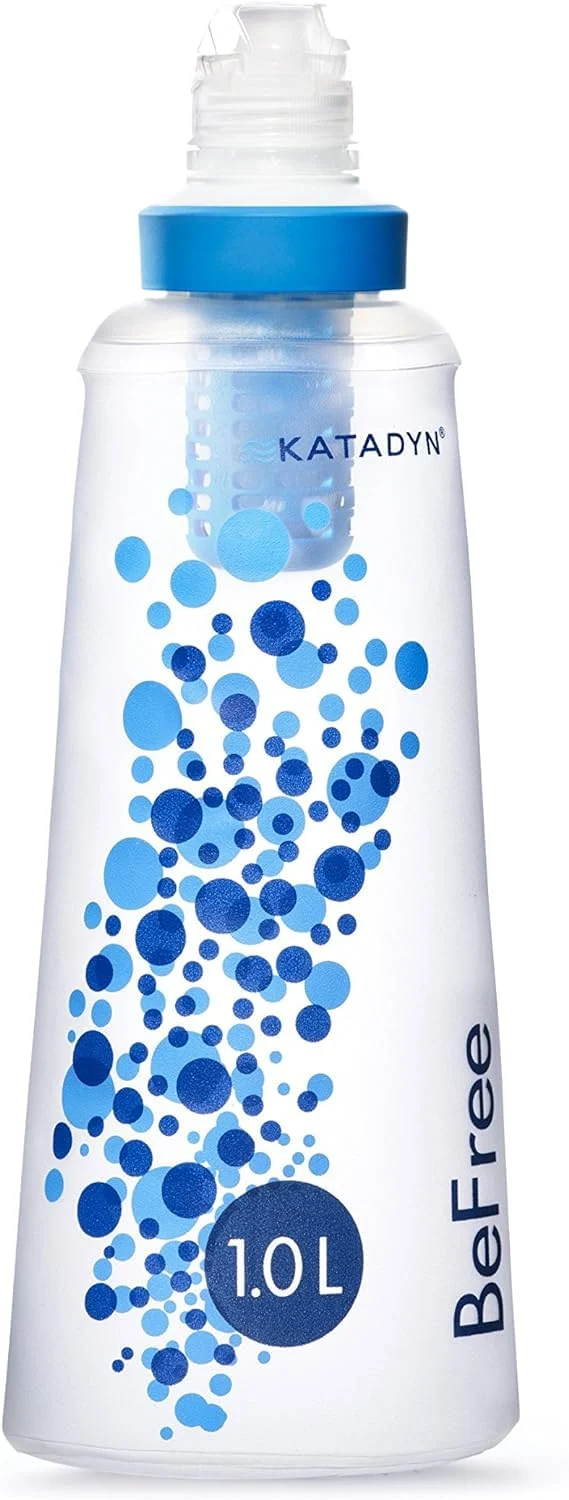
The Katadyn BeFree 1L is a collapsible filtered water bottle built around a 0.1 micron hollow-fiber membrane. You fill it from a stream, lake or spring, squeeze, and drink; the manufacturer rates the flow at 2 L/min and the membrane for up to 1,000 L. It is one model in a wider Katadyn range that also includes pump, gravity and chemical options, and this review covers the BeFree in detail while explaining where the other types fit.
Is a Katadyn Water Filter worth it? For the right job, yes. The BeFree is light, packs flat and needs no setup, which suits hiking and travel where weight and speed matter. It is not a purifier: it does not remove viruses, dissolved chemicals, salt or fluoride, so it belongs in a kit that already accounts for those risks rather than replacing one.
Specifications
Key specifications
| Specification | Detail | Why it matters |
|---|---|---|
| Purification Method | Hollow Fiber Membrane | A hollow-fiber membrane physically strains out particles and organisms above its pore size rather than adsorbing chemicals. |
| Filter Pore Size | 0.1 micron | A 0.1 micron rating is small enough to strain bacteria and protozoan cysts, but viruses are far smaller and pass through. |
| Contaminants Removed | Bacteria, protozoa, cysts, sediment | This is the full scope of the claim: no chemicals, salt, fluoride or viruses are listed. |
| Flow Rate | 2 L/min | A fast squeeze flow means less effort per liter, which matters on long days and for filling bottles quickly. |
| Capacity | 1 liters | The bottle holds 1 liter of water, so refills are frequent on hot or long sections. |
| Product Dimensions | 4.25"L x 10"W x 3"H | The unit measures about 10 inches across one dimension, and the collapsible body flattens for packing. |
| Material | Synthetic | A synthetic soft flask is flexible enough to squeeze and is described as BPA-free throughout. |
| Included Components | BeFree Filter Membrane | The filter membrane is the working part, so the replacement you plan for is the membrane itself. |
Does a Katadyn water filter remove viruses and chemicals?
No. A hollow-fiber Katadyn Water Filter strains out organisms larger than its pores, and the BeFree is rated at 0.1 micron for bacteria, protozoan cysts such as Giardia and Cryptosporidium, and sediment. Viruses are typically far smaller than 0.1 micron, so they pass through a membrane of this type, and dissolved chemicals, salt and fluoride are not particles at all, so no pore size stops them.
That distinction decides where the BeFree is appropriate. On clear backcountry water in North America, the main risks are protozoa and bacteria, which the membrane addresses.
Where human waste, agricultural runoff or industrial discharge may be present, add a chemical or viral step: Katadyn's own Micropur MP1 chlorine dioxide tablets are the brand's chemical option, and they treat water rather than filter it. For chemical contamination, a filter of this class is the wrong tool entirely, and boiling or a certified adsorption system is the conversation to have.
How the BeFree is used and how fast it flows
The BeFree is a squeeze filter: you fill the soft bottle, screw on the membrane cap and drink through it, or squeeze into another container. The stated flow is 2 L/min, which is quick for a personal filter and means a liter takes well under a minute of steady squeezing. There is no pumping, no setup and no tablets, which is the whole appeal for hikers and runners.
Effort rises as the membrane loads with sediment, and that is the practical limit on flow. The design also depends on the bottle: once the soft flask is worn or punctured, the filter has nothing to push water through, so a spare bag is part of long-term ownership. For a group of several people, a single 1 liter squeeze bottle becomes a bottleneck, and a gravity or pump system serves a camp better.
Filter life, cleaning and replacement parts
The membrane is rated for up to 1,000 L. Cleaning is deliberately simple: shake or swish the filter in water to restore flow, with no backflushing, tools or disassembly required. That is a real advantage in the field, because the maintenance step is short enough that people actually do it, and there are no small parts to lose on a windy ridge.
Replacement planning is straightforward because the working part is the membrane, listed as the included component. The published specifications do not state a replacement interval in months, so the honest guide is the 1,000 L rating and a visible drop in flow that shaking no longer fixes. Cost per liter depends on the cartridge price where you buy it, and over a full 1,000 L the membrane cost spread across that volume is small compared with the price of bottled water on a trip.
Weight, packed size and cold-weather care
The BeFree is built to collapse flat, which is why it fits running vests, cycling jerseys and small packs. The published dimensions describe the unit at roughly 4.25 by 10 by 3 inches, and the soft flask flattens well below that when empty. For a solo hiker counting grams, this is the category where the BeFree makes most sense.
Freezing is the risk to plan around. A hollow-fiber membrane that freezes with water inside can be damaged by ice expansion, and a membrane that has frozen should not be trusted for the rest of the trip. In shoulder-season or winter conditions, carry the filter inside a jacket, drain it before camp, and treat a frozen unit as a spent part rather than a working one.
Cloudy, silty and questionable water: when the BeFree is the wrong purchase
Silty or turbid water clogs a 0.1 micron membrane quickly, and each clog means more squeezing and more frequent cleaning. The BeFree is at its best on clear springs, lakes and fast-moving streams; on muddy livestock water or glacial melt, pre-filtering through cloth helps but does not solve it, and a pump with a replaceable prefilter handles dirty water with less frustration.
The bigger caution is scope. A Katadyn filter of this type is not a household drinking water system, not a desalinator and not a chemical purifier.
If your concern is lead, PFAS, fluoride or dissolved contaminants at home, a gravity or under sink system is the right category; the Travel Berkey listed below is a countertop gravity option that names chlorine, fluoride and arsenic reduction. For emergency kits stored for boil-water events, follow local authority guidance first, and keep chemical treatment as the backup for viral risk.
Which Katadyn model fits how you will use it
The BeFree covers solo, fast and light use. Katadyn's other types answer different needs: the Pocket is the brand's long-rated pump-style filter for expedition and group use, the Vario is a pump that can switch between modes for faster or finer output, the Hiker is a lighter pump for general hiking, the Survivor 35 is a desalination unit for life-raft and marine survival, and Micropur MP1 tablets are the chemical option for viruses and clear water.
Match the type to the job rather than the brand name.
For most recreational buyers, the decision comes down to squeeze versus pump versus chemical. Choose the BeFree if you want the least weight and the fastest drink on clear water. Choose a pump if you treat silty water or supply several people. Choose tablets if viral risk is the concern or you want a backup with no moving parts. The BeFree's 1,000 L rating and simple cleaning make it the easiest of these to live with on a personal basis.
Strengths and weaknesses
Pros and cons
Pros
- Fast stated flow of 2 L/min means a liter fills quickly with steady squeezing
- Collapses flat for running vests, cycling jerseys and small packs
- Cleaning needs only a shake or swish, with no backflushing, tools or disassembly
- Membrane rated for up to 1,000 L, with the filter membrane as the replaceable part
- No setup, no tablets and no pumping, so it works immediately at the water source
Cons
- Does not remove viruses, dissolved chemicals, salt or fluoride
- Clogs faster on silty or turbid water, raising effort per liter
- A frozen membrane should be treated as damaged
- A 1 liter bottle is a bottleneck for groups and long dry sections
Other options
Alternatives to consider
Travel Berkey 1.5 Gal
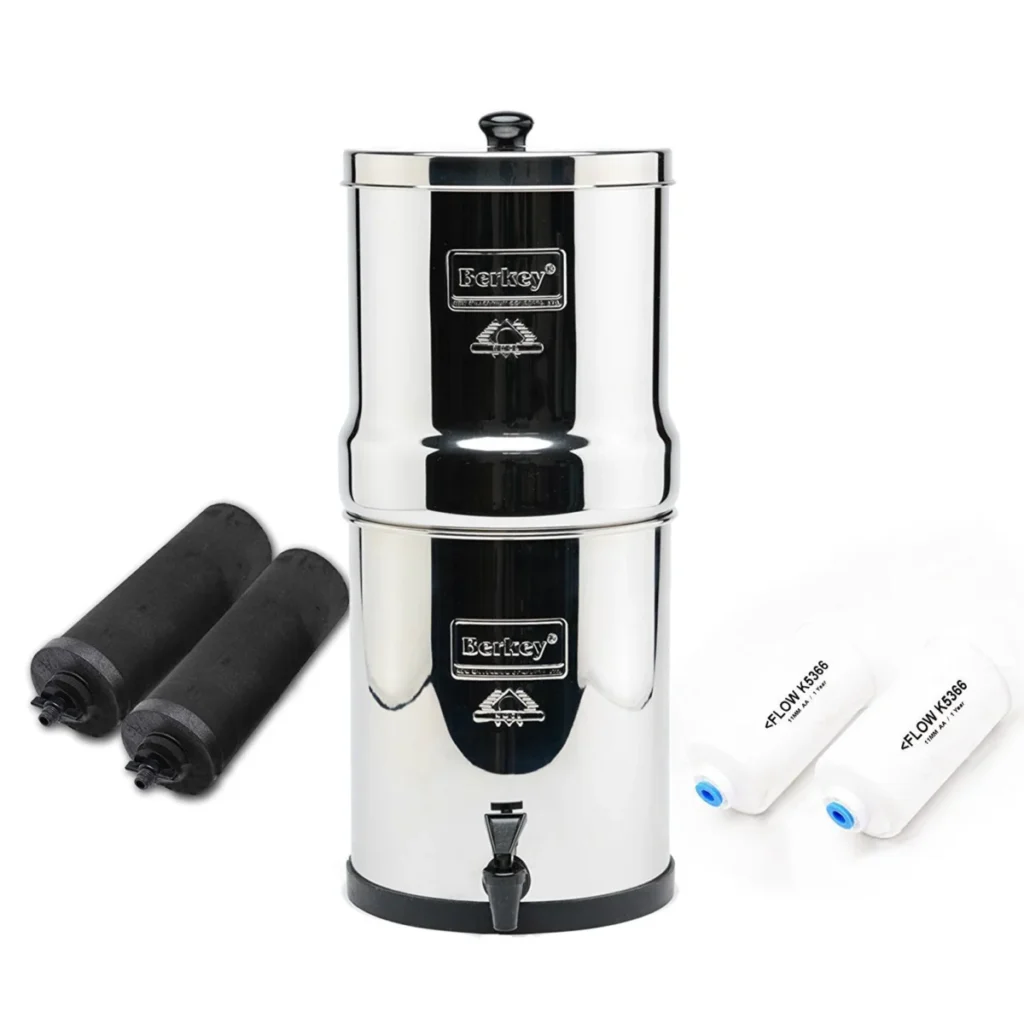
Choose the Travel Berkey if you need gravity-fed countertop filtration at home or basecamp that names chlorine, fluoride and arsenic reduction, rather than a personal squeeze filter for trail water.
Common questions
Frequently asked questions
Is a Katadyn water filter good enough for drinking stream water?
For clear stream water where the main risks are bacteria and protozoan cysts, the BeFree's 0.1 micron membrane is rated to reduce both, so it is a reasonable personal treatment. It is not sufficient where viruses or chemical contamination are possible, and cloudy water should be pre-filtered or treated with a pump instead.
How often do you replace a Katadyn BeFree filter?
Replace the membrane when it reaches its 1,000 L rating or when shaking no longer restores acceptable flow. The published specifications give the liter rating rather than a month interval, so track volume and watch for a permanent drop in squeeze speed.
Can you use a Katadyn filter on cloudy or silty water?
You can, but expect frequent clogging and much more squeezing, because a 0.1 micron membrane loads quickly with fine sediment. Pre-filter through cloth and clean often, or use a pump with a prefilter for consistently dirty sources.
What is the difference between the Katadyn BeFree and the Katadyn Pocket?
The BeFree is a collapsible squeeze bottle rated for up to 1,000 L with a 2 L/min flow, built for fast personal use. The Pocket is a pump-style filter with a much longer rated cartridge life, aimed at expedition and group use where durability and volume matter more than weight.
Can a Katadyn filter freeze, and does that ruin it?
Freezing can damage a hollow-fiber membrane if water is left inside, and a frozen unit should not be trusted afterward. Carry it warm, drain it before cold nights, and treat a membrane that has frozen as a part to replace.
Do Katadyn filters remove salt or fluoride?
No. Hollow-fiber membranes strain particles and organisms, not dissolved ions, so salt and fluoride pass through. Removing those requires reverse osmosis or a dedicated adsorption system, which is a different category of equipment.
Bottom line
Should you buy the Katadyn BeFree 1L?
Buy the Katadyn BeFree 1L if you hike, run or travel and want the lightest practical way to treat clear backcountry water, and you already have a plan for viruses and chemicals. Its 2 L/min flow, flat packing and shake-clean membrane make it easy to carry and easy to keep working, and the 1,000 L rating gives a clear replacement horizon.
In those cases a pump, chemical tablets such as Micropur MP1, or a gravity system like the Travel Berkey fits the job better, and the BeFree becomes a backup rather than the answer.
Keep reading
Which Filtered Bottle Fits Your Water? Taste Filters, Purifiers and What They Miss
The LifeStraw Personal Water Filter is our top pick among 7 filtered water bottles, compared on filter technology and certifications actually listed.

Sawyer Mini Water Filter Review: What It Removes, How Fast It Flows and Who Should Carry It
A 2 ounce filter for hiking, travel and emergency kits, plus the cases where a certified home filter, not the Sawyer Mini,…
LifeStraw Water Filter Review: Travel Straw vs Home Pitcher
The LifeStraw water filter removes bacteria and protozoa but not fluoride, lead or PFAS. See which version fits hiking, travel or your…